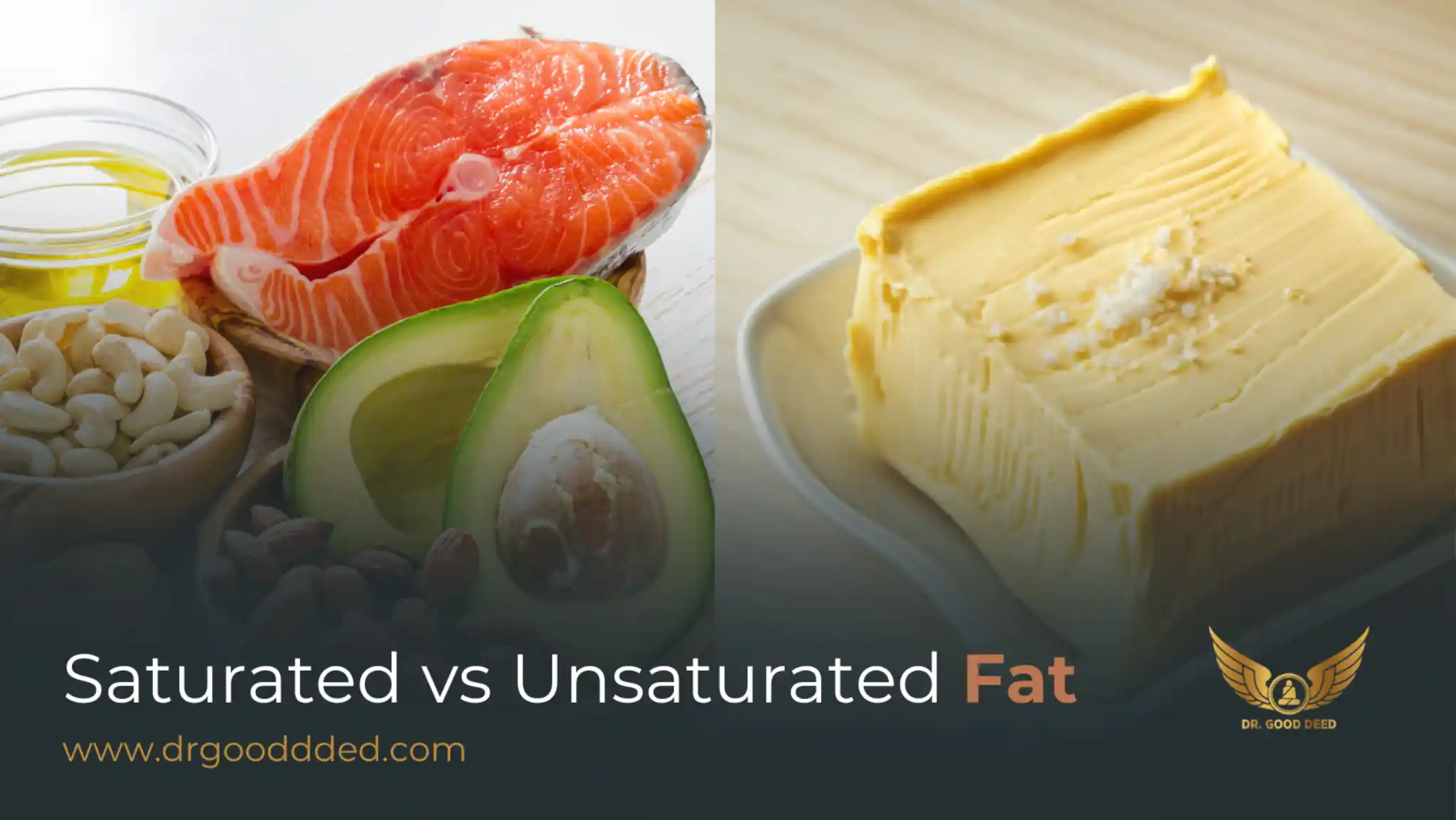
Saturated fat has a tightly packed structure with no double bonds, which makes it solid at room temperature and more likely to raise LDL cholesterol by slowing how your liver clears it from the blood. Unsaturated fat contains one or more double bonds that keep it liquid, flexible, and easier for your cells to use for energy, hormone signaling, and cholesterol transport.
This structural difference explains why saturated fat stays stable during high-heat cooking but stresses heart health when eaten often, while unsaturated fat supports better cholesterol balance and metabolic function when used in place of saturated sources.
Difference Between Saturated and Unsaturated Fats
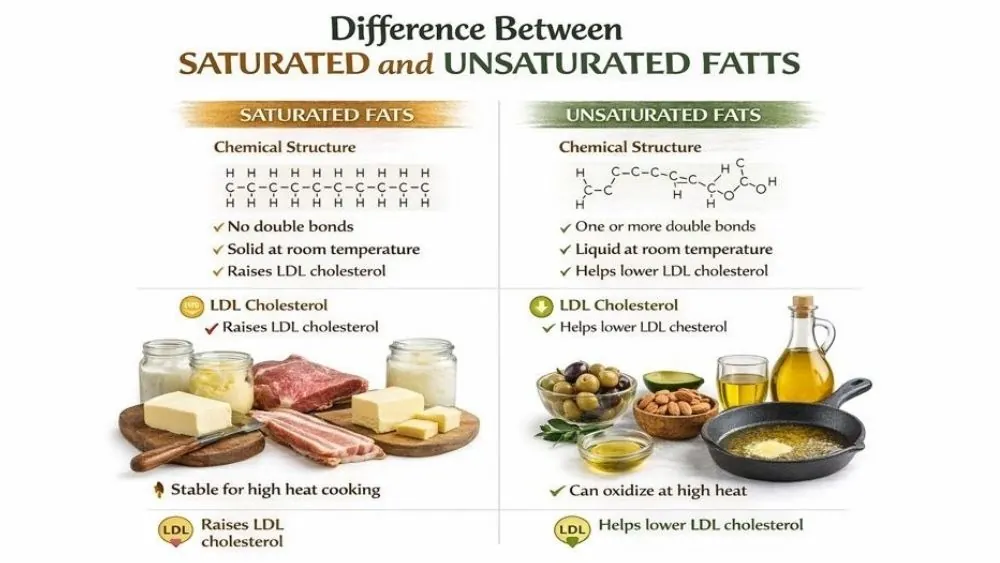
The difference between saturated and unsaturated fats lies in how their molecular structure affects digestion, cholesterol handling, and heat behavior. Saturated fat stays rigid and stable, while unsaturated fat stays flexible, which changes how your liver and cells use them.
Chemical Structure And Bonding
Saturated fat has carbon chains fully packed with hydrogen atoms. There are no double bonds. This tight structure makes the fat rigid and stable. Butter and animal fat show this structure clearly.
Unsaturated fat contains one or more double bonds. These bonds create bends in the carbon chain. Because of these bends, the fat molecules cannot pack tightly.
Tightly packed saturated fat molecules interact differently with liver receptors that control cholesterol production. This is one reason saturated fat raises LDL cholesterol in many people.
Physical State At Room Temperature
Saturated fat stays solid at room temperature. Butter, ghee, and lard keep their shape because of their straight molecular structure.
Unsaturated fat stays liquid. Olive oil, canola oil, and sunflower oil flow freely because their bent structure prevents solid packing.
This physical difference affects food texture, shelf life, and cooking behavior.
How The Body Processes Each Fat
Your digestive system breaks down fats using bile acids from the liver.
- Saturated fat moves more slowly through this process. Saturated fat stimulates higher production of LDL particles in the liver for many individuals.
- Unsaturated fat gets absorbed and used more efficiently. It supports cell membranes and hormone signaling. Some types also improve insulin sensitivity, which helps control blood sugar.
This difference explains why replacing saturated fat with unsaturated fat improves heart markers without reducing total fat intake.
Stability During Cooking
Saturated fat resists heat and oxygen damage. It breaks down slowly during high-heat cooking.
Unsaturated fat is more sensitive to heat. Double bonds react with oxygen and form oxidation products when overheated. These compounds can irritate blood vessels if consumed often. This does not mean unsaturated fat is unsafe. It means heat control matters.
Saturated Fats vs Unsaturated Fats: Health Effects
Saturated fat and unsaturated fat influence heart risk, inflammation, and insulin response in opposite ways. Health outcomes depend more on which fat replaces the other, not on total fat intake alone.
Impact On Heart Health
High intake of saturated fat raises LDL cholesterol in many people. LDL carries cholesterol into artery walls, which increases plaque buildup over time.
Unsaturated fat , especially monounsaturated fat, lowers LDL when it replaces saturated sources. Large population studies confirm this effect across different diets.
Replacing saturated fat with refined carbs does not reduce heart risk. This finding comes from long-term cohort studies published in major cardiology journals.
Effect On Inflammation
Saturated fat can activate inflammatory pathways when eaten in excess. This effect appears stronger in people with obesity or insulin resistance.
Unsaturated fat , especially omega-3 fats, lowers inflammation markers like C-reactive protein. Reduced inflammation supports blood vessel health and joint function. The evidence here is strong, but individual response varies.
Role In Metabolic Health
Diets high in saturated fat may reduce insulin sensitivity in some people. This makes it harder for cells to take in glucose.
Unsaturated fat improves cell membrane flexibility. This helps insulin work better. Clinical trials show better blood sugar control when saturated fat is replaced with unsaturated fat, even without weight loss.
Long-Term Health Risks
Long-term high intake of saturated fat is linked to higher heart disease risk when combined with low fiber intake and a sedentary lifestyle. Unsaturated fat lowers this risk when it replaces saturated fat, not when it adds extra calories.
10 Common Saturated Fat Foods List
A saturated fat foods list helps you identify where intake adds up quietly. Many of these foods combine saturated fat with low fiber, which worsens cholesterol response when eaten often or in large portions.
Palm Oil
Palm oil contains high levels of saturated fat . Food manufacturers use it because it stays stable and resists spoilage. Frequent intake raises total saturated fat exposure quickly.
Cheese
Cheese concentrates milk fat. Hard cheeses contain more saturated fat than soft varieties. Fermented cheese may offer gut benefits, but fat content still matters.
Whipped Cream
Whipped cream is mostly milk fat. Even small servings add significant saturated fat with little fiber or protein.
Hot Chips
Hot chips absorb fat during frying. When cooked in animal fat or palm oil, their saturated fat content increases sharply.
Ice Cream
Ice cream combines sugar and saturated fat , which stresses both cholesterol control and insulin response when eaten often.
Fatty Meats
Fatty cuts of beef and lamb supply dense saturated fat . Lean cuts reduce intake without removing protein or iron.
Desserts
Many desserts rely on butter or cream. These raise saturated fat intake rapidly without adding nutrients.
Whole Milk
Whole milk contains natural saturated fat . Reduced-fat versions lower intake while keeping calcium and protein.
Dark Chocolate
Dark chocolate contains cocoa butter, a source of saturated fat . Moderate portions matter here.
Butter
Butter is almost pure saturated fat . Its heat stability explains its cooking popularity, not its health value.
Saturated vs Unsaturated Fat Cholesterol
Cholesterol response depends on fat type, genetics, and what replaces that fat in your diet. This section focuses on mechanisms that are often missed in surface-level explanations.
Effect Of Saturated Fat On LDL Cholesterol
When you eat saturated fat , your liver reduces LDL receptor activity. LDL receptors act like a cleanup crews that remove cholesterol from the blood. Fewer receptors mean more LDL stays in circulation.
This effect appears even when calories stay the same. This means the rise in LDL is not just about overeating. Not everyone responds equally. Some people are hyper-responders, while others see a smaller rise.
Effect Of Unsaturated Fat On HDL Cholesterol
Unsaturated fat improves cholesterol handling inside the liver. It increases HDL production and improves reverse cholesterol transport, which means cholesterol moves away from arteries and back to the liver for disposal.
Monounsaturated fat shows the strongest effect here. Polyunsaturated fat also helps, but it is more sensitive to oxidation if overheated.
Total Cholesterol Vs Cholesterol Ratios
Total cholesterol alone gives an incomplete picture. Ratios such as LDL to HDL predict risk better. Replacing saturated fat with unsaturated fat improves these ratios even when total cholesterol changes only slightly.
What Research Says About Fat And Cholesterol
Large pooled analyses of cohort studies show lower heart disease rates when saturated fat calories are replaced with unsaturated fat calories. The benefit disappears when replacement comes from refined starch or sugar.
Saturated vs Unsaturated Fat In Cooking
Heat changes fat structure and safety. Saturated fat tolerates high heat better, while unsaturated fat preserves health benefits only when heat exposure stays controlled.
Smoke Points And Heat Stability
Saturated fat tolerates heat well because it lacks reactive double bonds.
Unsaturated fat breaks down faster under high heat. Oxidized fats can irritate blood vessels when eaten often. This does not mean unsaturated oils are unsafe. It means heat control matters.
Best Fats For Frying
Fats with more saturation perform better for short, high-heat cooking. Use moderate temperatures and avoid reusing oil. Reheated oil increases harmful byproducts.
Best Fats For Salads And Cold Use
Cold dishes benefit from unsaturated fat . These fats keep their structure and nutrients when not heated. An unsaturated fat foods list often includes olive oil, nuts, seeds, and avocado.
Common Myths About Dietary Fats
| Myth | Fact |
| All saturated fat is harmful and should be avoided. | Saturated fat is not toxic. Small amounts can fit into a balanced diet. Problems arise when intake stays high for long periods, especially with low fiber intake. |
| Unsaturated fat can be eaten without limits. | Unsaturated fat is healthier, but it still contains calories. Overeating it can lead to weight gain and metabolic issues. |
| Saturated fat always causes heart disease. | Saturated fat raises LDL cholesterol in many people, which increases heart risk over time. Risk depends on total diet, genetics, and lifestyle. |
| Switching to low-fat foods always improves health. | Replacing fat with sugar or refined starch does not improve heart health and may worsen blood sugar control. |
| Cooking oil choice does not matter. | Cooking changes fat structure. Unsaturated fat degrades faster at high heat, while saturated fat stays more stable. |
| Cholesterol in food is the main problem. | For most people, saturated fat affects blood cholesterol more than dietary cholesterol itself. |
| Plant-based fats are always healthy. | Some plant oils like palm oil are high in saturated fat and should still be used in moderation. |
| Butter and olive oil act the same in the body. | Butter is rich in saturated fat and raises LDL more often. Olive oil is rich in unsaturated fat and improves cholesterol balance. |
| You must remove saturated fat completely to be healthy. | Total elimination is unnecessary. Replacing excess saturated fat with unsaturated fat brings better health results. |
| All fats cause inflammation. | Excess saturated fat can raise inflammation markers, while unsaturated fat, especially omega-3s, can lower inflammation. |
How To Replace Saturated Fat With Healthier Fats
Replacing saturated fat works best when you swap it with unsaturated fat, not refined carbs. Small, consistent changes improve cholesterol, inflammation, and insulin response over time.
Simple Food Swaps
Use oils instead of butter when possible. Choose fish or legumes instead of fatty meats. These changes lower saturated fat intake without reducing nutrition.
Reading Nutrition Labels
The labels list grams of saturated fat clearly. Understanding the difference between saturated and unsaturated fats helps you judge quality, not just quantity.
Choosing The Right Cooking Oils
Match oil to heat level. Stable oils for heat. Delicate oils for cold use. An unsaturated fat foods list helps guide these choices.
Who Should Limit Saturated Fat Intake
People with heart disease, high cholesterol, or insulin resistance respond more strongly to saturated fat. For these groups, reduction brings measurable improvements in blood markers.
People With Heart Disease
Lowering saturated fat helps control LDL levels and slows plaque progression.
Individuals With High Cholesterol
These individuals often respond strongly to saturated sources. Replacement with unsaturated fat improves lipid profiles.
People With Diabetes Or Metabolic Syndrome
High saturated fat intake worsens insulin resistance in this group. Evidence here is consistent across clinical trials.
FAQs
What Is The Main Difference Between Saturated And Unsaturated Fat?
The difference between saturated and unsaturated fats lies in chemical bonds. Saturated fat has no double bonds and raises LDL more often. Unsaturated fat has double bonds and improves cholesterol balance.
Is Saturated Fat Worse Than Unsaturated Fat?
Yes, when eaten in excess. Unsaturated fat shows better heart outcomes when it replaces saturated fat, not when it adds extra calories.
Which Fat Raises Cholesterol The Most?
Saturated fat raises LDL cholesterol more than unsaturated types in most people, especially when fiber intake stays low.
Can Saturated Fat Be Eaten In Moderation?
Yes. Small amounts of saturated fat fit into a balanced diet that includes fiber, vegetables, and unsaturated fats.
Are Unsaturated Fats Always Healthy?
They are healthier replacements, not unlimited foods. Too much unsaturated fat still adds excess calories.
What Foods Contain Only Unsaturated Fats?
Most plant oils, nuts, seeds, flaxseed ,and fish dominate an unsaturated fat foods list , though trace saturated fat still exist.
Which Fats Are Best For Heart Health?
Monounsaturated and omega-3-rich unsaturated fat types show the strongest evidence for heart protection.
How Much Saturated Fat Is Too Much Per Day?
Most guidelines suggest keeping saturated fat under ten percent of daily calories. Needs vary by health status.
Does Cooking Change Fat Quality?
Yes. Heat damages unsaturated fat faster than saturated types, especially during frying.
Should Saturated Fat Be Completely Avoided?
No. The goal is balance. Replace excess saturated fat with unsaturated sources instead of refined carbohydrates.