
Pain under the left rib cage can come from muscles, digestion, blood flow, or organs that play a critical role in survival. This area protects the stomach, spleen, pancreas, left kidney, and part of the heart and lung, which is why pain here deserves attention.
In many people, the pain starts from muscle strain or stomach pain , but in some cases it signals inflammation, infection, or reduced oxygen supply to an organ. The pattern of pain, how it feels, when it starts, and what makes it worse often matters more than the exact spot.
Common Causes of Left-Sided Rib Pain
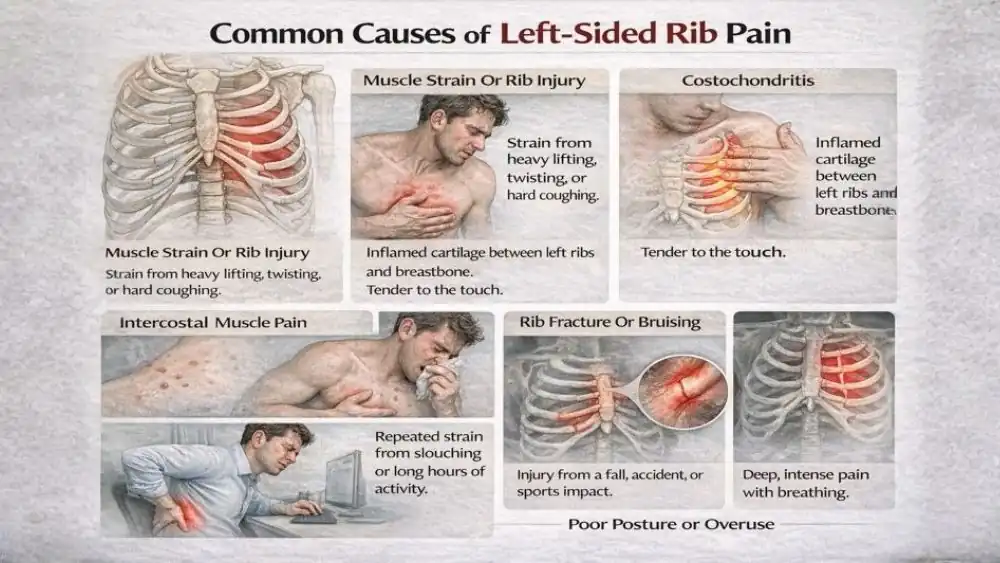
Muscle strain, cartilage inflammation, rib bruising, and posture stress account for a large share of left-sided rib pain seen in clinics. These causes often worsen with movement and improve with rest, which helps doctors separate them from organ-related pain.
Muscle Strain Or Rib Injury
Muscle strain is one of the most frequent reasons for pain under the left rib cage . You strain these muscles when you lift heavy objects, twist fast, or cough hard for days. The pain feels sharp when you move. It eases when you stay still. Strained intercostal muscles heal within two to four weeks if you rest. Imaging tests usually look normal.
Costochondritis
Costochondritis means swelling of the cartilage that links the ribs to the breastbone. It causes localized tenderness. Pressing the area increases pain. The pain can spread under the left ribs and mimic heart pain. Pain improves with time and anti-inflammatory care. It does not damage the heart.
Intercostal Muscle Pain
Intercostal muscles sit between the ribs and help you breathe. Overstretching them causes stabbing pain. Sneezing or laughing worsens it. This explains many cases of pain under the left rib cage after sudden movement. Doctors diagnose it by exam, not scans.
Rib Fracture Or Bruising
A fall, sports hit, or car crash can bruise or crack a rib. Even small fractures cause severe pain with breathing. X-rays may miss early fractures. Healing takes six weeks or more. This injury is among the common causes of left-sided rib pain after trauma.
Poor Posture Or Overuse
Slouching pulls on the rib muscles all day. Long desk hours cause tightness and pain. Overuse from rowing, swimming, or weight training does the same. Physical therapy studies show posture correction reduces repeat pain under the left rib cage .
12 Causes Pain Under Left Rib Cage
Pain under the left rib cage can come from digestive organs, lungs, kidneys, heart, or the spleen. The cause depends on timing, triggers like meals or breathing, and added symptoms such as fever, nausea, or shortness of breath. Multiple causes can overlap, making careful evaluation important.
Digestive Issues
Gas trapped in the left colon stretches the bowel wall. This causes sudden pressure pain. It often improves after passing gas or a bowel movement. Gas pockets near the splenic flexure cause sharp pain under the left ribs.
Gastritis
Gastritis means stomach lining irritation. Alcohol, stress, and pain medicines raise the risk. The pain feels burning or gnawing. Many people report pain in the left rib cage after eating , especially spicy or acidic foods. Treatment focuses on acid reduction and diet changes.
GERD (Acid Reflux)
GERD causes stomach acid to flow back into the esophagus. Pain may rise into the chest or sit under the left ribs. Lying down worsens it. Large meals increase symptoms. This explains another group with pain under the left rib cage after eating .
IBS And IBD
IBS causes bowel spasms linked to stress. IBD causes bowel inflammation with ulcers. Both can cause left-sided pain. IBD inflammation often affects the left colon and improves after bowel movements.
Pancreatitis
Pancreatitis is pancreas swelling. It causes deep pain under the left ribs that spreads to the back. Eating worsens pain because digestion activates the pancreas. Blood tests show high enzyme levels. Alcohol and gallstones cause most cases.
Kidney Stones Or Kidney Infection
Left kidney problems cause flank pain that reaches the ribs. Stones cause wave-like pain with nausea. Infection adds fever and burning urine. Ultrasound and CT scans confirm the diagnosis. Kidney issues remain key causes of pain under the left rib cage that doctors must rule out.
Lung-Related Causes
Lung problems often cause pain with breathing. The pain sits under the ribs because the lungs expand against the rib cage.
Pleurisy
Pleurisy is inflammation of the lung lining. Viral infections cause most cases. Pain feels sharp and worsens with deep breaths. Medical imaging often shows no lung damage. The inflammation explains the pain under the left rib cage during breathing.
Pneumonia
Pneumonia causes fever, cough, and chest pain. Lower lung infections irritate the diaphragm. This causes pain under the ribs. Left lower lobe pneumonia often presents with upper abdominal pain, not chest pain.
Cardiovascular Causes
Heart-related pain can feel misleading. It may not sit in the chest center.
Angina
Angina occurs when the heart muscle lacks oxygen. Pain feels like pressure. It may spread to the left ribs, arm, or jaw. Exercise triggers it, and rest relieves it. Cardiology research shows risk rises with diabetes and smoking.
Heart Attack (Referred Pain)
A heart attack may cause pain in the left ribs instead of the chest. Nausea, sweating, and shortness of breath often join. Delayed care happens when pain feels atypical. Any sudden pain under the left rib cage with these signs needs urgent care.
Spleen Pain Under Left Rib Cage
The spleen sits directly under the left ribs and is vulnerable to swelling and injury. When the spleen enlarges or loses blood supply, pain tends to feel deep and constant rather than sharp. Trauma-related spleen injury is serious because it can cause internal bleeding without obvious external signs.
Enlarged Spleen (Splenomegaly)
Infections like mono enlarge the spleen. Blood disorders also cause swelling. The enlarged organ presses against the ribs. This causes dull pain and fullness. Ultrasound studies confirm size increase. Doctors advise avoiding contact sports because rupture risk rises.
Splenic Infarction
Splenic infarction means tissue death from blocked blood flow. Blood clots cause it. Pain starts suddenly and stays severe. Fever may occur. CT imaging confirms the diagnosis. Evidence is limited because this condition is rare, but case reports support these findings.
Spleen Rupture (Medical Emergency)
Trauma can tear the spleen. Pain becomes intense and may radiate to the left shoulder. Internal bleeding follows. Emergency surgery saves lives; even minor accidents can rupture an enlarged spleen. This is the most dangerous spleen pain under the left rib cage .
Infections Affecting The Spleen
Chronic infections inflame the spleen. Malaria and bacterial infections do this. Pain develops slowly. Fatigue and fever often appear. Blood tests guide diagnosis.
Symptoms That Help Identify The Cause
Sharp pain usually points to muscles or lungs, while dull or pressure-like pain suggests organ involvement. Symptoms such as fever, pain with breathing, or pain spreading to the shoulder help narrow the diagnosis quickly.
Sharp Vs Dull Pain
Sharp pain suggests muscle strain, pleurisy, or kidney stones. Dull pain points to spleen or stomach issues. Pain quality helps narrow the causes of pain under the left rib cage .
Pain With Breathing Or Movement
Pain that worsens with breathing suggests lung or rib problems. Pain with twisting suggests muscle strain. These clues guide imaging choices.
Pain With Fever
Fever signals infection. Pneumonia, kidney infection, and splenic infections cause this pattern. Fever plus pain under the left rib cage needs medical review.
Pain Radiating To Back Or Shoulder
Pain spreading to the back suggests pancreatic issues. Shoulder pain suggests spleen irritation or rupture. These patterns appear in emergency medicine studies.
How Can I Treat Pain In My Left Ribs?
Treatment always depends on the cause. Some cases of pain under the left rib cage improve with basic care at home. Others need medical treatment. Doctors focus on easing pain, fixing the root problem, and preventing repeat episodes. You should never treat severe or unexplained pain on your own.
Rest And Activity Modification
Rest is the first step for muscle-related pain under the left rib cage . Strained muscles and irritated cartilage heal only when stress stops. Avoid heavy lifting, twisting, and high-impact exercise. Light walking is usually safe. Sports medicine research shows that early rest shortens recovery time and lowers reinjury risk.
Pain Relief Medications
Doctors usually prescribe pain relievers based on the cause. Anti-inflammatory medicines help with muscle strain and costochondritis. They reduce swelling, not just pain. For stomach-related causes, doctors often avoid strong pain pills because they irritate the stomach lining. Dosage varies by age, weight, and health condition. You should never exceed medical advice.
Heat Or Cold Therapy
Cold packs help during the first two days after injury. They reduce swelling and nerve irritation. Heat works better for tight muscles and poor posture. Physical therapy studies support alternating heat and cold for rib muscle pain. This approach helps many people with common causes of left-sided rib pain .
Dietary Changes
Diet matters when digestion triggers pain. Smaller meals reduce stomach pressure. Avoid spicy foods, alcohol, and acidic drinks. These changes help people with gastritis and acid reflux. Many patients notice less pain under the left rib cage after eating within days of dietary adjustment.
Breathing And Posture Exercises
Shallow breathing stiffens rib muscles. Gentle deep breathing keeps the ribs flexible. Posture exercises reduce strain from long sitting hours. Posture correction lowers repeat episodes of pain under the left rib cage linked to overuse.
When Pain Under Left Rib Cage Is An Emergency
Certain pain patterns signal immediate danger. Sudden severe pain, breathing difficulty, chest pressure, or pain after injury can indicate heart, lung, or spleen emergencies. Delayed care in these cases raises the risk of serious complications.
Sudden Severe Pain
Sudden intense pain under the left rib cage raises concern for organ rupture or blocked blood flow. Spleen rupture and splenic infarction fall in this group. Emergency imaging confirms the diagnosis.
Pain With Shortness Of Breath
Breathing difficulty with pain suggests lung or heart involvement. Pulmonary embolism, pneumonia, or a heart attack can present this way, and early treatment improves survival.
Pain With Chest Tightness
Chest tightness with left-sided rib pain may indicate heart ischemia. This includes angina or a heart attack. Symptoms may include sweating, nausea, or dizziness. Immediate medical care is critical.
Pain After Trauma Or Injury
Pain after a fall, sports injury, or accident may signal a rib fracture or internal bleeding. Even mild trauma can rupture an enlarged spleen. This form of spleen pain under the left rib cage needs urgent care.
Diagnosis Of Pain Under Left Rib Cage
Doctors use a combination of physical exam, blood tests, and imaging to find the cause. Imaging helps identify fractures, infections, or organ damage, while blood tests reveal inflammation or infection. Heart testing is essential when symptoms overlap with cardiac pain.
Medical History And Physical Exam
Doctors ask when the pain started, what worsens it, and what relieves it. They examine breathing, posture, and tenderness. This step often narrows the causes of pain under the left rib cage before tests begin.
Blood Tests
Blood tests detect infection, inflammation, and organ injury. Elevated white cells suggest infection. High pancreatic enzymes suggest pancreatitis. Blood tests are essential for unexplained pain under the left rib cage .
Imaging Tests (X-Ray, CT, Ultrasound)
X-rays detect fractures and pneumonia. Ultrasound checks the spleen and kidney size. CT scans give detailed views of organs and blood flow. CT is often used when doctors suspect splenic infarction or pancreatitis.
ECG And Cardiac Evaluation
Heart testing is critical when the pain location raises concern. ECG checks the heart rhythm and oxygen supply. Cardiac enzymes confirm heart muscle injury. Cardiology guidelines stress ruling out heart causes in left-sided pain cases.
When To See A Doctor
Pain that lasts, worsens, or keeps returning should not be ignored. Fever, vomiting, spreading pain, or pain after eating repeatedly may signal organ problems. Early evaluation helps prevent complications and avoid unnecessary anxiety.
Pain Lasting More Than A Few Days
Muscle strain improves within days. Pain that persists may indicate organ issues. Ongoing pain under the left rib cage needs medical review.
Worsening Or Spreading Pain
Pain that spreads to the back, shoulder, or chest suggests deeper problems. Pancreatic and splenic conditions often behave this way.
Pain With Fever Or Vomiting
Fever signals infection. Vomiting suggests digestive or pancreatic issues. Together with rib pain, these signs need prompt evaluation.
Recurrent Unexplained Pain
Repeated pain episodes without a clear cause require testing. Doctors look for chronic digestive disease, spleen disorders, or kidney stones.
FAQs
What Organ Causes Pain Under The Left Rib Cage?
Several organs can cause pain under the left rib cage , including the stomach, spleen, pancreas, left kidney, heart, and left lung. The cause depends on pain timing, triggers, and associated symptoms.
Can Gas Cause Pain Under The Left Ribs?
Yes, trapped gas in the left colon can stretch the bowel wall and cause sharp pressure pain. This is one of the most overlooked common causes of left-sided rib pain , and it often improves after bowel movement.
Is Spleen Pain Always Serious?
Not always. Mild spleen pain under the left rib cage can occur with infections that enlarge the spleen. However, sudden or severe pain raises concern for rupture and needs emergency care.
Can Left Rib Pain Be Heart-Related?
Yes, heart problems can cause referred pain under the left ribs. This includes angina and a heart attack. Any pain under the left rib cage with chest tightness or shortness of breath should be checked urgently.
Why Does Pain Worsen After Eating?
Eating activates the stomach and pancreas. Conditions like gastritis, GERD, and pancreatitis often cause pain under the left rib cage after eating because digestion increases acid and enzyme release.
Can Muscle Strain Cause Rib Cage Pain?
Yes, muscle strain is one of the most frequent causes of pain under the left rib cage . It often follows lifting, coughing, or sudden twisting, and it worsens with movement.
How Long Does Rib Muscle Pain Last?
Most rib muscle pain improves within two to four weeks with rest and activity modification. Persistent pain under the left rib cage beyond this period should be evaluated by a doctor.
Is Left Rib Pain Common With Anxiety?
Anxiety can tighten chest and rib muscles. This tension can cause aching or sharp pain. While harmless, anxiety-related pain still needs evaluation to rule out physical causes.
Can Kidney Stones Cause Pain Under the Left Ribs?
Yes, left kidney stones can cause sharp pain that travels from the back to under the ribs. Nausea and blood in urine often occur with this type of pain under the left rib cage .
When Should I Go To The ER For Left Rib Pain?
You should go to the ER if pain under the left rib cage is sudden, severe, linked to breathing trouble, chest tightness, fever, or follows an injury. Early care can prevent serious complications.
This article is for informational purposes only and does not substitute professional medical advice, diagnosis, or treatment. Always consult a licensed healthcare provider about your symptoms.