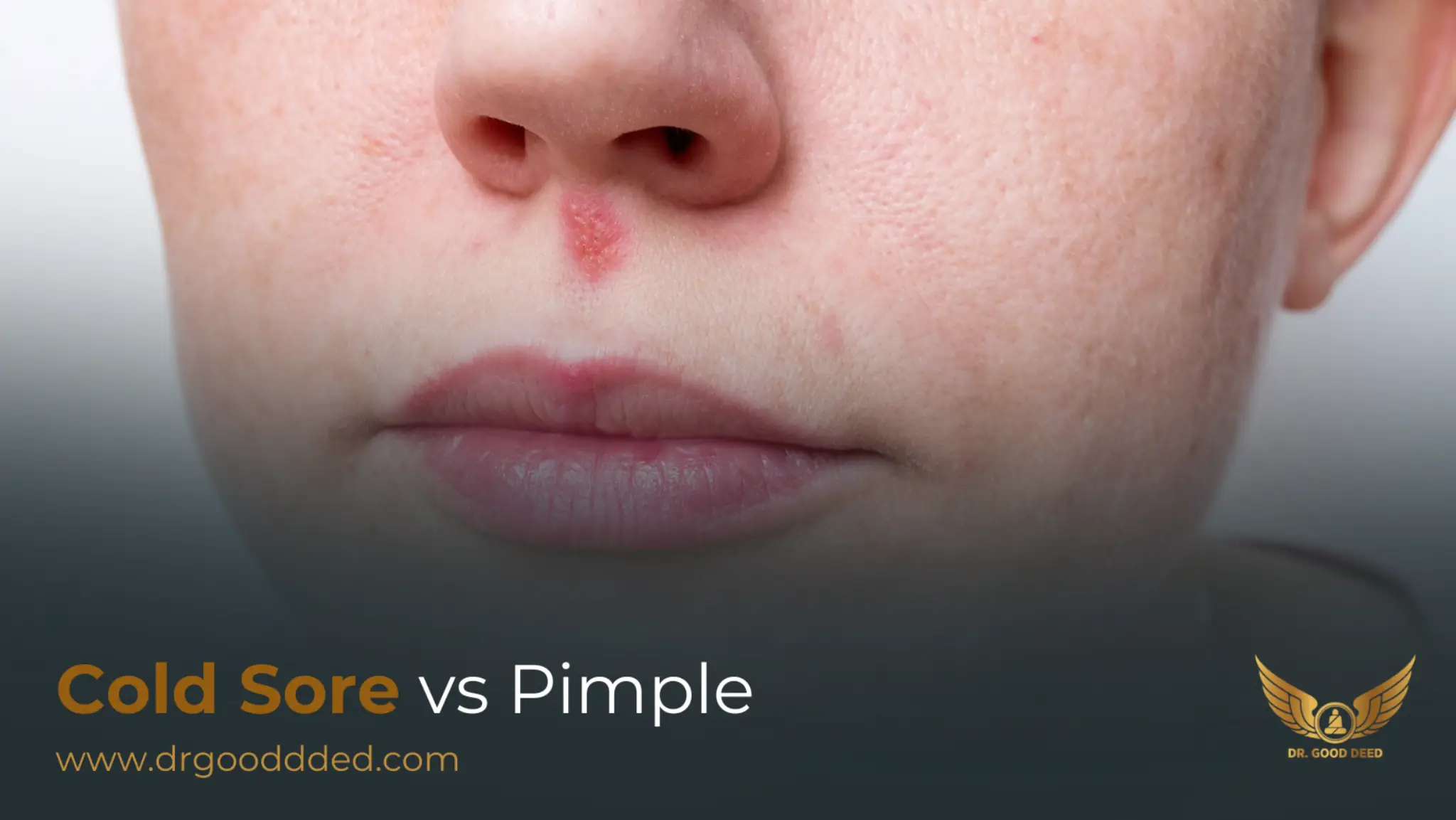

A pimple forms when a skin pore gets blocked with oil and dead skin, leading to a local bump that stays limited to the surface and heals once inflammation settles. It does not spread and does not stay in your body after healing.
A cold sore , however, comes from herpes simplex virus type 1, which stays in your body for life after the first infection. There is no permanent cure because the virus hides in nerve cells and can reactivate during stress, illness, sun exposure, or immune weakness. Treatment can shorten outbreaks and reduce pain, but it cannot remove the virus completely.
Difference Between Cold Sore and Pimple
The difference between cold sore and pimple starts with the cause and ends with how you treat it. If you confuse them, you may use the wrong product and make the problem worse.
Viral vs Bacterial Origin
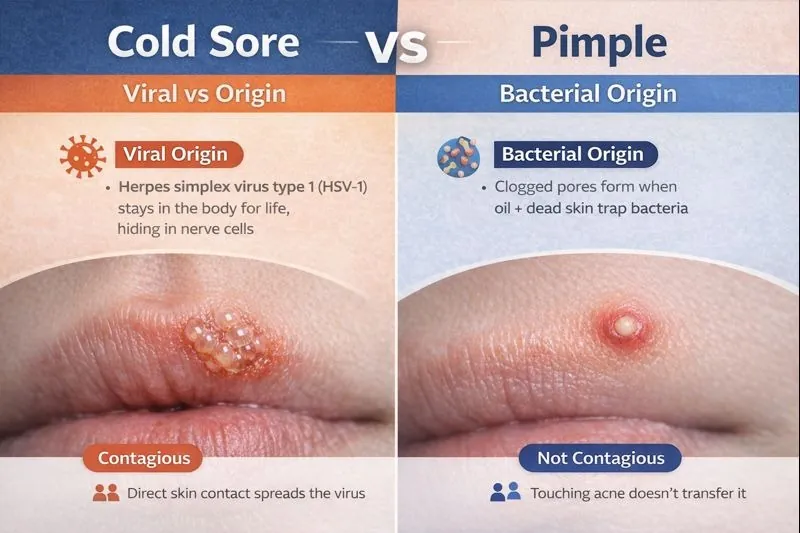
A cold sore forms because of herpes simplex virus type 1, also called HSV-1. This virus enters your body once and stays for life. It hides in nerve cells and becomes active during certain triggers. HSV-1 reactivates when the immune system weakens or skin barriers break.
A pimple forms when oil, dead skin, and bacteria block a pore. The bacteria involved are part of normal skin flora. They only cause trouble when trapped. This is why acne stays limited to the skin and does not move along nerves.
This origin difference explains why antivirals help a cold sore but do nothing for a pimple .
Contagious vs Non-Contagious
A cold sore is contagious. Direct skin contact spreads the virus. Saliva also spreads it. HSV-1 spreads most during the blister and oozing stages, but it can spread even when the skin looks normal.
A pimple is not contagious. Touching another person’s acne does not transfer it. You cannot catch acne from kissing or sharing utensils. This is a key safety point when lesions appear near the mouth.
Location on the Lips or Face
A cold sore usually appears on the border of the lips, just outside the mouth. It may also show under the nose or at the corner of the mouth. These areas connect closely to sensory nerves where HSV-1 stays dormant.
A pimple can appear on the lip line, cheeks, chin, or jaw. Pimples form where pores exist. The inner lip has no pores, so acne does not form there. This location clue often helps you decide fast.
Cold Sore vs Pimple Symptoms
Symptoms often show before you see a visible mark. Paying attention early reduces pain and spread.
Tingling and Burning Sensation
One of the earliest symptoms of a cold sore is tingling. You may feel itching or burning for hours or even a day before anything appears. This nerve-based sensation is a reliable early warning sign.
A pimple rarely causes tingling before it appears. You may notice mild tenderness only after swelling begins. If you feel a strong burning before a bump forms, it’s viral rather than acne.
Redness, Swelling, and Blisters
A cold sore begins as redness and swelling. Small fluid-filled blisters then appear in a cluster. These blisters break open and release clear or yellowish fluid.
The symptoms of a pimple include a single red bump. It may develop a white or yellow center filled with pus. The surface stays firm rather than blistered. Pimples do not release clear fluid unless squeezed. This blister pattern is one of the clearest visual differences.
Pain Level and Sensitivity
A cold sore often feels painful even without touch. Eating, talking, or smiling can hurt. The skin may feel raw or tight.
A pimple usually hurts only when pressed. The pain stays localized. Daily activities cause less discomfort unless the pimple is deep or infected.
Causes of Pimples and Cold Sores
Understanding causes helps you prevent repeat episodes rather than only treating the surface.
Causes of Cold Sores (HSV-1)
The causes of cold sores link directly to HSV-1 infection. Most people catch the virus in childhood through casual contact. Many carriers never recall their first exposure.
Triggers wake the virus, including fever, sun exposure, emotional stress, illness, and immune suppression. The virus travels along nerves to the skin and causes a cold sore outbreak. This nerve travel explains why outbreaks often return to the same spot.
Causes of Pimples (Clogged Pores)
The causes of pimples involve blocked pores. Oil production increases, dead skin cells stick together, and bacteria multiply inside the pore. Hormonal shifts during puberty, menstrual cycles, or stress raise oil levels.
External factors also matter. Heavy lip products, frequent face touching, and poor cleansing block pores near the mouth. Unlike viral lesions, pimples depend heavily on surface skin conditions.
Triggers Like Stress and Hormones
Stress affects both problems, but in different ways. Stress hormones weaken immune control over HSV-1, raising cold sore risk. For acne, stress increases oil production and inflammation, leading to more pimple formation.
Hormones strongly influence acne. Androgens increase oil gland activity. Hormones do not cause HSV-1 infection, but they can act as triggers once the virus is present.
By understanding the difference between a cold sore and a pimple at the cause level, you avoid wrong assumptions and poor care choices.
How Cold Sores Develop (Stages)
A cold sore does not appear all at once. It follows clear stages linked to viral activity in nerves and skin. Knowing these stages helps you act early and reduce pain, spread, and healing time.
Tingling Stage
This stage begins before anything shows on the skin. You may feel itching, burning, or tightness in one exact spot. These early symptoms of a cold sore happen because the virus travels from nerve cells to the skin. Antiviral creams work best at this point. Once blisters appear, treatment becomes less effective.
Blister and Oozing Stage
Small fluid-filled blisters appear next. They often cluster together. These blisters break open and release virus-rich fluid. This is the most contagious stage of a cold sore . Touching the area and then touching your eyes or genitals can spread infection. Hygiene matters most here.
Crusting and Healing Stage
The open sores dry out and form scabs. The skin feels tight and cracks easily. New skin grows underneath. Picking scabs delays healing and raises scar risk. Most cold sores heal fully once this stage ends.
How Pimples Form
A pimple forms gradually as oil production increases and pores clog, creating an environment where bacteria trigger inflammation. Hormones, skin friction, and product buildup often influence severity and location.
Whiteheads and Blackheads
Whiteheads form when pores stay closed. Oil and dead skin stay trapped inside. Blackheads form when pores open and the trapped oil reacts with air. Both are non-inflammatory acne types and early signs of blocked pores.
Inflammatory Pimples
When bacteria grow inside a blocked pore, the body sends immune cells. This causes redness, swelling, warmth, and pain. These pimples may contain pus. Deep inflammatory acne heals slowly and often leaves marks.
Hormonal and Lifestyle Factors
Hormones increase oil production, which raises pimple risk. Stress, poor sleep, greasy cosmetics, and frequent face touching also play a role. These factors explain why acne often appears around the mouth and chin.
How Are Cold Sores Treated
Pimple care targets oil control, pore clearing, and inflammation reduction. Treatment success depends on consistency, skin sensitivity, and avoiding habits that worsen blockage or irritation.
Antiviral Medications
Doctors usually prescribe antiviral creams or pills. These medications slow virus replication. They do not remove the virus from your body. Early use shortens outbreak duration and reduces pain. Dosage varies by age and health status.
At-Home Remedies
Cold compresses reduce swelling and numb pain. Lip balms protect cracked skin. Keeping the area clean lowers secondary infection risk. Evidence for herbal remedies is limited, and results vary.
What Not to Do
Never pop a cold sore . Avoid kissing, oral contact, or sharing items during outbreaks. Do not apply acne products to viral sores. These actions worsen irritation and delay healing.
How Are Pimples Treated
Pimple care targets oil control, pore clearing, and inflammation reduction. Treatment success depends on consistency, skin sensitivity, and avoiding habits that worsen blockage or irritation.
Topical Acne Treatments
Over-the-counter products with benzoyl peroxide reduce bacteria. Salicylic acid clears blocked pores. Use small amounts to avoid irritation, especially near the lips.
Home Care and Hygiene
Wash your face twice daily with a mild cleanser. Keep lip products clean. Avoid touching pimples. Clean pillowcases and phone screens often.
When Medical Treatment Is Needed
Large, painful, or recurring pimples may need prescription treatment. Signs of infection include spreading redness, warmth, and fever. Medical care helps prevent scarring.
Cold Sore vs Pimple Healing Time
Healing time differs because viral lesions depend on immune response, while pimples heal as inflammation resolves. Picking, stress, and poor sleep slow recovery for both conditions.
How Long Cold Sores Last
A cold sore usually lasts seven to ten days. Early antivirals may shorten this. Stress, illness, and sun exposure can extend healing.
How Long Pimples Take to Heal
A small pimple heals in three to seven days. Deep or inflamed acne can last weeks. Picking adds healing time and scar risk.
Factors That Delay Healing
Poor sleep, smoking, dehydration, and repeated touching slow skin repair. Using the wrong product also delays healing. This shows why knowing the difference between a cold sore and a pimple matters.
How to Prevent Cold Sores and Pimples
Prevention relies on trigger control for viral outbreaks and daily skin hygiene for acne. Lifestyle habits like sleep, stress control, and sun protection affect both conditions.
Preventing Cold Sore Outbreaks
Avoid known triggers like excessive sun or severe stress. Use lip sunscreen. Start antivirals at early tingling signs if prescribed. These steps reduce outbreak frequency but do not eliminate the virus.
Skincare Habits to Prevent Pimples
Clean skin gently. Avoid heavy oils near the lips. Remove makeup before sleep. Consistent care lowers pimple formation over time.
Lifestyle and Immune Support
Adequate sleep supports immune control over HSV-1. Balanced nutrition helps skin repair. Evidence on supplements remains limited and inconsistent.
When to See a Doctor
Medical care becomes important when symptoms are severe, recurrent, infected, or slow to heal. Early evaluation helps rule out complications and prevents long-term skin damage.
Recurrent or Severe Cold Sores
Frequent outbreaks or severe pain need medical advice. Eye involvement needs urgent care due to vision risk.
Painful or Infected Pimples
Signs of infection include swelling beyond the pimple, fever, or pus drainage. These require medical treatment.
Symptoms That Don’t Improve
Lesions that do not heal within the expected time need evaluation. Persistent sores may signal other skin conditions.
FAQs
How can I tell if it’s a cold sore or a pimple?
A cold sore often starts with tingling and forms clustered blisters near the lip edge. A pimple forms as a solid red bump linked to clogged pores, without early burning.
Are cold sores more serious than pimples?
A cold sore carries a viral infection risk and spreads to others. A pimple stays local. Serious outcomes remain rare, but viral sores need more caution.
Can a pimple appear on the lip line?
Yes. A pimple can form where pores exist, including the lip border. The inner lip lacks pores, so acne does not form there.
Do cold sores always start with tingling?
Most outbreaks begin with tingling, burning, or itching. Some skip early signs, but nerve-related discomfort is common before blisters appear.
Can stress cause cold sores and pimples?
Stress weakens immune control over HSV-1, triggering cold sore outbreaks. Stress hormones also increase oil production, raising pimple risk.
Is it safe to pop a cold sore or pimple?
Never pop a cold sore due to spread risk. Popping a pimple increases infection and scarring. Gentle care heals faster.
How long does a cold sore usually last?
A cold sore usually heals within ten days. Early antivirals may shorten duration. Healing varies with immune strength.
How long does a pimple take to heal?
A mild pimple heals in under a week. Deep acne lasts longer, especially if irritated or picked.
Can cold sores spread to other body parts?
Yes. Touching a cold sore and then another area can spread the virus. Hand washing lowers this risk.
When should I see a doctor for lip sores?
See a doctor if pain worsens, sores last beyond the expected time, or new symptoms appear. Early care prevents complications.