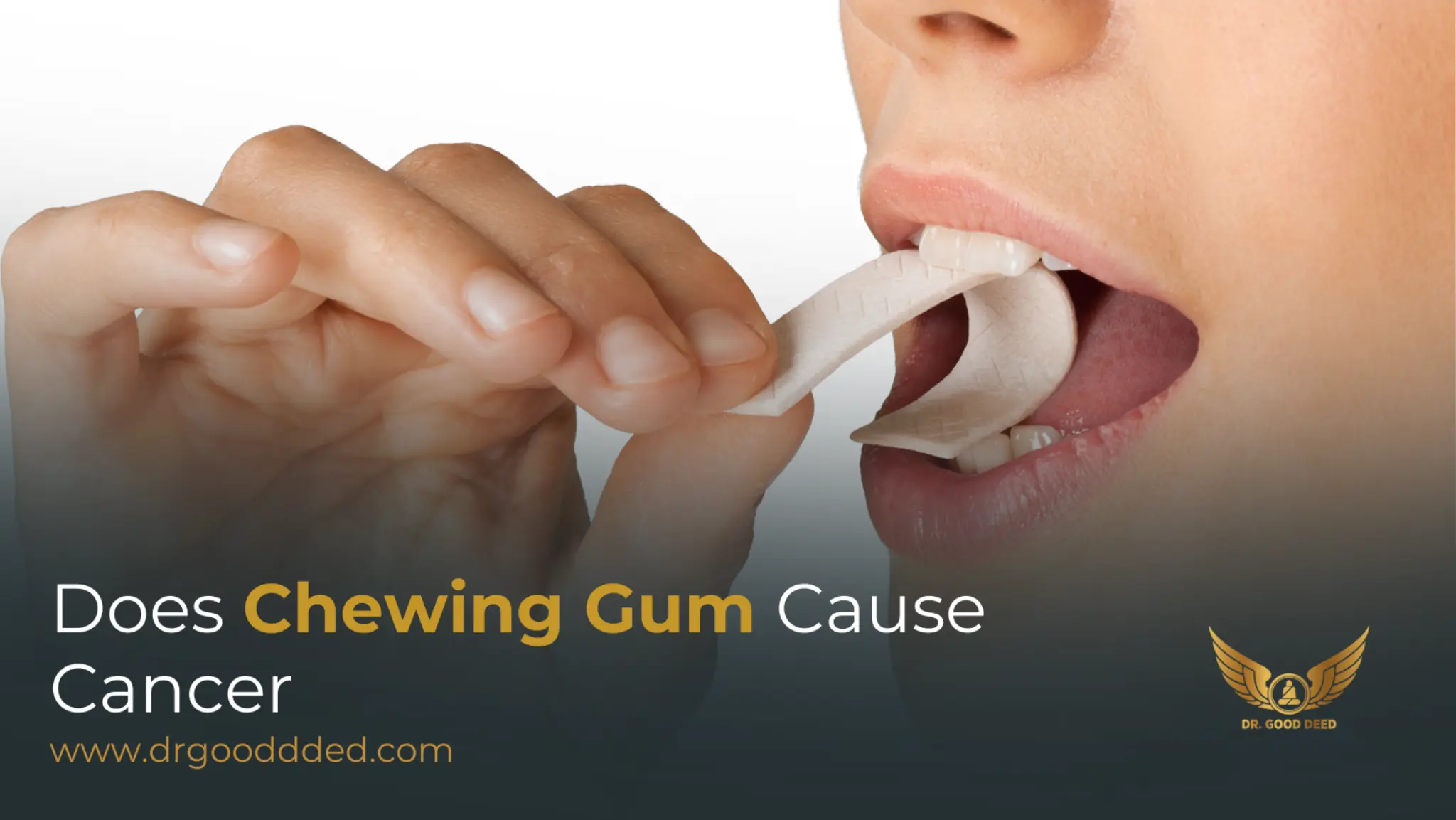

No, chewing gum does not cause cancer when used in normal amounts. Long-term studies that tracked artificial sweeteners, flavoring agents, and gum base materials have not shown a consistent rise in cancer rates tied to chewing gum. Real risks from chewing gum relate to jaw strain, digestive upset, and dental issues when overused, not to cancer development.
The concern mostly comes from animal research using doses far higher than real-life exposure and from misunderstanding how food safety limits work.
Chewing Gum Side Effects
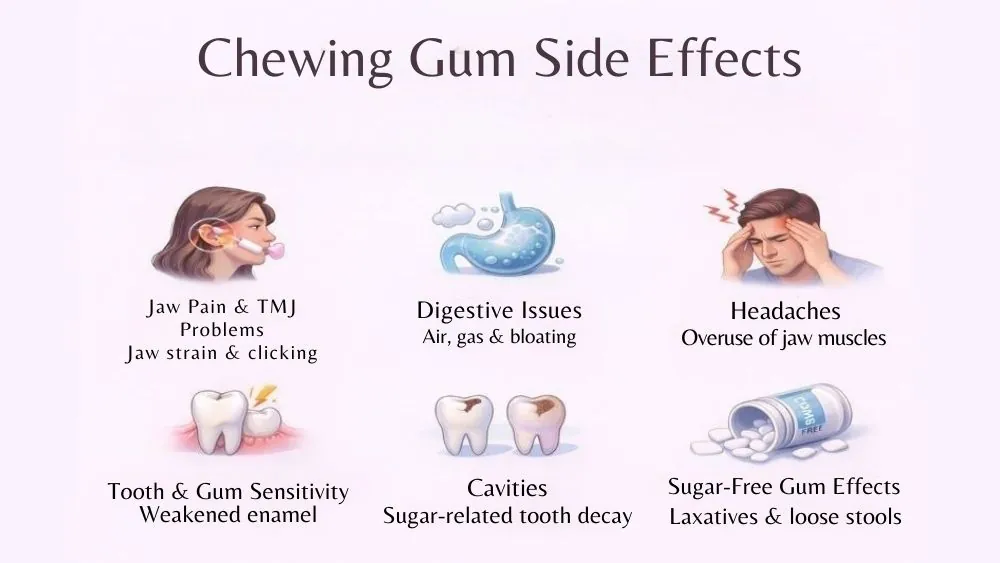
Chewing gum affects your body in practical ways. These effects are real, but they are often confused with serious disease. Understanding the side effects of chewing gum helps you judge risk correctly and avoid unnecessary fear that chewing gum causes cancer .
Jaw Pain and TMJ Problems
Your jaw works every time you chew. Gum keeps it moving for long periods without rest. This can strain the temporomandibular joint, also called TMJ, which connects your jaw to your skull. When stressed, this joint may click, ache, or feel stiff.
You notice pain behind the ear or headaches that spread to the temples. Repetitive chewing can worsen TMJ symptoms in people already prone to joint issues. This problem involves muscle fatigue and joint stress. It has no proven link to cancer.
Digestive Issues and Bloating
Chewing gum increases swallowing. Along with saliva, you swallow air. Extra air travels to your stomach and intestines, causing pressure and bloating. Sugar-free gum adds another factor. Many products contain sugar alcohols like sorbitol. These pull water into the gut and may cause loose stools when eaten in large amounts.
This is an osmotic effect, meaning fluid shifts inside the intestines. These digestive reactions explain discomfort, but chewing gum does not cause cancer .
Headaches From Excessive Chewing
Chewing activates muscles that connect to your head and neck. When these muscles stay active for hours, tension builds. This tension can trigger headaches, especially in people who already clench their teeth. These headaches behave like tension-type headaches, not brain-related diseases. Reducing chewing time often resolves symptoms without treatment.
Tooth and Gum Sensitivity
Sugary gum feeds mouth bacteria. These bacteria produce acid that weakens enamel. Over time, teeth become sensitive to cold or sweet foods. Gums may feel sore or inflamed. Dentists point out that this damage results from sugar exposure, not toxicity. Sugar-free gum avoids this issue and may even help protect teeth.
Sugar-Free Gums Contain Laxatives
Sugar-free gum often includes sorbitol, mannitol, or xylitol. These are sugar alcohols. In high amounts, they act like mild laxatives. People who chewed many sticks daily developed chronic diarrhea. Once gum intake stopped, symptoms improved. This reaction involves digestion, not cancer risk. It is one of the more misunderstood side effects of chewing gum .
Cavities
Cavities develop when acid breaks down tooth enamel. Regular gum with sugar increases this risk. Sugar-free gum reduces it by raising saliva flow. Cavities affect oral health but do not connect to cancer development.
Chewing Gum Myths and Facts
| Myth | Fact |
| Chewing gum stays in your stomach for years | Gum is not digested, but it moves through your digestive system and exits within days, just like other non-digestible items. |
| Does chewing gum cause cancer because it contains chemicals | Current human evidence does not show that chewing gum causes cancer when used in normal amounts. Ingredient safety depends on dose, not fear. |
| Sugar-free gum is more dangerous than regular gum | Sugar-free gum is often safer for teeth and does not show a higher cancer risk compared to sugary gum. |
| Artificial sweeteners in chewing gum always cause cancer | Large human studies do not confirm a direct cancer link at real-life intake levels. Dose matters more than presence. |
| All chewing gum is toxic | Approved gum ingredients fall within strict safety limits set after long-term testing. Toxicity claims ignore exposure levels. |
| Swallowing gum damages the stomach | Swallowed gum may cause temporary discomfort but does not injure the stomach lining or cause disease. |
| Chewing gum ruins gut health permanently | Digestive symptoms usually occur only with heavy use and stop after reducing intake. No lasting gut damage is shown. |
| Natural or organic gum is always safer | Safety depends on ingredients and amount chewed, not on labels like “natural” or “organic.” |
| Chewing gum causes jaw problems in everyone | Jaw issues mainly affect people who chew excessively or already have TMJ problems. |
| Children should never chew gum | Children can chew gum safely in moderation, especially sugar-free types, with proper supervision. |
Artificial Sweeteners In Chewing Gum Cancer
Artificial sweeteners in chewing gum receive more cancer scrutiny than most food ingredients. Long-term human data focuses on exposure levels, and typical gum use stays far below the tested risk thresholds.
Aspartame Safety Evidence
Aspartame appears in many sugar-free gums. Large population studies and cancer surveillance data have not shown a consistent rise in cancer linked to normal aspartame intake.
Some animal studies used extremely high doses that do not match real-life use. Cancer researchers emphasize that dose and exposure time matter when judging risk. Chewing gum does not cause cancer through aspartame.
Sucralose and Acesulfame Potassium
These sweeteners pass through the body with minimal breakdown. Toxicology studies focus on genetic damage and tumor growth. At approved intake levels, results remain negative or inconclusive. Human data do not support a clear cancer signal from these compounds when consumed in everyday amounts.
What Regulatory Agencies Say
Food safety agencies review long-term animal data, human intake patterns, and cancer trends before approving sweeteners. Acceptable daily intake limits include wide safety margins. Average gum use stays far below these thresholds. This gap between real exposure and tested limits matters when judging artificial sweeteners in chewing gum .
Dose vs Actual Cancer Risk
Cancer risk depends on repeated high exposure over time. One stick of gum contains a fraction of the tested limits. Even daily chewing rarely approaches concern levels. Current evidence does not support chewing gum causing cancer due to sweeteners.
Sugar-Free Gum Cancer Risk
The cancer risk of sugar-free gum worries many people because it sounds logical at first. Sugar-free products rely on substitutes, and substitutes feel artificial. Real-world data does not support the fear when you look closely at how these gums work inside your body.
Difference Between Sugar-Free and Sugary Gum
Sugary gum feeds harmful mouth bacteria. These bacteria release acid that damages enamel and raises cavity risk. Sugar-free gum avoids this process. From a cancer standpoint, neither sugary nor sugar-free gum shows a confirmed link. The difference lies in dental impact, not cancer biology. Chewing gum does not cause cancer because it lacks sugar; it misunderstands basic nutrition science.
Role of Xylitol and Sorbitol
Xylitol slows the growth of cavity-causing bacteria and reduces acid production after meals. Sorbitol sweetens gum with fewer calories but can upset digestion in high amounts. Neither ingredient has shown a consistent cancer signal in human research. The cancer risk of sugar-free gum often gets blamed on these compounds without supporting data.
Impact on Oral and Gut Health
Sugar-free gum increases saliva flow. Saliva protects teeth and balances the mouth’s pH. In the gut, sugar alcohols may ferment and cause gas in sensitive people; this is fermentation, not tissue damage. These effects stop once intake drops. This pattern does not match cancer behavior.
Why Sugar-Free Gum Is Often Misunderstood
Ingredient names sound complex. Complexity triggers fear. Online claims repeat without context. Sugar-free gum does not cause cancer.
Is Chewing Gum Safe for Daily Use?
No. Daily chewing safety depends on frequency, jaw health, and digestive sensitivity. Moderate use fits within accepted health limits for most people without raising long-term concerns.
How Much Chewing Gum Is Too Much
Most people tolerate one or two pieces daily. Problems appear when chewing becomes constant. Jaw strain, bloating, and headaches increase with heavy use. Staying within them lowers the side effects of chewing gum without needing strict rules.
Who Should Limit Chewing Gum?
People with jaw joint disorders should limit chewing. Those with chronic bloating or diarrhea should watch sugar alcohol intake. Limiting gum reduces symptoms without medication.
Children and Chewing Gum Safety
Children can chew gum safely if supervised. Sugar-free options protect teeth better. Parents should limit the quantity and ensure children understand not to swallow gum often. Chewing gum for kids can lead to choking and dental effects, not cancer.
Health Benefits Of Chewing Gum
The health benefits of chewing gum come mainly from saliva stimulation. This natural response protects teeth, reduces acid exposure, and supports oral balance after eating.
Increased Saliva and Cavity Prevention
Chewing stimulates the saliva glands. Saliva washes away food debris and neutralizes acid. Dental research shows this reduces cavity risk after meals. This benefit appears strongest with sugar-free gum containing xylitol.
Reduced Acid Exposure After Meals
After eating, acid levels in the mouth rise. Chewing gum speeds saliva flow and shortens acid contact time with enamel. This process protects teeth during the most vulnerable window after meals.
Temporary Stress Relief and Focus
Chewing provides rhythmic movement that some people find calming and mild improvements in alertness during tasks. These effects remain short-term and do not replace proper stress management.
Who Should Avoid Chewing Gum?
Certain groups experience more harm than benefit from chewing gum. Jaw disorders, gut sensitivity, and sweetener intolerance increase the chance of discomfort rather than health gains.
People With Jaw Disorders
TMJ disorders worsen with repetitive chewing. Jaw specialists often advise reducing gum use during flare-ups. Rest helps joints recover faster than constant motion.
Individuals With IBS or Bloating
Irritable bowel syndrome involves gut sensitivity. Sugar alcohols may trigger symptoms. Limiting gum often reduces gas and cramps without further treatment.
Sensitivity To Artificial Sweeteners
Some people report headaches or nausea after consuming certain sweeteners. These reactions vary. Reading labels helps avoid personal triggers without blaming artificial sweeteners in chewing gum as universally harmful.
When To See A Doctor?
Ongoing jaw pain, digestive distress, or anxiety about long-term chewing habits should not be ignored. Medical evaluation helps rule out underlying conditions and corrects unnecessary cancer fears.
Persistent Jaw Pain or Clicking
Pain lasting more than a few weeks needs evaluation. Dentists or jaw specialists can check for joint damage or misalignment.
Chronic Digestive Symptoms
Ongoing bloating or diarrhea should not be ignored. Doctors can rule out gut conditions and identify dietary triggers, including excessive gum use.
Concerns About Long-Term Use
If you worry about long-term habits, a healthcare provider can review your diet and reassure you with evidence.
FAQs
Is Chewing Gum Linked to Cancer?
Current human studies do not show a confirmed link. Normal gum use does not fit known cancer patterns. Claims often rely on theory, not real-world evidence.
Is Sugar-Free Gum Safer Than Regular Gum?
Sugar-free gum protects teeth better and avoids sugar damage. Cancer risk remains low for both types when used in moderation.
How Much Chewing Gum Is Safe Per Day?
One or two pieces daily suits most people. Higher amounts raise the chance of jaw strain and digestive discomfort.
Does Chewing Gum Damage the Stomach?
Gum does not harm the stomach lining. Swallowed air and sugar alcohols explain most stomach complaints.
Can Chewing Gum Cause Jaw Problems?
Yes. Long chewing sessions strain jaw muscles and joints, especially in people with TMJ issues.
Is Chewing Gum Safe For Children?
Yes, in small amounts and under supervision. Sugar-free gum supports dental health better than sugary gum.
Are Natural Chewing Gums Safer?
Natural gums still need moderation. Safety depends on ingredients and chewing habits, not marketing labels.
Does Chewing Gum Affect Gut Health?
It can cause gas or diarrhea in sensitive people due to sugar alcohols. Reducing intake usually fixes symptoms.
Should Chewing Gum Be Avoided Completely?
No. Balanced use offers benefits without serious risk. Fear-based avoidance is not supported by evidence.