
Ear infections are not contagious . An ear infection forms when swelling or trapped fluid inside your ear allows germs to grow, not because the infection passes from one person to another.
What is contagious are the respiratory viruses, such as cold and flu viruses, that inflame your nose and throat first. That inflammation can block normal ear drainage days later, leading to pain and infection in some people but not all.
Types of Ear Infections
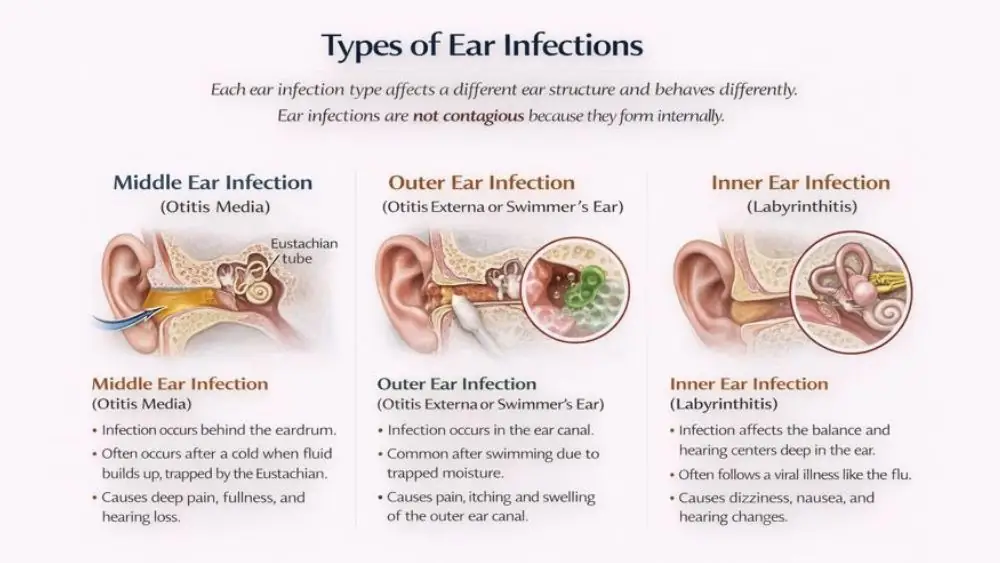
Each ear infection type affects a different ear structure and behaves differently. Location determines pain pattern, risk level, and recovery time. Ear infections are not contagious , regardless of type, because the infection forms internally rather than spreading between people.
Middle Ear Infection (Otitis Media)
Otitis media affects the air-filled space behind your eardrum. This area connects to your throat through a narrow tube. That tube is called the Eustachian tube. Its job is pressure control and fluid drainage.
When you get a cold, the lining of your nose and throat swells. Swelling blocks this tube. Fluid then stays trapped behind the eardrum. Germs grow in that fluid. Pain and pressure start.
Most middle ear infections begin after a viral cold. Bacteria may join later. Even then, ear infections are not contagious . The cold virus spreads first. The ear infection forms later inside your body.
Children get otitis media more often because their Eustachian tubes are shorter and flatter, and fluid drains poorly.
Outer Ear Infection (Otitis Externa or Swimmer’s Ear)
Swimmer’s ear affects the ear canal. This is the tunnel between the outer ear and the eardrum. Moisture trapped in the canal changes skin balance. Bacteria already living on your skin then multiply.
Scratches raise risk, and cotton swabs often cause these scratches. Swimming in lakes or pools without drying your ears adds risk.
This infection stays limited to the canal. It does not move to others. Shared towels do not pass it, so these ear infections are not contagious . Swimmer’s ear results from local skin breakdown. Person-to-person spread does not occur.
Inner Ear Infection (Labyrinthitis)
Labyrinthitis affects balance and the hearing organs deep in the ear. You may feel spinning, nausea, or hearing changes. This condition often follows viral illnesses like the flu.
Here, evidence is more limited. Many cases link to viruses, but direct causes are not always found. Even so, doctors agree on one fact. Ear infections are not contagious , including inner ear conditions. The virus may spread before balance symptoms begin. The ear damage itself does not spread.
Are Ear Infections Contagious in Children?
No. Children often develop ear infections after shared colds, but ear infections are not contagious , even in group settings. What spreads in schools and daycares are respiratory viruses that may later cause ear inflammation in some children.
Why Children Get Ear Infections More Often
Children’s immune systems are still learning. Their Eustachian tubes clog easily. Fluid clears slowly.
Breastfed infants show lower ear infection rates. Immune factors in breast milk help early defense. Anatomy explains why ear infections cluster in early years. It does not support spread between children.
Daycare and School Exposure Risks
Daycare increases exposure to respiratory viruses. Sneezing spreads cold germs. Those germs irritate the nose and throat.
Later, some children develop ear infections. Others do not. This pattern proves the ear problem itself does not spread. Ear infections are not contagious , even in crowded classrooms.
When Children Can Return to School
A child can return when the fever resolves and the pain improves. Antibiotics do not affect contagion status. Excluding children for ear infections alone has no medical basis.
What Causes Ear Infections?
Doctors focus on triggers rather than transmission. Knowing the causes of ear infections helps you act early and prevent repeat pain.
Upper Respiratory Infections
Colds inflame the nasal tissues. Swelling blocks ear drainage, and fluid traps germs. Most ear infections follow a cold by several days. The cold spreads, and the ear infection forms internally. This sequence reinforces that ear infections are not contagious .
Allergies and Sinus Congestion
Allergies cause chronic swelling. Mucus thickens, and drainage slows. Seasonal allergy control lowers ear infection frequency in some children.
Fluid Buildup Behind the Eardrum
Fluid may remain after symptoms fade. Hearing may sound muffled, and pressure may persist. This fluid alone does not mean infection. Bacteria may grow later. The process stays confined to your ear and is not contagious .
Eustachian Tube Dysfunction
Poor tube function traps fluid. Smoke exposure increases risk. Bottle-feeding while lying flat also raises the risk for infants. These risk factors explain recurrence patterns seen in clinics. They do not involve exposure to others.
Ear Infection Symptoms
Ear infections affect more than just your ear. The symptoms reflect pressure changes, inflammation, and fluid trapped where it should not stay. The severity depends on location, age, and immune response. Even with clear symptoms, ear infections are not contagious .
Ear Pain and Pressure
Ear pain starts when fluid or swelling presses against the eardrum. This pressure stretches sensitive nerves. Pain may feel sharp, deep, or throbbing. In children, pain often worsens at night due to lying flat, which increases ear pressure.
Pain does not indicate spread to others. The discomfort stays limited to your ear. Even intense pain does not change the fact that ear infections are not contagious .
Fever
Fever occurs when your immune system reacts to infection. It appears more often with middle ear infections. Viral cases usually cause mild fever, while bacterial cases may cause higher temperatures. Fever does not mean the infection can spread. Fever only signals immune activity. Ear infections are not contagious , even when fever is present.
Hearing Changes
Fluid blocks sound movement. Hearing may seem muffled or distant. Children may ignore sounds or raise volume levels. These changes usually reverse once the fluid clears.
Temporary hearing loss does not affect others. It stays local to your ear. This symptom does not alter the fact that ear infections are not contagious .
Ear Drainage
Drainage happens when pressure causes a small tear in the eardrum. Fluid may leak out. Pain often decreases after drainage. This looks alarming, but often heals well. Drainage fluid does not infect others. Direct contact does not spread infection, and ear infections are not contagious .
How Ear Infections Spread (Indirectly)
Ear infections themselves do not spread, but the triggers do. Cold and flu viruses move between people and can inflame the ear passages later. This indirect link explains timing patterns without changing the fact that ear infections are not contagious .
Cold and Flu Viruses
Cold and flu viruses spread through droplets and contact. These viruses inflame the nose and throat. That inflammation blocks ear drainage and leads to infection later. Only the virus spreads. The ear infection develops afterward. Ear infections are not contagious , even when linked to viral illness.
Coughing and Sneezing
Coughing releases droplets that carry viruses. Sneezing spreads germs onto surfaces. These actions raise cold risk, not ear infection risk. Stopping virus spread lowers ear infection risk. It does not stop ear infections from spreading because ear infections are not contagious .
Poor Hand Hygiene
Dirty hands move viruses to the face. Children touch their ears after touching surfaces. This behavior raises the risk of colds. Handwashing reduces respiratory infections. It does not block ear infections.
Diagnosis of Ear Infections
Diagnosis relies on visual and symptom-based evaluation, not exposure history. Doctors confirm infection by checking fluid, eardrum movement, and inflammation. Testing focuses on severity and complications, not transmission risk.
Physical Ear Examination
Doctors assess pain response and symptom timing. They ask about recent colds, allergies, or swimming exposure. These clues guide diagnosis. This evaluation focuses on internal causes. It does not involve assessing contagion because ear infections are not contagious .
Otoscope Examination
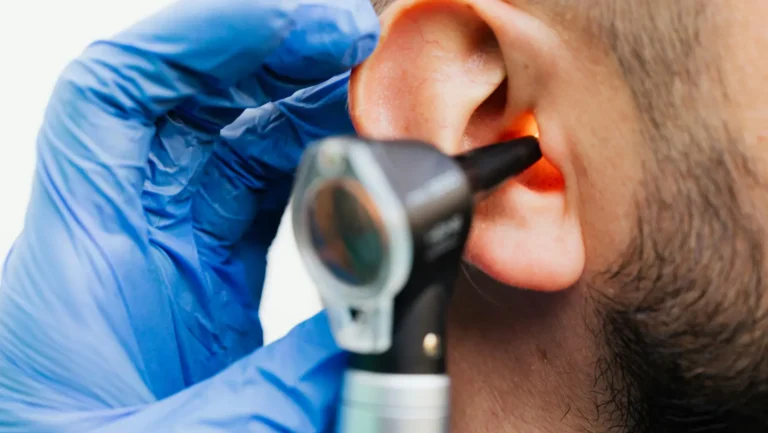
An otoscope allows doctors to view the eardrum. Bulging, redness, or fluid levels confirm infection. Clear landmarks suggest no infection. Otoscope findings guide treatment for ear infection decisions without assuming spread risk.
When Additional Tests Are Needed
Hearing tests help when fluid lasts for months. Balance tests help with inner ear symptoms. Imaging remains rare. Testing targets damage prevention. It does not relate to transmission because ear infections are not contagious .
Preventing Ear Infections
Preventing ear infections means reducing inflammation and fluid buildup rather than avoiding infected people. Controlling colds, allergies, and moisture exposure lowers risk. These steps target root causes, not spread, since ear infections do not transmit.
Hand Hygiene and Infection Control
Handwashing reduces colds. Fewer colds mean fewer ear infections. This strategy works indirectly by stopping viruses. Good hygiene protects ears by reducing triggers. It does not block the spread because ear infections are not contagious .
Preventing Colds and Respiratory Infections
Vaccination lowers flu risk. Avoiding smoke exposure protects ear function. Adequate sleep supports immune balance. These steps reduce major causes of ear infections .
Reducing Allergy Triggers
Dust mites, pollen, and pet dander inflame airways. Reducing exposure lowers ear congestion. Some children benefit greatly. Allergy control addresses internal triggers. It supports preventing ear infections long-term.
Ear Care and Swimming Precautions
Dry ears after swimming. Use earplugs if prone to swimmer’s ear. Avoid inserting objects into ears. These habits reduce outer ear infections without affecting others. Ear infections are not contagious, even in shared pools.
When to See a Doctor
Medical care becomes necessary when symptoms persist or worsen. Delayed treatment may affect hearing or balance. Seeking care early improves outcomes but does not change contagion status.
Persistent or Severe Ear Pain
Pain lasting more than two days needs evaluation. Severe pain may indicate pressure buildup or bacterial infection. Early care improves outcomes and guides treatment for ear infections .
High Fever
Fever above 102°F requires assessment. High fever may suggest bacterial involvement. Fever guides urgency, not isolation. Ear infections are not contagious, even with a high fever.
Hearing Loss or Balance Problems
Balance problems suggest inner ear involvement. Hearing loss lasting weeks needs testing. Prompt care protects long-term hearing health.
FAQs
Are ear infections contagious to adults?
No. Ear infections are not contagious in adults. Adults may catch colds, but the ear infection forms later due to inflammation and fluid buildup inside the ear.
Can you catch an ear infection from someone else?
No. You cannot catch it directly. You may catch a virus that later leads to ear pain, which fuels confusion about the spread.
Are ear infections contagious through kissing?
No. Kissing may spread cold viruses. The ear infection itself does not move between people.
Can children spread ear infections at school?
No. Ear infections are not contagious in school settings. Shared colds explain why several children may develop symptoms days apart.
Is swimmer’s ear contagious?
No. Swimmer’s ear results from moisture and skin damage in your ear canal. It does not pass through contact.
Can viral ear infections spread to others?
No. The virus may spread before ear symptoms appear. The ear infection itself does not spread.
How long should a child stay home with an ear infection?
Children should stay home for fever or severe pain. They can return once comfortable, since ear infections are not contagious .
Can untreated ear infections spread to others?
No. Untreated infections may damage hearing but do not spread to people around you.
Are recurrent ear infections contagious?
No. Recurrent cases reflect anatomy, allergies, or chronic fluid. They do not involve transmission.
How can I prevent ear infections from spreading in my home?
Focus on colds. Wash hands, reduce smoke exposure, manage allergies, and support sleep. Preventing ear infections depends on trigger control, not isolation.