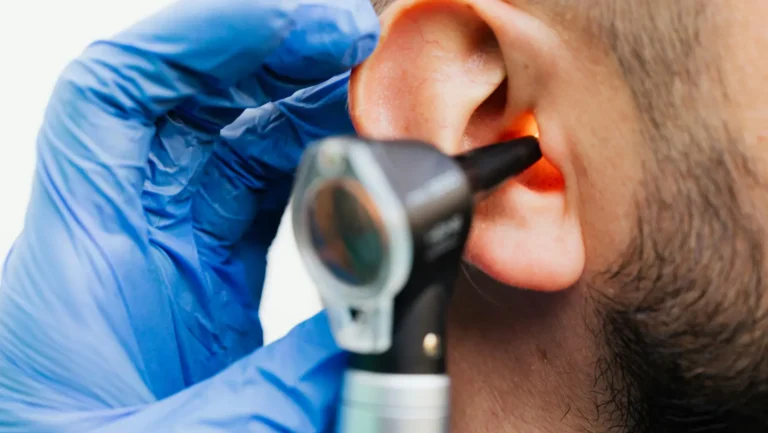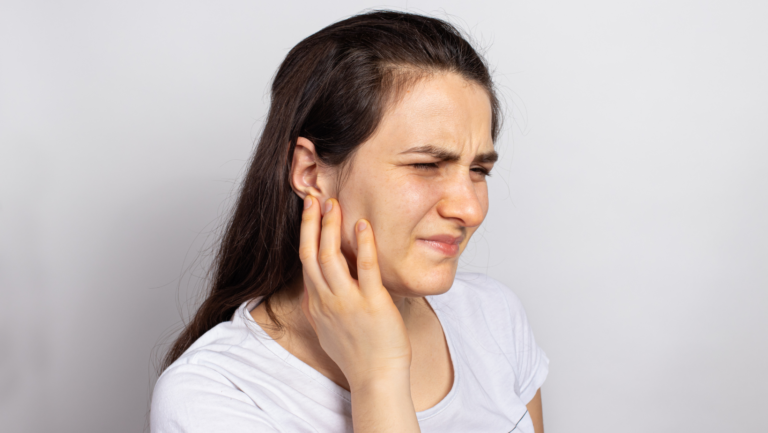

An ear infection lasts for about 7 to 10 days in most healthy people. Pain often fades sooner, but fluid and pressure can stay for weeks. The exact length depends on age, cause, and care. An ear infection starts when fluid gets trapped behind the ear drum. Germs grow in that warm space. Pressure builds, pain follows, and the ear infections last for days, not hours. Most simple ear infections improve within one week, even without antibiotics, if symptoms stay mild.
Ear Infection Timeline: Day by Day
An ear infection does not heal all at once. Symptoms rise, peak, and then fade in stages. Pain usually improves first, while pressure and fluid clear later. This staged pattern explains why an ear infection last for days or even weeks.
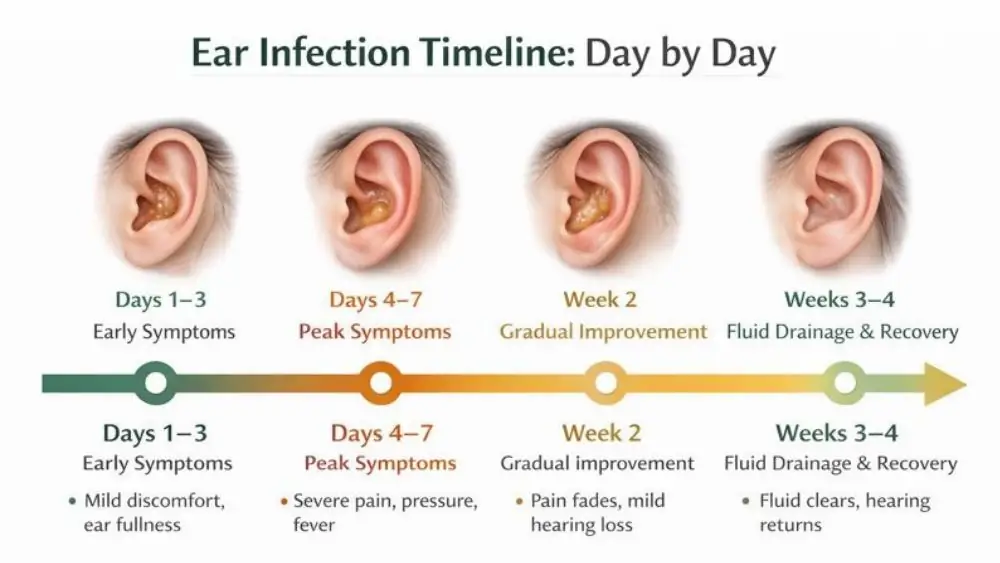
Days 1–3: Early Symptoms
The first days feel subtle. You may notice ear fullness, sounds may feel muffled, mild pain may come and go, and a low fever may appear. Many cases start after a cold, which swells the nasal passages and blocks the ear tube. This blockage often causes an ear infection .
During this phase, germs multiply. The immune system reacts. In children, crying and ear pulling appear. Adults report pressure more than pain. Viral infections trigger most early ear infections. At this point, an ear infection lasts for a few days if caught early in mild cases.
Days 4–7: Peak Symptoms
This stage brings the worst discomfort. Pain sharpens, fever may rise, and sleep becomes hard. Pressure peaks as fluid builds behind the eardrum. Some people feel throbbing pain. Others feel stabbing pain.
If pressure gets too high, the eardrum may leak fluid. This fluid looks cloudy or yellow. Pain may drop fast after this. That drop does not mean full healing. Pain relief often comes before infection clears. This stage shapes the true recovery time of an ear infection .
Doctors often decide on treatment for ear infection by looking at age, fever, and pain level. Antibiotics may help in bacterial cases. Viral cases still rely on time and comfort care. Even now, many ear infections still last for several more days.
Week 2: Gradual Improvement
By week two, pain usually fades. Fever resolves, energy returns, and the immune system clears most germs. Hearing may still feel blocked. Fluid often remains behind the eardrum.
This lingering fluid worries many people. This fluid can stay even after the infection ends. It does not always mean active disease. This explains why an ear infection lasts for longer than the pain itself. At this stage, doctors often advise watchful waiting unless new symptoms appear.
Weeks 3–4: Fluid Drainage and Recovery
Fluid drains slowly through the ear tube. Hearing improves little by little, and balance feels normal again. The eardrum returns to its usual position.
Middle ear fluid can last up to 12 weeks in children without causing harm. Adults clear fluid faster. This stage completes the ear infection timeline day by day . By week four, most people feel fully normal, even if mild pressure lingers. This long tail explains why an ear infection lasts for weeks in some cases.
Factors That Affect Ear Infection Recovery Time
Healing speed depends on the person and the infection itself. Age, immune response, and infection type change how fast swelling drops and fluid drains. These factors decide whether an ear infection last for a short period or drags on.
Age of the Patient
Children heal more slowly than adults. Their ear tubes stay shorter and flatter; hence, fluid drains poorly. This structure increases infection risk and delays healing. Children under five face the longest recovery time for ear infections . Adults often heal within one week.
Type of Infection
Viruses cause many ear infections. Bacteria cause others. Antibiotics only work on bacteria. Viral cases rely on the immune system alone. Fungal infections, though rare, heal more slowly. The type of germ strongly affects how long an ear infection lasts for .
Severity of Symptoms
Mild pain signals mild inflammation. Severe pain signals heavy pressure and swelling. High fever suggests aggressive infection. Severe cases raise the recovery time of ear infection and risk complications.
Immune System Strength
A strong immune system clears germs faster. Poor sleep, stress, and chronic illness weaken defenses. Immune health is directly related to infection length. Weak immunity means an ear infection lasts for longer.
Recurring Ear Infections
Repeat infections damage the ear lining. Scar tissue forms, and fluid drainage worsens. Each new infection heals more slowly than the last. Chronic cases often need advanced treatment for ear infection to break the cycle.
Treatment Options and Their Impact on Recovery
Treatment aims to control pain, clear infection when needed, and prevent damage. Some options shorten symptoms, while others mainly prevent repeat episodes.
Antibiotics
Doctors prescribe antibiotics when bacteria seem likely. Signs include high fever, severe pain, or symptoms lasting over two days in young children. Antibiotics shorten symptoms by about one day in clear bacterial cases. They do not help viral infections. Dosage varies by age and condition.
Pain Management
Pain relief improves sleep and healing. Doctors often suggest acetaminophen or ibuprofen. Warm compresses help with pressure pain. Pain control does not cure infection. It supports the body while healing continues. Even with pain relief, an ear infection last for its natural course.
Ear Drops
Ear drops treat outer ear infections, not middle ear infections. They reduce swelling and kill surface germs. Drops act fast because they reach the site directly. In swimmer’s ear, drops shorten how long an ear infection lasts when used early.
Ear Tubes (For Chronic Infections)
Ear tubes help children with repeated infections. Surgeons place tiny tubes in the eardrum. These tubes drain fluid and reduce pressure. Tubes lower repeat infections but do not prevent all cases. They mainly reduce the recovery time of ear infections over months, not days.
Complications That Can Prolong Healing
Complications slow recovery even when pain improves. Trapped fluid, pressure damage, or spread of infection can extend healing by weeks. These issues explain why an ear infection lasts for longer than expected in some people.
Persistent Middle Ear Fluid
Fluid can stay trapped behind the eardrum after infection clears. This condition is called otitis media with effusion, meaning fluid without active infection. You may feel fullness or reduced hearing, but pain stays mild or absent. This fluid can last 6 to 12 weeks in children and still count as normal healing. This explains why an ear infection lasts for weeks even when other symptoms fade.
Ruptured Eardrum
High pressure can tear the eardrum. This causes sudden fluid drainage and pain relief. Hearing may drop for a short time. Most ruptures heal on their own within weeks. Doctors usually avoid antibiotics unless infection signs persist. A healed rupture rarely affects long-term hearing if managed well.
Mastoiditis
Mastoiditis is a rare but serious complication. Infection spreads to the bone behind the ear. Symptoms include swelling, redness, fever, and worsening pain. This condition needs urgent hospital care. Delayed treatment increases the risk of hearing loss. Mastoiditis greatly extends how long an ear infection lasts and raises complication risk.
Hearing Problems
Temporary hearing loss is common during and after an infection. Fluid blocks sound movement. Permanent loss is rare but possible with repeated infections or untreated complications. Children face a higher risk of speech delay if hearing remains reduced. Monitoring hearing helps track the true recovery time of an ear infection .
When to See a Doctor for an Ear Infection
Ongoing pain, fever, or hearing changes signal higher risk. Early evaluation prevents complications that increase the recovery time of ear infection .
Symptoms Lasting More Than 3 Days
Pain or fever beyond three days signals poor response. In young children, this timeline matters more. Doctors evaluate if bacteria likely to cause an ear infection at this stage. Early care prevents worsening and shortens the ear infection timeline day by day .
High Fever or Severe Pain
Fever above 102°F or intense pain suggests severe inflammation. These signs increase the risk of eardrum damage. Doctors may recommend treatment for ear infections based on age and exam findings. Prompt care protects hearing.
Fluid or Pus From the Ear
Drainage can signal rupture or active infection. Clear fluid may appear during healing. Thick pus suggests bacteria. Doctors inspect the eardrum before deciding the next steps. This check helps predict how long an ear infection will last.
Balance or Hearing Issues
Dizziness or poor balance suggests inner ear involvement. Sudden hearing loss needs urgent evaluation. These symptoms change management plans and affect ear infection healing time without antibiotic decisions.
Preventing Long-Lasting Ear Infections
Keeping airways clear, avoiding moisture buildup, and managing allergies support better drainage. These steps lower how often infections start and how long an ear infection last for .
Preventing Colds and Respiratory Infections
Most ear infections start after colds. Hand washing reduces virus spread. Vaccines lower flu and pneumonia risk. Fewer infections mean fewer events that cause an ear infection and a shorter lifetime recovery time from ear infections.
Proper Ear Hygiene
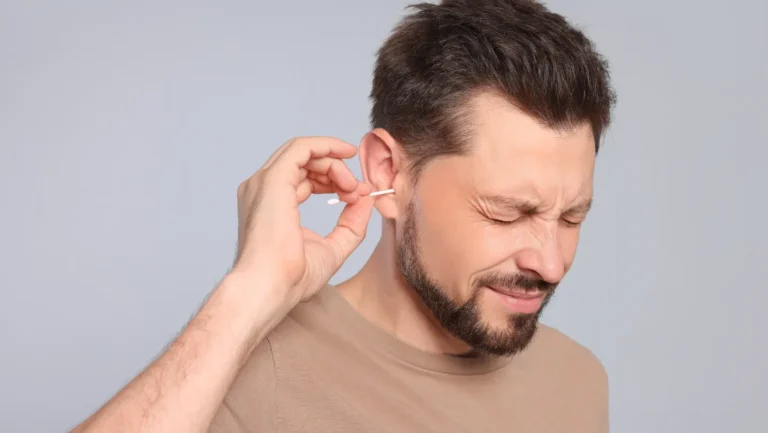
Avoid inserting objects into the ear canal. Cotton swabs push wax deeper. Keep your ears dry after swimming. Moisture promotes germ growth. Clean only the outer ear gently.
Managing Allergies
Allergies swell the nasal passages and block the ear tubes. This blockage traps fluid. Treating allergies improves drainage and lowers repeat infections. Allergy control reduces ear infection healing time without antibiotics in many cases.
FAQs
How long does an ear infection usually last in adults?
In adults, an ear infection lasts for about 7 to 10 days. Pain often improves sooner. Fluid and muffled hearing may linger for weeks without meaning an active infection.
How long does an ear infection last in children?
In children, an ear infection lasts for one to two weeks for pain, but fluid may stay longer. Young ears drain more slowly, which extends the ear infection timeline day by day .
Can an ear infection go away on its own?
Yes, many viral cases resolve without antibiotics. The body clears germs naturally. This process explains ear infection healing time without antibiotics , especially when symptoms stay mild.
How long does ear pain last during an infection?
Pain peaks during days four to seven. It usually fades before full healing ends. Pain relief does not equal a cure, so an ear infection lasts for longer than pain alone.
How long does fluid stay in the ear after infection?
Fluid can remain for weeks or months. This does not always need treatment. Doctors monitor hearing and symptoms to judge the true recovery time of an ear infection .
Does an ear infection last longer without antibiotics?
Bacterial cases may last longer without antibiotics. Viral cases show little difference. Doctors weigh risks before choosing treatment for an ear infection .
Can ear infections come back after treatment?
Yes, especially in children. New colds reopen blocked tubes. Incomplete treatment also raises risk. Repeat cases extend how long an ear infection lasts over time.
How do I know if my ear infection is healing?
Healing signs include reduced pain, no fever, better sleep, and improved hearing. These changes show progress even if fullness remains.
When should I worry about a long-lasting ear infection?
Worry if symptoms persist beyond two weeks, worsen, or affect hearing and balance. These signs suggest complications that extend the recovery time of ear infections.
Can untreated ear infections cause permanent damage?
Yes, in rare cases. Chronic fluid, bone infection, or repeated inflammation can harm hearing. Early care prevents long-term damage and limits how long an ear infection lasts .