

Right-sided chest pain can come from many structures packed into the right side of your chest, including muscles, ribs, lungs, nerves, the liver, and the gallbladder. The pain may feel sharp, burning, tight, stabbing, or pressure-like, and each sensation points toward a different cause.
Unlike left-sided chest pain, right-sided pain is less often linked to heart attacks, but it can still signal serious lung or blood vessel problems. Pain that worsens with breathing, movement, meals, or stress offers strong clues about the source.
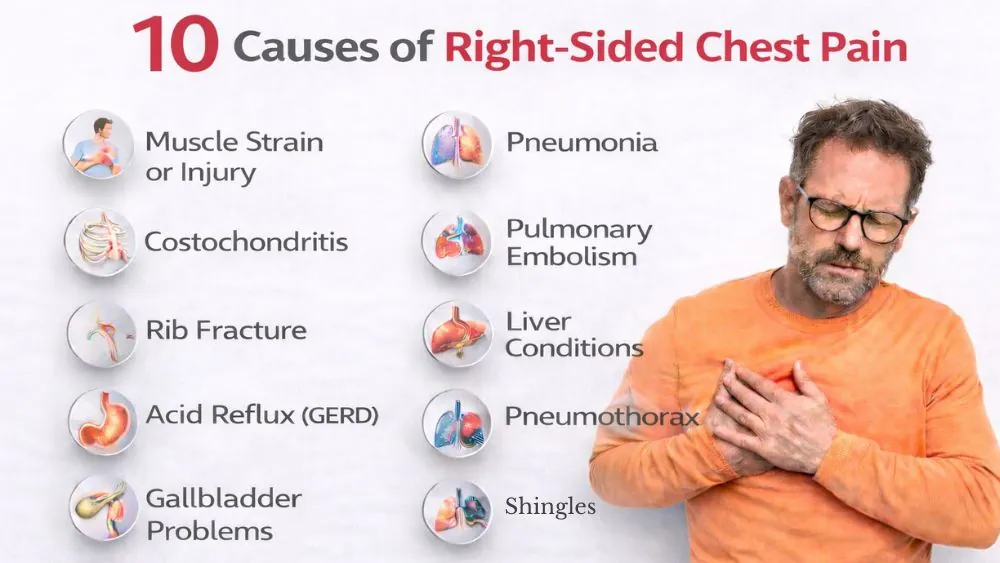
20 Causes of Right-Sided Chest Pain
Right-sided chest pain can start from muscles, lungs, digestive organs, nerves, or blood vessels. The location, pain type, and triggers help doctors separate harmless causes from emergencies. Many causes overlap in symptoms, which is why patterns matter more than pain intensity alone.
Muscle Strain or Chest Wall Injury
Muscle strain is one of the most common causes. You strain chest muscles while lifting, pushing, twisting, or intense exercise. Pain stays in one spot, and touching the area increases pain. Movement and coughing worsen chest pain. This muscle strain and right chest improve with rest and time.
Costochondritis (Rib Cartilage Inflammation)
Costochondritis means swelling of the cartilage that joins the ribs to the breastbone. Pain feels sharp near the ribs, pressing the chest reproduces pain, and breathing deep hurts. This condition stays harmless but painful. Infection rarely causes it. Most cases resolve without invasive care.
Rib Fracture or Bruising
A fall, accident, or heavy cough can bruise or crack ribs. Pain stays sharp and local. Laughing and deep breaths hurt. X-rays may miss small cracks. Doctors often diagnose by exam and symptoms alone.
Anxiety or Panic Attacks
Anxiety can cause intense right-sided chest pain . Stress hormones tighten chest muscles and speed breathing. Pain may mimic heart pain. You may feel fear, sweating, or dizziness. Chest pain is common during panic attacks despite normal heart tests.
Acid Reflux or GERD
Acid reflux pushes stomach acid upward. Burning pain may spread to the right chest. Pain worsens after meals or lying flat. Reflux pain often mimics heart pain but improves with antacids and posture changes.
Gallbladder Problems
Gallstones block bile flow. Pain starts under the right ribs and spreads to the chest or shoulder. Fatty meals trigger attacks. Pain lasts minutes to hours. Nausea may occur. Ultrasound confirms diagnosis.
Liver Conditions
The liver sits under the right rib cage. Swelling from hepatitis or fatty liver causes dull pressure pain. Pain increases with movement or deep breathing. Blood tests often show liver enzyme changes.
Pneumonia
Pneumonia causes a lung infection. Pain occurs when the lung lining inflames. Fever, cough, and fatigue often follow. Chest pain with pneumonia worsens during breathing or coughing.
Pleurisy
Pleurisy means inflammation of the lung lining. Each breath causes sharp pain. Pain improves when you hold your breath. Viral infections cause most cases. Doctors confirm with imaging and blood markers of inflammation.
Pulmonary Embolism
A pulmonary embolism is a blood clot in a lung artery. Pain starts suddenly and feels sharp. Shortness of breath appears fast. This condition is life-threatening and needs emergency care. Risk increases after surgery or long travel.
Pneumothorax (Collapsed Lung)
Air leaks into the chest cavity. The lung collapses partly or fully. Pain feels sudden and severe, and breathing becomes difficult. Tall, thin adults and smokers face a higher risk.
Shingles
Shingles affects nerves. Pain starts before the rash appears. Pain burns and stays on one side. The rash follows nerve paths. Early treatment reduces long-term nerve pain.
Lung Cancer
Tumors can irritate chest structures. Pain develops slowly and persists. Cough, weight loss, or blood in sputum may appear. Pain often signals advanced disease.
Chest Tumors
Noncancer tumors may grow in the chest wall tissues. Pain increases as the mass grows. Swelling or firmness may appear. Imaging confirms size and location.
Asthma
Asthma tightens airways. Chest tightness and pain may occur during attacks. Wheezing and short breath follow. Triggers include cold air and allergens.
Pulmonary Hypertension
High pressure in the lung arteries strains the heart. Pain appears during activity. Fatigue and dizziness may occur. This condition progresses slowly.
Heart-Related Conditions
Right-sided heart strain or inflammation can cause pain. Pain may spread to the neck or back. Though less common, doctors rule this out first.
COVID-19 Related Chest Pain
COVID-19 can inflame the lungs or heart lining. Pain may persist after infection; post-viral inflammation is a known cause. Breathing deeply often worsens pain.
Digestive Gas or Bloating
Gas stretches the digestive tract. Pressure may rise in the chest. Pain feels sharp but moves or eases with a position change.
Right-Side Chest Pain When Breathing
Right-sided chest pain when breathing usually points to movement-sensitive tissues like lungs, pleura (lung lining), ribs, or chest muscles. Pain that worsens with deep breaths often rules out stomach causes and raises concern for lung inflammation, clots, or rib injuries.
Lung-Related Causes
Lung infections, pleurisy, clots, and collapsed lungs cause pain during breathing. These conditions often include cough, fever, or breath trouble. Doctors treat these as high priority because oxygen levels may drop fast.
Musculoskeletal Causes
Chest muscles stretch with each breath. A strain or rib injury causes pain when breathing deeply. Pain stays local and improves when breathing shallow. This pattern supports a muscle source rather than lung disease.
Diagnosis of Right-Side Chest Pain
The diagnosis of right-side chest pain focuses on ruling out dangerous conditions first, especially lung clots, infections, or heart strain. Doctors combine symptom timing, physical findings, and targeted tests rather than relying on pain location alone.
Physical Examination
Doctors begin by asking how the pain started, what worsens it, and how long it lasts. They press on the chest to check for tenderness, which often points to muscle or rib causes.
Listening to the lungs helps detect fluid, infection, or airway narrowing. Heart sounds help rule out rhythm or valve issues. This step alone can separate muscle strain right chest pain from lung or heart causes.
Imaging and Blood Tests
X-rays show lung infections, collapsed lungs, or rib injuries. CT scans help detect blood clots, tumors, or hidden fractures. Blood tests check infection markers, liver enzymes, and clot indicators like D-dimer.
Cardiac and Lung Function Tests
An ECG records heart rhythm and strain patterns. An echocardiogram checks heart size and pumping strength. Lung function tests measure airflow and oxygen exchange. These tests help doctors rule out asthma, pulmonary hypertension, and heart-related causes of right-sided chest pain .
Treatment of Right-Side Chest Pain
Treating muscle pain differs completely from treating lung clots or infections, which is why self-treatment without diagnosis can be risky.
Home Treatment for Mild Causes
Muscle strain, mild reflux, or gas pain often improves at home. Rest reduces muscle stress. Ice lowers swelling in chest wall injuries. Heat may relax tight muscles after swelling drops. Small meals and upright posture reduce reflux-related right-side chest pain . Doctors advise avoiding heavy lifting until pain resolves.
Medications and Medical Treatment
Doctors may prescribe anti-inflammatory drugs for rib or cartilage inflammation. Antibiotics treat bacterial pneumonia only when confirmed. Inhalers open airways in asthma. Blood thinners treat lung clots, with dosage varying by age and risk. Correct medication choice reduces repeat episodes and complications.
Hospital-Based Treatment
Severe causes need hospital care. Pulmonary embolism requires monitored blood thinners or clot removal. Collapsed lungs may need chest tube placement to remove trapped air. Severe infections need IV fluids and antibiotics. Continuous monitoring prevents sudden breathing or heart failure.
Can Right-Side Chest Pain Be Prevented?
Many triggers can be reduced through posture control, movement habits, stress management, and disease control. Prevention focuses on lowering inflammation, strain, and circulation problems.
Lifestyle and Posture Changes
Good posture reduces chest wall stress. Safe lifting prevents muscle tears. Regular movement lowers clot risk, especially during long travel. Balanced meals reduce reflux and gallbladder attacks. Posture correction lowers the recurrence of muscle strain and right chest pain .
Managing Underlying Conditions
Controlled asthma lowers chest tightness episodes. Anxiety therapy reduces panic-related pain. Managing cholesterol and blood pressure protects heart and lung vessels. Consistent care reduces repeated right-sided chest pain episodes.
When to See a Doctor
Right-sided chest pain should never be ignored when it changes pattern, intensity, or breathing comfort. Early evaluation prevents delayed diagnosis of serious lung or heart conditions and reduces long-term complications.
Persistent or Worsening Pain
Pain lasting more than a few days needs medical review. Pain that spreads to the arm, back, or jaw needs urgent evaluation. Progressive pain suggests infection, inflammation, or structural damage.
Chest Pain With Fever, Vomiting, or Shortness of Breath
These signs point to infection, clots, or lung collapse. Early care improves survival in respiratory emergencies. Sudden right-sided chest pain with breathing difficulty requires emergency care.
FAQs
Is Right-Side Chest Pain Related to the Heart?
Yes, it can be, but it is less common. Doctors still rule out heart causes first because a delayed diagnosis increases the risk of serious heart complications.
Can Muscle Strain Cause Right-Side Chest Pain?
Yes. Muscle strain and right chest pain are common after lifting or sudden movement. Pain worsens with motion and improves with rest and time.
Why Does My Right Chest Hurt When I Breathe Deeply?
Right-sided chest pain when breathing often points to lung lining inflammation or strained chest muscles. Breathing stretches these tissues and triggers pain signals.
Is Right-Side Chest Pain Serious?
It depends on the cause. Mild pain in muscles heals on its own. Sudden severe pain with breathing trouble may signal a medical emergency.
Can Anxiety Cause Right-Sided Chest Pain?
Yes. Anxiety tightens chest muscles and alters breathing. The pain feels real even when the heart and lungs remain healthy.
How Long Does Muscle-Related Chest Pain Last?
Most muscle-related pain improves within one to three weeks. Persistent pain suggests repeated strain or poor posture.
Can Gas Cause Right-Side Chest Pain?
Yes. Gas pressure can move upward and mimic chest pain. The pain often shifts or eases with movement or passing gas.
What Tests Diagnose Right-Sided Chest Pain?
Doctors use exams, X-rays, blood tests, ECGs, and CT scans. These tools guide the diagnosis of right-sided chest pain accurately.
When Should I Go to the ER for Right-Side Chest Pain?
Go immediately if pain is sudden, severe, or paired with shortness of breath, fainting, or blue lips.
How Is Right-Side Chest Pain Treated at Home?
Home care helps mild cases only. Rest, ice, posture changes, and doctor-approved medication support recovery and proper treatment of right-sided chest pain .