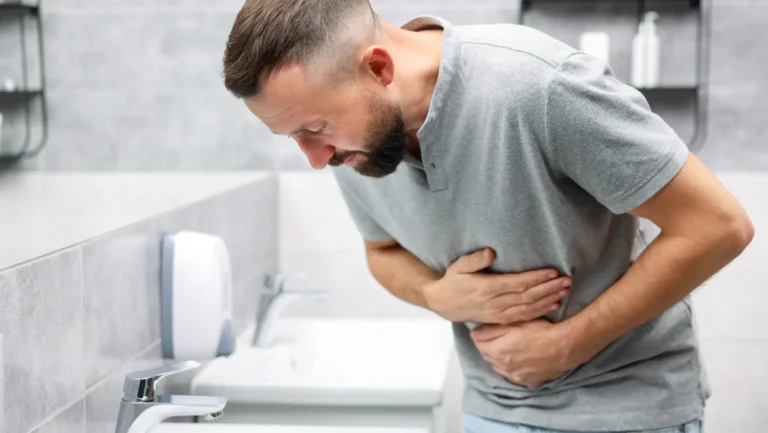

Chest pain due to gas happens when air builds up inside your stomach or intestines and pushes upward toward the chest. This pressure irritates nerves that also respond to heart pain, which is why the discomfort can feel tight, sharp, or alarming.
Unlike heart-related pain, chest pain due to gas often appears after eating, worsens with bloating, and changes when you move or sit upright. Trapped gas can stretch the stomach, press against the diaphragm, and send pain signals across the chest area. While this condition is usually harmless, understanding how digestion creates this pain helps you react calmly and avoid unnecessary fear.
10 Causes of Gas Pain in the Chest
Gas-related chest discomfort happens when air gets trapped and cannot move normally through the digestive tract. This trapped gas stretches the stomach or intestines and presses against the diaphragm and chest nerves, which explains why the pain can feel sharp, tight, or heavy instead of mild.
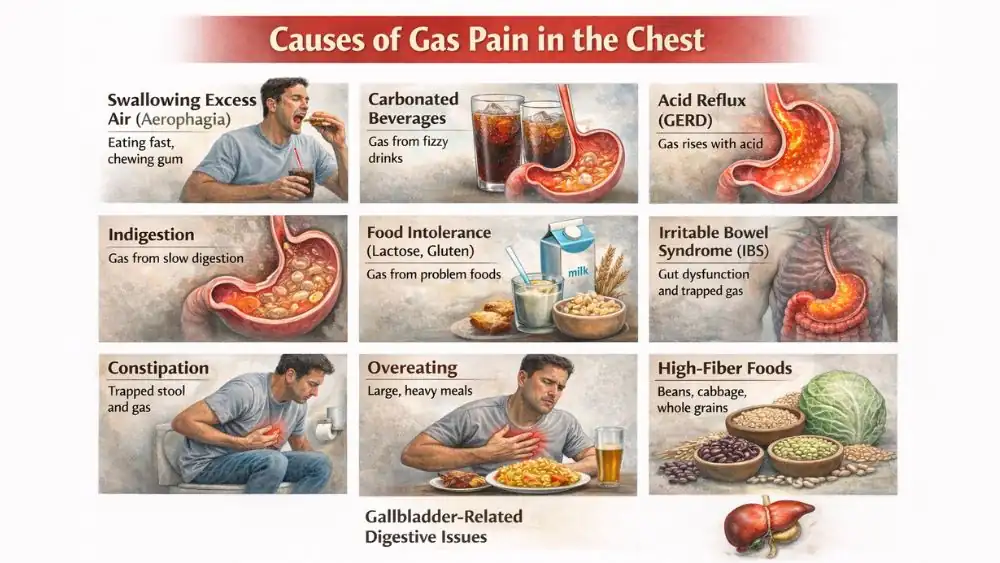
Swallowing Excess Air (Aerophagia)
You swallow air when you eat fast, talk while chewing, chew gum, or drink through a straw. This air collects in the stomach. The stomach stretches and pushes upward. The chest nerves sense this pressure. Chest pain due to gas from swallowed air often improves after burping.
Carbonated Beverages
Fizzy drinks release carbon dioxide gas inside the stomach. That gas expands fast. The stomach wall stretches before the gas escapes. This sudden pressure often causes chest pain due to gas , especially when you drink soda with meals.
Acid Reflux (GERD)
Acid reflux means stomach contents move backward into the esophagus. Gas often rises with the acid. The food pipe runs through the chest. Irritation there causes burning or squeezing pain. This type of chest pain due to gas worsens when you lie flat after eating.
Indigestion
Indigestion happens when the stomach empties slowly. Food stays longer and ferments. Fermentation creates gas. The pressure pushes toward the chest. Indigestion-related chest pain due to gas often appears after heavy or fatty meals.
Food Intolerance (Lactose, Gluten)
When your body cannot break down certain foods, bacteria in the gut ferment them instead. This process creates large amounts of gas. Lactose and gluten are common triggers. The trapped gas can lead to chest pain due to gas soon after eating.
Irritable Bowel Syndrome (IBS)
IBS affects how the gut muscles move. Gas does not travel smoothly. It becomes trapped. The pressure may rise upward and cause chest discomfort. Many people with IBS report repeated chest pain due to gas during flare-ups.
Constipation
Constipation traps stool and gas in the intestines. The buildup increases pressure across the abdomen. This pressure can push upward and irritate chest nerves. Constipation-related chest pain due to gas often improves after a bowel movement.
Overeating
Large meals stretch the stomach beyond comfort. Digestion slows. Gas forms faster than it escapes. The stretched stomach presses against the diaphragm, the breathing muscle under the lungs. This pressure causes chest pain due to gas , especially after late meals.
High-Fiber Foods
Fiber supports digestion, but sudden high intake causes gas. Beans, lentils, cabbage, and whole grains ferment in the gut. If your system is not used to them, gas builds quickly. This is a common but temporary cause of chest pain due to gas .
Gallbladder-Related Digestive Issues
The gallbladder releases bile to digest fats. When bile flow slows, fat digestion becomes harder. Gas forms more easily. Pain may appear in the upper abdomen and spread to the chest. This pain can mimic chest pain due to gas from other causes.
5 Home Remedies for Chest Pain Due to Gas
Non-drug methods work by relaxing digestive muscles, improving gas movement, and lowering pressure inside the abdomen. These approaches are most effective when the pain is mild, meal-related, and improves with movement or posture changes.
Warm Compress on the Chest or Abdomen
Heat relaxes the muscles of the stomach and intestines. Relaxed muscles allow gas to move instead of staying trapped. Placing a warm pad for 10 to 15 minutes often reduces chest pain due to gas .
Gentle Walking
Walking stimulates gut movement. It helps push gas forward through the intestines. Even a slow walk around the room can ease pressure. Many people feel relief from chest pain due to gas within minutes.
Ginger or Peppermint
Ginger speeds stomach emptying. Peppermint relaxes intestinal muscles. Both reduce gas buildup. Drinking warm tea made from either plant works well as a home remedy for chest pain due to gas after meals.
Deep Breathing Exercises
Slow breathing relaxes the diaphragm. A relaxed diaphragm reduces pressure on the stomach. Breathing also lowers anxiety, which often worsens gas pain. This method helps reduce chest pain due to gas caused by tension.
Avoiding Tight Clothing
Tight belts and waistbands squeeze the abdomen. This pressure traps gas. Looser clothing allows the stomach to expand naturally. Many people underestimate how effective this home remedy for chest pain due to gas can be.
5 Treatments for Gas Pain in the Chest
Medical treatment focuses on reducing gas formation, helping gas move out faster, and managing digestive conditions that slow digestion. These treatments are used when lifestyle changes fail or when symptoms return often.
Over-the-Counter Antacids
Antacids neutralize stomach acid and reduce irritation. They also help gas escape more easily. Doctors often suggest antacids for chest pain due to gas linked to reflux or indigestion.
Gas-Relief Medications
Gas-relief products break large gas bubbles into smaller ones. Smaller bubbles move through the gut more easily. You feel improvement within an hour. These medications support other treatments for chest pain in the chest .
Dietary Changes
Eating smaller meals slows gas production. Avoiding trigger foods prevents fermentation. Drinking water instead of soda helps. Dietary changes remain one of the most effective treatments for long-term gas pain in the chest .
Posture and Movement
Sitting upright after meals prevents gas from rising into the chest. Gentle stretching supports digestion. Poor posture increases pressure. Correct posture plays a key role in treatments for chest pain .
Treating Underlying Digestive Conditions
Chronic reflux, IBS, or food intolerance needs long-term care. When the root problem improves, chest pain due to gas becomes less frequent. Doctors usually guide this step-by-step.
5 Complications of Gas Pain in the Chest
When chest pain due to gas happens often or gets ignored, it can slowly affect your health and daily life. Gas itself is not dangerous, but repeated pain signals that digestion is not working smoothly. Over time, this leads to physical stress and mental strain.
Chronic Digestive Discomfort
Repeated gas buildup stretches the stomach and intestines again and again. This makes nerves more sensitive over time. You may start feeling pain even with small meals. Chronic bloating, pressure, and chest pain due to gas can become part of daily life if the digestive trigger stays untreated.
Misdiagnosed Heart Conditions
One serious complication of gas pain in the chest happens when real heart pain gets mistaken for gas. Some people delay medical care because past pain turned out to be digestive. This delay can be risky. Any new or unusual chest pain always needs careful attention.
Anxiety and Panic Symptoms
Chest pain triggers fear. Fear tightens muscles and slows digestion. This creates more gas and more pain. Over time, people begin to panic at the first sign of chest pain due to gas , even when digestion is the real issue. This anxiety loop is common and exhausting.
Sleep Disturbance
Gas pain often worsens at night because lying flat traps pressure upward. Pain interrupts sleep and reduces rest quality. Poor sleep then slows digestion the next day. This cycle worsens chest pain due to gas and overall gut health.
Reduced Quality of Life
Fear of pain changes eating habits, travel plans, and social events. People avoid meals outside or eat less than needed. This complication of gas pain in the chest affects nutrition, mood, and confidence over time.
Diagnosing Gas Pain in the Chest
Diagnosis relies on identifying digestive patterns while first ruling out serious causes like heart or lung problems. Doctors look at timing, food triggers, body position, and symptom relief to separate gas pain from other chest conditions.
Medical History and Symptom Review
Doctors ask when the pain starts, what you ate, and how long it lasts. They look for bloating, burping, or relief after passing gas. Pain linked to meals strongly supports diagnosing gas pain in the chest .
Physical Examination
Gentle pressure on the abdomen helps locate trapped gas. Doctors also listen for bowel sounds. Tender areas often point to digestive causes rather than heart problems during the diagnosis of gas in the chest .
Ruling Out Heart-Related Causes
Heart tests come first, which may include heart rhythm checks and blood tests. Normal results shift focus to digestion. This step is essential before confirming chest pain due to gas .
Imaging and Digestive Tests
X-rays may show gas pockets. Other tests check reflux or slow digestion. These tools confirm the diagnosis when symptoms repeat or stay unclear during diagnosing gas in the chest.
When Chest Pain Due to Gas Is Not Gas
Certain symptoms signal that chest pain may not come from digestion at all. These signs point toward heart, lung, or circulation problems and require urgent medical attention rather than home care.
Chest Pain With Shortness of Breath
Breathing trouble suggests heart or lung stress. Gas pressure rarely affects breathing directly. Seek urgent care if chest pain and breathlessness appear together.
Chest Pain Radiating to Arm or Jaw
Pain moving into the arm, neck, or jaw often points away from digestion. This pattern needs immediate evaluation, even if gas symptoms exist.
Chest Pain With Dizziness or Sweating
Cold sweats, nausea, or dizziness signal body stress. These signs do not match typical chest pain due to gas and need urgent attention.
When to See a Doctor
Medical care becomes necessary when chest pain is frequent, severe, or unpredictable. Seeing a doctor helps identify hidden digestive disorders and ensures that serious conditions are not missed.
Persistent or Worsening Chest Pain
Pain lasting several hours or worsening over time needs evaluation. Even if gas caused past episodes, new pain patterns matter.
Chest Pain That Does Not Improve
If movement, burping, or remedies fail, see a doctor. Ongoing chest pain due to gas often signals an underlying digestive condition.
Recurrent Chest Pain After Meals
Frequent pain after eating suggests reflux, intolerance, or slow digestion. Early care prevents repeated flare-ups and long-term discomfort.
FAQs
Can gas really cause chest pain?
Yes, gas can stretch the stomach and push against chest nerves. This pressure creates real pain that feels sharp or tight, even though the heart is not involved.
How do I know if my chest pain is gas or heart-related?
Gas pain often starts after meals, changes with position, and improves after burping. Heart pain often appears with exertion and does not ease with digestive relief.
How long does gas-related chest pain last?
Most gas-related episodes last minutes to a few hours. Relief often comes after passing gas, walking, or using a home remedy for chest pain due to gas .
Can anxiety make gas pain worse?
Yes, anxiety tightens abdominal muscles and slows digestion. This traps gas and increases pressure, making chest pain due to gas feel stronger and last longer.
What foods cause gas pain in the chest?
Beans, dairy, carbonated drinks, fatty foods, and large meals commonly trigger gas buildup. Each person reacts differently based on digestion speed and tolerance.
Does lying down make gas chest pain worse?
Yes, lying flat allows gas to rise toward the chest. Sitting upright or walking helps gas move downward and reduces discomfort.
Can gas pain occur on the left side of the chest?
Yes, the stomach sits on the left side. Trapped gas there often causes left-sided chest pain due to gas , which many people mistake for heart pain.
Can gas pain feel like a heart attack?
Gas pain can feel intense and scary. Tightness, pressure, and burning sensations overlap with heart pain, which is why medical evaluation matters.
How can I quickly relieve gas chest pain?
Walking, warm compresses, peppermint tea, and posture changes help fast. These steps reduce pressure and support digestion during chest pain due to gas .
When should I go to the ER for chest pain?
Go immediately if chest pain comes with breath trouble, arm pain, sweating, or dizziness. Never assume serious symptoms are only gas-related.