
Mild to moderate piles respond well to home remedies for piles. Sitz baths, a high-fiber diet, proper hydration, and topical applications like aloe vera and witch hazel reduce pain and swelling within days. Severe cases, especially with heavy or persistent bleeding, need a doctor.
Piles are swollen veins inside or around the rectum. They form when pressure builds up in the lower rectal area, usually from straining, constipation, or sitting for too long. Around 75% of people will have piles at some point in their lives. Most of them never need surgery.
This article covers the most effective home remedies for piles, what to eat, when to worry about bleeding, and when home care stops being enough.
Can Piles Be Treated at Home?
Yes, early-stage internal or external piles respond well to home remedies for piles. Sitz baths reduce pain and muscle tension. Fiber softens stools. Aloe vera and witch hazel calm irritated tissue externally.
Large, prolapsed piles (where tissue pushes out of the anus and cannot be pushed back in) and piles that bleed heavily or repeatedly need medical care. Procedures like rubber band ligation or laser treatment are options at that stage. But for grade 1 and grade 2 piles, consistent home care works.
10 Home Remedies for Piles
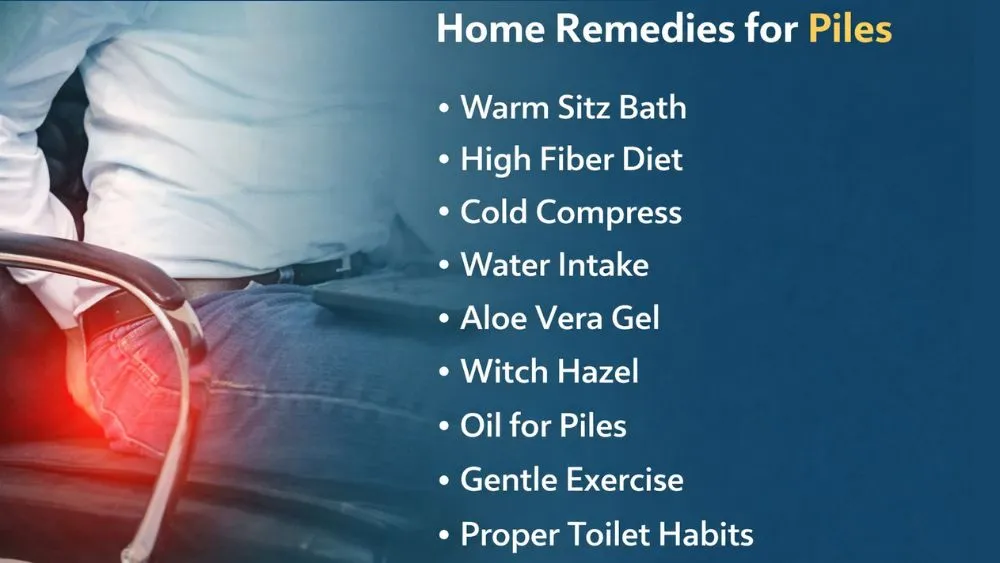
These 10 home remedies for piles are backed by how the body actually responds to hemorrhoid swelling, irritation, and constipation.
1. Warm Sitz Bath
A sitz bath is the most immediately effective remedy for piles pain. Fill a shallow tub or sitz bath basin with warm water (not hot). Sit in it for 15 to 20 minutes. Do these two to three times a day, especially after a bowel movement.
Warm water increases blood flow to the area and relaxes the internal anal sphincter muscle. That muscle is often in spasm during a pile. Once it relaxes, pain drops fast. No soap or additives needed. Plain warm water works.
2. High Fiber Diet for Piles Management
Hard stools are the main trigger for piles pain and bleeding. Fiber softens stool by absorbing water in the gut. Aim for 25 to 35 grams of fiber daily. Most adults get around 15 grams. That gap is a big reason piles keep coming back.
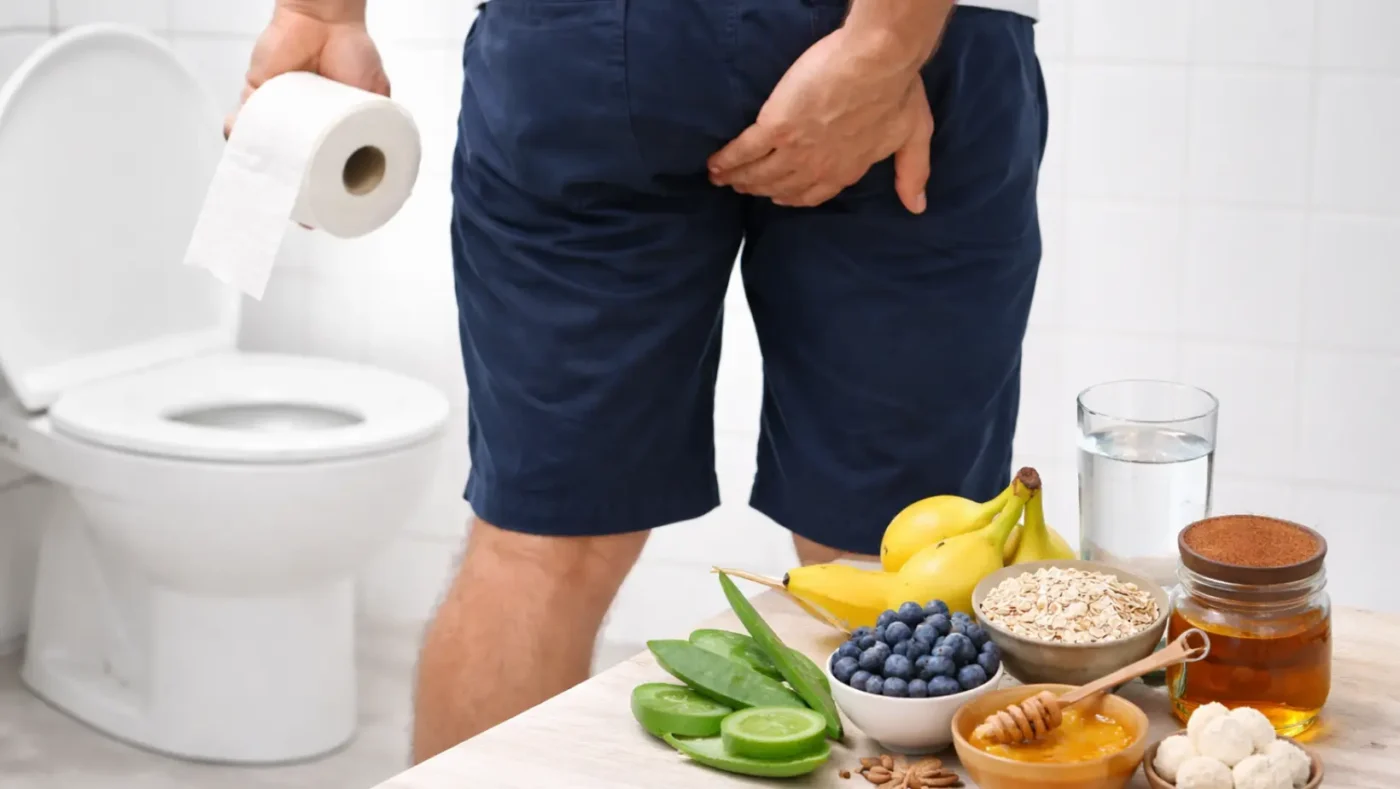
A high-fiber diet for piles management means adding oatmeal, lentils, brown rice, whole wheat bread, and fruits like papaya, pear, and banana to daily meals. Soaked flaxseeds work well too. One tablespoon soaked overnight adds around 3 grams of fiber and acts as a natural stool softener.
3. Increase Water Intake
Fiber works only when there is enough water in the body. Without water, fiber can actually make stool harder. Drink 2 to 3 liters of water a day. If you sweat a lot or live in a hot climate, go closer to 3 liters.
Dehydration is one of the most overlooked causes of constipation. Fix hydration, and bowel movements become easier, which directly reduces straining.
4. Cold Compress
A cold compress reduces swelling and numbs pain fast. Wrap ice in a clean cloth; never apply ice directly to skin. Press it against the affected area for 10 to 15 minutes. Repeat every few hours during an acute flare.
Cold narrows blood vessels temporarily. This reduces the size of swollen hemorrhoidal tissue and brings down the burning sensation. It does not heal piles, but it gives fast symptom relief while other remedies do the deeper work.
5. Aloe Vera Gel
Fresh aloe vera gel contains compounds called anthraquinones and acemannan. Anthraquinones have a mild laxative effect when ingested. Acemannan accelerates tissue repair and reduces inflammation when applied topically.
Apply pure aloe vera gel (no added alcohol or fragrance) directly to external piles. Leave it on. Repeat two to three times a day. For internal piles, do not insert anything inside. An external application at the anal opening is enough to reduce irritation.
6. Witch Hazel
Witch hazel is an astringent. It tightens and shrinks swollen tissue on contact. It contains tannins, which are plant compounds that reduce bleeding and inflammation in surface tissue.
Apply witch hazel with a cotton pad to external hemorrhoids two to three times a day. Tucks medicated pads use witch hazel as their active ingredient. The plain, alcohol-free liquid from a pharmacy works the same way at a lower cost. This is one of the most researched home remedies for piles with documented results.
7. Best Oil for Piles Treatment at Home
The best oil for piles treatment at home depends on what you need. Coconut oil soothes burning and reduces surface irritation. It contains lauric acid, which has anti-inflammatory properties. Olive oil improves the elasticity of blood vessel walls.
Apply oil externally only. A small amount around the anal area after a sitz bath works well. Never insert oils internally. The best oil for hemorrhoid treatment at home for most people is coconut oil for external flare relief and olive oil as part of a daily diet for long-term vein health.
8. Avoid Straining During Bowel Movements
Straining is how piles form in the first place. It also makes existing ones worse. If a bowel movement does not happen within two to three minutes, get up and try later. Sitting and pushing for extended periods raises pressure in the rectal veins by a large amount.
Use a footstool to prop your feet up slightly while on the toilet. This changes the angle of the rectum and makes bowel movements easier without straining. This position is sometimes called the squatting position, and it is the natural angle the colon prefers.
9. Gentle Exercise (Walking)
Prolonged sitting slows the movement of food and stool through the gut. A 20- to 30-minute walk daily keeps gut motility regular. It also reduces pressure on rectal veins by improving blood circulation in the pelvic area.
Avoid heavy weight lifting or high-intensity exercise during a piles flare. These activities increase abdominal pressure. Walking is enough, and it makes a real difference in how frequently constipation happens.
10. Proper Toilet Habits
Do not sit on the toilet for more than five minutes. Phones and reading material in the bathroom are a real problem here. Extended sitting on a toilet seat creates a pressure vacuum around the rectal area, which pushes blood into hemorrhoidal veins.
Respond to the urge to go as soon as it comes. Holding it in causes stool to dry out, making it harder to pass later. These two habits alone prevent many cases of piles from forming.
Quick Relief for Hemorrhoids at Home
For quick relief for hemorrhoids at home, combine these in the first 24 to 48 hours:
- Sitz bath for 15 to 20 minutes twice a day
- Cold compress between sitz baths
- Over-the-counter cream with hydrocortisone 1% (reduces inflammation fast)
- Avoid sitting for long stretches. Stand or lie down instead.
Mild cases feel significantly better within two to three days with this routine. The key is doing all four together, not picking one and waiting.
Quick relief for hemorrhoids at home is about reducing swelling and the urge to scratch or rub the area. Both the sitz bath and cold compress handle that when used back to back.
Home Remedy for Bleeding Piles
Small streaks of bright red blood on toilet paper after a bowel movement are common with external piles. This happens because swollen tissue near the anal opening gets irritated during the passage of stool.
A home remedy for bleeding piles focuses on removing the root cause. Softer stools mean less trauma to swollen tissue. That means less bleeding.
Supportive care for bleeding piles:
- Increase fiber to 30 grams daily immediately
- Drink at least 2.5 liters of water
- Take a sitz bath after every bowel movement
- Avoid constipation at all costs
Stop using any scented wipes or soaps in the area. They irritate already-damaged tissue.
Seek medical care if bleeding is heavy (blood dripping into the bowl, not just on paper), persistent beyond a week, or comes with dizziness or fatigue. That level of bleeding is not a home remedy for a bleeding piles situation. It needs a gastroenterologist or colorectal surgeon.
High Fiber Diet for Piles Management
A high-fiber diet for piles management is the most important long-term change a person with recurring piles can make.
Best foods to add:
- Oatmeal (1 cup cooked = 4 grams of fiber)
- Lentils (1 cup cooked = 15 grams of fiber)
- Brown rice, whole wheat bread, and whole wheat pasta
- Leafy vegetables like spinach, kale, and cabbage
- Papaya, pear, and banana
- Soaked flaxseeds (1 tablespoon = 3 grams fiber plus mucilage that coats the gut)
Foods to reduce:
- White bread, white rice, and processed snacks (zero fiber)
- Excess spicy food if it triggers burning during bowel movements
- Alcohol and caffeine in large amounts (both dehydrate)
A high-fiber diet for piles management should be built gradually. Adding 30 grams of fiber overnight when the body is used to 10 grams causes gas and bloating. Add 5 grams per week until you reach the target.
Preventing Piles Recurrence
Piles come back when the lifestyle does not change. The home remedies for piles listed here are treatment tools. Prevention requires daily habits.
- Keep bowel movements regular with fiber and hydration
- Walk daily
- Avoid sitting for more than 45 minutes without a short break
- Maintain a healthy body weight (excess abdominal fat raises rectal pressure)
- Never strain during bowel movements
Recurrence rate is high for people who treat a flare and then return to the same diet and habits. The recurrence rate for piles after non-surgical treatment is around 10 to 50%, depending on diet and lifestyle habits.
When to See a Doctor
Home remedies for piles are not the right answer for every situation. See a doctor when:
- Bleeding is heavy or continues beyond one week
- Pain is severe and does not improve with sitz baths
- Hemorrhoid tissue protrudes and cannot be pushed back in
- Symptoms persist beyond two weeks
- There is fever, discharge, or pus (sign of abscess)
Medical procedures available at that point include rubber band ligation, infrared coagulation, laser treatment, and surgical hemorrhoidectomy. These are outpatient procedures in most cases.
How Long Do Piles Take to Heal?
- Mild cases: 3 to 7 days with consistent home remedies for piles
- Moderate cases: 1 to 2 weeks with sitz baths, fiber, and topical treatment
- Chronic or prolapsed cases: Medical treatment needed; healing varies by procedure
FAQs
Can piles go away without surgery?
Yes. Grade 1 and grade 2 piles resolve without surgery in most cases. Sitz baths, fiber increase, and avoiding straining are enough for early-stage piles. Grade 3 and grade 4 (prolapsed) almost always need rubber band ligation or surgery to fully resolve.
Is coconut oil safe for piles?
Yes, for external use only. Coconut oil reduces surface burning and irritation due to its lauric acid content. It does not shrink hemorrhoids. Use it after a sitz bath on external piles. Never apply it internally or as a substitute for medical treatment in prolapsed cases.
What is the fastest way to shrink hemorrhoids?
A cold compress reduces swelling fastest, within 10 to 15 minutes. Witch hazel is applied after shrinks surface tissue due to its tannin content. For internal hemorrhoids, a sitz bath combined with a high-fiber diet shows a visible reduction within 3 to 5 days in mild cases.
Can piles cause serious problems?
Yes. Untreated piles can cause chronic anemia from repeated blood loss, strangulated hemorrhoids (where the blood supply gets cut off, causing intense pain), and thrombosed hemorrhoids (blood clots inside the vein). These conditions need emergency medical care. Home remedies do not fix them.
Are piles and fissures the same?
No. Piles are swollen veins. Fissures are small tears in the lining of the anus. Both cause pain and bleeding but feel different. Fissures cause a sharp, cutting pain during and after bowel movements. Piles cause pressure, fullness, and a dull ache. Treatment overlaps partially (fiber, sitz bath), but fissures often need additional treatment like topical nitrates or calcium channel blockers.