
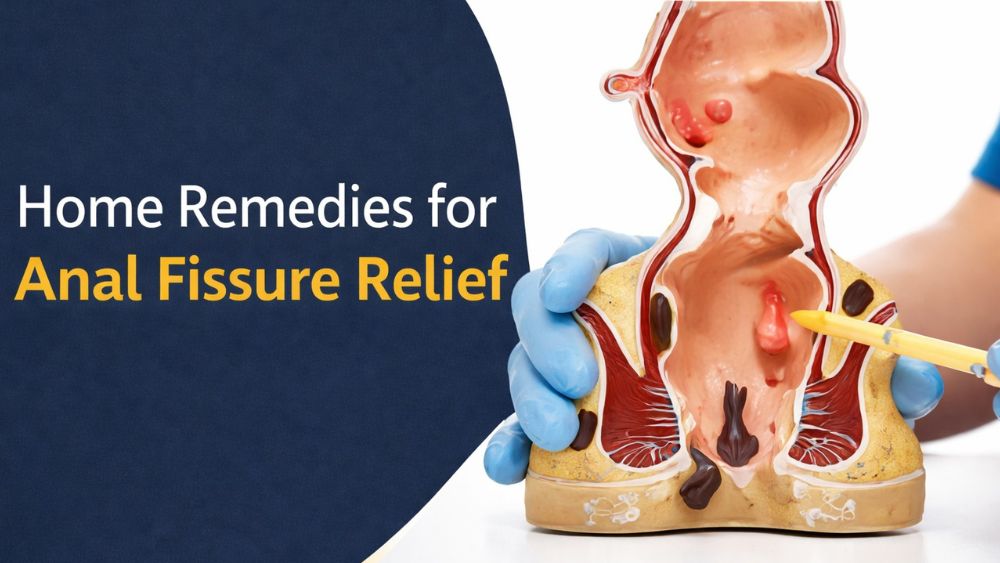
An anal fissure is a small tear in the thin tissue that lines the opening of the anus. It causes sharp pain during bowel movements, sometimes followed by a burning sensation that lasts for hours. You may feel too embarrassed to talk about it, but it is common, treatable, and most acute cases heal completely with the right home remedies for anal fissure.
The key factor in healing is reducing the cycle of hard stool, spasm, and poor blood flow to the area.
Can an Anal Fissure Heal at Home?
Yes, most acute anal fissures heal within 4 to 6 weeks with consistent home care. The strategy focuses on three things: softening the stool, relaxing the anal sphincter muscle, and improving blood circulation to the tear.
- Acute fissure (under 6 weeks): Responds well to home remedies for anal fissure. Most heal completely without medication.
- Chronic fissure (over 6 to 8 weeks): Usually develops a skin tag at the base and does not heal on its own. Needs prescription creams or a minor procedure.
Treating a chronic fissure with only home care delays healing and prolongs pain.
7 Home Remedies for Anal Fissure Relief
These 7 home remedies for anal fissure relief address both the symptom (pain) and the root problem (hard stool plus muscle spasm). Use all of them together for the fastest recovery.
1. Warm Sitz Baths
A sitz bath is a shallow, warm water soak for the anal area. Fill a basin or your bathtub with a few inches of warm (not hot) water. Sit in it for 15 to 20 minutes. Do this 2 to 3 times daily, and always after a bowel movement.
The warm water relaxes the internal anal sphincter muscle. Relaxing it even temporarily allows blood to return and tissue repair to begin. Warm sitz baths significantly reduce anal resting pressure. This is the single most important home remedy for anal fissure on this list.
2. Increase Dietary Fiber
Fiber bulks up the stool and makes it softer, which means less force and friction during a bowel movement. The target is 25 to 35 grams of fiber per day. Most adults eat less than 15 grams daily.
Good fiber sources for fissure recovery:
- Soaked flaxseeds (1 tablespoon provides 3 grams of soluble fiber)
- Oatmeal (4 grams per cup)
- Pears with the skin on (5 grams each)
- Lentils (15 grams per cup, cooked)
- Psyllium husk (5 to 7 grams per teaspoon, taken with a full glass of water)
Add fiber gradually. Adding too much too fast causes gas and bloating, which creates a different problem.
3. Drink Adequate Water
Fiber without water makes constipation worse, not better. Water is what activates the fiber and keeps stool soft. Drink 2 to 3 liters of water daily. That is roughly 8 to 10 glasses.
Caffeinated drinks like coffee and tea are mildly dehydrating. If you drink 3 cups of coffee daily, your actual water intake needs to be higher to compensate. If you have fissures and drink a lot of coffee, you struggle to heal because you are chronically slightly dehydrated without realizing it.
4. Use Stool Softeners If Needed
When diet alone is not enough, stool softeners provide reliable relief. Lactulose is an osmotic laxative that draws water into the colon. Psyllium husk acts as a bulk-forming agent. Both are available without a prescription.
Lactulose: 15 ml once or twice daily, adjusted based on stool consistency. Psyllium husk: 1 teaspoon in a full glass of water before bed. Do not use stimulant laxatives like senna as a first choice. They cause cramping, and the body becomes dependent on them over time.
5. Apply Coconut Oil or Petroleum Jelly
Applying a thin layer of coconut oil or plain petroleum jelly (Vaseline) to the anal opening before a bowel movement reduces friction significantly. Less friction means less tearing at the fissure site during passage of stool.
Coconut oil has an additional benefit. It contains lauric acid, which has antimicrobial properties that reduce the risk of secondary infection at the fissure site. Apply gently with a clean fingertip. Do not use any product containing fragrances, alcohol, or numbing agents like benzocaine, as these irritate the already sensitive tissue.
6. Gentle Physical Activity
Walking for 20 to 30 minutes daily improves bowel motility, which means food moves through the digestive tract more efficiently and stool does not sit in the colon long enough to harden. Prolonged sitting slows bowel function.
Avoid high-intensity exercise during active pain. Cycling, in particular, puts direct pressure on the anal area and worsens symptoms. Stick to flat walking during recovery.
7. Avoid Straining at All Costs
Straining during a bowel movement tears the fissure further. It also spikes pressure in the anal sphincter, triggering a stronger spasm that reduces blood flow for hours afterward.
Two rules that prevent straining:
- Respond to the urge immediately. Do not delay. Stool held too long in the colon loses water and becomes harder.
- Do not sit on the toilet for more than 3 to 5 minutes. Reading or using a phone on the toilet causes unconscious straining and increases anal pressure significantly.
A footstool under the feet while sitting on the toilet changes the body’s angle from 90 degrees to about 35 degrees, which is the natural squatting position. This straightens the lower colon and reduces the effort needed to pass stool.
Foods to Eat With Anal Fissure
Foods to eat with an anal fissure focus on softening stool and reducing inflammation in the surrounding tissue.
Best choices:
- Papaya: Contains the papain enzyme, which aids protein digestion and softens stool. Eat ripe.
- Banana (ripe): High in pectin, a soluble fiber that adds bulk to soft stools.
- Oatmeal: Excellent source of beta-glucan, a fiber that draws water into the stool.
- Leafy greens: Spinach and kale are high in magnesium, which relaxes muscle tissue, including the anal sphincter.
- Lentils and beans: High-fiber protein sources that support soft, bulky stools.
- Soaked flax seeds: Mucilaginous when soaked. They coat the intestinal lining and ease passage.
- Whole grains: Brown rice, whole wheat bread, and millet are fiber-dense and gentle on digestion.
Foods to Avoid
- Processed foods with low fiber content (white bread, packaged snacks)
- Excess dairy, especially cheese, which is constipating for many people
- Spicy foods if they cause burning at the fissure site after a bowel movement
- Alcohol and caffeinated drinks, which dehydrate and harden stool
- Fried foods, which slow digestion and increase the time stool spends in the colon
Anal Fissure Constipation Relief
Anal fissure constipation relief addresses the root cause of why fissures form and persist.
The cycle works like this: hard stool tears the tissue. The body responds with a sphincter spasm to protect the area. That spasm reduces blood flow. Less blood flow means slower healing. The next bowel movement causes another tear before the previous one closes.
Breaking that cycle requires two things happening at the same time: softer stool and a relaxed sphincter.
Practical anal fissure constipation relief steps:
- Establish a fixed toilet time each morning, ideally 20 to 30 minutes after breakfast. Food entering the stomach triggers the gastrocolic reflex, which stimulates the colon to move. Working with this reflex reduces the need to strain.
- Take psyllium husk or lactulose until stool is consistently soft. Do not stop early just because the pain reduces.
- Drink the full 2 to 3 liters of water. Fiber without water makes constipation worse.
- Avoid delaying the urge to use the bathroom. Every delay allows the stool to harden further.
Anal Fissure Without Surgery Treatment
Anal fissure treatment without surgery works for most acute cases. Surgery is rarely needed in the first 6 to 8 weeks.
When home care fails or the fissure becomes chronic, the next steps before surgery include:
- Topical nitroglycerin ointment (0.2%): Relaxes the internal sphincter and increases blood flow to the fissure. Applied twice daily. Side effect is headache in some patients.
- Calcium channel blocker creams (diltiazem or nifedipine): Similar mechanism to nitroglycerin, fewer side effects. Applied twice daily.
- Botox injection: A small amount of botulinum toxin injected into the sphincter muscle temporarily paralyzes it, breaking the spasm cycle and allowing healing. Effective in about 70% of chronic cases without the need for surgery.
If all of the above fail:
- Lateral internal sphincterotomy: A minor surgical procedure where a small portion of the sphincter muscle is cut to permanently reduce spasm. Success rate exceeds 90%. It is the last resort, not the first.
Anal fissure without surgical treatment handles the vast majority of cases when started early and applied consistently.
Preventing Anal Fissure Recurrence
Preventing anal fissure recurrence requires the same habits that healed it in the first place, continued permanently.
Fissures recur in roughly 30% of patients who return to low-fiber, low-water diets. The recurrence rate drops significantly with consistent dietary habits.
Long-term prevention:
- Keep dietary fiber at 25 grams per day minimum
- Stay hydrated year-round, not just during a flare-up
- Maintain a regular toilet schedule
- Do not ignore constipation for more than 2 days. Treat it immediately with psyllium husk or lactulose before hard stool causes a new tear.
- Exercise daily to keep bowel motility active
If you start a new high-protein, low-carbohydrate diet (like keto), you often develop fissures within weeks because fiber intake drops sharply. If following a low-carb diet, add psyllium husk daily as a preventive measure.
How Long Does an Anal Fissure Take to Heal?
- Acute fissure: 4 to 6 weeks with consistent home remedies for anal fissure
- Chronic fissure: Does not heal reliably without prescription creams or a minor procedure
Warning signs that a fissure has become chronic:
- A small fleshy lump (skin tag) at the outer edge of the fissure. This is scar tissue and signals a healing problem.
- Severe burning pain lasting 1 to 2 hours after every bowel movement
- Persistent bright red bleeding at each bowel movement for more than 6 weeks
If any of these appear, home care alone will not resolve the fissure.
When to See a Doctor
Stop relying only on home remedies for anal fissures and get a medical evaluation if:
- Pain persists beyond 6 weeks without any improvement
- Rectal bleeding is heavy or increasing
- Fever develops alongside anal pain (possible abscess)
- You have a history of Crohn’s disease, as fissures in Crohn’s patients often appear in unusual locations and require different treatment entirely
- Fissures keep returning despite maintaining a healthy diet
Conclusion
Anal fissures are painful and disruptive, but they are not permanent for most people. The home remedies for anal fissure work when applied together and consistently. Sitz baths, fiber, water, and stool softeners address the full problem. Most acute fissures respond within 4 to 6 weeks.
If the pain is still present after 6 to 8 weeks despite doing everything right, see a colorectal specialist. A prescription cream or a single Botox injection often resolves what months of home care could not.
FAQs
Can anal fissures heal without surgery?
Yes. Around 80 to 90% of acute anal fissures heal completely without surgery using fiber, water, sitz baths, and stool softeners within 4 to 6 weeks. Chronic fissures lasting beyond 8 weeks may need topical nitroglycerin or Botox injection before surgery is considered. Surgery applies to fewer than 10% of total fissure cases.
Is coconut oil good for anal fissure?
Yes. Coconut oil reduces friction at the anal opening before a bowel movement and contains lauric acid, which reduces the risk of infection at the fissure site. Apply a small amount with a clean fingertip before each bowel movement. Do not use coconut oil products with added fragrances or preservatives, as these irritate the tissue further.
What is the fastest way to heal an anal fissure?
The fastest combination is warm sitz baths 3 times daily, plus psyllium husk daily, plus 3 liters of water. This trio targets all three causes at once: sphincter spasm, hard stool, and dehydration. Most patients who follow all three consistently report significant pain reduction within 7 to 10 days, even though full tissue healing takes 4 to 6 weeks.
Can stress cause fissures?
Not directly. Stress does not tear anal tissue. But stress causes changes in gut motility, which leads to constipation or diarrhea in many people. Both conditions increase fissure risk. Chronic stress also elevates cortisol, which slows tissue repair throughout the body, including at the fissure site. So stress worsens healing even if it did not cause the fissure.
Are fissures dangerous?
No, in most cases. Acute fissures are painful but not medically serious. The risk increases if a fissure becomes infected, developing into an anal abscess, which causes fever and severe throbbing pain. An untreated abscess can become a fistula, an abnormal tunnel from the anal canal to the skin. That does require surgery. Bleeding fissures rarely cause significant blood loss.