Heart rate during a heart attack is not the reliable warning signal you believe it to be. It can stay perfectly normal while the heart sustains serious damage. A normal heart rate during a heart attack does not rule out a myocardial infarction.
The only safe response to chest pain with any associated symptom (no matter what the pulse reads) is an immediate call to emergency services. Heart rate during a heart attack should never be used alone to decide whether an emergency is real.
Cardiology works on patterns across multiple signs, such as heart muscle strength and electrical activity in the heart, not single readings.
Normal Heart Rate During Heart Attack
A normal heart rate is between 60 and 100 beats per minute (bpm) for most adults. A heart attack can start, progress, and cause permanent heart muscle damage, all while the pulse stays completely within that range.
This happens because heart rate and heart muscle function are separate systems. The sinoatrial (SA) node sets the pace. Unless the attack directly disrupts that node or the surrounding electrical tissue, the pulse rhythm stays intact. The cardiac muscle suffers, and the rate does not necessarily change.
If someone has chest pressure, jaw pain, or breathlessness, checking the pulse and finding it normal is not reassurance.
Irregular Heartbeat During Heart Attack
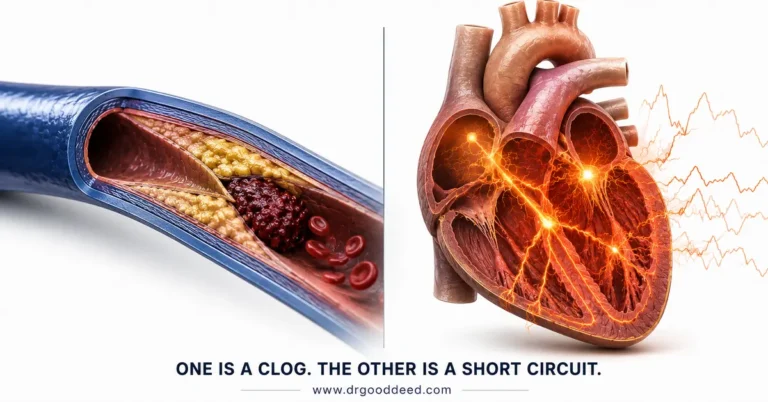
When the heart muscle loses blood supply, it becomes electrically unstable. Damaged cells fire erratically. That erratic firing disrupts the heart’s normal rhythm.
Common Arrhythmias
- Ventricular tachycardia (VT): The lower chambers beat very fast, often 150–250 bpm, but ineffectively. Blood output drops. The person feels faint, short of breath, or collapses.
- Ventricular fibrillation (VF): The most dangerous. The ventricles quiver instead of pumping. Cardiac output stops. This is cardiac arrest. Without a defibrillator within minutes, it is fatal.
- Atrial fibrillation (AF): The upper chambers fire chaotically. It reduces pumping efficiency by roughly 20–30% and increases clot risk in an already-stressed heart.
Irregular heartbeat during heart attack from VF is responsible for the majority of sudden cardiac deaths that occur outside hospitals. Many of these happen within the first 30–60 minutes of symptom onset before emergency services arrive.
Why Arrhythmias Occur
Blocked blood flow starves heart cells of oxygen. Oxygen-deprived cells cannot maintain their normal electrical charge. They become irritable, firing at the wrong time or failing to fire at all. Scar tissue from previous damage makes this worse because electrical signals travel around dead tissue unpredictably.
The bigger the blocked artery and the more muscle affected, the higher the risk of irregular heartbeat during a heart attack.
Silent Heart Attack Heart Rate
Silent heart attack heart rate changes are subtle, sometimes absent entirely. A silent heart attack causes the same artery blockage and muscle damage as a standard one, but without the dramatic chest pain. The person may feel mildly tired or slightly unwell.
In a silent heart attack, heart rate often stays within normal range throughout the event. There is no rapid racing pulse or palpitations to prompt a trip to the hospital. The electrical system remains undisturbed while the muscle quietly sustains damage.
This pattern is most common in diabetics and older adults. Diabetes damages nerve fibers, including the ones that carry pain signals from the heart. Without those signals, the heart attack is neurologically silent. The pulse stays normal. The body does not respond with the typical adrenaline surge that pushes heart rate up.
Silent heart attacks account for roughly 45% of all myocardial infarctions. They are found weeks or months later during routine ECGs, revealing the damage long after it occurred.
Heart Rhythm Changes During Heart Attack
Heart rhythm changes during heart attack depend on which part of the heart is affected and which artery is blocked.
STEMI Patterns
STEMI (complete artery blockage) carries the highest arrhythmia risk. Large segments of muscle lose blood supply at once. The electrical instability spreads faster. VF risk is highest in the first hour of a STEMI, which is why rapid defibrillator access saves lives.
NSTEMI Patterns
NSTEMI (partial blockage) typically produces milder heart rhythm changes during heart attack. The arrhythmia risk is lower but not zero. Sustained VT and AF still occur. The rhythm disturbances tend to be less severe and more manageable with medication.
Heart Block Possibility
Inferior wall heart attacks (those affecting the bottom of the heart, supplied by the right coronary artery) frequently cause AV (atrioventricular) block. This means the electrical signal from the upper chambers slows or fails to reach the lower chambers.
As a result, the heart rate drops significantly. Bradycardia (heart rate below 60 bpm) during a heart attack involving the inferior wall. It reflects direct damage to the AV node’s blood supply.
Heart Attack Symptoms Heart Rate
Heart attack symptoms, like heart rate changes, are one part of a broader symptom picture. The pulse alone rarely tells the full story.
What heart patients should watch for:
- Palpitations: A fluttering, skipping, or pounding sensation. You feel beats seem wrong. This often reflects early arrhythmia.
- Rapid pulse: Heart rate above 100 bpm (tachycardia) in a person with chest pain is a cardiac warning. The heart compensates for poor output by beating faster.
- Weak pulse: A pulse that feels thin or difficult to detect at the wrist suggests low blood pressure. This indicates the heart is not pumping enough blood.
- Associated chest pain: Pressure, heaviness, or tightening in the chest alongside any pulse abnormality is an emergency combination.
- Shortness of breath: When heart attack symptoms occur and the heart rate runs high (above 120 bpm), the heart fills incompletely between beats. This reduces oxygenation and triggers breathlessness even at rest.
The combination of chest discomfort plus any pulse change (faster, slower, or irregular) warrants an emergency call immediately.
When Heart Rate Becomes Dangerous
Not every abnormal heart rate during a heart attack is immediately life-threatening. But certain thresholds demand emergency action.
- Sustained heart rate above 120 bpm: The heart beats too fast to fill properly between contractions. Cardiac output drops. Blood pressure falls. Sustained tachycardia above 150 bpm during a heart attack is associated with significantly higher mortality.
- Heart rate below 40 bpm with symptoms: Severe bradycardia during an inferior MI means the electrical conduction system is failing. Below 40 bpm with lightheadedness or low blood pressure requires immediate pacing.
- Sudden collapse: Typically caused by VF. No meaningful pulse is present. Without immediate CPR and defibrillation, survival drops by 10% for every minute that passes without treatment.
- Loss of consciousness: Sudden loss of consciousness with no pulse requires CPR to begin immediately, and emergency services must already be called.
VF during a heart attack kills within 4–6 minutes if untreated.
How Doctors Monitor Heart Rate in a Heart Attack
Once a patient arrives at the ER with suspected MI, heart rate during heart attack monitoring becomes continuous and multi-layered.
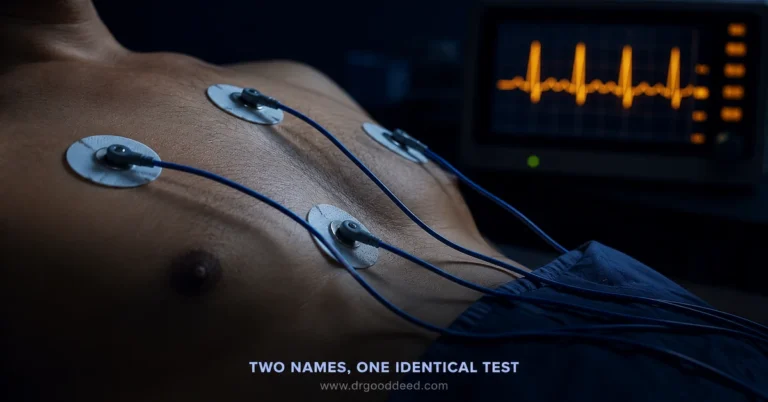
- 12-lead ECG: It captures the heart’s electrical activity in detail, identifies the type of heart attack, and flags arrhythmias instantly. A STEMI requires this within 10 minutes of arrival under international treatment guidelines.
- Cardiac telemetry: Continuous wireless heart monitoring. Every beat transmits to a central nursing station. Any rhythm change triggers an alert. Patients stay on telemetry for 24–48 hours minimum after a heart attack.
- Continuous rhythm observation: In the ICU or cardiac care unit, live rhythm strips display on bedside monitors. Staff watches for VT, VF, heart block, or rate extremes in real time.
This monitoring structure exists because the highest-risk arrhythmia window extends for 24–72 hours after the initial event.
FAQs on Heart Rate During Heart Attack
Does heart rate always increase during a heart attack?
No. Heart rate during a heart attack stays within 60–100 bpm in many cases. Inferior MI specifically causes bradycardia (a drop below 60 bpm) due to AV node damage. Tachycardia occurs in large anterior STEMIs and when pain triggers an adrenaline surge.
Can heart rate stay normal during a heart attack?
Yes. A completely normal pulse does not exclude a heart attack. The SA node sets heart rate independently from coronary blood flow. Unless the electrical system is directly affected, the rate stays normal while muscle damage progresses.
Is irregular heartbeat common during a heart attack?
Yes. Up to 90% of STEMI patients develop some form of arrhythmia within the first 24 hours. Ventricular ectopic beats are the most common. VF (the lethal form) occurs in roughly 5–10% of STEMI cases, mostly in the first hour.
Can bradycardia occur during a heart attack?
Yes. Inferior wall MI damages the right coronary artery’s supply to the AV node. This slows or blocks the electrical signal, dropping heart rate to 30–50 bpm. Atropine 0.5–1 mg IV is the first-line treatment. Temporary pacing follows if atropine fails.
Is tachycardia dangerous in a heart attack?
Yes. Sustained VT above 150 bpm during a heart attack reduces cardiac output by up to 40%. The heart beats too fast to fill properly. If VT degenerates into VF, the heart stops pumping. Electrical cardioversion is required immediately.
Does a silent heart attack change heart rate?
No, usually not. Silent heart attack heart rate remains normal in most cases because the autonomic nervous system does not trigger a stress response without pain signals. This is particularly true in diabetics with nerve damage.
Can heart rhythm changes cause sudden death?
Yes. Ventricular fibrillation from heart rhythm changes during heart attack is the leading cause of sudden cardiac death. It causes 300,000+ deaths per year in the US alone. Most occur outside hospitals, within 1–2 hours of symptom onset.
Should I check my pulse during chest pain?
No. Checking your pulse wastes time and gives false reassurance if normal. Call emergency services first. A normal heart rate during heart attack does not make the situation safe. Let paramedics assess rhythm with proper equipment.
Does anxiety raise heart rate during chest pain?
Yes. Anxiety triggers adrenaline release, pushing heart rate to 90–130 bpm. This mimics cardiac tachycardia. The difference: anxiety-induced tachycardia resolves with rest within minutes. Heart attack symptoms heart rate changes do not improve with calm and persistence or worsen.
When should heart rate changes worry me?
Any heart rate above 120 bpm or below 50 bpm combined with chest pain, breathlessness, or sweating is an emergency. Irregular pulse with any of those symptoms requires immediate emergency services