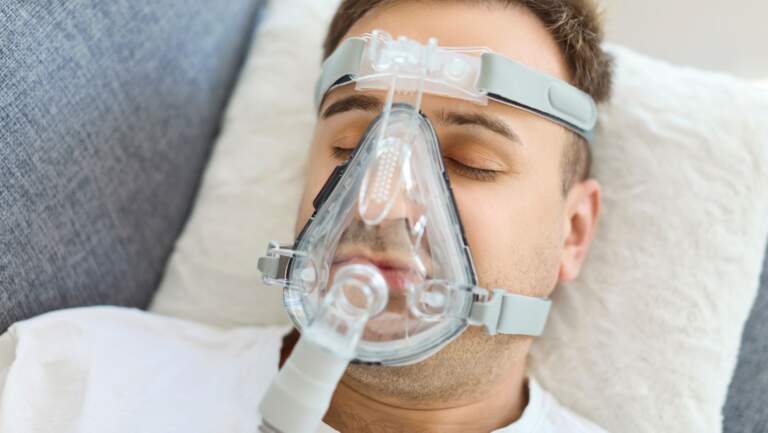

No. You cannot get 8 hours of sleep in 4 hours. Your brain needs to pass through multiple sleep stages in sequence, and cutting that time in half does not compress the process. It just cuts it short.
How Much Sleep the Body Actually Needs
How much sleep does the body actually need comes down to 7 to 9 hours for most adults. This is backed by the American Academy of Sleep Medicine and consistent across decades of clinical research. Below 6 hours per night, cognitive performance degrades at the same rate as alcohol intoxication. The brain just stops telling you it’s impaired.
Recommended Sleep Duration for Adults
- Adults (18–64): 7–9 hours
- Older adults (65+): 7–8 hours
- Teenagers (14–17): 8–10 hours
They reflect how long the body needs to complete full recovery.
Why Sleep Needs Vary Between People
Genetics plays a real role in sleep. A gene variant called ADRB1 allows roughly 1–3% of people to function well on 6 hours or less. For the rest, individual variation exists within the 7–9-hour range but not below it. Stress load, physical activity, illness, and age all shift where someone lands within that window.
Short Sleepers vs Normal Sleepers
True short sleepers wake after 6 hours feeling genuinely rested without naps or caffeine to survive the afternoon. If you need an alarm and coffee every morning, that is not a short sleeper pattern. That is sleep deprivation normalized over time.
Why Most People Cannot Function on 4 Hours
Four hours covers two sleep cycles at most. Full recovery requires four to five. The gap shows up as slow reaction times, poor short-term memory, worse emotional control, and a weakened immune system.
After two weeks on 4 hours, University of Pennsylvania research found subjects performed at the same level as people who had not slept for 48 hours straight.
Sleep Cycles and REM Sleep Duration
Sleep cycles and REM sleep duration determine how rested you actually feel, not just the total time in bed. One cycle lasts roughly 90 minutes. Each cycle moves through four stages, and each stage handles something different.
The Four Stages of the Sleep Cycle
- Stage 1 (NREM 1): Light sleep. Lasts 1–5 minutes. Easy to wake from.
- Stage 2 (NREM 2): Heart rate slows, body temperature drops. Lasts 10–25 minutes.
- Stage 3 (NREM 3): Deep sleep. Physical repair happens here. Hardest to wake from.
- Stage 4 (REM): Brain becomes active again. Memory consolidation and emotional processing occur.
Average Length of a Sleep Cycle
A cycle averages 90 minutes. The first two cycles of the night carry more deep sleep. The final two to three cycles carry longer REM periods. Both matter. They serve completely different recovery functions.
Role of REM Sleep in Brain Recovery
REM sleep is when the brain processes the day’s events, clears emotional stress, and solidifies learning into long-term memory. After 4 hours, the brain gets at most one short REM period, sometimes under 20 minutes. Missing REM consistently links directly to anxiety, memory issues, and emotional dysregulation.
Why Multiple Cycles Are Necessary
Each sleep cycle is not a repeat. Early cycles repair the body. Later sleep cycles repair the mind. Stop at 4 hours and you collect the physical repair but almost none of the mental recovery.
Deep Sleep Importance for Brain Recovery
Deep sleep importance for brain recovery is not theoretical. During Stage 3, the brain activates the glymphatic system, which flushes out toxic waste proteins including beta-amyloid. Beta-amyloid buildup is directly linked to Alzheimer’s disease. One night of poor sleep reduces glymphatic clearance by up to 20%.
What happens only during deep sleep:
- Human growth hormone release for muscle and tissue repair
- Immune system reinforcement
- Blood pressure recovery for cardiovascular health
- Transfer of memories from short-term to long-term storage
- Cellular repair throughout the body
Skipping deep sleep does accelerates biological aging.
Can You Compress Sleep Into Four Hours?
You cannot compress sleep into four hours.
Scientific Studies on Sleep Restriction
A 2003 study published in the journal Sleep restricted participants to 6 hours per night for two weeks. Their cognitive performance matched that of subjects kept awake for 24 hours straight. Critically, they did not feel impaired. The brain loses its ability to judge its own impairment after chronic sleep loss.
Polyphasic Sleep Schedules Explained
Polyphasic sleep breaks sleep into multiple short blocks throughout the day. The Uberman schedule uses six 20-minute naps across 24 hours, totaling 2 hours of sleep daily.
In the early 2000s, it became popular in tech circles. Most people who attempted it reported significant cognitive decline within two weeks. The few who sustained it showed unusual genetic sleep traits.
Why Extreme Sleep Reduction Rarely Works
The brain does not restructure sleep architecture based on preference. Deep sleep and REM sleep require the full cycle sequence to trigger. Cutting total sleep time cuts these stages disproportionately, because they appear later in each cycle and later in the night.
Myths About Training Your Body to Need Less Sleep
You cannot train away sleep need the way you train for endurance sports. Sleep debt is cumulative and measurable. Subjects in the University of Pennsylvania study who slept 6 hours nightly for two weeks showed the same deficits as those who had not slept for 48 hours, regardless of how adapted they felt.
How to Maximize Deep Sleep in Less Time
When a full 8 hours is genuinely not possible, you need to maximize deep sleep in less time. These methods are research-backed.
- Fix your wake time. Waking at the same time daily stabilizes your circadian rhythm and makes sleep more efficient, even at shorter durations.
- Cool your room to 65–68°F (18–20°C). Body temperature must drop to enter deep sleep. A cooler room speeds this up.
- Cut alcohol before bed. Even 1–2 drinks reduce REM sleep duration by up to 24%.
- Avoid blue light 90 minutes before sleep. It delays melatonin production by 90 minutes to 3 hours.
- Exercise earlier in the day. Physical activity increases deep sleep intensity but raises core temperature when done late at night, which delays sleep onset.
- Try magnesium glycinate. Multiple studies show 300–400mg before bed increases deep sleep duration in adults with low magnesium levels.
Health Risks of Chronic Sleep Deprivation
Health risks of chronic sleep deprivation are specific, not vague. Sleeping under 6 hours per night consistently increases the risk of:
- Type 2 diabetes; insulin sensitivity drops 30% after just one week of 4-hour nights
- Cardiovascular disease; risk doubles compared to 7-hour sleepers
- Obesity; hunger hormone ghrelin rises 15%, satiety hormone leptin drops 15%
- Depression and anxiety disorders
- Alzheimer’s disease from reduced glymphatic clearance
- Weakened vaccine effectiveness
- Serious workplace and road accidents
A 2019 study in Nature Communications found less than 6 hours of nightly sleep raises dementia risk by 30%.
Why Sleeping Four Hours Feels Exhausting
Adenosine, a chemical that builds up during waking hours and creates sleep pressure, clears slowly during sleep. After just 4 hours, it is only partially cleared. The brain wakes into a state that biochemically still registers as needing sleep. Cortisol spikes to compensate. That combination is why 4-hour sleepers feel simultaneously wired and exhausted.
More causes:
- Incomplete growth hormone release due to cut-short deep sleep
- Emotional regulation circuits under-restored from missing REM
- Elevated inflammatory markers (IL-6, TNF-alpha) after shortened sleep
Safer Alternatives to Reduce Sleep Debt
Strategic Daytime Naps
A 20-minute nap between 1 PM and 3 PM partially clears adenosine and improves alertness for 2 to 3 hours. NASA research found a 26-minute nap improved pilot performance by 34%. Keep it under 30 minutes or you will enter deep sleep and wake up groggy.
Sleep Efficiency Techniques
Sleep efficiency is the ratio of actual sleep to time spent in bed. Most people sit around 85%. Cognitive Behavioral Therapy for Insomnia (CBT-I) raises this to 95% in clinical trials. That means you extract more recovery from the same number of hours.
Improving Sleep Quality Instead of Shortening Sleep
Better-quality 6-hour sleep beats fragmented 8-hour sleep. Address the real disruptors first: untreated sleep apnea, caffeine after 2 PM (its half-life is 5–7 hours), and chronic stress. Fixing those gives better results than cutting time further.
Recovery Sleep After Sleep Loss
Extending sleep over the following nights partially repairs sleep debt. Pre-loading sleep before a known short night reduces impairment by about 20%, not fully. You cannot bank sleep in advance and draw on it like a reserve.
When Poor Sleep Signals a Health Problem
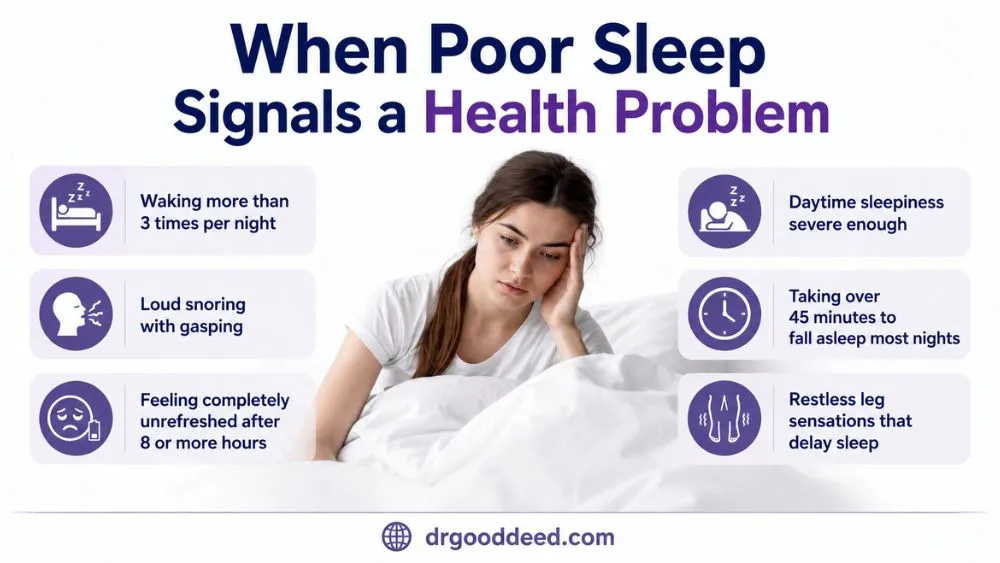
Persistent poor sleep despite good habits is often medical, not behavioral.
See a doctor if you experience:
- Waking more than 3 times per night for over 4 weeks
- Loud snoring with gasping or choking during sleep
- Feeling completely unrefreshed after 8 or more hours
- Daytime sleepiness severe enough to fall asleep while sitting still
- Taking over 45 minutes to fall asleep fast most nights
- Restless leg sensations that delay sleep
Sleep apnea affects 26% of adults aged 30–70. Most are undiagnosed. A home sleep test costs under $300 in most countries and produces a diagnosis in one night.
Frequently Asked Questions
Is it possible to sleep 8 hours in 4 hours?
No. Sleep cannot be biologically compressed. Four hours gives you roughly 2 sleep cycles. Your brain needs 4 to 5 full cycles to complete deep sleep and REM recovery. No supplement, breathing pattern, or schedule changes this requirement.
Can the body adapt to only 4 hours of sleep?
No. The body accumulates measurable cognitive and physical damage on 4 hours per night. You lose the ability to accurately feel how impaired you are, but the damage continues. University of Pennsylvania research confirmed this after 14 days of restricted sleep.
How many sleep cycles occur in 4 hours?
Roughly 2 full cycles. Each cycle runs about 90 minutes. The first two cycles carry more deep sleep and very little REM sleep, so 4 hours leaves you almost completely without REM recovery.
Why do some people claim they need very little sleep?
The ADRB1 gene mutation affects 1–3% of people and allows genuine short sleep. Everyone else who claims to function well on little sleep scores measurably impaired on objective cognitive tests, even when self-reporting that they feel fine.
What happens if you sleep only 4 hours every night?
After 10 days, your cognitive performance matches someone awake for 24 hours straight. After weeks, insulin resistance rises, immune function drops noticeably, and cardiovascular disease risk doubles compared to 7-hour sleepers.
Can naps replace lost nighttime sleep?
Partially. A 20-minute nap clears some adenosine and boosts alertness for a few hours. It does not restore the deep sleep or REM sleep missed at night. Think of it as a small recharge, not a full replacement.
What is polyphasic sleep and does it work?
Polyphasic sleep divides sleep into multiple short blocks across 24 hours. For most people, it causes cognitive decline within two weeks. It appears sustainable only for individuals with atypical genetic sleep profiles, a very small group.
How can I improve sleep quality if I sleep less?
Keep your bedroom at 65–68°F, eliminate alcohol before bed, and maintain a fixed wake time every day. Magnesium glycinate at 300–400mg before sleep increases deep sleep duration in people with low magnesium levels, which is common.
How much sleep do adults actually need to function well?
7 to 9 hours. Below 7 hours consistently, reaction time, memory, and judgment degrade. Below 6 hours, the impairment level is comparable to being legally drunk.
When should I see a doctor for sleep problems?
If you wake more than 3 times per night for 4 consecutive weeks, snore with gasping episodes, or feel completely unrefreshed after 8 or more hours, see a doctor. These are symptoms of diagnosable sleep disorders, not just poor habits.