
Medical Disclaimer: This content is for informational purposes only and is not a substitute for professional medical advice. Consult a qualified healthcare professional for personalized dietary guidance, especially if you have food allergies or a medical condition.
Normal Butter vs Peanut comes down to nutrition, taste, and your health goals. Regular butter is a dairy fat made from churned cream, providing about 102 calories per tablespoon with almost no protein. Peanut butter is made from ground peanuts and contains approximately 94 calories per tablespoon, along with 4 grams of protein and 1 gram of fiber per serving.
Neither is inherently bad. The right choice depends on your health goals, dietary needs, and portion size. This guide covers nutrition facts, digestion, weight management, practical uses, and common mistakes to avoid when choosing between butter and peanut butter..
Key Takeaways
- Peanut butter provides more protein and fiber than normal butter.
- Peanut butter contains less saturated fat, making it a better option for heart health.
- Both are calorie-dense, so portion control matters for weight management.
- Normal butter works best for baking and cooking, where its texture and flavor are important.
- Choose based on your health goals: Peanut butter offers more nutritional benefits, while butter adds richness and flavor.
Difference Between Butter and Peanut Butter
Normal butter vs peanut butter differs fundamentally in source, fat type, and nutritional value. Normal butter comes from cow’s milk fat and contains primarily saturated fat. Peanut butter comes from ground peanuts and contains primarily monounsaturated and polyunsaturated fats.
The American Heart Association classifies saturated fat (found in butter) as a contributor to LDL cholesterol elevation, while unsaturated fat (found in peanut butter) supports cardiovascular health.
For the average American consuming both regularly, understanding this difference at the fat-type level, not just calorie level, changes the decision significantly.
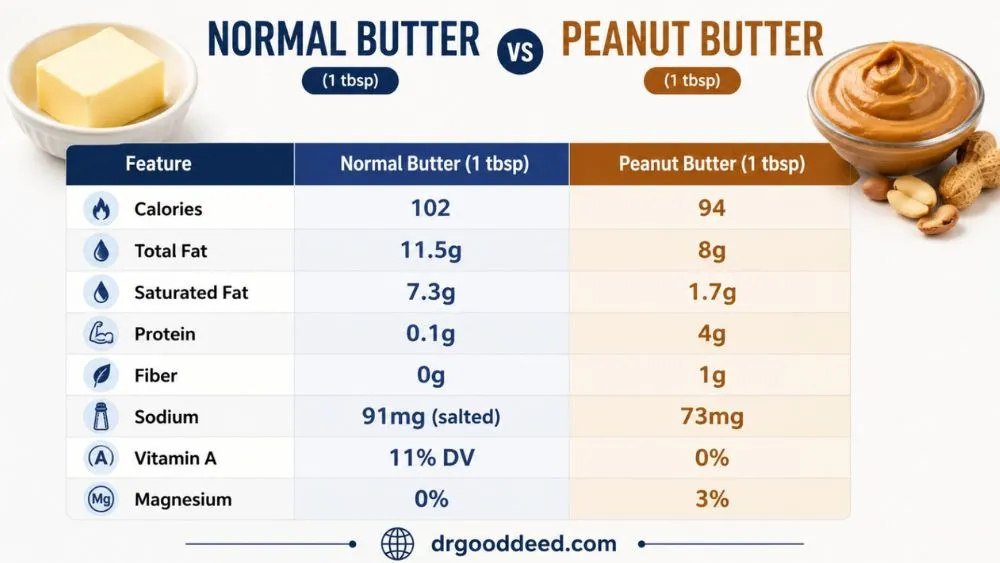
| Feature | Normal Butter (1 tbsp) | Peanut Butter (1 tbsp) |
| Calories | 102 | 94 |
| Total Fat | 11.5g | 8g |
| Saturated Fat | 7.3g | 1.7g |
| Protein | 0.1g | 4g |
| Fiber | 0g | 1g |
| Sodium | 91mg (salted) | 73mg |
| Vitamin A | 11% DV | 0% |
| Magnesium | 0% | 3% |
Nutritional Breakdown: What You’re Actually Eating
Calories and Fat Content
Normal butter is 80% fat by weight. One tablespoon delivers 7.3 grams of saturated fat, which is 36% of the American Heart Association’s daily limit of 20 grams. Peanut butter delivers 8 grams of total fat per tablespoon, but only 1.7 grams are saturated.
The remaining 6.3 grams are monounsaturated and polyunsaturated fats, the types linked to lower LDL cholesterol and reduced cardiovascular disease risk.
Protein and Fiber Differences
This is where normal butter vs peanut butter separates clearly. Normal butter contains virtually zero protein and zero fiber. Two tablespoons of peanut butter deliver 8 grams of protein and 2 grams of fiber.
For context, the USDA recommends 0.8 grams of protein per kilogram of body weight daily. A 150-pound adult needs roughly 55 grams of protein per day. Two tablespoons of peanut butter covers 14.5% of that. Butter covers none of it.
Vitamins and Minerals
Normal butter contains fat-soluble vitamins A, D, E, and K2. Vitamin K2 is specifically relevant here because it directs calcium away from arteries and toward bones. Grass-fed butter contains higher K2 levels than conventional butter.
Peanut butter supplies magnesium, phosphorus, potassium, zinc, and B vitamins including niacin (B3), which supports cholesterol metabolism. Neither food is a multivitamin, but each brings genuinely different micronutrient profiles.
Butter vs Peanut Butter for Digestion
Butter and Fat Digestion
In the peanut butter vs butter comparison, normal butter digests through bile acid emulsification in the small intestine. Its high saturated fat content can slow digestion, and people with gallbladder issues or low bile production may experience bloating and nausea after high-butter meals. Butter also contains short-chain fatty acids, particularly butyrate, which may support colon cell health when consumed as part of a balanced diet.
Peanut Butter and Fiber Support
The 1 gram of fiber per tablespoon in peanut butter feeds beneficial gut bacteria, specifically Lactobacillus and Bifidobacterium strains. A 2014 study published in the British Journal of Nutrition found that peanut consumption increased beneficial gut microbiota within 3 weeks of daily intake. The fiber slows glucose absorption, reducing post-meal blood sugar spikes.
Which Is Easier on the Stomach
Normal butter is easier for most people to tolerate in small amounts. When comparing peanut butter vs butter saturated fat, peanut butter is generally the better choice because it contains more unsaturated fat and less saturated fat. Peanut butter can cause digestive discomfort in people with peanut sensitivity or those who eat large quantities quickly. For people without peanut sensitivity or IBS, peanut butter generally digests well and promotes longer-lasting satiety because its protein and fiber help slow digestion.
Butter vs Peanut Butter for Weight Gain
High-Calorie Density of Butter
Normal butter adds calories without adding protein, fiber, or satiety signals. Calories without these elements do not trigger the hormones (GLP-1, PYY, CCK) that signal fullness to the brain. This makes it easy to overeat. Four tablespoons of butter add 408 calories with near-zero satiety effect.
That same caloric load from peanut butter provides 16 grams of protein and 4 grams of fiber, producing a measurably stronger fullness response.
Balanced Calorie and Protein in Peanut Butter
For people trying to gain lean muscle mass, peanut butter is the more useful option. It supports muscle protein synthesis because it delivers leucine and arginine alongside its calories.
A 2019 study from the Journal of the International Society of Sports Nutrition confirmed that peanut protein supports muscle recovery comparably to whey protein in recreational athletes when consumed post-workout.
Which Is Better for Healthy Weight Gain
For healthy weight gain, peanut butter wins. For cooking applications requiring high heat or adding richness to savory dishes, normal butter serves a different purpose. These are not competing products in the same use case; they solve different problems.
Benefits of Peanut Butter
Source of Protein and Healthy Fats
Two tablespoons of peanut butter deliver 8 grams of protein and 16 grams of fat, with 12.3 of those grams being unsaturated. Harvard’s T.H. Chan School of Public Health classifies peanut butter as a plant protein source comparable to legumes in its cardiovascular protective effects.
Supports Energy and Muscle Building
The combination of slow-digesting fat, protein, and B vitamins in peanut butter supports sustained energy release over 3 to 4 hours after eating. Athletes and active individuals in the U.S. use it widely as a pre-workout or post-workout food because it does not cause a blood sugar spike and crash the way refined carbohydrate snacks do.
Keeps You Full Longer
Peanut butter raises peptide YY (PYY) levels in the gut, a hormone that signals satiety to the hypothalamus. A 2013 study published in the British Journal of Nutrition found that participants who ate peanuts or peanut butter at breakfast reported lower hunger and higher fullness scores 2.5 hours later compared to a carbohydrate-matched control breakfast.
Best Alternatives to Butter
Peanut Butter and Other Nut Butters
Peanut butter serves as a direct spread alternative to normal butter on toast, crackers, and sandwiches with significantly more protein and less saturated fat. Almond butter contains 3.4 grams of protein per tablespoon and more vitamin E than peanut butter. Cashew butter is lower in fat but also lower in protein.
Olive Oil
Extra virgin olive oil contains 73% monounsaturated fat and zero saturated fat in the form that raises LDL cholesterol. For cooking applications where normal butter is used for sautéing, olive oil is the most evidence-supported swap. The PREDIMED trial (2013, New England Journal of Medicine) showed a Mediterranean diet with olive oil reduced major cardiovascular events by 30%.
Avocado
Mashed avocado delivers monounsaturated fat, potassium, and fiber as a spread. One-quarter of an avocado (roughly 57g) provides 6 grams of fat, 3 grams of fiber, and 250mg of potassium, making it more nutritionally complete than normal butter for toast applications.
When to Choose Butter vs Peanut Butter
Butter for Taste and Cooking
Normal butter has a smoke point of 302°F (150°C), making it ideal for low-heat sautéing and baking where fat content affects texture and flavor. Croissants, shortbread, and roux-based sauces depend on butter’s specific fat crystalline structure. No nut butter replicates this in baking.
Peanut Butter for Nutrition and Snacks
For snacking, breakfast applications, smoothies, sauces, and pre-workout fuel, peanut butter delivers more per calorie than normal butter. It holds at room temperature without refrigeration and adds protein to meals that would otherwise lack it.
Based on Health Goals
- Heart health goal: Choose peanut butter; its unsaturated fat profile actively supports LDL reduction.
- Bone health goal: Consider grass-fed normal butter for its K2 content alongside dietary diversity.
- Muscle gain goal: Peanut butter for its protein and caloric density together.
- Baking: Normal butter for structure and flavor chemistry that nut butters cannot replicate.
Common Mistakes When Choosing Between Them
Most Americans make the normal butter vs peanut butter decision based on calorie count alone. That misses the full picture. Here are the most common errors:
- Choosing “reduced-fat” peanut butter: Manufacturers replace fat with sugar and corn syrup solids. Full-fat natural peanut butter with only peanuts and salt as ingredients is nutritionally superior.
- Assuming all butter is equal: Grass-fed butter (Kerrygold, for example) contains 5x more conjugated linoleic acid (CLA) and higher K2 than conventional butter. The source of normal butter changes its nutritional impact.
- Ignoring portion size: Both foods are calorie-dense. Two tablespoons is a serving. Most people use 3 to 4 tablespoons without realizing it, which doubles the caloric intake.
- Using flavored peanut butters: Chocolate or honey-flavored peanut butter products add 4 to 8 grams of sugar per serving. Plain varieties with no added sugar deliver the nutritional benefits; flavored ones undercut them.
- Disqualifying butter entirely: Moderate butter consumption (1 to 2 teaspoons per day) in a diet already low in saturated fat does not meaningfully raise cardiovascular risk in healthy adults, based on a 2020 meta-analysis in Nutrients.
FAQs
Which is healthier: normal butter vs peanut butter?
Peanut butter is healthier by nutritional profile. It delivers 4 grams of protein, 1 gram of fiber, and primarily unsaturated fat per tablespoon. Is butter or peanut butter healthier? For heart health, weight management, and satiety, peanut butter is generally the better choice because it provides more protein and fiber, while regular butter contains more saturated fat and virtually no protein or fiber.
Can butter be used in moderation for health?
Yes. One to two teaspoons of normal butter daily does not significantly raise LDL in adults with an otherwise low-saturated-fat diet. Grass-fed butter specifically provides vitamin K2 and CLA, both of which support bone health and metabolic function. The problem is chronic overconsumption, not occasional use.
Is peanut butter good for daily consumption?
Yes. Two tablespoons of natural peanut butter daily is linked to reduced LDL cholesterol, better blood sugar regulation, and improved satiety. The Nurses’ Health Study found women who ate peanut butter 5 or more times per week had a 21% lower risk of type 2 diabetes compared to those who rarely ate it.
Can peanut butter cause weight gain?
Yes, if eaten in excess. Two tablespoons of peanut butter contain 188 calories. Eating 4 to 6 tablespoons daily without accounting for those calories in total intake adds 376 to 564 extra calories, which creates a caloric surplus leading to weight gain over weeks. Portion control eliminates this risk entirely.
Which butter is healthier, salted or unsalted?
Unsalted normal butter is healthier for people monitoring sodium intake. Salted butter contains 91mg of sodium per tablespoon versus 2mg in unsalted. For people with hypertension or heart disease, the American Heart Association recommends keeping daily sodium under 1,500mg; salted butter adds to that load meaningfully across a day.
When should I choose butter over peanut butter?
Choose normal butter when baking pastries, making roux, or cooking low-heat savory dishes where fat structure and flavor matter. Croissants, hollandaise, and shortbread require butter’s specific saturated fat crystalline behavior. Peanut butter cannot replicate this. Outside of cooking applications, peanut butter is the nutritionally stronger choice in nearly every scenario.
Source Link
Cleveland Clinic – Anxiety Disorders
MedlinePlus – Generalized Anxiety Disorder
American Heart Association – Saturated Fats
Harvard T.H. Chan – Peanuts and Peanut Butter Can Be Healthy