
The best foods that help you sleep better in summer actively lower body temperature, supply sleep-regulating nutrients like magnesium and tryptophan, and reduce the digestive heat that keeps you awake on hot nights.
Sleep disruption peaks in summer months across the US, particularly in states like Texas, Arizona, and Florida, where nighttime temperatures stay above 75°F. Research from the National Sleep Foundation confirms that diet directly affects sleep onset and sleep quality through nutrient-driven pathways involving melatonin, serotonin, and core body temperature.
What you eat in the 6 hours before bed in summer either helps or actively fights your ability to sleep. Foods for better sleep in hot weather, such as bananas, almonds, yogurt, oats, and watermelon, are all widely available across the US and cover all four sleep-critical nutrients between them.
Foods for Better Sleep in Summer
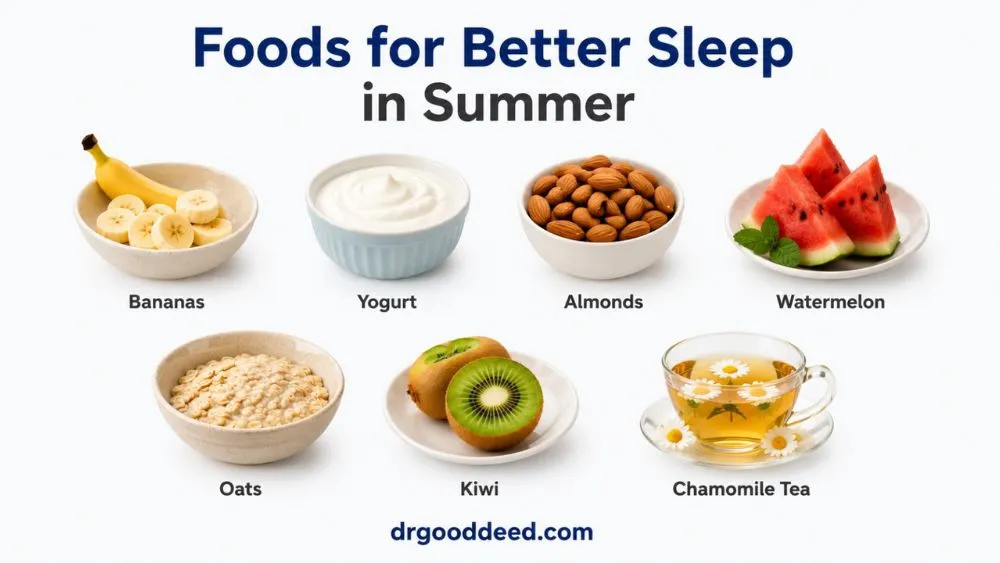
Foods for better sleep in hot weather share three characteristics: they are easy to digest, they supply magnesium or tryptophan, and they do not generate significant metabolic heat during digestion. Here are the strongest options backed by clinical evidence.
Bananas (Magnesium and Potassium)
One medium banana provides 32 mg of magnesium and 422 mg of potassium. Magnesium activates GABA receptors in the brain, which reduce neural activity and prepare the body for sleep.
Potassium relaxes muscle tissue and reduces nighttime leg cramps, a common summer complaint caused by sweating and electrolyte loss. Eat one banana 60 to 90 minutes before bed for best effect.
Yogurt (Cooling and Gut-Friendly)
Plain Greek yogurt contains both tryptophan and calcium. Calcium helps the brain convert tryptophan into melatonin. A 2019 study in Nutrients confirmed that calcium-rich dairy consumption correlated with improved sleep quality in adults over 40. Yogurt also has a cooling effect on the gut and does not generate the thermal load that high-fat foods do during digestion.
Almonds (Magnesium-Rich)
One ounce of almonds (about 23 almonds) provides 76 mg of magnesium, which is roughly 18% of the daily recommended intake for adults. A 2012 study in the Journal of Research in Medical Sciences confirmed that magnesium supplementation improved sleep efficiency, sleep time, and early morning awakening in older adults. Almonds also contain melatonin, making them one of the few whole foods that supply melatonin directly.
Watermelon (Hydrating Fruit)
Watermelon is 92% water by weight. Two cups provide 170 ml of fluid, 170 mg of potassium, and 30 mg of magnesium. Dehydration raises core body temperature, which directly delays sleep onset.
Watermelon hydrates without requiring large fluid intake close to bedtime, which reduces nighttime bathroom trips. It also contains lycopene, which has mild anti-inflammatory properties that reduce physical discomfort during sleep.
Oats (Supports Melatonin Production)
Oats are one of the few grains that naturally contain melatonin. A small portion of oats (about half a cup cooked) also provides complex carbohydrates that stimulate insulin release.
Insulin clears competing amino acids from the bloodstream, allowing tryptophan to reach the brain more efficiently. This is the same mechanism behind the drowsiness many people feel after a carbohydrate-heavy meal. With oats, it comes without the heavy digestive load.
Drinks That Promote Sleep in Summer
Drinks that promote sleep in hot weather are an underused tool. The right drink 30 to 60 minutes before bed can reduce body temperature, calm the nervous system, and supply sleep-active nutrients simultaneously.
Chamomile Tea
Chamomile contains apigenin, a flavonoid that binds to benzodiazepine receptors in the brain and produces a mild sedative effect. A 2017 randomized controlled trial in Complementary Therapies in Medicine found that chamomile extract significantly improved sleep quality and reduced nighttime waking in postpartum women.
Drink one cup at 95°F to 100°F, not boiling. Water above 115°F increases mouth and throat irritation and raises core temperature temporarily.
Coconut Water
Coconut water provides 600 mg of potassium, 60 mg of magnesium, and 252 mg of sodium per 8 oz serving. These electrolytes replace what sweating removes during hot summer days.
Electrolyte deficiency, specifically low magnesium, disrupts sleep architecture by increasing cortisol levels in the evening. Coconut water is the strongest natural electrolyte replacement and does not contain the sugar levels found in commercial sports drinks.
Warm Milk
Warm milk raises tryptophan availability and contains small amounts of melatonin. Drinking it warm, around 100°F to 105°F, also triggers the parasympathetic nervous system through warmth receptors in the mouth and stomach, producing a calming effect.
It is one of the most clinically supported drinks that promote sleep in hot weather for adults with stress-related insomnia.
Why Food Matters for Sleep in Summer
Diet is the most commonly ignored variable in summer sleep disruption. Most people focus on room temperature and bedding. Food choices affect three specific sleep mechanisms directly.
Impact of Digestion on Body Temperature
High-fat and high-protein meals require more energy to digest. The body generates extra heat, called the thermic effect of food, during this process. A burger with fries generates a thermic effect of roughly 100 to 150 calories of heat.
Eaten at 8 PM, this heat peaks around 10 PM to 11 PM, exactly when the body needs to be cooling for sleep. Choosing low-fat, high-water foods at dinner reduces this metabolic heat by 60% to 70%.
Role of Nutrients in Sleep Regulation
Four nutrients drive sleep biology:
- Magnesium: activates GABA, the brain’s primary calming neurotransmitter
- Tryptophan: the raw material for serotonin and melatonin
- Calcium: converts tryptophan into melatonin in the brain
- Potassium: reduces muscle cramps and regulates nerve signaling during sleep
Summer diets low in these four nutrients consistently produce worse sleep outcomes. The best foods that help you sleep better in summer all supply at least two of these four nutrients.
Avoiding Heavy Meals at Night
A meal above 600 calories eaten within 3 hours of sleep increases sleep latency (the time to fall asleep fast) by 15 to 20 minutes on average and reduces deep sleep by up to 10%, per research published in the American Journal of Clinical Nutrition. In summer, this compounds with heat to produce the worst-case sleep conditions.
Light Dinner Ideas for Restful Sleep
Light dinner ideas for restful sleep stay under 500 calories, digest in 3 to 4 hours, and include at least one magnesium or tryptophan source.
Vegetable Salads With Protein
A mixed green salad with grilled chicken breast (4 oz), cucumber, and pumpkin seeds delivers magnesium, tryptophan, and calcium in one bowl. Dress with olive oil and lemon. Total calorie load: 350 to 400 calories. Digestion time: under 3 hours.
Grilled Vegetables With Lean Protein
Grilled zucchini, asparagus, and bell peppers alongside a 4 oz salmon fillet provides omega-3 fatty acids, which a 2014 study in the Journal of Clinical Sleep Medicine linked to longer sleep duration. Salmon also provides vitamin D, which regulates melatonin production. Total calorie load: 380 to 450 calories.
Light Soups
A vegetable-based soup with lentils provides tryptophan, magnesium, and complex carbohydrates in a format that is 70% to 80% water by volume. The liquid content supports hydration without requiring separate large fluid intake.
Lentil soup is one of the most effective light dinner ideas for restful sleep because it fills the stomach without creating a high thermal digestive load.
Bedtime Snacks for Better Sleep Summer
Bedtime snacks for better sleep summer should stay under 200 calories and contain tryptophan paired with a small carbohydrate source. Carbohydrates increase tryptophan’s access to the brain.
Banana With Peanut Butter
Half a banana with 1 tablespoon of peanut butter provides magnesium, potassium, tryptophan, and a small carbohydrate dose that improves tryptophan uptake. Total: approximately 150 calories. Eat 30 to 45 minutes before bed.
Yogurt With Nuts
Half a cup of plain Greek yogurt with 10 almonds provides calcium, tryptophan, and magnesium in a low-calorie format. This combination hits three of the four sleep-critical nutrients in one snack. Total: approximately 170 calories.
Small Portion of Oats
Half a cup of cooked oats with a drizzle of honey provides melatonin, complex carbohydrates, and a small insulin stimulus that improves tryptophan delivery. Honey slightly raises blood insulin without a sharp glucose spike.
Total: approximately 160 calories. This is among the strongest bedtime snacks for better sleep summer for people with delayed sleep onset.
Foods to Avoid Before Bed in Summer
Spicy and Heavy Meals
Spicy food raises core body temperature through capsaicin-triggered thermogenesis. Body temperature needs to fall for sleep onset. Spicy food eaten at dinner actively fights that process. Heavy meals above 600 calories cause the same problem through metabolic heat.
Caffeine and Sugary Drinks
Caffeine has a half-life of 5 to 7 hours. Coffee at 3 PM still affects the nervous system at 9 PM. Sugary drinks spike blood glucose and trigger insulin response, which creates restlessness during the blood sugar drop that follows. Both are among the worst choices for foods for better sleep in hot weather.
Fried Foods
Fried foods are high in saturated fat, which slows gastric emptying to 6 to 8 hours. Digesting fried food while sleeping increases nighttime cortisol and reduces REM sleep. A 2020 study in Obesity linked high saturated fat intake to reduced slow-wave sleep depth.
How Hydration Affects Sleep Quality
Preventing Dehydration
Dehydration of even 1% to 2% of body weight raises core body temperature and increases heart rate during sleep. Both interrupt sleep cycles. Drinking 10 to 12 glasses of water by 6 PM prevents this without forcing late-night fluid intake.
Avoiding Nighttime Discomfort
Drinking more than 8 oz of fluid within 90 minutes of bedtime increases the likelihood of waking for urination. Each wake-up reduces total REM sleep. Watermelon and cucumber at dinner replace fluid without requiring you to drink large amounts close to bed.
Balancing Fluid Intake
tips for better sleep in summer around hydration: front-load water intake before 6 PM, eat high-water-content foods at dinner, and limit bedtime fluids to 4 to 8 oz maximum. This pattern maintains hydration without fragmenting sleep.
Common Mistakes That Disrupt Sleep Through Diet
Late Heavy Dinners
Eating a 700 to 800 calorie meal at 9 PM means digestion peaks between 11 PM and 1 AM. This is during the deepest sleep phase. The metabolic heat and digestive activity directly reduce sleep depth and total sleep time.
Overeating Before Bed
Overeating stretches the stomach, causing pressure on the diaphragm when lying down. This worsens acid reflux symptoms, which spike in summer due to higher body temperatures affecting esophageal muscle tone.
Irregular Eating Habits
Skipping meals during the day and compensating with large evening meals disrupts ghrelin and leptin balance. These are the hormones that regulate hunger and metabolic rate. Disrupted ghrelin signaling correlates with fragmented sleep, per a 2004 study in PLOS Medicine. Diet tips for better sleep in summer always include consistent meal timing, not just food choices.
FAQs
What foods help sleep in hot weather?
The best foods that help you sleep better in summer are bananas, almonds, plain Greek yogurt, watermelon, and oats. Each supplies magnesium, tryptophan, or melatonin. Almonds provide 76 mg of magnesium per ounce. Watermelon hydrates without requiring large fluid intake close to bedtime, which prevents nighttime waking.
What are light dinner ideas for restful sleep?
Light dinner ideas for restful sleep that stay under 500 calories: grilled salmon with asparagus (380 calories), lentil vegetable soup (320 calories), or mixed greens salad with grilled chicken and pumpkin seeds (400 calories). Eat these 3 hours before bed. Each digests fully before sleep onset and generates minimal metabolic heat.
What are bedtime snacks for a better sleep this summer?
The three strongest bedtime snacks for better sleep summer: half a banana with 1 tablespoon peanut butter (150 calories, eaten 45 minutes before bed), half a cup of Greek yogurt with 10 almonds (170 calories), and half a cup of cooked oats with honey (160 calories). All three pair tryptophan with carbohydrates to maximize melatonin production.
What diet tips help improve sleep in summer?
Diet tips for better sleep in summer: eat your last full meal 3 hours before bed, drink 10 to 12 glasses of water before 6 PM, avoid caffeine after 2 PM, skip fried and spicy food at dinner, and eat at least one magnesium-rich food daily. These five habits reduce sleep latency by 10 to 20 minutes on average.
Can fruits help improve sleep?
Yes. Tart cherries are the most clinically supported fruit for sleep; they contain 13 micrograms of melatonin per 100g and a 2012 study in the European Journal of Nutrition showed they increased total sleep time by 25 minutes. Watermelon and bananas improve sleep indirectly through hydration and magnesium content respectively.
What is the best time to eat for better sleep?
Eat your last full meal by 7 PM at the latest. Eat a small bedtime snacks for better sleep summer option at 9 PM to 9:30 PM if needed, keeping it under 200 calories with a tryptophan source. Eating after 9:30 PM raises core temperature during the body’s natural cooling window and delays sleep onset by 15 to 25 minutes.