



Abdominal pain and burping happen when your stomach hurts, you feel pressure building up, and then comes the burp. Sometimes it brings relief, other times the pain stays.
These two symptoms share common roots in your digestive system. When your stomach produces extra gas or acid, or when food moves through your gut more slowly than normal, both pain and burping can appear at the same time. Understanding why this happens helps you figure out when to worry and when simple changes can fix the problem.
What Is Abdominal Pain and Burping?
Abdominal pain and burping refer to stomach discomfort paired with the release of gas through your mouth. The pain can feel sharp, dull, crampy, or like pressure in your upper belly. Burping (also called belching) is your body’s way of releasing swallowed air or gas produced during digestion. Gas buildup creates pressure that causes both pain and the need to burp.
This differs from simple gas or indigestion in timing and intensity. Regular indigestion might give you mild discomfort that fades quickly. When abdominal pain and burping occur together repeatedly, especially after meals or at specific times, your body is signaling something more than just eating too fast once.
Burping and Stomach Pain Cause (Most Common to Serious)

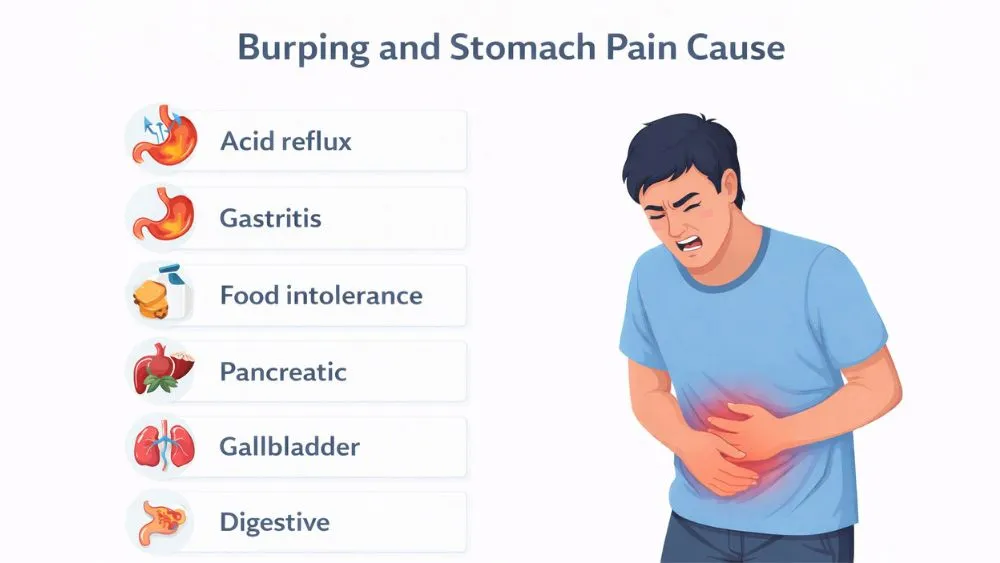
Digestive and Lifestyle Causes
Each time you eat, drink, or even talk, you swallow small amounts of air. When you rush through meals, chew gum constantly, or sip through straws, that air intake multiplies.
Eating too fast creates a perfect storm for abdominal pain and burping. Food sits longer than it should, ferments slightly, and produces gas. The combination of stretched stomach walls and extra gas creates pain and frequent burping.
Carbonated drinks add bubbles directly into your stomach. Each sip delivers carbon dioxide that must escape somewhere, making burping easier but potentially triggering acid reflux.
Acid and Upper GI Causes
Acid reflux occurs when stomach acid flows backward into your esophagus. The same acid that causes pain can make you burp more frequently. Your body tries to clear the irritation by expelling gas. You may notice burping with abdominal discomfort worsens when you lie down or bend over, positions that make acid reflux easier.
Gastritis means inflammation of your stomach lining. This condition creates persistent upper belly pain that often comes with burping.
Food-Related Causes
Food intolerance means your digestive system can’t properly break down specific ingredients. When you eat these problem foods, they ferment in your gut. This fermentation produces significant gas, bloating, and pain. The burping and stomach pain cause directly links to what you ate, typically appearing 30 minutes to several hours after eating.
High-fat meals slow stomach emptying dramatically. As food sits there, it can cause feelings of fullness, pressure, and pain. The delayed emptying also increases gas production.
Less Common but Serious Causes
Ulcers are open sores in your stomach lining or upper small intestine. They create burning pain that might improve or worsen with eating. The damaged tissue doesn’t function properly, leading to gas buildup and burping.
Pancreatic or gallbladder problems occasionally present with abdominal pain and burping, though these organs typically cause different symptom patterns. When either struggles, digestion suffers, potentially creating the symptoms you’re experiencing.
Symptoms of Burping With Abdominal Discomfort
Common Symptoms
Frequent burping stands out as the most obvious sign. You might burp every few minutes or have episodes where you can’t stop burping for 10 to 20 minutes. The burps might bring up small amounts of stomach contents or just release air. You may taste acid or food when you burp.
Bloating creates visible stomach distension. Your belly might look and feel swollen, tight, or round. The bloating can shift position throughout the day, sometimes concentrating in your upper belly, other times spreading across your entire abdomen.
Mild pain with burping with abdominal discomfort typically rates as a 2 to 5 on a 10-point scale. It bothers you but doesn’t stop your daily activities.
Warning Symptoms
Severe or persistent pain that rates 7 or higher, lasts several hours without improvement, or keeps returning daily needs medical evaluation.
Unexpected weight loss of more than 5 pounds in a month without trying raises concerns. Weight loss combined with abdominal pain and burping can indicate conditions that need treatment.
Vomiting, especially if it’s frequent or contains blood (looks red or like coffee grounds), requires immediate attention.
Night-time symptoms that wake you from sleep carry more weight than daytime discomfort. Pain or burping that interrupts your sleep suggests acid reflux or another condition that needs management.
Abdominal Pain After Eating and Burping: What It Indicates
Pain After Heavy or Fatty Meals
Abdominal pain after eating and burping follows large or rich meals, typically signaling digestive overload. Your stomach expanded to accommodate all that food. Meanwhile, the food itself requires hours of processing. Fatty foods delay stomach emptying significantly.
This extended processing time allows more gas production. The combination of a stretched, full stomach plus extra gas creates significant pressure. Your body responds with pain and attempts to release gas through burping. The symptoms usually peak 30 minutes to two hours after eating and gradually improve as digestion progresses.
Pain After Small Meals
When abdominal pain after eating and burping appear even after light meals, your digestive system might be hypersensitive.
Acid production issues can also create this pattern. You produce excess stomach acid that irritates their stomach lining whenever food arrives. Others have slowed stomach emptying (called gastroparesis), where even small amounts of food can’t move forward properly. The food accumulates, creating pressure and discomfort disproportionate to the meal size.
Abdominal Pain and Burping at Night: Is It Serious?
Why Symptoms Worsen at Night
Abdominal pain and burping at night intensify when you lie flat immediately after eating, leading to acid reflux.
Acid reflux mechanics change dramatically in the horizontal position. This creates burning pain and irritation that triggers burping. The body tries to clear the acid by producing extra saliva and releasing gas.
Evening meals eaten close to bedtime compound the problem. Your stomach might still be digesting when you lie down. The half-processed food and active acid production create the perfect setup for nighttime symptoms. Experts typically recommend finishing your last meal at least three hours before bed.
When Night Symptoms Are a Red Flag
Pain that wakes you from sleep deserves attention. When pain becomes severe enough to interrupt sleep, it suggests significant inflammation, ulceration, or another condition needing treatment.
Pain combined with vomiting or breathlessness at night warrants immediate medical evaluation.
Diagnosis of Abdominal Pain and Burping
Doctors start by asking about your symptom patterns. When does the pain occur? How long does it last? What makes it better or worse? Does eating specific foods trigger it? These questions help identify patterns.
Diet and timing correlation matters greatly. You might need to keep a food diary for one to two weeks. Write down everything you eat, when you eat it, and when symptoms appear. The diary helps both you and your doctor understand your triggers.
Blood tests can check for anemia (which might indicate bleeding from an ulcer), inflammation markers, or signs of infection.
Imaging or endoscopy becomes necessary when abdominal pain and burping continues for several weeks without improvement. An upper endoscopy lets doctors spot inflammation, ulcers, or other structural problems. Ultrasound or CT scans help evaluate organs like the gallbladder and pancreas.
Abdominal Pain and Burping Treatment
Initial and Home-Based Management
Abdominal pain and burping treatment starts with correcting eating pace. Slow down during meals. Put your fork down between bites. Chew each mouthful thoroughly before swallowing. This simple change reduces air swallowing dramatically. Aim for meals that last at least 20 minutes instead of rushing through in five.
Identify your trigger foods through that food diary. Common troublemakers include carbonated beverages, fatty foods, spicy dishes, caffeine, alcohol, and specific items related to intolerances. Eliminating or reducing these triggers often brings significant relief within days to weeks.
Smaller, more frequent meals prevent overloading your stomach. Instead of three large meals, try five or six smaller ones. This keeps your digestive system working steadily without overwhelming it.
Gas and acid reduction strategies include over-the-counter medications. Antacids and simethicone help break up gas bubbles, making them easier to expel.
Medical Treatment
Acid suppression through stronger medications becomes necessary when lifestyle changes and antacids aren’t enough. Doctors might prescribe H2 blockers or proton pump inhibitors. These medications reduce how much acid your stomach produces. Treatment typically lasts several weeks to months, allowing damaged tissue to heal.
Motility regulation helps when your stomach empties too slowly. Special medications can stimulate stomach contractions and speed up digestion. Doctors monitor these medications carefully because they can have side effects.
If tests reveal an H. pylori infection causing gastritis, antibiotics clear the infection. Food intolerances require dietary adjustments rather than medication. Gallbladder problems might need surgery. The specific abdominal pain and burping treatment depends entirely on what’s causing your symptoms.
When to See a Doctor for Abdominal Pain and Burping
- Symptoms lasting more than two weeks without improvement need professional evaluation.
- Persistent abdominal pain and burping that happens daily or multiple times weekly suggests an underlying issue requiring diagnosis and treatment.
- Night-time pain deserves quicker attention, especially if it wakes you regularly.
- Pain accompanied by weight loss or vomiting requires prompt medical care.
No relief with basic measures after two to three weeks means it’s time to see a doctor. If you’ve already tried eating slower, avoiding trigger foods, using over-the-counter medications, and nothing helps, you need professional guidance. Your doctor can perform tests and provide stronger treatments that aren’t available without a prescription.
FAQs on Abdominal Pain and Burping
Is abdominal pain and burping normal?
Occasional abdominal pain and burping after large meals or eating too quickly is normal. If it happens frequently or severely, it’s not normal and suggests an underlying digestive issue.
Can gas cause abdominal pain and burping?
Yes, trapped gas is a common burping and stomach pain cause. Gas buildup creates pressure, which triggers pain receptors. Your body tries to release the gas through burping, which may or may not relieve the discomfort completely.
Is abdominal pain after eating and burping serious?
Abdominal pain after eating and burping is usually not serious if it’s mild and improves within a few hours. It becomes serious when it’s severe, happens after every meal, includes warning symptoms like vomiting or weight loss, or doesn’t respond to basic treatment.
Does acid reflux cause burping and pain?
Acid reflux commonly causes both symptoms. Stomach acid flowing backward irritates your esophagus, creating burning pain. The reflux also allows gas to escape more easily, increasing burping frequency.
Why does burping relieve abdominal pain?
Burping releases trapped gas and reduces pressure in your stomach and esophagus. This pressure relief can temporarily ease abdominal pain and burping. However, if the underlying cause continues producing gas or acid, the relief is short-lived and symptoms return.
Can stress cause abdominal pain and burping?
Stress affects digestion significantly. Stress-related changes often result in abdominal pain and burping even without changes to your diet.
Is abdominal pain and burping at night concerning?
Abdominal pain and burping at night is concerning when it regularly wakes you from sleep or happens despite avoiding late meals. Nighttime symptoms often indicate acid reflux or other conditions that need medical management to prevent complications.
Can food intolerance cause these symptoms?
Food intolerance is a frequent cause of burping and stomach pain. When you can’t properly digest certain foods like lactose or gluten, they ferment in your gut. This fermentation produces excess gas, bloating, and abdominal discomfort along with frequent burping.
Do medications help abdominal pain and burping?
Yes, antacids neutralize stomach acid. Anti-gas products break up gas bubbles. Stronger prescription medications reduce acid production or improve stomach emptying. The right abdominal pain and burping treatment depends on your specific diagnosis.
When is abdominal pain and burping an emergency?
Seek emergency care for severe, sudden abdominal pain that doesn’t improve. Red flags include pain with chest pressure or breathlessness, vomiting blood, black or bloody stools, rigid abdomen, or fever with pain.








Leave a Comment