


Chest pain during exercise happens when your body is under stress, which can start as pressure, tightness, burning, or sharp pain in the chest during workouts or right after stopping. In many cases, chest pain during exercise happens when the heart does not get enough oxygen-rich blood to match the effort. It can also come from strained chest muscles, irritated nerves, breathing problems, acid moving up from the stomach, or sudden spikes in heart rate and blood pressure.
The key detail is timing. Pain that appears with effort and eases with rest is more likely linked to blood flow, while pain that changes with movement or breathing often points to muscles or lungs.
14 Causes of Chest Pain After Exercise
Chest pain after activity can come from the heart, lungs, muscles, or digestion. The pattern of pain matters more than intensity. Pain linked to blood flow often improves with rest, while muscle or acid-related pain may linger or change with movement.
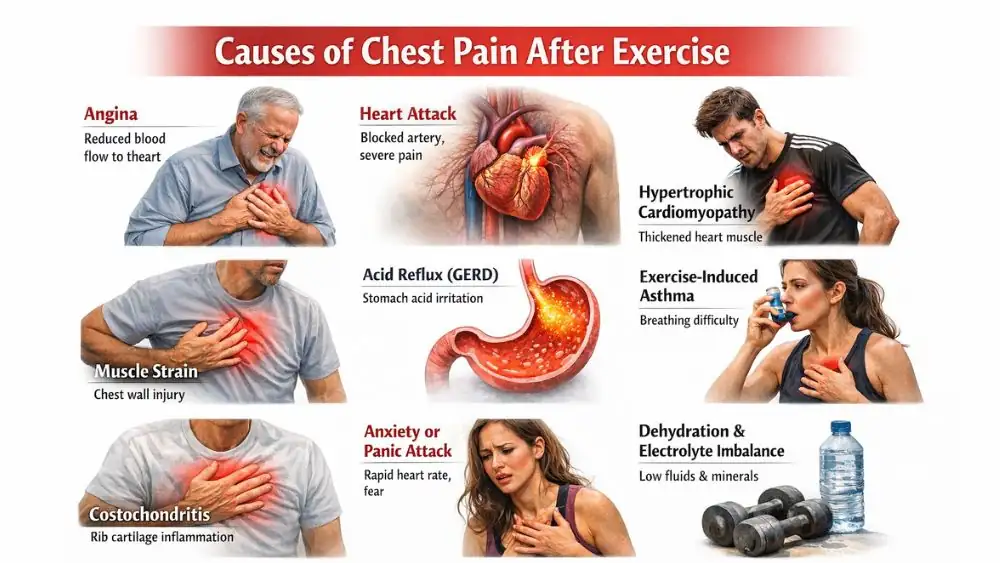
Angina (Reduced Blood Flow to the Heart)
Angina happens when the heart muscles do not get enough oxygen. Exercise increases oxygen demand. Narrow heart arteries cannot keep up. You may feel pressure or tightness in the chest. The pain often fades after rest. Chest pain during exercise that improves with rest fits this pattern and needs medical review.
Heart Attack (Myocardial Infarction)
A heart attack occurs when blood flow to part of the heart stops. Exercise can trigger symptoms in people with hidden artery blockages. Pain feels heavy, squeezing, or burning. It may spread to the arm, neck, or jaw. Sweating and nausea often appear. This form of chest pain during exercise is a medical emergency.
Hypertrophic Cardiomyopathy
This condition causes abnormal thickening of heart muscle. The thick muscle blocks blood flow during effort. Young athletes face a higher risk. Symptoms include chest pain, shortness of breath, or fainting. The pain often appears only during intense exercise.
Coronary Artery Disease
Coronary artery disease develops when plaque builds inside the heart’s arteries. Exercise exposes the problem by raising the heart workload. Chest pain starts with effort and stops with rest. If you ignore early signs, it increases the risk later.
Muscle Strain or Chest Wall Injury
Heavy exercise can strain chest muscles. Weight lifting and sudden movements are common triggers. Pain feels sharp or sore. Pressing the area often hurts. Movement makes it worse. Rest usually helps, unlike heart-related pain.
Costochondritis
Costochondritis is swelling of the cartilage that connects the ribs to the breastbone. It causes sharp pain near the center of the chest. Touching the spot increases pain. Exercise can irritate the area, but the heart is not involved.
Acid Reflux (GERD)
During workouts, stomach acid can move upward. Pressure from bending or lying flat worsens it. Pain feels like burning behind the chest. It may feel similar to heart pain. Eating large meals before exercise increases risk.
Asthma or Exercise-Induced Bronchospasm
Some people develop airway tightening during exercise. This limits airflow to the lungs. Chest tightness and breathing trouble follow. Cold or dry air raises the risk. The pain often eases after stopping activity.
Anxiety or Panic Attacks
A fast heart rate and heavy breathing can trigger panic in some people. Chest tightness feels intense and scary. The heart itself remains healthy. Anxiety-related chest pain during exercise often appears with fear and rapid breathing.
Dehydration and Electrolyte Imbalance
Sweating reduces fluids and minerals like sodium and potassium. Thickened blood makes the heart work harder. Muscle cramps and chest discomfort may appear. Proper hydration lowers this risk.
Chest Pain During Weight Lifting
Weight lifting places high pressure on the chest and heart, especially during heavy or repeated lifts. Holding breath, poor form, or lifting beyond capacity can sharply increase chest pressure and trigger pain that should not be ignored.
Improper Lifting Technique
Poor form stresses chest muscles and joints. Flaring elbows during presses strains the chest wall. Jerky movements cause small tears. Pain worsens during pushing movements.
Excessive Load or Overtraining
Lifting too heavy without recovery leads to inflammation. Muscles stay sore and weak. Pain may appear during or after workouts. Over time, injury risk rises.
Breath-Holding (Valsalva Maneuver)
Holding your breath during lifts spikes blood pressure. This stresses the heart and chest. People with heart disease face a higher risk. Proper breathing reduces strain and lowers the chance of chest pain during weight lifting .
Chest Pain During Cardio Exercise
Cardio workouts raise heart rate and oxygen demand quickly. If blood flow cannot keep up, chest pain may appear during running, cycling, or intense intervals. Pain that starts with effort and eases with rest is especially concerning.
Running or High-Intensity Training
Fast pace and hills push the heart hard. Poor fitness increases strain. Chest pain may appear during sprints and fade when slowing down. Repeated pain needs evaluation.
Chest Pain While Cycling
Cycling posture can compress the chest. Long rides stress the heart. Cold air may tighten airways. Pain that returns often should not be ignored.
Chest Pain During HIIT Workouts
HIIT causes rapid heart rate changes. This stresses the heart and lungs. People with hidden heart disease may feel chest pain during intense intervals.
Symptoms That Often Accompany Chest Pain
Chest pain becomes more serious when other symptoms appear at the same time. Breathing trouble, dizziness, cold sweating, or spreading pain often point to heart strain rather than muscle or digestion issues.
Shortness of Breath
Breathing trouble during exercise suggests heart or lung stress. It should not happen with mild effort. This symptom increases concern.
Dizziness or Lightheadedness
Reduced blood flow to the brain causes dizziness. Fainting risk rises. This symptom needs medical review.
Excessive Sweating
Cold, clammy sweat differs from normal workout sweat. It often appears with heart strain or a heart attack.
Pain Radiating to Arm, Jaw, or Back
Pain that spreads beyond the chest often points to heart causes. Muscle pain usually stays in one spot. Radiating pain needs urgent care. Recognizing symptoms that often accompany chest pain helps you stop early and seek help before damage occurs.
Diagnosing Chest Pain During Exercise
Doctors compare symptoms, exam findings, and test results to separate harmless causes from conditions that raise the risk of heart damage or sudden events.
Medical History and Exercise Assessment
Your doctor first looks at when the pain starts, how long it lasts, and what stops it. They ask about workout type, intensity, and recent changes. Family history of heart disease matters. Smoking, diabetes, and high blood pressure increase risk. These details help separate muscle pain from dangerous heart-related chest pain during exercise .
Physical Examination
The exam checks heart rhythm, blood pressure, and lung sounds. Doctors press on the chest to see if pain worsens, which often signals muscle or joint causes. They also check swelling, posture, and breathing patterns. Simple findings here can rule out serious problems early.
ECG and Stress Testing
An ECG records the heart’s electrical activity. It can show rhythm problems or past damage. Stress tests monitor the heart during controlled exercise. Reduced blood flow often appears only under stress. This step is key when chest pain during exercise appears during cardio or intense training.
Imaging and Blood Tests
Heart imaging shows structure and blood flow. Blood tests check for heart muscle injury. These tests help confirm or rule out heart attacks and inflammation. They are used when symptoms raise concern or tests show abnormal results.
Treatment for Chest Pain During Exercise
Treatment depends on the exact cause and your health background. Some cases improve with rest and technique changes, while others need medication or heart-focused care to reduce strain and restore safe exercise capacity.
Rest and Activity Modification
Reducing intensity often improves symptoms. Rest allows muscles and joints to heal. Gradual return prevents repeat pain. Many people feel relief when they stop pushing through warning signs. This step alone resolves many cases of chest pain during exercise .
Medications
Doctors may prescribe medicines to improve blood flow or control heart rate. Inhalers help with exercise-related breathing problems. Acid blockers reduce reflux-related chest pain. Dosage varies by age and condition. Medication choice depends on the exact cause.
Physical Therapy or Rehabilitation
Therapy corrects posture, breathing, and muscle balance. It helps chest wall injuries heal faster. Cardiac rehab guides safe exercise after heart issues. This approach reduces repeat episodes and builds confidence.
Cardiac Treatment if Required
Blocked arteries may need procedures to restore blood flow. Devices or surgery are used when medicines are not enough. Early treatment lowers long-term risk and improves survival in people with heart-related chest pain during exercise .
When to Stop Exercising Due to Chest Pain
Exercise should stop immediately when chest pain signals possible heart stress. Pain that worsens with effort, appears suddenly, or affects breathing means continuing could cause serious harm.
Chest Pain That Worsens With Activity
Pain that increases as you continue exercising is a red flag. Heart-related pain often behaves this way. Stopping early reduces strain. Continuing can cause lasting harm.
Chest Pain With Breathing Difficulty
Chest pain with shortness of breath suggests heart or lung stress. This combination needs immediate rest and evaluation. Do not wait for symptoms to pass on their own.
Sudden or Severe Chest Pain
Sudden, intense pain requires urgent medical care. Waiting to “see if it passes” is dangerous. Emergency help improves outcomes and reduces complications.
Preventing Chest Pain During Exercise
Proper warm-up, controlled breathing, gradual intensity increases, and managing health conditions lower the chance of repeat chest pain episodes.
Proper Warm-Up and Cool-Down
Gradual warm-up prepares the heart for effort. Sudden starts increase oxygen demand too fast. Cooling down prevents sharp heart rate drops. These steps support steady blood flow.
Correct Exercise Technique
Proper form reduces muscle strain and joint stress. Breathing correctly limits pressure spikes in the chest. Good technique protects both muscles and the heart.
Gradual Intensity Progression
Sudden jumps in intensity stress the body. Slow progress allows adaptation. This reduces injury risk and lowers the chances of chest pain during exercise .
Managing Underlying Health Conditions
Controlling blood pressure, cholesterol, and blood sugar supports heart health. Following medical advice improves exercise tolerance. Skipping care raises risk during workouts.
When to See a Doctor
Medical care is necessary when chest pain shows a pattern or occurs with minimal effort. Early evaluation helps detect heart disease before it causes lasting damage or emergency situations.
Recurrent Chest Pain During Workouts
Pain that returns during multiple workouts suggests an unresolved issue. Patterns point to disease rather than chance. Evaluation is needed.
Chest Pain After Minimal Exertion
Pain during light activity signals reduced tolerance. This often indicates heart disease. Early care prevents worsening symptoms.
Chest Pain With Heart Disease History
Past heart problems raise risk. New or changing pain needs prompt medical review. Delaying care increases danger.
FAQs
Is chest pain during exercise always heart-related?
No, muscle strain, lung problems, reflux, and anxiety can also cause pain. However, heart causes are the most dangerous and must be ruled out first.
Can muscle strain cause chest pain during workouts?
Yes, strained chest muscles cause sharp, local pain that worsens with movement or touch. Rest and proper form usually improve symptoms over time.
Why do I get chest pain only during intense exercise?
High-intensity effort increases heart’s oxygen demand. Hidden heart or lung issues often appear only under stress, which is why intense exercise triggers pain.
Is chest pain during weight lifting dangerous?
Chest pain during weight lifting can be muscle-related, but heart issues also occur during strength training. Repeated or severe pain should be checked.
Can anxiety cause chest pain during exercise?
Yes, anxiety can tighten chest muscles and change breathing. The pain feels real, but the heart remains healthy. Proper breathing helps reduce symptoms.
Should I stop exercising if I feel chest pain?
Yes. Stop immediately. Assess symptoms after resting. Continuing through pain increases risk, especially with heart-related chest pain during exercise .
Can dehydration cause chest pain during exercise?
Yes, dehydration thickens blood and strains the heart. Electrolyte loss affects muscle function. Drinking fluids reduces this risk.
Why does chest pain go away after resting?
Rest lowers the heart workload and improves blood flow. Angina often behaves this way. Pain relief with rest still requires medical evaluation.
Can acid reflux cause chest pain during workouts?
Yes, exercise pressure can push acid upward, causing burning chest pain. Timing meals and posture changes helps reduce symptoms.
When should chest pain during exercise be checked by a doctor?
Any repeated, severe, or unexplained chest pain during exercise needs medical evaluation. Early care prevents serious complications.


Leave a Comment