

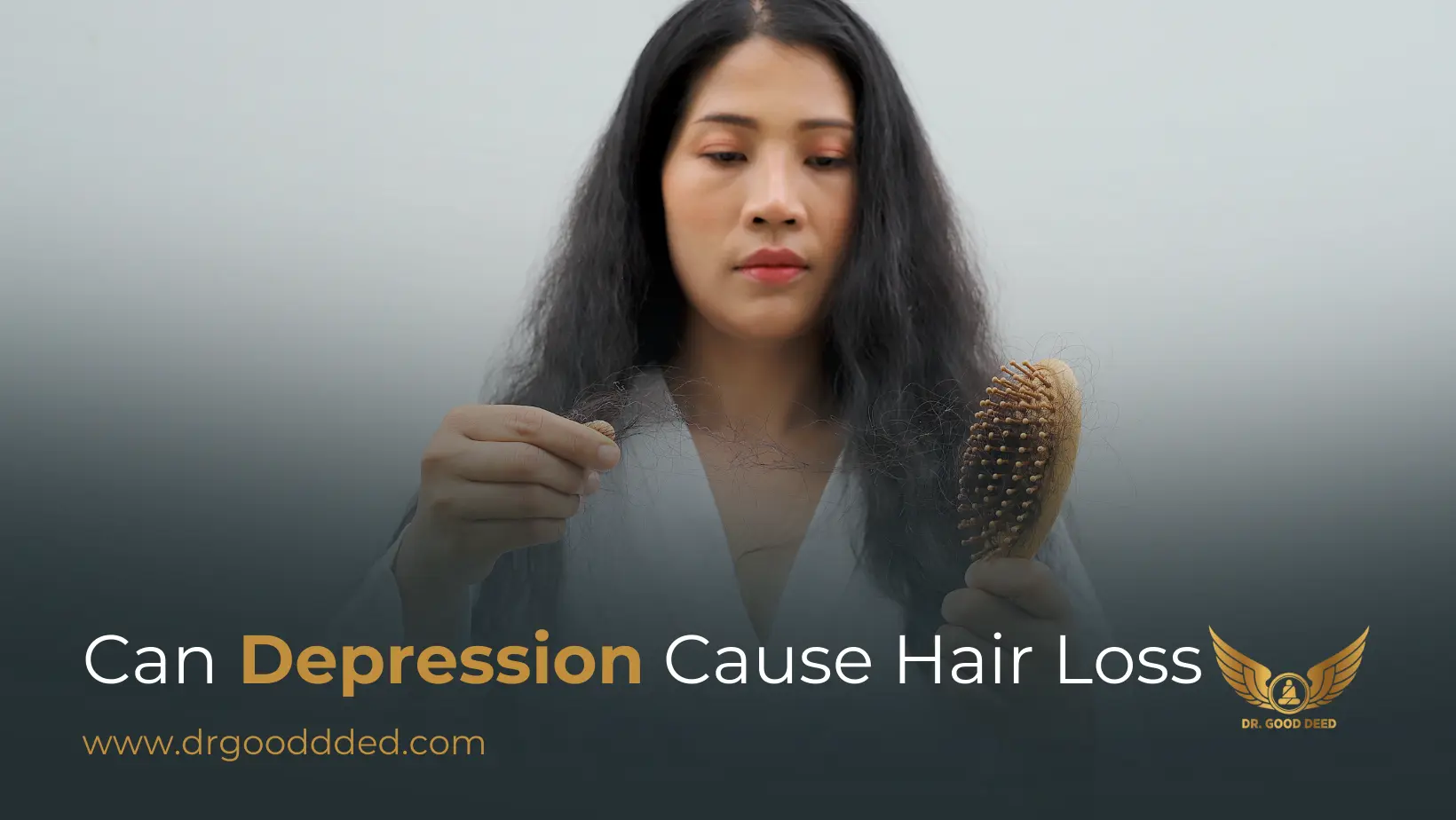

Depression can cause hair loss in real, physical ways, but usually not by directly “killing” hair roots. It does this through stress hormones, changes in routine, poor sleep, appetite shifts, and sometimes medicines. These factors push more hairs into a shedding phase called telogen effluvium (a stress-related shedding problem).
Most of the time, hair loss caused by depression or stress is temporary. When stress and mood improve, hair usually starts to come back over several months. The key is to understand the depression-hair loss connection early so you can protect both your mind and your scalp.
Stress hormones can switch hair stem cells off, which helps explain how depression can cause hair loss through the body’s stress system.
Depression–Hair Loss Connection

The depression-hair loss connection starts with the way your brain handles stress. When you feel low or hopeless for weeks, your body often stays in stress mode. This changes hormones, nerve signals, and even blood flow to your scalp. Over time, that is one of the main ways depression can cause hair loss .
How Chronic Stress Disrupts The Hair Growth Cycle
Hair grows in cycles.
- Growth phase (anagen), where hair gets longer.
- Rest phase (telogen), where hair takes a break.
- Shed phase (exogen), where old hair falls out.
Chronic stress from depression pushes more hairs out of growth and into rest. After a few months, many of those “resting” hairs drop out at once, called telogen effluvium.
Emotional stress is one of the major triggers for this condition, which helps explain how depression can cause hair loss in a short span of time.
Cortisol’s Role In Telogen Effluvium
When you feel stressed or deeply sad, your adrenal glands release more cortisol (the main stress hormone). High stress hormonal levels can keep hair stem cells “quiet” so they do not make new hairs.
In simple terms, cortisol tells your body to save energy for vital organs. Hair is not a priority. This is why depression can cause hair loss after months of high stress. Your follicles are not ruined, but they slow down and let go of more hairs than usual.
How Emotional Distress Pushes Follicles Into Shedding Phase
Strong emotional distress, such as grief, breakup, or long loneliness, activates the same stress wiring as physical danger. Nerve signals and immune chemicals travel from your brain to your scalp. These signals can change how hair follicles move between growth and rest phases.
When this happens during depression, more hairs enter telogen at the same time. A few months later, shedding rises. This pattern is one of the clearest examples of how depression can cause hair loss even when your blood tests are normal.
Depression-Related Habits That Worsen Hair Loss (Sleep, Appetite, Self-Care)
Depression often changes the way you live day to day. You might:
- Sleep very little or at odd hours.
- Skip meals or eat mostly junk food.
- Wash or brush your hair less.
Poor sleep raises cortisol further and harms tissue repair.
Unbalanced food choices can lead to low iron, vitamin D, B12, and protein, which are all important for strong hair. Sudden weight loss, crash diets, and low protein intake are classic triggers for telogen effluvium.
Hair Loss From Depression Symptoms
Not every hair change comes from depression. But there is common hair loss from depression symptoms that shows up in telogen effluvium.
Sudden Diffuse Shedding Across The Scalp
Stress-related shedding usually looks even across the head. You may notice:
- More scalp shows when you part your hair.
- A thinner ponytail.
- Less volume when you style your hair.
In telogen effluvium, significant stress pushes many follicles into resting phase, and these hairs then fall out within a few months.
Because this shedding is spread out, people often blame shampoo, water, or a single product. In truth, the deeper cause is often the long buildup of stress, where depression can cause hair loss silently before you notice it.
Increased Hair Fall During Routine Grooming
You might start to see a lot more hair in the shower drain or on your brush. Some people describe handfuls of hair with each wash. Telogen effluvium is “excessive shedding” that becomes visible during combing or washing, often a few months after a stressor.
This can feel terrifying, but remember that follicles usually stay alive. If you address mood and health triggers, this type of hair loss from depression symptoms often improves over time.
Slower Regrowth During Depressive Episodes
During or after a deep depressive episode, you may notice fewer short baby hairs around your hairline. New growth may seem weak or slow. This happens because chronic stress and poor nutrition reduce the rate at which hair matrix cells divide.
Here again, depression can cause hair loss not only by making hair fall out but also by slowing the return of strong new strands.
Differences Between Stress Shedding And Medical Hair Loss
Stress shedding has some features that set it apart:
- Diffuse thinning instead of round bald patches.
- Normal-looking scalp skin without scarring.
- Shedding starts 2 to 3 months after a major stress event.
Medical hair loss from thyroid disease, iron deficiency, or autoimmune problems can show patchy areas, strong itching, redness, or hair loss on the brows and body. That is why doctors often check your blood and scalp even when you feel sure that depression can cause hair loss in your case.
Can Mental Health Affect Hair Loss?
Mental health can affect hair loss through several body systems at once. Your brain chemistry, hormones, immune system, and blood vessels all respond to mood changes. Scientists describe this as a “brain-skin-hair axis,” and recent reviews link mood disorders with both telogen effluvium and pattern hair loss.
How Mood Disorders Alter Hormones Affecting Follicles
Depression can disturb:
- Cortisol levels.
- Thyroid hormones.
- Sex hormones such as estrogen and androgens.
High cortisol and sudden hormone shifts are known triggers for telogen effluvium. Emotional stress, thyroid imbalance, and hormone changes are among the main causes.
Because of this, depression can cause hair loss indirectly. You feel mood changes first, but your hormone pattern also shifts in the background and puts your hair cycle under pressure.
Nervous-System Changes That Impair Blood Flow To The Scalp
Your nervous system controls how tight or relaxed your blood vessels are. In constant stress, vessels in different parts of the body can stay narrower than normal. That can reduce blood flow to the scalp, which means less oxygen and fewer nutrients for hair roots.
Some experimental work shows that stress signals can affect tiny vessels around hair follicles and change their growth behavior.
When this lasts for months, depression can cause hair loss by slowly weakening each hair shaft that grows out of the affected follicle.
Impact Of Poor Nutrition From Depression On Hair Health
Depression often reduces your drive to cook or eat balanced meals. You might live on snacks, tea, or fast food. Over time, this can cause:
- Low iron or ferritin.
- Low vitamin D.
- Low zinc or B12.
- Not enough protein.
All of these are linked with diffuse hair shedding and slower regrowth. Crash diets and low protein intake are classic triggers of telogen effluvium, which means poor food choices during depression lead to hair loss .
How Anxiety + Depression Together Intensify Shedding
Anxiety often sits on top of depression. You may feel restless, worried, or panicky while also feeling empty or hopeless. This mix keeps your stress system active most of the day.
The constant flood of stress chemicals increases the chance that mental health can visibly affect hair loss . Some newer studies suggest a two-way link, where stress and hair loss feed each other, and both raise the risk of anxiety and depression.
When you fear every hair that falls, stress climbs higher, and depression can cause even more hair loss. Breaking this loop needs care for both mind and hair at the same time.
Emotional Stress Hair Shedding
You do not always need a full depressive disorder for emotional stress hair shedding to begin. A single intense event can act like a shock to your system.
Sudden Stress Triggers Vs. Long-Term Emotional Burden
Short-term triggers include:
- Loss of a loved one.
- Major accident or surgery.
- Job loss or big exam pressure.
Long-term emotional burden includes months of money stress, caregiving, bullying, or relationship conflict. Reviews on telogen effluvium note that both sharp shocks and ongoing strain can start the same shedding pattern, which explains why depression can cause hair loss after many different life events.
Telogen Effluvium Timelines After Stress Events
A typical timeline is about 2 to 3 months after a major stress; shedding peaks, then slowly drops over 3 to 6 months.
So if you had a big emotional blow in January, you might notice emotional stress hair shedding starting around March or April. This delay often confuses people, because the stress and the shedding do not appear on the same day.
Why Shedding Often Peaks 2–3 Months After Emotional Trauma
Hair follicles do not jump straight from growth to falling out. After a shock, many hairs first move into the telogen rest phase. They sit there for weeks. Only later do they loosen and fall with washing or brushing.
Chronic stress hormones keep hair stem cells in a quiet state, which matches this delayed pattern.
How Recurring Stress Cycles Lead To Repeated Hair Loss Episodes
If your life keeps swinging between calm and extreme stress, your hair cycle can also swing. Each stressful season can push another batch of hairs into telogen. Just as you start to see regrowth, another round of emotional stress hair shedding may start.
The impact of stress on hair follicles warns that repeated stress episodes may move telogen effluvium from a short-term problem to a chronic one. In that setting, depression can cause hair loss again and again, unless you get support for both your mental health and your general health.
Does Depression Medication Cause Hair Loss?
Some people notice extra shedding a few weeks after starting an antidepressant. In those cases, depression can cause hair loss through the illness itself and through the pills used to treat it. This is called depression medication hair loss, and it usually looks like diffuse shedding, not bald spots.
Antidepressants Linked To Shedding (SSRIs, SNRIs, Tricyclics)
Reports and reviews list several drug groups that can trigger depression medication hair loss in some users:
- SSRIs such as sertraline, fluoxetine, paroxetine
- SNRIs such as venlafaxine
- Older tricyclics such as amitriptyline
- Atypical drugs such as bupropion
Telogen effluvium caused by these medicines often starts within 4 to 12 weeks after the dose is begun or changed. Shedding stops after the drug is reduced or switched, which shows that this form of depression medication hair loss is usually reversible when handled correctly.
How Medication-Induced Hair Loss Differs From Stress Shedding
Drug-induced shedding follows a clearer timeline. You may see:
- No major life stress 2 to 3 months before hair loss
- New antidepressant or dose change before shedding begins
- Normal blood tests for thyroid, iron, and vitamins
Telogen effluvium from life stress often has a strong emotional trigger. Drug-triggered loss is more tied to prescription changes. In both situations, depression can cause hair loss , but the main driver in the second case is the medicine, not your feelings.
When To Adjust Medication With Your Provider
Never stop an antidepressant on your own just because you see hair in the drain. Sudden stopping can cause mood crashes or withdrawal. If you suspect depression medication hair loss , talk with your doctor. They may:
- Watch for a few months if mood benefit is strong
- Lower the dose if safe
- Change to a different class of drug
Doctors balance mental health and hair changes together, since both matter for your quality of life.
Signs Your Medication, Not Depression, Is Causing The Hair Loss
You can suspect a pill is the main cause when:
- Shedding began soon after starting or raising the dose
- There was no big stress event a few months earlier
- Hair loss improves after switching drugs with your doctor
In that case, the medicine acts as the main trigger, even though depression can cause hair loss through other paths at the same time.
Can Hair Loss Cause Depression?
Yes, and the link works both ways. Many people start with stress shedding, then slip into a low mood because they feel they are losing a part of their identity. Here, the depression hair loss connection turns into a loop.
How Appearance Changes Impact Self-Esteem
Hair is tied to youth, health, and culture. When you see your scalp more, you may feel older, less attractive, or less “like yourself.” You might avoid photos or social events. Studies show that people with visible hair loss have higher rates of sadness and social anxiety, which can grow into clinical depression in vulnerable people.
Hair Loss Anxiety Vs Depressive Symptoms
You can have hair-focused anxiety without full depression. Signs of anxiety include constant checking, searching online for hours, and fear of going outside without a cap. Depression adds deep sadness, loss of interest, guilt, and sometimes thoughts that life is not worth living.
In both cases, depression can cause hair loss or get worse because of hair changes, so both the mind and scalp deserve attention.
Breaking The Cycle Of Hair Loss → Emotional Distress → More Hair Loss
To break this cycle, you need care on both sides:
- Support for mood with therapy, lifestyle changes, and when needed medicines
- Support for hair with gentle care and medical checks
When stress drops, mental health can affect hair loss in a better way, and your follicles get a chance to return to a normal growth rhythm.
When Hair Loss From Depression Is Reversible
In many people, hair loss from depression symptoms is temporary. The follicles rest, then wake up again once the triggers calm down.
Recovery Timeline For Stress-Related Shedding
Most telogen effluvium cases last 3 to 6 months, then shedding slows. New hairs slowly fill in the thinner areas over several more months. This type of loss rarely leads to permanent baldness because the roots remain alive.
This means that even when depression can cause hair loss , you can often regain density with time and proper care.
When Regrowth Begins After Treating Depression
Once your mood improves, sleep and appetite usually stabilize. Stress hormones fall, which helps the growth phase restart. Often, you notice short baby hairs near the hairline a few months after depression treatment begins to work. That is a sign that your depression-hair loss connection is starting to loosen.
Lifestyle Factors That Accelerate Reversal
You support faster recovery by:
- Eating enough protein, iron-rich foods, and fresh produce
- Keeping a regular sleep schedule
- Moving your body daily, even with light walks
- Avoiding tight hairstyles and harsh treatments
These steps do not erase all shedding overnight, but they remove extra strain, so depression can cause less hair loss over time.
Signs You Should Seek Dermatology Evaluation
You should see a skin and hair specialist if:
- Shedding stays heavy longer than 6 months
- You see round bald patches or scarring
- Your scalp burns, hurts, or has thick scale
A dermatologist can spot other causes that sit on top of the stress-related problem so that hair loss from depression symptoms is not missed or blamed on the wrong thing.
Evidence-Based Treatments For Depression-Related Hair Loss
You get the best results when mood treatment and hair treatment work together. That way, mental health can affect hair loss in a positive direction, not just a negative one.
Behavioral And Stress-Reduction Therapies
Cognitive behavioral therapy, problem-solving therapy, or simple counseling can teach you ways to respond to stress that reduce the cortisol surge. Mind-body approaches like breathing drills or short relaxation sessions have shown benefits in lowering stress markers, which helps the same pathways through which depression can cause hair loss .
Scalp And Hair Care Strategies During Recovery
Gentle care protects growing hairs:
- Use mild shampoo and lukewarm water
- Pat dry instead of rough towel rubbing
- Limit heat styling and tight braids
A soft daily scalp massage with clean fingers can support blood flow and may ease emotional stress and hair shedding by giving you a calm routine that feels in your control.
Medications For Hair Regrowth (Minoxidil, Supplements)
Topical minoxidil is one of the most studied options. Doctors often suggest it for diffuse shedding or pattern thinning. Nutrient supplements such as iron or vitamin D are useful only if tests show low levels, since too much can be harmful. Dosage varies by age and condition, so your doctor sets the plan.
These steps will not block every case where depression can cause hair loss , but they may shorten the active shedding phase and improve the strength of new strands.
When To Combine Mental Health Treatment + Hair Loss Therapy
You should think about combining both when:
- Hair loss is harming your mood or self-worth
- Depression or anxiety is clearly linked in time with shedding
- You feel stuck in a cycle of stress and loss
In that situation, treating only one side leaves the depression hair loss connection partly active. A joint plan gives you a better chance of full recovery.
When To See A Doctor For Depression-Linked Hair Loss
You do not have to wait until your scalp is very thin. Early help can stop a small problem from becoming a big one.
Warning Signs Of Severe Or Prolonged Shedding
See a doctor if:
- You fill your brush with hair every day for weeks
- You notice visible gaps or a much wider part
- You feel your mood sliding down as your hair thins
These are clear signs that depression can cause hair loss in a way that needs professional support.
Symptoms Suggesting Another Medical Condition
Hair loss plus any of these should prompt blood tests
- Strong fatigue, weight change, or feeling too hot or too cold
- Very light or very heavy periods
- New acne, facial hair growth, or menstrual changes
Thyroid disease, iron deficiency, and hormone disorders can sit alongside hair loss from depression symptoms and must be treated on their own.
What Dermatologists Look For During Examination
A dermatologist checks:
- Pattern of thinning
- Condition of scalp skin
- Hairs under a magnifier
- Recent stress, illness, and drug history
This helps them see if hair shedding caused by emotional stress is the main issue, or if another disorder of the follicle is at work.
How Mental Health Professionals Assess Hair-Related Distress
Therapists and psychiatrists ask how much time you spend thinking about hair, how it affects your social life, and whether you feel hopeless. If sadness or fear is high, they treat that as seriously as any physical symptom, since depression can cause hair loss and hair loss can deepen depression in a tight circle.
FAQ
Does all stress cause hair loss or only severe depression?
Not all stress causes shedding. Short, mild stress usually has little effect. Lon,g intense stress or deep depression is more likely to push follicles into telogen, so depression can cause hair loss .
How long does stress-related hair loss last?
Stress shedding from telogen effluvium usually starts a few months after the trigger and lasts three to six months. With recovery and better routines, hair loss from depression symptoms often improves over time.
Can untreated depression lead to permanent hair loss?
Most stress-related shedding is temporary. If depression can cause hair loss again and again for years, and you also have a family pattern of thinning, density may drop long-term, so early mood care protects hair.
Are women more likely to get hair loss from depression than men?
Women often report more distress from thinning hair and may also have anemia or hormone shifts, which add risk. The depression-hair loss connection can affect both sexes and needs proper checking in everyone.
Do antidepressants always cause hair shedding?
No, most people never get depression medication hair loss . When it happens, the shedding is usually mild and reversible. Doctors balance mood benefits and hair changes before changing drugs or plans.
What nutrient deficiencies worsen depression-related hair loss?
Low iron, ferritin, vitamin D, zinc, and B12 can increase shedding, and these are common in people who eat poorly during depression, which makes it easier for depression can cause hair loss to show.
Can exercise improve both mood and hair regrowth?
Regular movement lowers stress hormones and improves blood flow, including to your scalp. That means mental health can affect hair loss in a good way as activity supports both brain chemistry and follicle health.
How much daily shedding is normal during depression?
Most people lose fifty to one hundred hairs each day. During stress periods, emotional stress causes hair shedding and can push that higher, but clumps, bald areas, or long-lasting loss should be checked.
Can hair loss be the first sign of hidden depression?
Sometimes yes. You may notice thinning hair and only later see how flat or withdrawn you feel. In such cases, depression can cause hair loss before mood symptoms are obvious to you or your family.
What is the fastest way to stop stress-induced hair shedding?
There is no instant stop switch. The quickest path is to lower stress, treat mood problems, eat well, sleep regularly, and use gentle scalp care so depression can cause hair loss less as time passes.


Leave a Comment