


Depression is a medical condition that changes your mood, thinking, and how you handle daily life. It causes lasting low mood, tiredness, sleep and appetite changes, and loss of interest in things you used to enjoy.
How long depression lasts depends on the type and how soon you get help. A single episode must last at least two weeks to be diagnosed, but most episodes run for months.
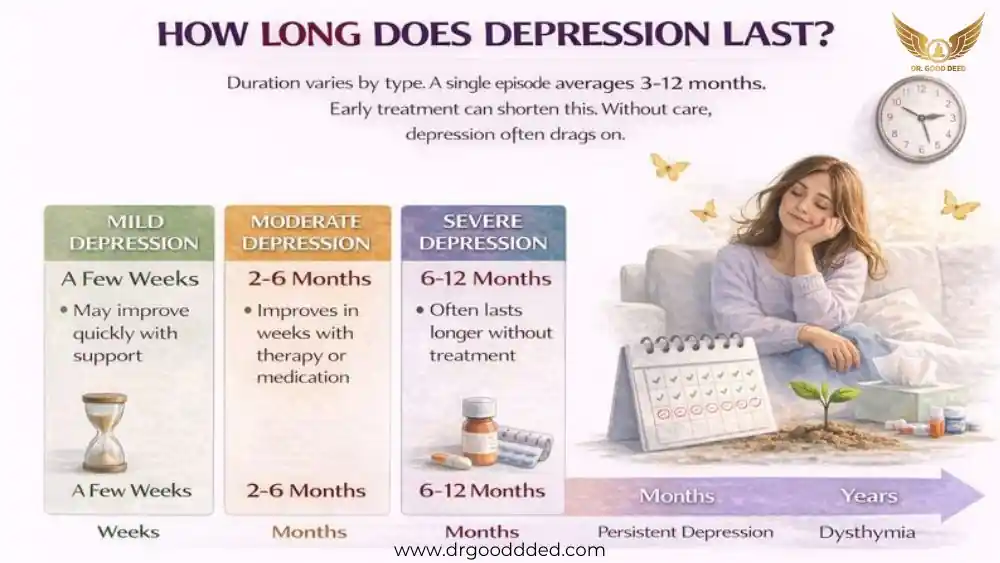
Mild cases can ease in a few weeks with support, while major depression often lasts six to twelve months without treatment. Persistent depressive disorder means symptoms last two years or more, so depression lasts for years in that form.
With proper therapy and medication, many people see clear improvement in four to twelve weeks and remission within months.
How Long Does Depression Last on Average?
Most single depressive episodes last months, not days. For many people, symptoms meet diagnostic criteria after two weeks. Many improve within three to six months with care. Without treatment, major episodes often last six to twelve months. These averages come from large clinical reviews and psychiatric references.
Typical Duration Of Depressive Episodes
A formal depressive episode requires symptoms for at least two weeks. After that point, episode length varies by type and care. Half of people recover faster than the median in some studies. Others take much longer. Expect months for recovery in many cases.
How Long Mild Depression Usually Lasts
Mild depression often eases faster than severe forms. If you get support early, symptoms can drop within a few weeks. Low-intensity therapy or short-term counseling often helps. Still, risk of recurrence remains without follow-up. Evidence for natural recovery exists but varies.
How Long Moderate Depression Typically Lasts
Moderate depression usually needs structured care. With therapy or medication, many people see improvement in weeks. Full remission may take months. If you delay treatment, depression lasts for longer periods.
How Long Severe Or Major Depression Lasts
Major depression is more serious. Untreated, a major depressive episode often lasts six to twelve months. With proper treatment, many people recover faster. Some people have recurring or prolonged episodes across years. If you have high symptom severity, expect a longer course unless treatment is prompt and effective.
Chronic Depression Duration (Persistent Depressive Disorder / Dysthymia)
Persistent depressive disorder means low-level symptoms most days for at least two years in adults. By definition, the duration of chronic depression is long-term. This type often responds to ongoing therapy and medication, but full recovery may be gradual.
Depression Recovery Timeline Explained
You want a clear idea of milestones. Below are common patterns from clinical sources.
- Two weeks: symptoms meet diagnostic threshold. Seek evaluation.
- Four to eight weeks: therapy or medication often begins to show benefit.
- Three months: many people report clear improvement.
- Six to twelve months: many reach remission with ongoing care. Some need longer.
These ranges are averages. Your path may differ. If symptoms do not improve after an adequate trial of care, ask for a treatment review. The recovery timeline of depression depends on treatment type and personal factors.
Factors That Influence How Long Depression Lasts
Several clear factors change length of illness:
- Severity at the start. Severe episodes last longer.
- Delay to treatment. Later care means longer recovery.
- Coexisting conditions like anxiety or medical illness.
- Social stress and ongoing trauma.
- Substance use.
- Prior episodes and family history.
Each factor can add weeks or months to recovery time.
How Long Different Types Of Depression Last (MDD, PDD, Postpartum, Seasonal)
- MDD (major depressive disorder): often months. Untreated episodes commonly last six to twelve months.
- PDD (persistent depressive disorder): two years or more by definition.
- Postpartum depression: varies. Many cases show meaningful improvement within months with treatment. Evidence is limited on exact averages because studies differ in methods.
- Seasonal affective disorder: symptoms often recur seasonally and resolve with season change or treatment. Duration aligns with seasonal patterns.
When you read averages, remember that individual outcomes vary. If you need more precise guidance, a clinician will tailor estimates to your history and test results.
How Long Depressive Episodes Last Without Treatment
Without care, major episodes commonly last six to twelve months. Mild cases may still take months to improve. Chronic forms can persist for years. Early treatment shortens most episodes..
Why Some People Recover Quickly While Others Do Not
Quick recovery links to early help, strong social support, and no major medical comorbidity. Slow recovery often involves delayed care, substance use, untreated medical problems, or trauma. Research also shows biological differences that affect response to treatments. Evidence here is growing but not complete.
How Long Major Depression Lasts
Typical Recovery Time For Major Depressive Disorder
With active care, many people show symptom relief in four to eight weeks. Clear remission often takes several months. Untreated, many episodes last six to twelve months.
Why Major Depression May Last Months Or Years
Delayed treatment, treatment resistance, co-occurring disorders, and ongoing life stress can extend the course. Biological vulnerability and repeated episodes increase chronicity. When standard treatments fail, specialists call the case treatment-resistant. Evidence supports stepped care and specialist referral in such cases.
Chronic Depression
What makes depression chronic is time and persistence. If you have low mood most days for two years, clinicians call this persistent depressive disorder. Chronic cases need steady care.
Combined therapy and medication work best for many people. With regular treatment, symptoms can lessen, but recovery can take months or years. If depression lasts for years, a stepwise plan with a specialist helps. You must track sleep, appetite, and energy. Small goals and routine matter a lot.
How Long Depressive Episodes Last
Therapy shortens episodes. Cognitive behavioral therapy and structured short-term therapies often show change in weeks. Antidepressants usually take four to eight weeks to show benefit.
You may need medication adjustments. Lifestyle habits speed recovery. Good sleep and daily movement help mood. If depressive episodes last longer than three months despite care, ask for a treatment review.
Some people need combined care plus social support. Keep tracking symptoms weekly. This shows progress.
How Therapy Affects Recovery Time
Therapy teaches skills for thought and behavior change. You learn to test negative thoughts. You practice small steps to re-engage with life. Therapy plus medication works faster than either alone for many people. Therapy also helps prevent relapse.
How Long Antidepressants Take To Work
Most people feel partial change in four to six weeks. Full benefit can take eight to twelve weeks. If you see no change after a proper trial, your clinician may change the drug or dose. Never stop medication suddenly. Doctors usually advise gradual changes.
How Lifestyle Changes Speed Recovery
Exercise, sleep, nutrition, and avoiding alcohol help. Daily walks and regular sleep times support mood. Small social contacts matter. These habits shorten how long depression lasts for many people.
Signs Treatment Is Helping Or Not Helping
You sleep better. You feel more interested. You can do small tasks. If none of these appear after eight to twelve weeks, ask for a review. Worsening sleep, appetite, or thoughts are red flags.
Can Depression Go Away on Its Own?
Sometimes mild episodes lift on their own. Support from friends and routine help this. But moderate and severe depression rarely fully resolve without treatment. If depression lasts for many weeks and affects your work or safety, professional care is needed. Evidence is limited on which mild cases will remit without help. If you have repeated episodes, do not assume natural recovery.
Why Your Depression May Be Lasting Longer Than Expected
Look for these common causes:
- Untreated medical issues such as thyroid or vitamin problems.
- Ongoing stress or trauma.
- Alcohol or drug use that delays healing.
- Incorrect diagnosis or wrong medication.
Addressing these issues shortens how long depression lasts for you. If tests are normal, ask for a specialist referral.
When Depression Goes Away
Early recovery shows in small wins. You sleep better and feel less tired. Interest in once-liked activities returns before the mood fully lifts. Physical symptoms often ease first. Full recovery can take months. You may reach remission within six to twelve months with care. Track changes with a simple weekly checklist. When positive signs accumulate, relapse risk falls.
Managing Depression During Long Episodes
You need practical tools when episodes are long.
- Break tasks into tiny steps.
- Use a daily plan with set wake and sleep times.
- Ask for help at work or school.
- Keep medical appointments.
- Limit alcohol and drugs.
If standard care fails, consider advanced options. Transcranial magnetic stimulation, ketamine infusion, and electroconvulsive therapy are options for treatment-resistant cases.
Discuss risks and benefits with a specialist. These treatments can reduce how long depression lasts for people with resistant illness.
When To See A Doctor About Long-Lasting Depression
If symptoms last more than eight to twelve weeks despite active treatment, seek a review. If you have suicidal thoughts, get urgent care now. If daily function drops significantly, call your clinician. When two adequate medication trials fail, ask about specialist care. Do not delay.
How Long Is “Too Long” For Depression?
If your mood stays severe after three months of consistent care, that is too long. Seek an expert opinion. Chronic forms need longer plans.
Symptoms That Require Immediate Medical Attention
- Clear plans to harm yourself.
- Severe withdrawal from daily life.
- New hallucinations or confusion.
Call emergency services or a crisis line immediately.
When Suicidal Thoughts Appear
Tell someone right away. Contact emergency services or a crisis number. Stay with a trusted person until help arrives. Suicidal thoughts are an emergency.
FAQs
How long does depression normally last?
Most single episodes last months. With treatment, many improve within three to six months. Without treatment, major episodes often last six to twelve months or more. Depression lasts for variable times.
Can depression last for years without treatment?
Yes. Persistent depressive disorder and untreated major depression can last years. Chronic forms often need long-term care. The duration of chronic depression is commonly measured in years.
How long does major depressive disorder last?
Major depressive episodes often last six to twelve months without treatment. With proper care, many reach remission faster. Major depression lasts longer when untreated or severe.
How long does it take to recover from depression with therapy?
Therapy often shows benefits in four to eight weeks. Full recovery may take months. Combining therapy with medication often shortens the course. The recovery timeline of depression improves with combined care.
Why is my depression getting worse instead of better?
Worsening can follow untreated medical issues, substance use, ongoing stress, or wrong treatment. Ask your clinician for tests and a treatment review. Rapid action matters.
Do antidepressants shorten depressive episodes?
Yes. Antidepressants can shorten episodes and prevent relapse when used appropriately. They often take weeks to show effect and work best with therapy.
What’s the difference between a depressive episode and chronic depression?
An episode is a defined period of symptoms. Chronic depression persists for two years or more. Treatment plans differ accordingly.
Can anxiety make depression last longer?
Yes. Coexisting anxiety increases symptom severity and slows recovery. Treating both conditions shortens how long depression lasts for you.
Does depression ever fully go away?
Many people reach full remission. Others need ongoing care. Early treatment raises the chance that depression lasts for a shorter time.
What should I do if my depression isn’t improving?
Contact your clinician for a full review. Ask about medication changes, combined therapy, or specialist referral. If you feel unsafe, seek urgent help now.



Leave a Comment