

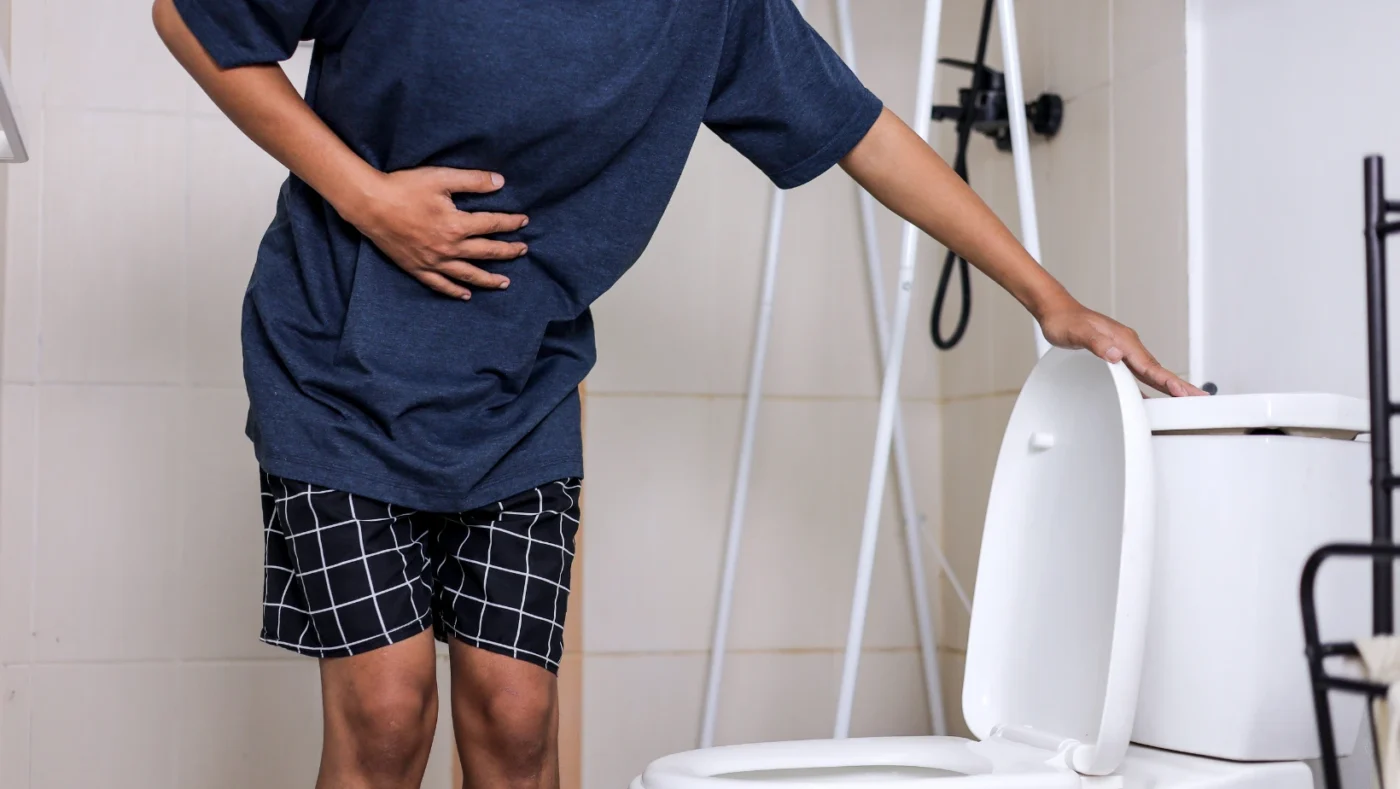

Constipation after diarrhea is the gut’s recovery process. This happens because diarrhea disrupts gut motility, depletes fluids, and sometimes gets treated with medications that slow the bowel down too much.
Hydration, gradual fiber, and movement fix your gut within a week. When that window closes without improvement, medical input stops the cycle before it becomes a longer-term issue.
What Causes Constipation After Diarrhea
What causes constipation after diarrhea comes down to four main factors. Sometimes one is responsible. Often, two or three overlap.
Post-Infectious Gut Slowdown
During diarrhea caused by a viral or bacterial infection, the gut speeds up. Contractions become rapid and uncoordinated. Once the infection clears, the gut doesn’t snap back to normal immediately. Motility, the rhythmic muscle movement that moves stool through the colon, stays disrupted for a few days.
The colon shifts from moving too fast to moving too slow. Stool sits longer than usual. Water gets absorbed out of it. The result is hard, difficult-to-pass stool.
Gut inflammation also takes time to settle. While it recovers, normal signaling between gut nerves gets disrupted, which further slows stool movement.
Dehydration After Diarrhea
Diarrhea causes significant fluid loss. The colon’s job is to absorb water from the stool before it exits. When the body is dehydrated after a bout of diarrhea, the colon pulls extra water from the stool to compensate. That makes stool harder and drier than normal.
| You may drink water after diarrhea, but not enough to replace what was lost. A single day of diarrhea can cause fluid losses of 1–2 liters. Replacing that takes more than one glass of water. |
Medication Effects
Two drug types commonly cause constipation after diarrhea:
- Anti-diarrheal drugs: Loperamide (Imodium) works by slowing bowel contractions. It’s effective. But if you take it longer than needed or take more than the recommended dose, the bowel stays slowed down even after the diarrhea has passed.
- Antibiotics: Antibiotics kill the bacteria causing the infection. They also kill beneficial gut bacteria. Without the right bacterial balance, the colon doesn’t function normally. Motility suffers, and constipation follows.
Gut Flora Imbalance
The gut microbiome (the community of bacteria living in the intestines) controls a significant portion of bowel function. During infection and antibiotic use, this community gets disrupted. Beneficial species like Lactobacillus and Bifidobacterium drop in number. Without them, fermentation of fiber slows, gas production decreases, and stool takes longer to move through.
This imbalance can persist for weeks after the original infection resolves, which is why you may experience ongoing constipation long after they feel better.
IBS Constipation After Diarrhea
IBS constipation after diarrhea follows a specific and recognizable pattern. It’s one of the defining features of IBS-M: mixed-type irritable bowel syndrome.
IBS-M (Mixed Type) Pattern
IBS-M involves alternating bouts of diarrhea and constipation, sometimes within the same week. You might have 3 days of loose stools, then 4 days of no movement at all. This is a clear physiological explanation.
Why IBS Patients Cycle Between Extremes
Two gut issues drive this cycle:
- Gut hypersensitivity: the nerves in the IBS gut overreact to normal stimuli. Food, stress, or even mild gas causes exaggerated pain and bowel responses. Sometimes the overreaction speeds motility (diarrhea). Other times it triggers spasms and slowed movement (constipation).
- Irregular motility: IBS changes how gut muscles contract. Contractions don’t follow a consistent rhythm. High-amplitude contractions push stool through too fast. Low-amplitude, weak contractions leave stool sitting and hardening.
For IBS patients, constipation after diarrhea is a recurring cycle that needs long-term dietary and sometimes pharmacological management.
Are There Different Types of Diarrhea?
Yes, there are different types of diarrhea. Three main types, each with a distinct cause and timeline:
- Acute diarrhea: lasts less than 14 days. Usually caused by a viral or bacterial infection. Norovirus, Rotavirus, Salmonella, and Campylobacter are the most common causes of acute diarrhea. Resolves on its own in most cases.
- Chronic diarrhea: lasts more than 4 weeks. Linked to conditions like Crohn’s disease, ulcerative colitis, microscopic colitis, or celiac disease. Requires medical investigation.
- Functional diarrhea: no structural or infectious cause found. The gut simply moves too fast. IBS-D falls into this category.
Understanding which type triggered the episode matters for predicting how long constipation after diarrhea will last.
What Are the Symptoms of Diarrhea?

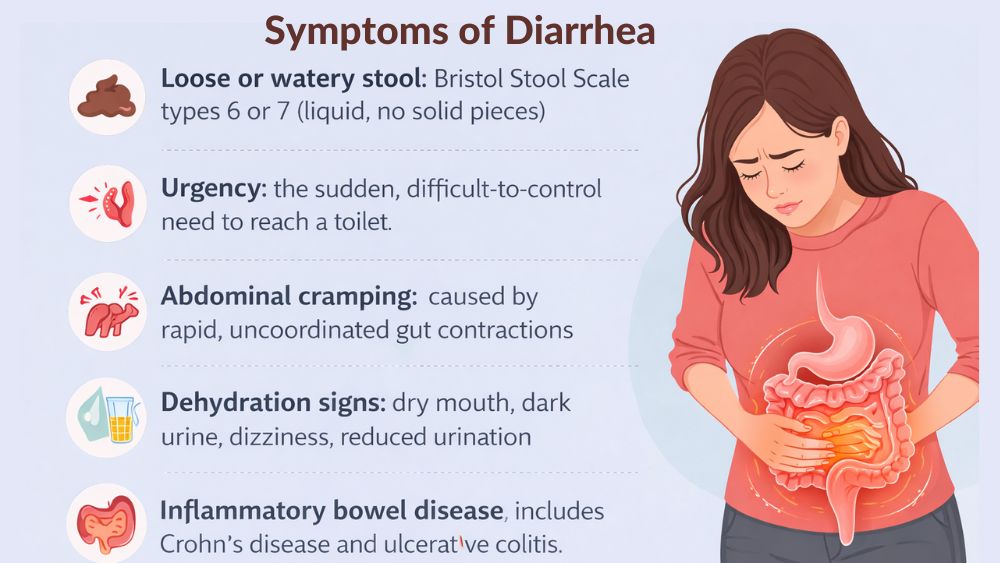
The symptoms of diarrhea beyond just loose stools are:
- Loose or watery stool: Bristol Stool Scale types 6 or 7 (liquid, no solid pieces)
- Urgency: the sudden, difficult-to-control need to reach a toilet
- Abdominal cramping: caused by rapid, uncoordinated gut contractions
- Dehydration signs: dry mouth, dark urine, dizziness, reduced urination
These symptoms matter for understanding constipation after diarrhea because the more severe the diarrhea episode, the more fluid is lost and the harder the rebound constipation.
How Long Does Constipation After Diarrhea Last?
Constipation after diarrhea from a standard viral infection lasts 2–4 days. The gut normalizes once hydration is restored and inflammation settles.
If dehydration was severe, vomiting alongside diarrhea for 24+ hours, constipation can stretch to 5–7 days. The colon takes longer to restore normal water balance and motility.
Duration becomes concerning when:
- Constipation lasts more than 7 days after the diarrhea stops
- No bowel movement occurs despite adequate hydration and fiber intake
- Pain accompanies the constipation, rather than just discomfort
These situations suggest the gut isn’t recovering on its own and needs evaluation.
Treatment for Constipation After Diarrhea
Treatment for constipation after diarrhea should be gradual. The gut just went through a stressful episode. Aggressive laxative use after diarrhea makes things worse, not better.
Gradual fiber reintroduction: Don’t go straight to high-fiber foods after a diarrhea episode. Start with bland foods: white rice, bananas, and toast. After 24–48 hours with stable stools, add soluble fiber sources like oats, cooked carrots, and peeled apples. These soften stool without overstimulating the gut.
Hydration correction: drink at least 2–2.5 liters of water daily during recovery. Add an oral rehydration solution (ORS) if the diarrhea is severe. Plain water alone doesn’t restore electrolyte levels fast enough.
Gentle physical activity: a 20–30 minute walk stimulates gut motility. The connection between physical movement and bowel activity is well-documented. Lying still delays recovery.
Avoid stimulant laxatives immediately: senna and bisacodyl force gut contractions. After a diarrhea episode, the gut lining is still irritated. Stimulant laxatives can trigger cramping and further disrupt motility. If a laxative is needed, use an osmotic one like polyethylene glycol (MiraLAX), which softens stool by drawing water in without forcing contractions.
For treatment of constipation after diarrhea in IBS patients specifically, probiotics containing Lactobacillus rhamnosus GG or Bifidobacterium longum have shown measurable benefit in clinical trials for normalizing bowel frequency after gut disruption.
When to See a Doctor
Constipation after diarrhea usually resolves without medical care. See a doctor when:
- No bowel movement for more than 7 days after diarrhea stopped
- Severe abdominal pain: not mild discomfort, but pain that stops normal activity
- Blood appears in stool
- Bloating becomes visibly severe or progressively worsening
- No response to adequate hydration, fiber, and gentle movement after 5 days
These signs suggest something beyond post-infectious gut slowdown. Structural issues, inflammatory bowel disease, or bowel obstruction need to be ruled out.
FAQs on Constipation After Diarrhea
Is constipation normal after diarrhea?
Yes. Constipation after diarrhea happens because the gut shifts from rapid contractions to a slow, disrupted motility pattern during recovery. The colon also pulls extra water from stool to compensate for fluid lost during diarrhea. This makes constipation the expected follow-up in most cases.
Why does stool become hard after diarrhea?
Diarrhea depletes body fluids fast. Once diarrhea stops, the colon overcompensates by absorbing more water than normal from whatever stool is present. Stool dries out and hardens. People who don’t replace lost fluids aggressively after diarrhea always experience harder stools during recovery.
How long does constipation last after diarrhea?
For standard viral gastroenteritis, constipation after diarrhea lasts 2–4 days. If diarrhea was severe or lasted more than 48 hours, constipation can extend to 5–7 days. Beyond 7 days without bowel movement needs medical evaluation.
Can anti-diarrheal medicine cause constipation?
Yes. Loperamide (Imodium) slows bowel contractions. The recommended adult dose is 4mg initially, then 2mg after each loose stool, with a maximum of 16 mg per day. Taking it beyond that, or continuing after diarrhea stops, directly causes constipation after diarrhea by over-suppressing gut motility.
Is IBS linked to alternating diarrhea and constipation?
Yes. IBS constipation after diarrhea is the defining feature of IBS-M (mixed type), which affects roughly 35% of IBS patients. The gut cycles between hypermotility (diarrhea) and hypomotility (constipation) due to disordered nerve signaling, not a structural problem.
Should I take a laxative right away?
No. Start with water, soluble fiber, and light walking. If no bowel movement occurs after 4–5 days of adequate hydration and fiber, use polyethylene glycol (MiraLAX). Avoid senna or bisacodyl immediately after diarrhea; they irritate the already-inflamed gut lining.
Can dehydration cause hard stool?
Yes. The colon pulls water from stool as a last resort when the body is dehydrated. Even mild dehydration, losing 1–2% of body water, measurably increases stool hardness and transit time. After diarrhea, drink at least 2.5 liters daily plus one ORS sachet to recover electrolyte balance.
Is the diarrhea-to-constipation cycle dangerous?
No, it’s a temporary gut disruption. For IBS patients, the cycle causes chronic discomfort but isn’t medically dangerous on its own. It becomes dangerous when constipation after diarrhea is accompanied by blood in stool, fever, or significant unintentional weight loss: those signs require investigation.
When should I worry?
Worry when constipation after diarrhea lasts beyond 7 days, or when it comes with fever, blood in stool, or severe abdominal pain. Also, worry if the diarrhea-constipation pattern has been repeating for months without a clear infectious cause: that pattern warrants testing for IBD or celiac disease.
Can probiotics help?
Yes. Lactobacillus rhamnosus GG and Bifidobacterium longum have the strongest clinical evidence for restoring bowel regularity after gut disruption. Probiotic benefit shows up within 5–7 days of consistent use. Yogurt-based probiotics are too low-dose; clinical-grade supplements work better.






Leave a Comment