

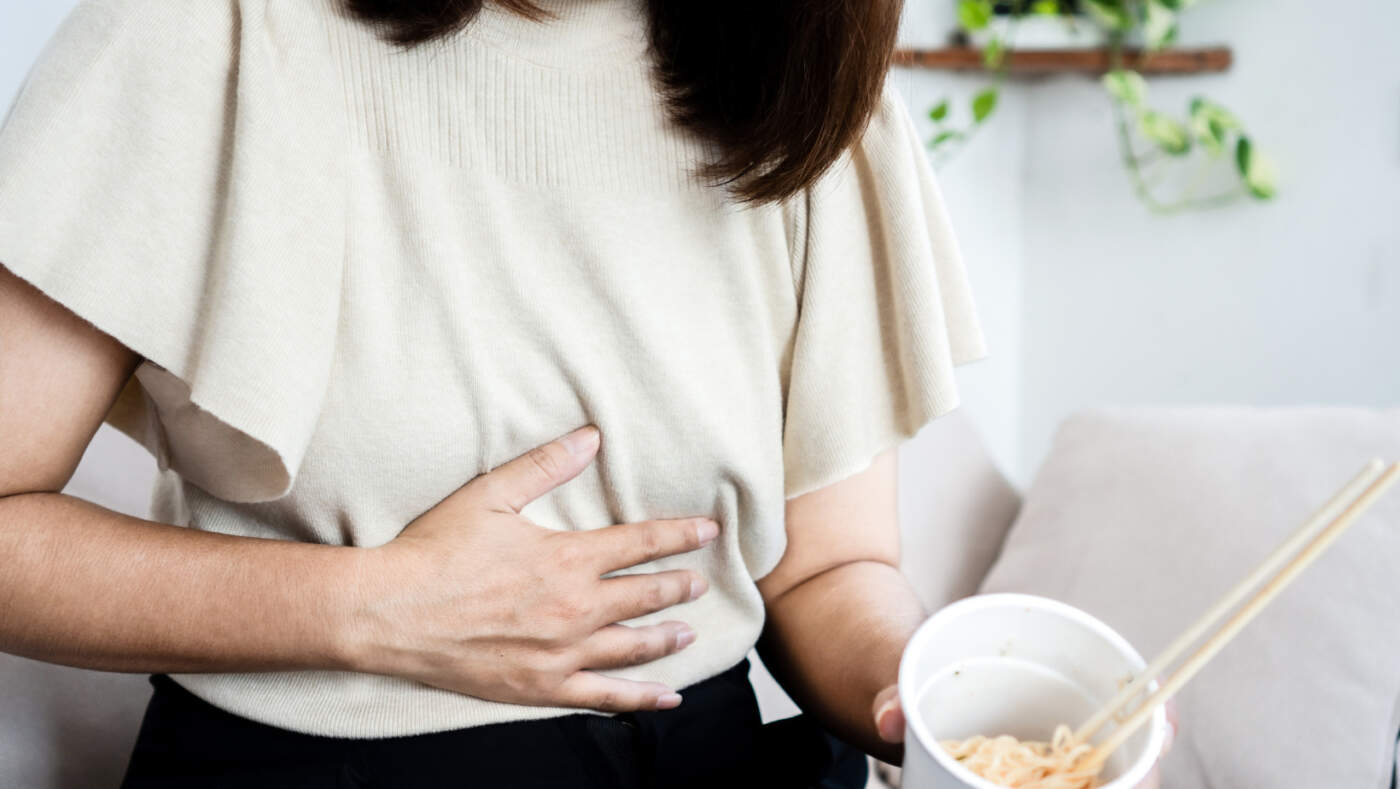

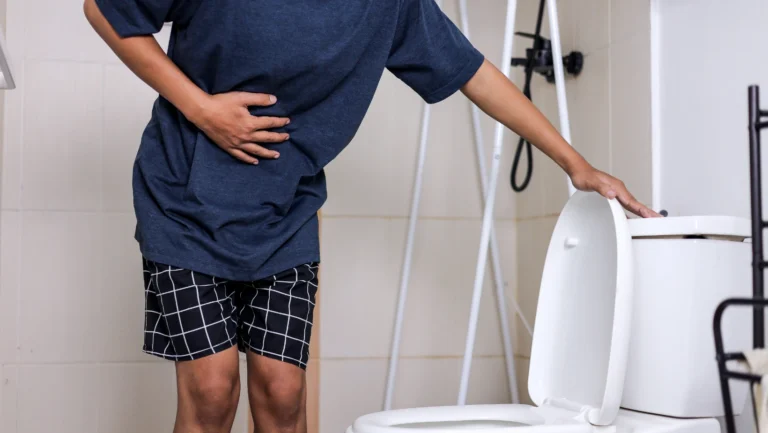
Diarrhea after eating happens when loose, watery bowel movements occur within minutes to two hours of finishing a meal. This differs from regular diarrhea because the timing connects directly to food intake. Your digestive system reacts faster than normal, pushing food through your intestines before proper absorption happens.
The gastrocolic reflex triggers this response. When food enters your stomach, signals tell your colon to make room for what’s coming. Sometimes this reflex works too aggressively, causing urgent bathroom trips right after meals.
What Is Diarrhea After Eating?
Regular diarrhea can happen anytime (morning, night, or unrelated to eating). Diarrhea after eating strikes quickly, with the window typically ranging from a few minutes to two hours post-meal.
Your gastrocolic reflex acts like a conveyor belt operator. Food arrives at one end, and the system signals the other end to clear space. In healthy digestion, this happens smoothly.
When the reflex overreacts, your intestines contract too hard and too fast. Food doesn’t get absorbed properly. Water stays in your stool instead of being absorbed. The result is loose, urgent bowel movements.
Causes Acute Diarrhea After Eating
Causes of acute diarrhea after eating usually resolve within days or weeks. These triggers hit suddenly and leave just as fast.
Food-Related Triggers
Food poisoning caused by bacteria like Salmonella or E. coli contaminates your meal, and diarrhea appears anywhere from hours to a day after eating. Contaminated food comes from improper storage, undercooked meat, or unwashed produce.
Sudden dietary changes shock your system. You switch from low-fiber to high-fiber overnight, and your intestines can’t keep up. You eat spicy food for the first time in months, and your gut throws a fit.
The digestive system prefers gradual transitions. Understanding the causes of acute diarrhea after eating helps you avoid future episodes.
Intolerance or Sensitivity
Lactose intolerance affects millions. Your small intestine lacks enough lactase enzyme to break down milk sugar. Gas, bloating, and diarrhea after eating dairy products follow within 30 minutes to two hours.
High-fat foods trigger rapid intestinal contractions. Your gallbladder releases bile to digest fats. Too much bile irritates your colon, causing loose stools.
Artificial sweeteners like sorbitol, mannitol, and xylitol don’t get absorbed well, creating diarrhea. Sugar-free gum, diet sodas, and protein bars often contain these. Check labels if you’re sensitive.
Medication-Related Causes
Magnesium supplements work as natural laxatives. Too much magnesium overwhelms your intestines’ absorption capacity. If you take high doses for leg cramps or migraines, you often experience this.
Antibiotics kill bad bacteria, but they also destroy good gut bacteria. This disruption causes antibiotic-associated diarrhea in about 20% of users. The imbalance allows harmful bacteria like C. difficile to overgrow. Sometimes diarrhea after eating persists for weeks after finishing the antibiotic course.
Causes Of Chronic Diarrhea After Eating|

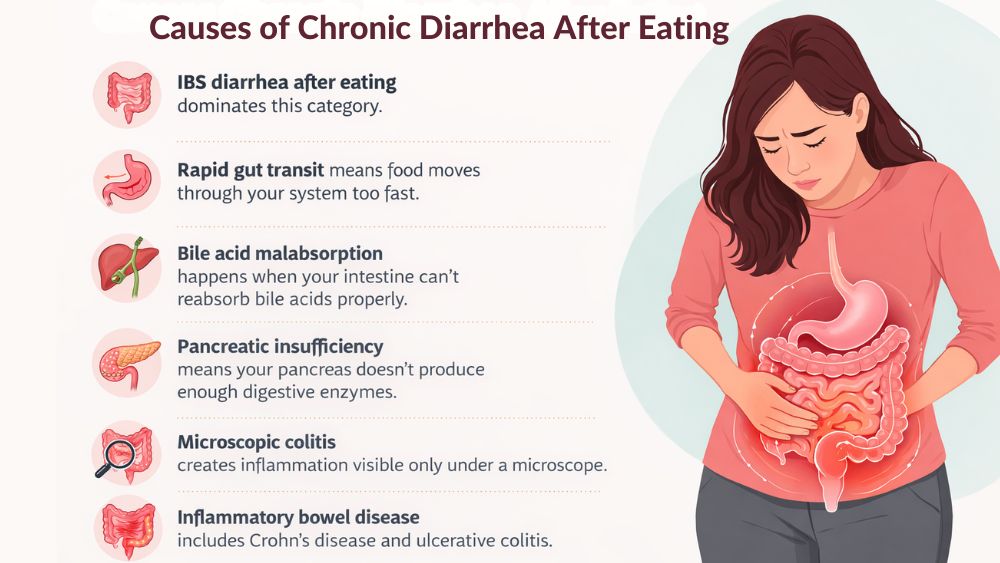
Causes chronic diarrhea after eating last beyond three weeks. These conditions require medical management.
Functional Disorders
IBS diarrhea after eating dominates this category. The intestines overreact to normal stimuli. Meals trigger exaggerated contractions.
Rapid gut transit means food moves through your system too fast. Nutrients don’t get absorbed. Water doesn’t get reabsorbed. This is one of several causes of chronic diarrhea after eating that requires medical attention.
Malabsorption Conditions
Bile acid malabsorption happens when your intestine can’t reabsorb bile acids properly. These acids reach your colon and cause watery diarrhea. This affects about 1 in 100 people but gets diagnosed less often than it occurs.
Pancreatic insufficiency means your pancreas doesn’t produce enough digestive enzymes. Fats don’t break down properly. Undigested fats reach your colon, causing oily, floating stools.
Inflammatory Causes
Microscopic colitis creates inflammation visible only under a microscope. This affects mostly women over 50. Watery diarrhea after eating becomes chronic and disruptive.
Inflammatory bowel disease includes Crohn’s disease and ulcerative colitis. These cause intestinal inflammation, ulcers, and bleeding. Diarrhea happens after eating and at other times. Weight loss and abdominal pain accompany the digestive symptoms. Recognizing causes of chronic diarrhea after eating leads to earlier diagnosis.
Anxiety Diarrhea After Eating
Anxiety diarrhea after eating combines psychological stress with physical symptoms. Your mind and gut communicate constantly through the gut-brain axis.
Stress and the Gut-Brain Axis
Stress hormones, particularly cortisol, change how your intestines work. Cortisol speeds up intestinal contractions. Your body prioritizes survival over digestion. This physiological response creates anxiety diarrhea after eating in susceptible individuals.
The vagus nerve connects your brain to your gut. Stress signals travel down this nerve, triggering intestinal changes. Serotonin, which regulates mood, also controls intestinal movement. Stress disrupts this balance. This explains why anxiety diarrhea after eating affects so many people.
How to Identify Stress-Triggered Episodes
Anxiety diarrhea after eating strikes before important meetings, presentations, or confrontations. Symptoms improve during vacations or relaxed periods. The diarrhea disappears when stress decreases. If you notice this pattern, anxiety likely drives your symptoms.
Deep breathing before meals and eating smaller portions when stressed helps some people. Managing anxiety diarrhea after eating involves both stress reduction and dietary awareness.
IBS Diarrhea After Eating
IBS diarrhea after eating affects roughly 10-15% of adults worldwide. Women get diagnosed twice as often as men.
Why IBS Symptoms Worsen After Meals
In IBS, even small meals trigger strong intestinal contractions. Your colon overreacts to the presence of food in your stomach. Managing IBS diarrhea after eating starts with understanding these mechanisms.
During IBS, your gut nerves are extra sensitive. Normal intestinal stretching feels painful. This heightened sensitivity makes eating uncomfortable.
Common IBS Trigger Foods
High FODMAP (Fermentable Oligosaccharides, Disaccharides, Monosaccharides, and Polyols) foods ferment in your intestines. These carbohydrates don’t get absorbed well. Bacteria in your colon ferment them, creating gas and drawing water into your intestines.
Common high FODMAP foods include:
- Onions and garlic
- Wheat and rye products
- Apples, pears, and watermelon
- Beans and lentils
- Milk and soft cheeses
- Honey and high-fructose corn syrup
Fatty meals slow stomach emptying but can trigger rapid bowel movements in IBS. Fried foods, creamy sauces, and fatty meats commonly cause problems. Avoiding these triggers helps reduce IBS diarrhea after eating episodes.
Foods and Drinks To Avoid for Diarrhea
Foods and drinks to avoid for diarrhea depend on your specific triggers.
- Dairy products cause problems if you’re lactose intolerant. Milk, ice cream, soft cheeses, and cream-based sauces contain high lactose levels. Hard cheeses and yogurt contain less lactose and might be tolerable.
- Fried foods overwhelm your digestive system. French fries, fried chicken, and doughnuts contain high fat levels. These rank high among foods and drinks to avoid for diarrhea.
- Spicy foods contain capsaicin, which speeds intestinal transit. Hot peppers, spicy sauces, and heavily seasoned dishes can trigger diarrhea after eating.
- Alcohol irritates your intestinal lining. Beer, wine, and spirits all increase intestinal motility. Drinking on an empty stomach makes effects worse.
- Caffeine acts as a stimulant for your intestines. Coffee, tea, energy drinks, and chocolate contain caffeine. Even decaf coffee contains compounds that stimulate bowel movements.
- Artificial sweeteners listed as sugar alcohols cause osmotic diarrhea. Check ingredient lists for sorbitol, mannitol, xylitol, erythritol, and isomalt. These appear in sugar-free products, protein bars, and chewing gum.
Knowing foods and drinks to avoid for diarrhea helps prevent symptoms.
How Is Diarrhea After Eating Diagnosed
Doctors start by analyzing timing patterns. When does diarrhea occur? How quickly after eating? Which foods trigger it? These details reveal whether food, stress, or an underlying condition causes symptoms.
- A food diary review helps identify patterns you might miss. Write down everything you eat, when you eat it, and when symptoms occur. After two weeks, you might discover that dairy always triggers symptoms within an hour.
- Stool tests check for infections, blood, and inflammation markers. Fecal fat tests measure fat content, revealing malabsorption issues.
- Blood tests screen for celiac disease, thyroid problems, and inflammatory markers.
- Colon evaluation through colonoscopy happens when red flags appear. The procedure examines your colon lining and allows biopsies.
- Breath tests measure gas production after consuming specific sugars.
Treatment Options for Diarrhea After Eating
- Hydration prevents dehydration from fluid loss. Drink water, but also consume electrolyte solutions. Sports drinks work, but oral rehydration solutions work better. Coconut water provides natural electrolytes.
- Dietary adjustments form the foundation of treatment for diarrhea after eating. Eliminate identified triggers first.
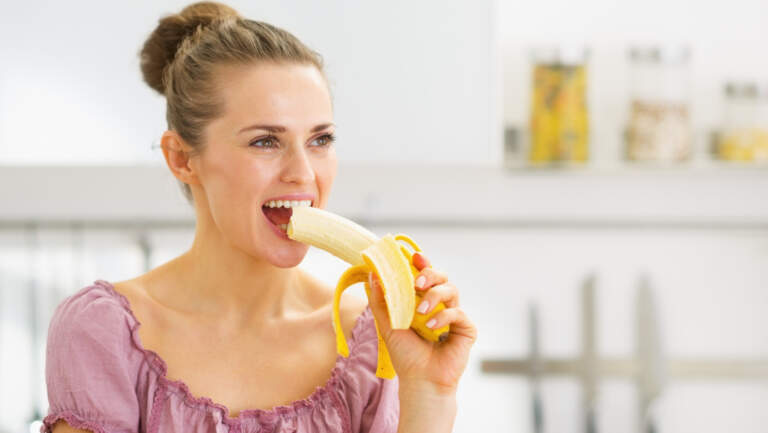
- The BRAT diet (bananas, rice, applesauce, toast) helps during acute episodes. Add plain chicken, crackers, and potatoes once symptoms improve.
- Anti-diarrheal medication provides short-term relief. Loperamide (Imodium, bismuth subsalicylate (Pepto-Bismol) can help, but use these medications sparingly.
- Probiotics help restore healthy gut bacteria, especially after antibiotic use. Lactobacillus and Bifidobacterium strains show the most evidence. Results take several weeks.
Prescription medications treat specific conditions. Bile acid sequestrants help bile acid malabsorption. Pancreatic enzyme supplements treat pancreatic insufficiency. IBS medications like rifaximin or eluxadoline target bacterial overgrowth or intestinal contractions.
When to See a Doctor
Diarrhea after eating lasting more than 2-3 weeks needs medical evaluation. Persistent symptoms suggest underlying conditions requiring diagnosis.
Blood in stool indicates serious problems. Bright red blood might come from hemorrhoids, but it could signal inflammatory bowel disease or colorectal cancer. Black, tarry stools suggest upper gastrointestinal bleeding.
Weight loss without trying raises red flags. Losing 10 pounds or more warrants investigation.
Severe abdominal pain beyond normal cramping needs attention. Sharp, stabbing pains could indicate bowel obstruction or perforation. Pain that wakes you from sleep suggests serious inflammation.
Signs of dehydration, such as dizziness when standing, dark urine, dry mouth, and rapid heartbeat, require immediate care.
Fever above 101°F (38.3°C) combined with diarrhea suggests infection. Severe bacterial infections need antibiotic treatment.
People over 50 experiencing new-onset chronic diarrhea need a thorough evaluation. Family history of inflammatory bowel disease or colon cancer increases risk.
FAQs on Diarrhea After Eating
Is diarrhea after eating normal?
Occasional episodes are common and normal. Your gut sometimes overreacts to rich foods or stress. Daily or weekly diarrhea after eating isn’t normal and needs evaluation. Frequency and severity determine whether medical attention is needed.
Why do I poop right after eating?
Your gastrocolic reflex triggers colon contractions when food hits your stomach. This reflex clears space for incoming food. In some people, this reflex is stronger, causing immediate bowel movements. It’s usually harmless unless accompanied by pain or blood.
Can anxiety cause diarrhea after eating?
Yes. Anxiety diarrhea after eating happens when stress hormones speed up intestinal contractions. The gut-brain connection means emotional stress directly affects digestion. Symptoms improve when you’re relaxed and worsen during stressful periods.
Is IBS a common cause?
IBS diarrhea after eating ranks among the top causes of chronic post-meal diarrhea. It affects 10-15% of adults and causes exaggerated gastrocolic reflex. The condition is functional, meaning tests appear normal despite real symptoms.
Can food poisoning cause instant diarran exaggerated
Food poisoning rarely causes instant symptoms. Bacterial contamination takes 6-48 hours to trigger diarrhea. Staphylococcal toxins work fastest at 1-6 hours. True instant diarrhea after eating usually involves preformed toxins or severe food intolerance.
Does lactose intolerance cause diarrhea after meals?
Lactose intolerance causes diarrhea after eating dairy products within 30 minutes to 2 hours. Undigested lactose pulls water into your intestines and gets fermented by bacteria. Gas, bloating, and cramping accompany the diarrhea.
Is chronic diarrhea after eating serious?
Causes of chronic diarrhea after eating include treatable conditions like IBS and serious diseases like inflammatory bowel disease. Chronic means lasting over three weeks. This requires medical evaluation to identify the cause and prevent complications like malnutrition.
Can fatty foods trigger diarrhea?
Fatty foods commonly trigger diarrhea after eating because they require more bile for digestion. Excess bile irritates your colon. People with gallbladder problems or bile acid malabsorption are especially sensitive. Fried foods cause the worst symptoms.
Should I avoid all fiber?
No. Soluble fiber found in oats, bananas, and applesauce actually helps firm stools. Insoluble fiber from raw vegetables and wheat bran can worsen diarrhea. During acute episodes, reduce insoluble fiber. Once symptoms improve, gradually reintroduce both types.
When is diarrhea after eating an emergency?
Severe dehydration, high fever above 102°F, bloody stools with clots, and extreme abdominal pain require emergency care. Diarrhea after eating, combined with confusion, rapid heartbeat, or inability to keep fluids down needs immediate medical attention.






Leave a Comment