


Knowing which foods cause diarrhea for you specifically takes some observation. A food diary to track what you eat and when symptoms appear is the most reliable way to identify patterns. It’s low-tech, and it works. You can find your triggers within two weeks of consistent tracking.
If symptoms keep returning despite dietary changes, that points toward something systemic rather than dietary. That’s when a gastroenterologist becomes the right next step.
15 Foods That Cause Diarrhea
1–5: High-Fat and Fried Foods
When you eat a fatty meal, your small intestine releases bile to break it down. Too much fat overwhelms your gut process. Undigested fat reaches the colon and pulls water in; that’s the loose stool.
The 15 foods that cause diarrhea most consistently start here:
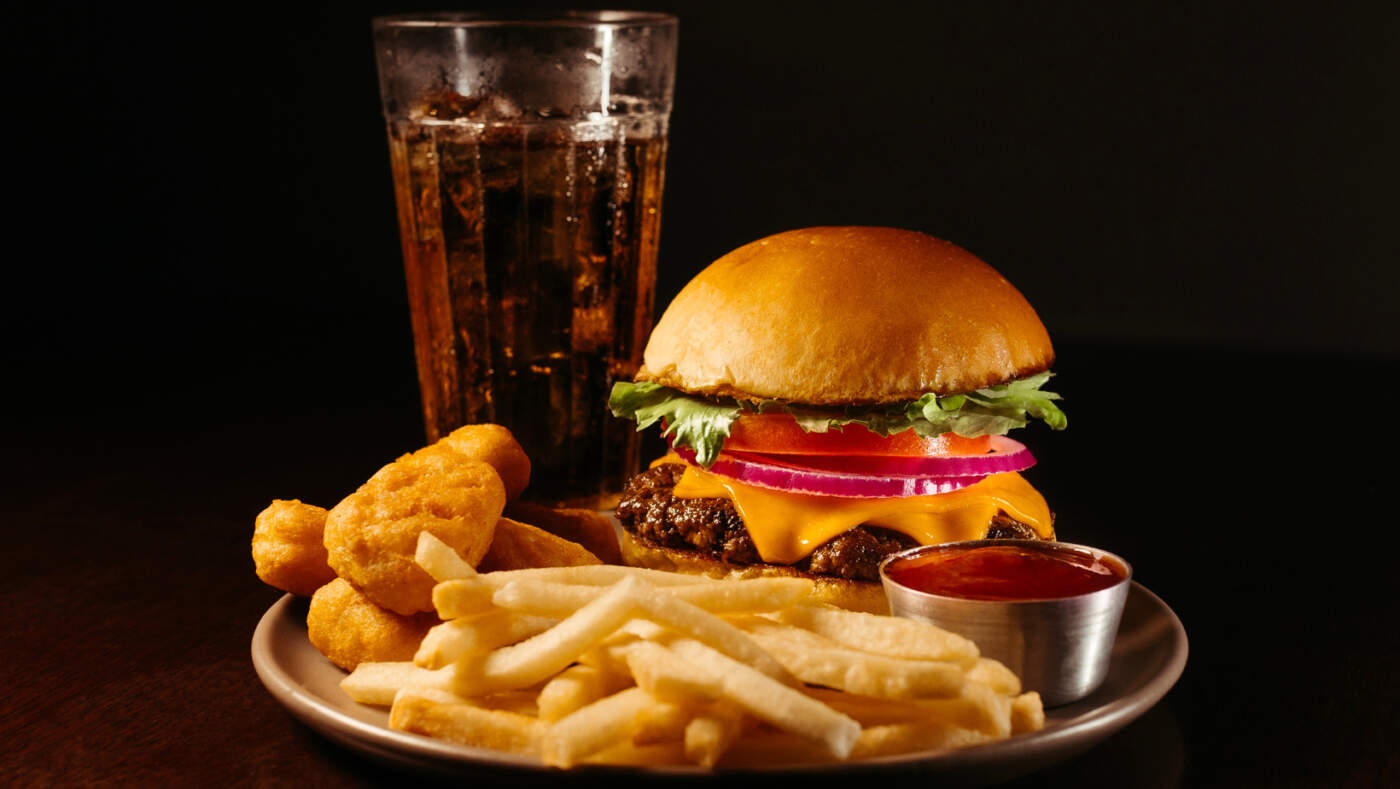
- Greasy fast food: a double cheeseburger with fries contains 40–60g of fat. That’s close to a full day’s limit in one sitting. The gut responds fast.
- Heavy cream sauces: Alfredo, béchamel, cream-based curries. These hit the colon like a wave.
- Processed meats: hot dogs, sausage links, and salami. High in fat and salt, and often contain emulsifiers that disrupt gut bacteria.
Reduce portion size before eliminating. Going from a double patty to a single already makes a measurable difference for most people.
6–8: Sugar and Artificial Sweeteners
Sugar alcohols are the main gut disruptors in “diet” and “sugar-free” products. The body doesn’t absorb them well. They sit in the colon and ferment, pulling water in and producing gas. The result is cramping and diarrhea, sometimes within 30 minutes.
- Sorbitol and xylitol: found in sugar-free gum, mints, and some protein bars. Even 10g of sorbitol causes diarrhea in healthy adults.
- Diet drinks: aspartame and acesulfame potassium alter gut bacteria composition with regular use. Not immediately obvious, but chronic consumption changes gut response.
- Candy and chewing gum: most people chew 2–3 pieces without reading labels. Those pieces add up.
These are among the most overlooked foods that cause diarrhea because you assume “sugar-free” means safer for digestion. It’s often the opposite.
9–11: Dairy Products
About 65% of adults worldwide have some degree of lactose intolerance. The body stops producing enough lactase, the enzyme that breaks down milk sugar, after childhood. Undigested lactose ferments in the colon. Gas, bloating, and diarrhea follow.
- Milk: whole milk hits hardest because fat compounds the lactose load.
- Ice cream: high lactose and high fat. Two triggers in one.
- Soft cheeses: ricotta, cream cheese, cottage cheese retain high lactose. Hard cheeses like cheddar and parmesan are actually low-lactose and usually safe.
You may not know you’re lactose intolerant until your stomach gets sensitive.
12–13: High-FODMAP Foods
FODMAPs are fermentable carbohydrates that the small intestine doesn’t absorb well. They pass into the colon intact, get fermented by bacteria, and produce gas and loose stools. For people with IBS-D (diarrhea-predominant IBS), FODMAPs are a major problem.
- Onions and garlic: two of the highest-FODMAP foods. Even cooking doesn’t eliminate the fructans that trigger symptoms. Garlic-infused oil is safer because the fructans don’t transfer into oil.
- Legumes: lentils, chickpeas, and black beans are healthy foods. But high in galactooligosaccharides, which gut bacteria ferment aggressively.
These are foods that cause diarrhea specifically in people with gut sensitivity, not necessarily in everyone.
14–15: Caffeine and Alcohol
- Coffee: caffeine stimulates the colon’s muscle contractions. It speeds up the entire process. Decaf coffee does this too, meaning something beyond caffeine in coffee also affects motility. Studies show coffee triggers colon activity within 4 minutes of consumption.
- Beer and wine: alcohol irritates the gut lining directly. Beer contains fructans (the same as onions) on top of the alcohol. Wine contains sulfites that some people react to with gut inflammation.
Spicy Foods Causing Diarrhea
Why Capsaicin Triggers Loose Stools
Spicy foods causing diarrhea is a direct, documented mechanism. Capsaicin, the active compound in chili peppers, binds to TRPV1 receptors in the gut lining. These are heat-sensing pain receptors. When capsaicin activates them, the gut interprets it as a threat and accelerates movement to expel the irritant.
The result is that food moves through much faster than normal. The colon doesn’t have time to absorb water properly. Loose stools: sometimes within 20–30 minutes of eating.
Capsaicin also survives digestion mostly intact. That’s why spicy food burns on the way out, not just on the way in.
Who Is More Sensitive
- IBS patients: their gut receptors are already hypersensitive. Even mild spice triggers a strong response.
- People with hemorrhoids: capsaicin exiting the rectum worsens inflammation and pain directly.
People who eat spicy food regularly do build partial tolerance. But “tolerance” means the gut reacts less noticeably, not that the mechanism stops.
IBS Trigger Foods and Diarrhea

Common IBS-D Triggers
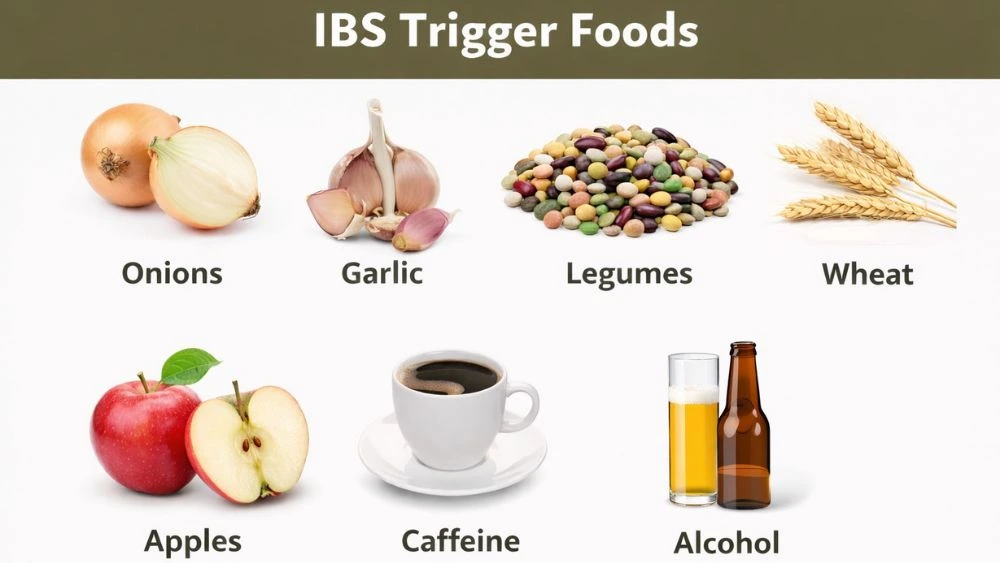
IBS trigger foods diarrhea follows a different pattern from regular food sensitivity. In IBS-D specifically, the gut overreacts to normal amounts of normal foods. The main dietary triggers:
- High-FODMAP foods (onions, garlic, legumes, wheat, apples, mangoes)
- Fatty foods: any meal above 30g of fat
- Caffeine: even one cup of coffee triggers urgent bowel movements in IBS-D patients
Why IBS Patients React Faster
The IBS gut has two specific problems.
- First, gut hypersensitivity: nerve signals from the colon are amplified. A normal amount of gas or mild stretching triggers pain signals that a healthy gut wouldn’t register.
- Second, altered motility: the colon contracts too fast. Food moves through before water gets absorbed.
This is why an IBS patient and a non-IBS patient can eat the same meal and have completely different outcomes.
Food Poisoning Diarrhea Foods
High-Risk Foods
Food poisoning diarrhea foods are found in the most common sources:
- Undercooked meat: chicken is the top source of Campylobacter and Salmonella infections. Pink chicken is never safe.
- Unpasteurized dairy: raw milk and raw milk cheese carry E. coli O157:H7 and Listeria. These cause serious infections, not just mild stomach upset.
- Contaminated salads: leafy greens are the top source of foodborne illness outbreaks in the US (per CDC data). Because they’re eaten raw, there’s no cooking step to kill bacteria.
How Food Poisoning Differs From Food Sensitivity
Food sensitivity causes gradual, predictable symptoms. Food poisoning is sudden and severe. Key differences:
- Onset: food poisoning hits in 2–6 hours (Staph aureus toxin) or 6–24 hours (Salmonella). Sensitivity symptoms develop over 30 minutes to a few hours after eating the trigger food.
- Fever: Food poisoning often causes fever. Food sensitivity does not.
- Vomiting: common in food poisoning. Less common in food sensitivity.
If diarrhea came with sudden vomiting and fever after eating out, that’s food poisoning, not the foods that cause diarrhea due to sensitivity.
How to Treat Diarrhea
Immediate Steps
How to treat diarrhea at home starts with fluids. The gut is losing water and electrolytes rapidly. Plain water isn’t enough.
- Oral rehydration solution (ORS): WHO formula: 1 liter of water, 6 teaspoons of sugar, ½ teaspoon of salt. Or buy pre-made ORS sachets. This restores sodium and glucose simultaneously, which is required for proper absorption.
- Bland foods: white rice, plain boiled potatoes, bananas, and plain toast. These slow gut transit and are easy to digest.
- Avoid dairy, coffee, fatty foods, and artificial sweeteners until stools normalize.
When Medication Is Appropriate
Loperamide (Imodium) slows bowel movement and is appropriate for short-term use in non-infectious diarrhea. Do not use it in bloody diarrhea: it can trap bacterial toxins in the gut and worsen the infection.
When to See a Doctor
Go to a doctor when:
- Diarrhea lasts more than 3 days without improvement
- Blood or mucus appears in the stool
- Signs of severe dehydration: no urination for 8+ hours, sunken eyes, rapid heartbeat
- Fever above 38.5°C (101.3°F)
Children and elderly people dehydrate faster. 48 hours is the threshold for them, not 3 days.
FAQs on Foods That Cause Diarrhea
What food most commonly causes diarrhea?
Dairy is the most common trigger globally because 65% of adults are lactose intolerant. Among the foods that cause diarrhea in otherwise healthy people, milk and ice cream top the list. Artificial sweeteners like sorbitol are second, especially for people eating sugar-free products daily.
Can spicy food cause diarrhea immediately?
Yes. Capsaicin activates TRPV1 receptors in the gut within minutes. Spicy foods causing diarrhea can happen in as little as 20 minutes. People with IBS-D experience it even faster because their gut receptors are already hypersensitive.
Does coffee cause diarrhea?
Yes. Coffee triggers colon contractions within 4 minutes of drinking it, as confirmed by motility studies. This happens with decaf, too, which means caffeine isn’t the only active compound. People with IBS should treat even one cup as a potential trigger.
Can dairy cause diarrhea?
Yes. Undigested lactose ferments in the colon and pulls water in. Whole milk and ice cream hit hardest. Hard cheeses like cheddar have very little lactose and rarely cause problems. Lactase enzyme supplements taken before meals reduce symptoms significantly.
Are artificial sweeteners linked to diarrhea?
Yes. Sorbitol causes diarrhea at just 10g: that’s roughly 5 sticks of sugar-free gum. Among foods that cause diarrhea without most people realizing it, sugar-free products are the most underestimated. Check ingredient labels for sorbitol, xylitol, and mannitol.
Can healthy foods cause diarrhea?
Yes. High-fiber vegetables like broccoli, legumes, and apples are among the foods that cause diarrhea in people with IBS or sensitive guts. Raw onions cause diarrhea even in people without IBS due to their high fructan content. Healthy doesn’t always mean gut-friendly.
Is diarrhea always caused by food?
No. Antibiotics, anxiety, irritable bowel syndrome, Crohn’s disease, and viral infections all cause diarrhea without any food trigger. Foods that cause diarrhea are a common cause, but if symptoms persist after diet changes, a non-food cause needs investigation.
Do IBS patients react differently to food?
Yes. IBS trigger foods cause diarrhea, which happens at smaller food amounts and more quickly than in people without IBS. An IBS-D patient may react to half a serving of onions. A person without IBS might eat a full serving and feel nothing. The underlying nerve hypersensitivity makes the threshold much lower.
Can alcohol trigger diarrhea?
Yes. Alcohol irritates the gut lining and speeds up bowel contractions. Beer is worse than spirits because it also contains fructans. Even two glasses of wine cause measurable changes in gut motility. Drinking on an empty stomach worsens the effect.
When should food-related diarrhea worry me?
When it’s bloody, when the fever is above 38.5°C, or when it lasts more than 3 days. One-day diarrhea after eating foods that cause diarrhea is self-limiting. Diarrhea with fever and vomiting after eating out suggests food poisoning and diarrhea that needs medical evaluation, not home treatment alone.









Leave a Comment