


Getting rid of diarrhea fast starts with replacing fluids before anything else. Diarrhea drains water and electrolytes faster than you realize, and dehydration is what turns a bad day into an ER visit.
Intaking fluids first helps the body regain fluid balance, and bland foods help fix loose stools. With rest, you can manage diarrhea at home.
Most cases of acute diarrhea resolve within 24–48 hours with the right steps. The problem persists when you take too much (wrong medications, wrong foods) or too little (no fluids, no rest).
If symptoms don’t ease within 48 hours or a fever develops, you need medical attention.
15 Natural Remedies for Diarrhea

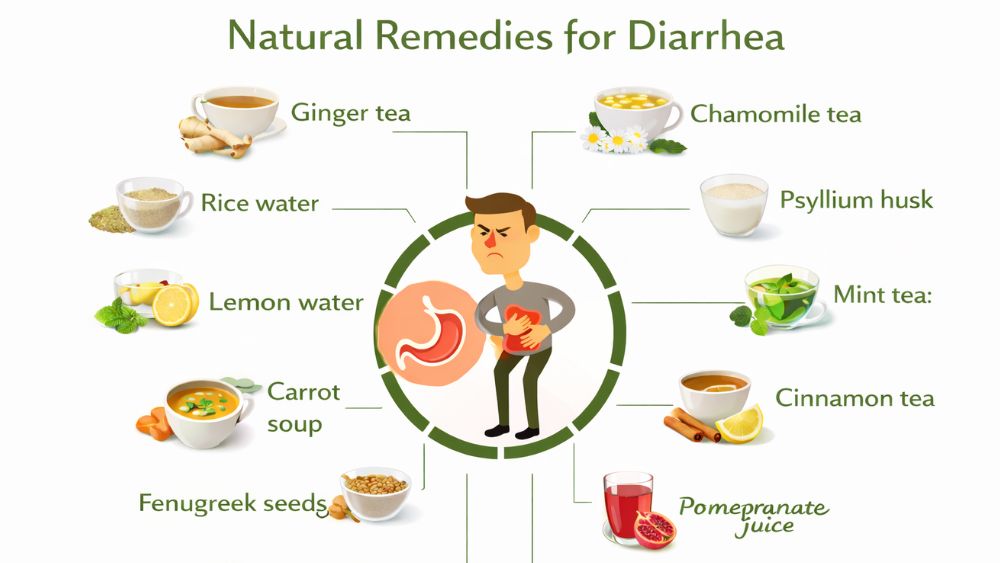
The 15 natural remedies for diarrhea listed below include some that slow gut motility, some that kill bacteria, and some that restore gut lining integrity. Pick based on what you have at home.
- Ginger tea: Ginger contains gingerols and shogaols that reduce intestinal inflammation and slow excessive gut contractions. Boil 1 inch of fresh ginger in 2 cups of water for 10 minutes. Drink warm.
- Chamomile tea: Chamomile has antispasmodic properties. It relaxes the intestinal muscle wall and reduces cramping. Two cups a day is enough.
- Psyllium husk: This is a soluble fiber that absorbs excess water in the colon. It firms up stool without stopping bowel movements entirely. One teaspoon in water twice daily works.
- Rice water: The starchy water left after boiling rice coats the gut lining and reduces the secretion of fluids into the intestine. It’s one of the fastest-acting home options.
- Mint tea: Peppermint contains menthol, which relaxes intestinal spasms. It won’t cure the cause, but it cuts cramping quickly.
- Fenugreek seeds: High in mucilage, which forms a gel in the gut and slows stool transit. Swallow half a teaspoon of raw seeds with water: don’t boil them.
- Cinnamon tea: Cinnamon has antimicrobial properties against common gut bacteria like E. coli. Steep one cinnamon stick in hot water for 10 minutes.
- Pomegranate juice: Pomegranate peel extract reduces diarrhea caused by gut infections. The juice form works, but the peel tea is more potent.
- Carrot soup: Boiled carrots are easy on the gut and provide pectin, a soluble fiber that helps bind stool. This works especially well for children.
- Buttermilk: Plain buttermilk contains Lactobacillus cultures that rebalance gut flora. It’s most useful when diarrhea follows antibiotic use.
- Lemon water: Warm lemon water slightly alkalizes the gut environment and has mild antibacterial effects. Useful in early-stage diarrhea.
- Nutmeg (small amounts): Nutmeg contains myristicin, which reduces gut motility. Only use a pinch: large amounts are toxic.
- Coconut water: Naturally high in potassium and sodium. It rehydrates without the sugar load of sports drinks.
- Apple cider vinegar (diluted): One tablespoon in a glass of warm water may help with diarrhea triggered by bacterial overgrowth. Don’t take it undiluted: it irritates the esophagus.
- Coriander seed tea: Coriander seeds have antispasmodic and antimicrobial properties. Crush and boil one teaspoon in water, strain, and drink warm.
5 Ways to Find Relief From Diarrhea
These are the 5 ways to find relief from diarrhea that work regardless of the cause.
1. Start Oral Rehydration Immediately
The gut loses 200–400 ml of fluid per loose stool. That adds up fast.
- Drink water, ORS, or diluted coconut water in small sips (larger gulps trigger more bowel movement)
- ORS formula: 1 liter of water + 6 teaspoons of sugar + half a teaspoon of salt. This matches how the gut absorbs fluid most efficiently.
- Aim for at least 200 ml after every loose stool
2. Switch to a Bland Diet
High-fiber and fatty foods speed up gut motility. That’s the last thing you need. Stick to low-fiber, low-fat foods: plain rice, toast, boiled potatoes, banana. These are easy to digest and don’t stimulate extra bowel contractions.
3. Use Anti-Diarrheal Medication (If Appropriate)
Loperamide (Imodium) slows intestinal movement and reduces stool frequency. It works within 1–2 hours.
| Do not use loperamide if you have a fever or blood in your stool. Those signs point to a bacterial infection. Stopping the diarrhea traps the bacteria inside, and that makes things significantly worse. |
4. Rest and Reduce Gut Stimulation
Caffeine speeds up gut contractions. Alcohol irritates the intestinal wall. Both make knowing how to get rid of diarrhea fast harder than it needs to be. Rest also lowers cortisol. High cortisol from stress directly worsens diarrhea by altering gut motility signals.
5. Avoid Trigger Foods
These foods worsen diarrhea regardless of the underlying cause:
- High-fat foods (fried items, butter, cream)
- Spicy foods (capsaicin directly stimulates bowel contractions)
- Sugary foods (excess sugar draws water into the colon)
- Dairy products (except plain yogurt with live cultures)
Diarrhea and Dehydration Treatment
Diarrhea and dehydration treatment must happen in parallel. Treating one without the other leaves the patient worse off.
Signs of Dehydration
- Dry or sticky mouth
- Dizziness when standing up
- Dark yellow or amber urine
- No urination for more than 6 hours
- Sunken eyes (in children)
Best Fluids for Rehydration
- ORS (oral rehydration solution): The WHO standard formula works better than plain water because glucose helps the gut absorb sodium, which pulls water in with it.
- Coconut water: Naturally contains electrolytes close to what the body loses in diarrhea. Better than sports drinks, which have high sugar.
- Clear broths: Provide sodium, which is depleted during acute diarrhea. Chicken or vegetable broth works well.
| Avoid: Fizzy drinks, fruit juices (high sugar), and coffee. |
When IV Fluids Are Needed
Some people cannot rehydrate orally, especially if vomiting prevents keeping fluids down.
Go to the ER for IV fluids if:
- No urine output for 8+ hours
- Severe dizziness or fainting
- Rapid heart rate with weakness
- The child is limp and unresponsive to normal stimulation
Foods to Eat When You Have Diarrhea
The foods to eat when you have diarrhea follow one rule: low stimulation, high digestibility.
BRAT-Based Options
The BRAT diet (Bananas, Rice, Applesauce, Toast) has been used in clinical settings for decades. Here’s why each one works:
- Bananas: Rich in pectin (binds stool) and potassium (lost during diarrhea). Ripe bananas work better than unripe ones.
- Rice: White rice, not brown, is low in fiber and easy to digest. It slows gut transit.
- Applesauce: Cooked apples are easier than raw ones. Contains pectin. Avoid apple juice: the sugar makes diarrhea worse.
- Toast: Plain white bread is low-fiber. Soaks up excess fluids in the gut.
Additional Gentle Foods
- Boiled potatoes (no skin): High in potassium and starch. Easy on the gut.
- Plain scrambled eggs: High protein, low fat if cooked without butter. Easy to digest.
- Yogurt with live cultures: Lactobacillus and Bifidobacterium strains in plain yogurt help restore gut bacteria balance. Choose yogurt labeled “live active cultures.”
How to Treat Children Who Have Diarrhea
Children dehydrate faster than adults. Treating children who have diarrhea requires moving quickly, especially under age 5.
Priority: Prevent Dehydration
- ORS solution: Give 5–10 ml every 1–2 minutes for a child who is actively vomiting. Small, frequent amounts are absorbed better than larger doses.
- Continue breastfeeding: Breast milk provides hydration, antibodies, and gut-protective compounds. Don’t stop during diarrhea, it helps recovery.
- Avoid giving plain water as the sole fluid for infants: it dilutes sodium levels and can cause hyponatremia.
Safe Food Options
- Rice porridge (congee): Diluted, soft, easy to digest
- Mashed banana: Provides potassium and pectin
- Avoid fruit juices, sugary drinks, and carbonated beverages entirely
When to Seek Pediatric Care
Take the child to a doctor if:
- No urination for 6+ hours
- Sunken eyes or a sunken soft spot on the infant’s head
- Persistent vomiting is preventing fluid intake
- Blood or mucus in stool
- Fever above 38.5°C (101.3°F) lasting more than 24 hours
When Fast Relief Is NOT Enough
How to get rid of diarrhea fast with home remedies works for most cases. But some situations require medical care, and waiting makes it worse.
See a doctor if you have:
- Diarrhea lasting more than 3 days: Acute diarrhea should resolve. Anything beyond 72 hours needs investigation for bacterial infection, parasite, or IBD.
- High fever (above 38.5°C / 101.3°F): Points to an infectious cause that needs antibiotics, not loperamide.
- Severe abdominal pain: Cramping is normal. Severe localized pain that doesn’t ease between stools suggests something more serious: appendicitis, colitis, or bowel obstruction.
- Bloody stools: Blood in stool with diarrhea is a red flag for Salmonella, Campylobacter, E. coli O157:H7, or ulcerative colitis. These need lab testing and possibly targeted antibiotics.
FAQs on How to Get Rid of Diarrhea Fast
What stops diarrhea immediately?
Loperamide (Imodium) is the fastest-acting option: it works within 1–2 hours by slowing intestinal contractions. For a drug-free option, rice water works within 2–3 hours by coating the gut lining and reducing fluid secretion. Neither fixes the cause, but both cut frequency fast.
How fast can diarrhea go away?
Viral diarrhea clears in 24–72 hours. Bacterial diarrhea from food poisoning typically resolves in 3–5 days. If it’s antibiotic-related, expect 3–7 days after finishing the course. You can get rid of diarrhea fast with ORS, and a bland diet cuts recovery time by roughly 30%.
Is loperamide safe for quick relief?
Yes, for adults with watery diarrhea and no fever. The standard dose is 4 mg to start, then 2 mg after each loose stool: max 16 mg per day. Never use it with a fever above 38°C or blood in the stool. It’s unsafe for children under 2.
Can probiotics stop diarrhea fast?
Yes, but with a delay. Lactobacillus rhamnosus GG (found in Culturelle) and Saccharomyces boulardii reduce diarrhea duration by about 1 day in clinical trials. They work best starting within the first 24 hours. They’re most effective for antibiotic-associated and viral diarrhea.
What drink helps diarrhea most?
ORS (oral rehydration solution) is clinically the best. It outperforms plain water, coconut water, and sports drinks because the glucose-sodium ratio matches how the gut absorbs fluid. The WHO formula reduces diarrhea-related dehydration hospitalizations by over 90%.
Should I stop eating completely?
No. Fasting starves the gut cells that repair the intestinal lining. Eat small amounts of bland foods to eat when you have diarrhea are banana, plain rice, and toast, within the first few hours. Eating actually speeds recovery.
Is diarrhea dangerous?
For healthy adults, rarely. For children under 5 and adults over 65, yes: dehydration escalates fast. Globally, diarrheal disease kills approximately 1.6 million children annually, almost entirely from dehydration. The disease itself is rarely fatal; dehydration is.
Can stress cause sudden diarrhea?
Yes. The gut has 500 million neurons: more than the spinal cord. High cortisol from stress directly increases gut motility. You can get rid of diarrhea fast when stress is the cause: reduce stimulation, avoid caffeine, and try peppermint tea, which cuts gut spasms within 30 minutes.
When should I go to the ER?
Go immediately if there is no urination for 8+ hours, a heart rate above 100 bpm with dizziness, blood in stool with fever, or inability to keep any fluids down for more than 4 hours. These signs mean diarrhea and dehydration treatment at home are no longer sufficient.
Can I exercise during diarrhea?
No. Exercise raises body temperature, increases fluid loss through sweat, and diverts blood away from the gut, all of which worsen dehydration. Wait until you’ve had no loose stools for at least 24 hours and can eat normally before resuming any physical activity.





Leave a Comment