

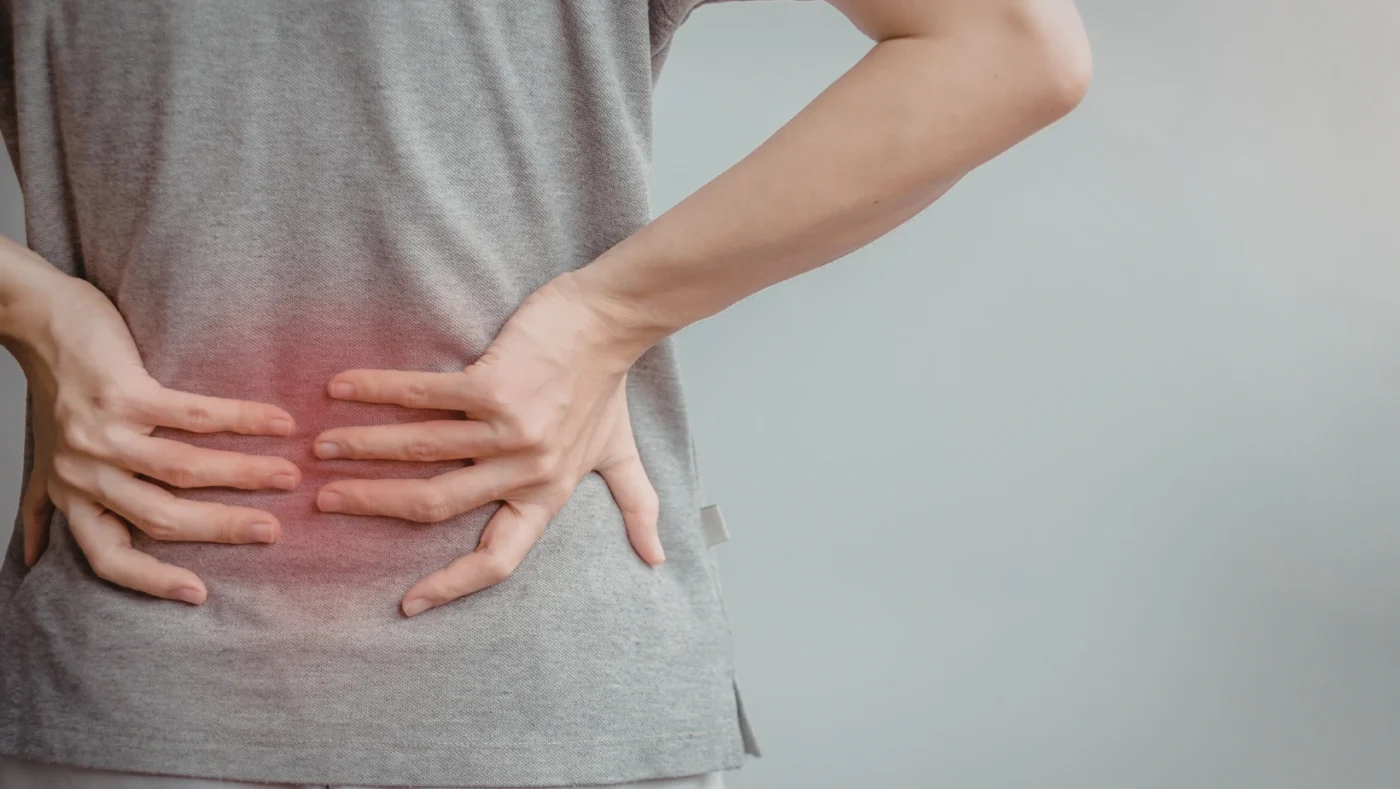

Lower back pain and diarrhea together are uncomfortable and occasionally a signal of something serious. In most people, the cause is a gut infection or IBS, both self-limiting within a few days. The cases that matter are the ones with fever, one-sided pain, or organ-specific symptoms. Recognizing that difference is what determines whether to wait it out at home or get evaluated the same day.
Common Causes of Lower Back Pain and Diarrhea
The common causes of lower back pain and diarrhea range from simple gut infections to organ-level problems. The key is which symptoms come alongside them.
Gastrointestinal Infections
- Viral gastroenteritis (stomach flu) is the most frequent reason lower back pain and diarrhea show up together. The back muscles, especially in the lumbar region, tense in response to abdominal cramping. Back pain in this case is secondary to the gut inflammation.
- Bacterial food poisoning from Salmonella, Campylobacter, or E. coli produces more intense symptoms. Diarrhea is often bloody. Abdominal cramping is severe. Back pain comes from the same muscle-tension mechanism.
Both resolve within 24–72 hours in healthy adults without treatment. Longer than that, and the infection needs to be ruled out properly.
Inflammatory Conditions
IBS flares cause lower back pain in 30–40% of IBS patients report concurrent lower back pain during flares, not from any structural spine problem, but from referred pain. The nerves supplying the gut and the lower back share pathways. When gut nerves fire intensely, the brain sometimes interprets the pain as coming from the back.
IBD (Crohn’s disease and ulcerative colitis) causes more persistent lower back pain and diarrhea. In IBD, inflammation sometimes extends beyond the gut, causing actual joint inflammation.
Structural or Mechanical Causes
Pelvic inflammatory disease (PID) in women causes lower abdominal and back pain. PID affects the uterus, fallopian tubes, and surrounding structures. Diarrhea occurs because inflamed pelvic tissue irritates the adjacent bowel.
Severe constipation with overflow diarrhea causes back pain from the physical pressure of impacted stool pressing against spinal nerves. Watery stool leaks around the impaction; this looks like diarrhea but is actually overflow. A hard, distended abdomen confirms this.
Kidney Infection and Diarrhea
Kidney infection and diarrhea together are a specific combination, and you assume back pain is a muscle problem, not a kidney problem.
Why Kidney Infections Cause Back Pain
The kidneys sit in the upper-to-mid back area, under the lower ribs on both sides. When one gets infected (pyelonephritis), the surrounding tissue inflames. That inflammation causes pain in the flank, the area between the lower ribs and the hip.
This pain differs from muscle pain. It doesn’t change with movement or position. Pressing on the area, especially on the costovertebral angle (where the lower rib meets the spine), produces sharp tenderness.
Associated Symptoms
Kidney infection and diarrhea occurring together usually include:
- Fever: often above 38.5°C; kidney infections cause systemic illness
- Burning urination: pain while urinating confirms urinary tract involvement
- Chills: a sign the infection has entered the bloodstream
- Cloudy or foul-smelling urine: a visible sign of bacterial activity in the urinary tract
Diarrhea occurs because the same bacterial infection sometimes affects the gut simultaneously or because the systemic immune response disrupts gut motility. Kidney infections require antibiotics. Untreated, they progress to sepsis within days.
Pancreatitis, Back Pain, and Diarrhea
Pancreatitis, back pain, and diarrhea are one of the most serious combinations on this list.
How Pancreatic Inflammation Radiates to the Back
The pancreas sits deep in the abdomen, behind the stomach. When it inflames, the pain starts in the upper-to-mid abdomen and radiates through to the back. It’s often worse when lying flat and slightly better when leaning forward.
Pancreatitis, back pain, and diarrhea occur because the inflamed pancreas stops producing digestive enzymes normally. Fat doesn’t get digested. It passes through to the colon undigested, where it causes fatty, pale, foul-smelling stools, sometimes called steatorrhea. This is a specific type of diarrhea distinct from infectious loose stools.
When to Suspect Pancreatitis
Suspect pancreatitis when:
- Pain is severe, constant, and localized to the upper abdomen with back radiation
- Nausea and vomiting accompany the pain
- The person has a history of heavy alcohol use (most common cause)
- Gallstones have been previously diagnosed (second most common cause)
Pancreatitis, back pain, and diarrhea are severe; pancreatitis is potentially life-threatening and requires hospital admission.
Gallbladder Back Pain and Diarrhea
Gallbladder back pain and diarrhea follow a pattern that makes it identifiable if you know what to look for.
Digestive Triggers
After a high-fat meal, the gallbladder contracts to release bile, and if a stone is present, that contraction causes severe pain within 30–60 minutes of eating.
Diarrhea occurs because bile isn’t released properly into the small intestine. Fat digestion fails. Undigested fat speeds through the colon. This is the same fatty diarrhea seen in pancreatitis, but it comes specifically after fatty meals rather than being constant.
Lower Back Pain and Diarrhea Treatment
Lower back pain and diarrhea treatment start differently depending on whether the cause is an infection, an organ problem, or a functional condition like IBS.
Immediate Home Management
For symptoms that appear to come from a gut infection or IBS flare:
- Hydration: oral rehydration solution (ORS) replaces lost sodium, potassium, and glucose. Plain water doesn’t restore electrolytes fast enough after diarrhea.
- Rest: Physical rest reduces the muscle tension contributing to back pain. Heat applied to the lower back for 15–20 minutes reduces muscle spasm.
- Avoid heavy or fatty meals: these stimulate the gut and worsen both diarrhea and cramping. Stick to rice, plain toast, and bananas until stools normalize.
Condition-Specific Treatment
- Bacterial infections: require antibiotics. A doctor determines the specific antibiotic based on stool culture results.
- IBS flare management: antispasmodics like hyoscine reduce gut cramping and the referred back pain that comes with it.
- Kidney infection: oral antibiotics (trimethoprim-sulfamethoxazole or ciprofloxacin) for mild cases; IV antibiotics in hospital for severe cases.
- Pancreatitis or gallbladder disease: home treatment isn’t appropriate. These need imaging, IV fluids, and medical management in a hospital setting.
When Lower Back Pain and Diarrhea Are an Emergency

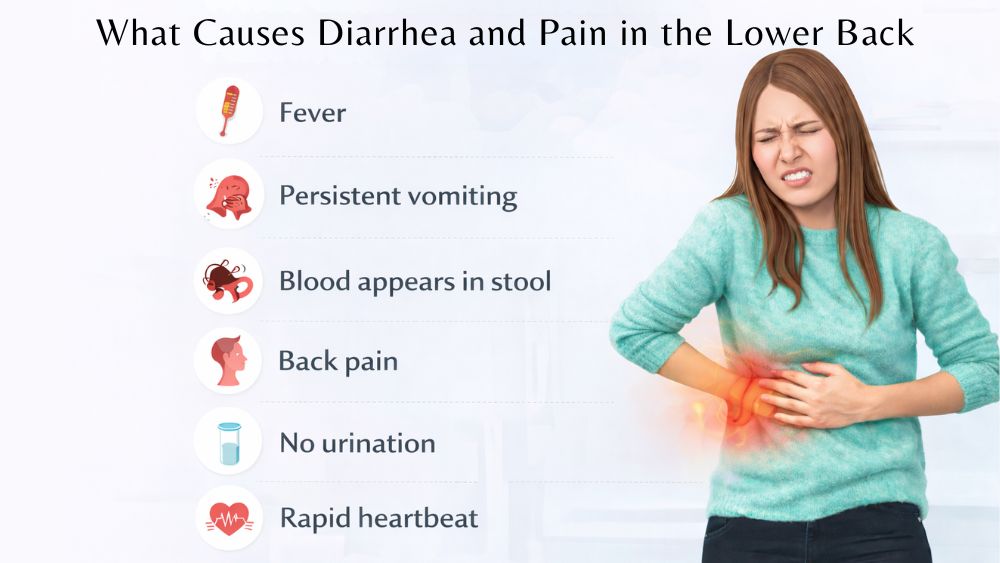
Lower back pain and diarrhea become an emergency when:
- Fever rises above 38.5°C: signals systemic infection or organ involvement
- Persistent vomiting increases the risk of dehydration rapidly
- Blood appears in stool: rules out must include colitis, IBD flare, or bacterial infection
- Back pain becomes severe, constant, and unresponsive to rest or position changes
- Signs of dehydration appear: no urination for 8+ hours, rapid heartbeat, confusion
If the back pain is one-sided and accompanied by burning urination and fever, assume kidney infection until proven otherwise, and go to the emergency department.
How Doctors Diagnose Lower Back Pain and Diarrhea
Diagnosis of lower back pain and diarrhea starts with the symptom timeline: how long both have been present and what came first.
- Symptom timeline: sudden onset within 24 hours of a meal points to food poisoning. Gradual onset over days suggests IBS, IBD, or an organ-related condition.
- Urine tests: check for bacteria, white blood cells, and blood in urine. Positive results point to a kidney or urinary tract infection.
- Blood tests: complete blood count (CBC) shows if white blood cells are elevated (infection or inflammation). Lipase and amylase levels confirm or rule out pancreatitis.
- Imaging: ultrasound checks for gallstones, kidney enlargement, or abdominal organ changes. CT scan is used when pancreatitis, appendicitis, or kidney abscess is suspected.
FAQs on Lower Back Pain and Diarrhea
Can diarrhea cause lower back pain?
Yes. Gut spasms during diarrhea activate the same nerve pathways that carry lower back pain signals. Abdominal cramping causes the lower back muscles to tense defensively. In severe diarrhea from food poisoning, this back pain can be sharp and persistent until the gut settles.
Is kidney infection linked to diarrhea?
Yes. Kidney infection and diarrhea occur together because the bacterial infection, usually E. coli, sometimes spreads from the urinary tract to the gut, or because systemic inflammation disrupts gut motility. One-sided flank pain with fever and burning urination confirms kidney involvement over a gut cause.
Does IBS cause lower back pain?
Yes. 30–40% of IBS patients experience lower back pain during flares. The mechanism is referred to as pain: overactive gut nerves share pathways with lower back nerve signals. No spinal abnormality is present. The back pain resolves when the IBS flare settles.
Can pancreatitis cause back pain and diarrhea?
Yes. Pancreatitis, back pain, and diarrhea are a classic presentation. The pancreas sits behind the stomach; when inflamed, it radiates pain into the mid-to-lower back. Diarrhea is fatty and pale because the damaged pancreas stops producing lipase, the enzyme that digests fat.
Is gallbladder disease linked to back pain?
Yes. Gallbladder back pain and diarrhea follow fatty meals. The referred pain targets the right shoulder blade and right side of the back, not the lower left. If back pain consistently appears 30–60 minutes after eating fatty food and includes right-upper-abdominal pain, gallbladder disease is the likely cause.
Should I go to the ER for these symptoms?
Yes, if fever exceeds 38.5°C, if blood appears in stool, if back pain is severe and constant, or if no urination occurs for 8+ hours. Simple lower back pain and diarrhea from a mild gut infection don’t need the ER. Add organ-level symptoms: fever, burning urination, and severe pain.
Can dehydration cause back pain?
Yes. Dehydration reduces the fluid cushioning around spinal discs. Prolonged dehydration after severe diarrhea creates disc compression, causing genuine lower back discomfort. This type of back pain improves within a few hours of proper rehydration with ORS.
Is this combination usually serious?
No, in most cases. Lower back pain and diarrhea from viral gastroenteritis or an IBS flare resolve within 24–72 hours without treatment. It becomes serious when organ involvement, such as the kidneys, gallbladder, or pancreas, is the underlying cause. Fever is the most reliable signal that something more serious is happening.
Can stress cause both symptoms?
Yes. The gut-brain axis connects the central nervous system directly to gut function. Acute stress triggers cortisol and adrenaline release, which speeds gut motility (causing diarrhea) and increases muscle tension throughout the body, including the lower back. Exam stress, work deadlines, and traumatic events all produce this response.
When should I worry most?
Worry most when lower back pain and diarrhea come with a fever above 38.5°C, one-sided back pain that doesn’t change with position, blood in stool, or severe pain in the upper abdomen radiating to the back. These combinations, particularly with fever, point to kidney infection, pancreatitis, or IBD flare, all of which need same-day medical evaluation.









Leave a Comment