


Signs of thyroid problems affect how your body produces energy, controls temperature, regulates heart rate, and manages brain function. When the thyroid slips out of balance, you may notice ongoing fatigue, sudden weight changes, hair thinning, mood shifts, sleep trouble, bowel changes, heart palpitations, and sensitivity to heat or cold. These symptoms often appear slowly and overlap, which is why many people dismiss them for years.
In reality, they reflect hormone signals failing at the cellular level, not lifestyle issues. Recognizing multiple signs of thyroid problems early helps prevent long-term damage to the heart, metabolism, fertility, and mental health.
15 Common Hyperthyroidism Symptoms
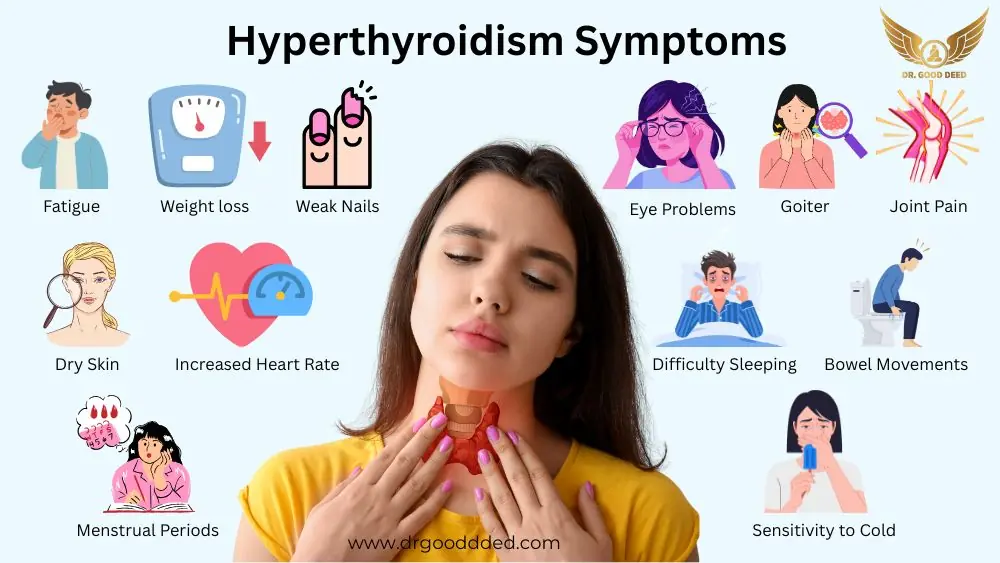
When thyroid hormones rise above normal, your body speeds up in ways you cannot consciously control. Organs work faster, energy burns unevenly, and many systems get overstimulated at the same time.
Fatigue
Feeling drained even after proper sleep is one of the earliest signs of thyroid problems . Your cells fail to use energy correctly. This type of fatigue feels deep and constant. Rest does not fix it. Thyroid-related fatigue often comes with muscle weakness and mental slowdown, not just sleepiness.
Unexplained Weight Changes
Sudden weight gain or weight loss without diet changes is a red flag. This ranks high among common thyroid symptoms seen in clinics. A fast thyroid burns calories too quickly. A slow one stores fat even when food intake stays the same. If the weight shifts by more than 5% in months, testing becomes necessary.
Weak Nails and Thinning Hair
Hair becomes dry, brittle, or falls out in clumps. Nails split, peel, or stop growing. These physical changes are visible signs of thyroid problems . Hormones control protein building in hair and nails. When levels drop or spike, growth quality declines first.
Dry Skin or Excessive Sweating
Some people develop rough, pale skin. Others sweat heavily without heat or exercise. Both patterns point to signs of thyroid problems affecting body temperature control. Thyroid hormones directly regulate sweat glands and skin oil production.
Increased Sweating
Excess sweating that feels sudden or constant is a known marker among common thyroid symptoms . You may sweat during rest or mild activity. This happens because the body thinks it is overheating even when it is not.
Increased Heart Rate Plus Palpitations
A racing heart, skipped beats, or pounding in the chest should never be brushed off. These are dangerous signs of thyroid problems . Hyperthyroidism increases the heart workload. An untreated thyroid imbalance raises the risk of rhythm disorders and heart failure.
Changes in Menstrual Periods
Cycles may become heavier, lighter, longer, or irregular. This is one of the most reported thyroid symptoms in women . Thyroid hormones interact with estrogen and progesterone. When balance breaks, menstrual timing and flow change. Fertility often drops as well.
Nervousness and Anxiousness
Constant tension, shaking hands, or racing thoughts often get labeled as anxiety. In reality, these can be signs of thyroid problems affecting the nervous system. Excess thyroid hormone overstimulates brain signaling, causing restlessness and panic-like feelings.
Vision and Eye Problems
Dry eyes, pressure behind the eyes, light sensitivity, or bulging eyes appear in some thyroid disorders. These eye issues are well-documented signs of hyperthyroidism , especially in autoimmune cases. They result from tissue swelling behind the eyes, not eye disease itself.
More Bowel Movements
Frequent stools without infection or diet change suggest a hormone imbalance. This digestive shift is one of the overlooked common thyroid symptoms . Thyroid hormones control how fast food moves through your gut. Too much hormone speeds digestion and reduces nutrient absorption.
Difficulty Sleeping
Trouble falling asleep or waking often during the night connects strongly to signs of thyroid problems . Hormone imbalance keeps the brain alert when it should rest. Untreated thyroid disease reduces deep sleep stages, leading to daytime exhaustion.
Goiter
A goiter is a visible swelling at the base of the neck. It forms when the thyroid gland strains to meet hormone demand. This is one of the most obvious signs of thyroid problems . WHO data links iodine imbalance and autoimmune disease to goiter development.
Depression and Brain Fog
Low mood, poor focus, memory lapses, and slow thinking often surprise patients. These mental changes are real signs of thyroid problems , not personality flaws. Thyroid hormones affect how brain cells use glucose and oxygen.
Joint Pain, Stiffness, and Swelling
Aching joints without injury can point to thyroid imbalance. This symptom appears in both fast and slow thyroid states. Doctors list it among common thyroid symptoms tied to inflammation and fluid shifts in tissues.
Sensitivity to Cold
Feeling cold when others feel fine signals slowed metabolism. This is one of the classic signs of thyroid problems seen in underactive thyroid cases. The body produces less heat, even in warm environments.
These fifteen patterns explain why signs of thyroid problems rarely show up alone. They overlap, build gradually, and worsen when ignored. If you recognize several of these common thyroid symptoms in your daily life, medical testing is not optional. It is the logical next step.
Signs Of Hyperthyroidism
Signs of hyperthyroidism appear when your thyroid gland releases too much hormone into your blood. This pushes your body into a constant high-speed state. These symptoms often feel intense and hard to ignore. Many people notice them suddenly, even if mild signs of thyroid problems existed earlier.
Rapid Heart Rate And Palpitations
Your heart may beat fast even while resting. You may feel pounding in your chest or skipped beats. These signs of hyperthyroidism happen because excess thyroid hormone forces the heart to pump harder. Cardiology research shows this raises the risk of rhythm disorders if left untreated.
Heat Intolerance And Excess Sweating
You may feel hot in normal weather. Sweat may soak clothes without physical effort. This is one of the clearest signs of hyperthyroidism . Your body burns energy too fast, creating extra heat that it struggles to release safely.
Unintentional Weight Loss
You lose weight even when eating normally or more than usual. This happens because your metabolism runs too fast. Among all common thyroid symptoms , this one often pushes people to seek medical help.
Nervousness, Anxiety, And Tremors
Hands may shake, thoughts may race, and small stressors may feel overwhelming. These signs of hyperthyroidism result from overstimulation of the nervous system. Doctors often see patients misdiagnosed with anxiety before thyroid testing reveals the real cause.
Frequent Bowel Movements
Food moves quickly through your digestive system. You may need the bathroom more often. This symptom links strongly to signs of hyperthyroidism and can cause nutrient loss over time.
Causes Of Hyperthyroidism
Hyperthyroidism does not happen randomly. It is usually triggered by immune disorders, structural changes in the thyroid, or excess iodine exposure. Identifying the cause matters because treatment differs widely between autoimmune, inflammatory, and iodine-related cases.
Graves’ Disease
Graves’ disease is an autoimmune condition. Your immune system attacks the thyroid and forces it to overproduce hormones. It is the most common of all causes of hyperthyroidism . Eye problems often appear alongside hormone symptoms.
Thyroid Nodules
Nodules are growths within the thyroid gland. Some nodules release hormones on their own. These nodules disrupt normal control signals, making them important causes of hyperthyroidism , especially in older adults.
Excess Iodine Intake
Too much iodine from supplements, medications, or contrast dyes can overstimulate the thyroid. This is a growing concern and a recognized cause of hyperthyroidism , especially in people with hidden thyroid disease.
Thyroiditis
Thyroiditis means inflammation of the gland. It causes stored hormones to leak into the blood. This creates short-term signs of hyperthyroidism , followed later by low hormone symptoms in some cases.
Thyroid Symptoms In Women
Female hormones interact closely with thyroid hormones, which makes symptoms stronger and more complex. Reproductive health, menstrual cycles, and metabolism often show early disruption. Many women experience symptoms years before receiving a diagnosis.
Irregular Or Heavy Menstrual Periods
Cycles may become unpredictable. Flow may increase or decrease. These thyroid symptoms in women happen because thyroid hormones influence estrogen levels and ovulation timing.
Fertility And Ovulation Problems
Irregular ovulation makes pregnancy harder. An untreated thyroid imbalance reduces fertility. These thyroid symptoms in women often improve once hormone levels stabilize.
Weight Gain Or Difficulty Losing Weight
Even with diet control, weight may increase. This is one of the most frustrating thyroid symptoms in women and often leads to delayed diagnosis.
Postpartum Thyroid Changes
After childbirth, immune shifts can trigger thyroid inflammation. These thyroid symptoms in women may appear months after delivery and often get mistaken for postpartum stress.
Thyroid Symptoms In Men
Men often show fewer early warning signs but stronger physical effects. Muscle strength, sexual health, and emotional control tend to decline first. Delayed diagnosis in men increases the risk of heart and fertility complications.
Low Libido And Erectile Dysfunction
Hormone imbalance reduces testosterone activity. This leads to sexual difficulties. These thyroid symptoms in men are medically recognized and reversible with treatment.
Muscle Weakness And Loss Of Strength
Muscles may feel heavy or tire quickly. Protein breakdown increases with hormone imbalance. This makes muscle loss a key thyroid symptom in men warning sign.
Mood Changes And Irritability
Men may feel unusually angry, restless, or withdrawn. These emotional shifts are real thyroid symptoms in men , not personality changes.
Reduced Sperm Count
Thyroid hormones influence sperm production. Low counts can result from an untreated imbalance. Fertility clinics often screen for thyroid disease for this reason.
Early Warning Signs Of Thyroid Problems
Early thyroid changes often affect the neck, voice, and temperature control. These signs appear before a severe hormone imbalance develops. Catching them early prevents progression to heart, nerve, and metabolic damage.
Neck Swelling Or Goiter
A visible or felt lump suggests gland strain. This is one of the most direct signs of thyroid problems and requires imaging and blood tests.
Voice Changes Or Hoarseness
Pressure on the vocal cords can alter your voice. Persistent hoarseness without infection is an overlooked sign of thyroid problems .
Swallowing Or Breathing Difficulty
Large thyroid enlargement can press on the windpipe or food pipe. These advanced signs of thyroid problems need urgent medical evaluation.
Cold Intolerance Or Feeling Hot Often
Temperature discomfort reflects hormone imbalance. Feeling cold or overheated is a daily sign of thyroid problems clue many people dismiss.
Thyroid Problems That Are Often Missed
Standard blood tests do not always reflect how thyroid hormones act inside tissues. Stress, inflammation, and early autoimmune activity can cause symptoms even when lab values appear normal. This leads to frequent underdiagnosis.
Subclinical Thyroid Disorders
Hormone levels sit near normal, but symptoms exist. Doctors call these subclinical cases. Patients still experience common thyroid symptoms that affect daily life.
Thyroid Symptoms With Normal TSH
TSH alone does not show the full picture. Free T3, Free T4, and antibodies matter. Many patients experience signs of thyroid problems despite normal TSH.
Stress-Induced Thyroid Dysfunction
Chronic stress alters immune and hormone signaling. This can trigger or worsen common thyroid symptoms , especially in genetically prone individuals.
FAQs
What Are The Earliest Signs Of Thyroid Problems?
Early signs of thyroid problems include fatigue, unexplained weight changes, mood shifts, and temperature sensitivity. These symptoms often appear months before blood tests clearly turn abnormal.
Are Thyroid Symptoms Different In Men And Women?
Yes. Thyroid symptoms in women often affect periods and fertility, while men experience muscle loss and sexual issues. Hormonal interactions explain these differences.
Can Thyroid Problems Cause Anxiety Or Depression?
Yes. Mental health changes are core signs of thyroid problems . Hormone imbalance alters brain chemistry, leading to anxiety, low mood, and poor focus.
What Are The Most Common Signs Of Hyperthyroidism?
The most common signs of hyperthyroidism include rapid heart rate, heat intolerance, weight loss, tremors, and frequent bowel movements.
Can Thyroid Problems Occur With Normal Blood Tests?
Yes. Many people have signs of thyroid problems even when TSH appears normal. Advanced testing often reveals hidden imbalance.
Do Thyroid Symptoms Worsen With Age?
Untreated common thyroid symptoms often worsen over time. Aging increases sensitivity to hormone imbalance and raises complication risk.
Can Stress Trigger Thyroid Problems?
Chronic stress can trigger immune changes and hormone disruption. This makes stress a known factor behind signs of thyroid problems .
When Should Thyroid Symptoms Be Taken Seriously?
Symptoms lasting more than a few weeks deserve testing. Ignoring signs of thyroid problems increases heart, fertility, and mental health risks.
Are Thyroid Problems Reversible?
Many thyroid disorders improve with early diagnosis and proper care. Outcomes depend on the cause and how quickly signs of thyroid problems are addressed.
Which Doctor Should Be Consulted For Thyroid Problems?
An endocrinologist specializes in hormone disorders. They evaluate and treat persistent signs of thyroid problems using full diagnostic testing.



Leave a Comment