



Amoxicillin for ear infection is one of the most common antibiotic treatments used by doctors today. You usually receive it when bacteria cause pain, pressure, or fluid inside the ear. It works best for middle ear infections, not all ear problems. It does not cure viral infections. It does not fix every ear condition. Used correctly, amoxicillin for an ear infection reduces pain, fever, and infection spread. Used wrongly, it fails and increases resistance.
What Is an Ear Infection?
An ear infection happens when germs grow inside parts of your ear. Bacteria cause many painful cases. Viruses cause many mild ones. The location of the infection decides treatment. Doctors first identify the different types of ear infections before choosing antibiotics. This step prevents misuse and treatment failure.
Middle Ear Infection (Otitis Media)
A middle ear infection affects the space behind your eardrum. This area should stay dry and air-filled. When a cold or allergy blocks drainage, fluid builds up. Bacteria then multiply inside that fluid.
You may feel deep ear pain, pressure, or hearing loss. Children may pull their ears or cry at night. Fever is common. Middle ear infections cause most antibiotic prescriptions in children. In these cases, amoxicillin for ear infection often works because it targets bacteria like Streptococcus pneumoniae .
Doctors prefer amoxicillin for ear infections here because it reaches high levels in the middle ear fluid. It also stays safe for most patients. This type responds best to antibiotics when symptoms are moderate to severe.
Outer Ear Infection (Otitis Externa)
An outer ear infection affects the ear canal. This canal runs from the ear opening to the eardrum. Water exposure raises risk. Swimmers get it often. Bacteria grow on moist skin.
Pain worsens when you touch or pull the ear. Swelling and drainage may appear. Hearing may feel blocked. Oral antibiotics usually do not help. Topical drops work better. Amoxicillin for ear infection does not treat infectious disease well. Using it here adds risk without benefit.
Inner Ear Infections
Inner ear infections affect balance and hearing nerves. Symptoms include dizziness, nausea, and spinning sensations. Many cases come from viruses, not bacteria. Antibiotics often fail here.
Doctors rarely use amoxicillin for ear infections unless tests confirm a bacterial cause. Neurology reviews show limited benefit of antibiotics for inner ear problems. Care often focuses on symptom control instead.
Amoxicillin Dosage for Ear Infection
Doctors choose dosing based on age, weight, kidney function, and infection severity. Using the wrong amoxicillin dosage for ear infection increases failure rates and contributes to antibiotic resistance documented in long-term population studies.
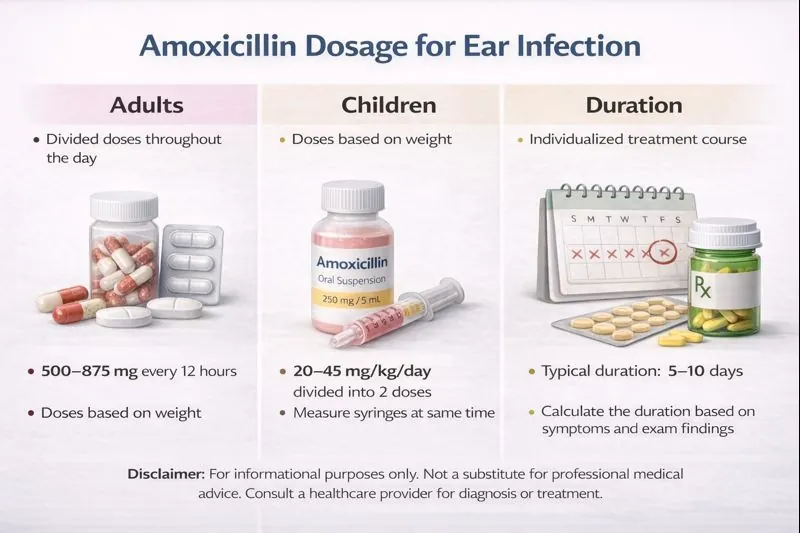
Amoxicillin Dosage for Adults
Doctors usually prescribe adult dosing in divided amounts across the day. The goal is steady drug levels in your blood. Severe infections may need higher-strength tablets. Mild cases need less.
Proper amoxicillin dosage for ear infection reduces relapse risk. You should never adjust doses on your own. Skipping doses allows bacteria to recover and adapt.
Amoxicillin Dosage for Children
Children receive weight-based dosing. This method ensures enough drug reaches the middle ear. Liquid forms help accuracy. Underdosing leads to failure.
Doctors calculate the amoxicillin dosage for ear infection carefully in children. Parents should use proper measuring tools, not kitchen spoons. Accuracy matters more in children than adults.
Duration of Treatment
Treatment length depends on age and severity. Young children often need longer courses. Older children and adults may need shorter ones. Doctors decide the duration based on symptoms and exam findings. You should finish the full course of amoxicillin for an ear infection unless a doctor stops it due to side effects.
How Long Does Amoxicillin Take to Work?
Symptom relief follows bacterial control, not instant pain relief. Amoxicillin for ear infection usually reduces fever and pain within two to three days, while fluid and pressure may take longer to clear completely.
What to Expect in the First 24 to 48 Hours
Pain may slowly ease. Fever often drops first. Pressure may still remain. Hearing may stay dull. This does not mean failure. Improvement usually begins within two days when amoxicillin for ear infection works. You may still need pain relievers during this time. Antibiotics treat bacteria, not inflammation.
Signs the Infection Is Improving
You may sleep better. Ear pain becomes mild. Fever stays down. Drainage may stop. Appetite returns. These signs suggest that amoxicillin for ear infection is effective. Doctors often advise watching symptoms rather than expecting instant relief. Improvement trends matter more than single symptoms.
When Symptoms Do Not Improve
No improvement after three days needs attention. Pain may worsen. Fever may persist. This may mean resistant bacteria or wrong diagnosis. Treatment failure is often linked to resistant strains. In such cases, doctors reassess the treatment for amoxicillin ear infections and may switch drugs.
At this point, continuing amoxicillin for ear infection without review adds risk and delays proper care.
Amoxicillin Ear Infection Side Effects
Most side effects result from changes in gut bacteria rather than toxicity. Serious side effects of amoxicillin ear infection treatment remain uncommon when the drug is used appropriately and for the correct duration.
Common Side Effects
The most common issues include nausea, loose stools, stomach pain, or mild vomiting. These happen because antibiotics disturb normal gut bacteria. Children may also develop mild diaper rash. These side effects of amoxicillin ear infection treatment usually fade after the medicine ends. Taking doses with food often reduces discomfort without lowering effectiveness.
Serious Side Effects
Serious reactions remain rare but possible. Severe diarrhea with mucus or blood may signal Clostridioides difficile infection. Liver irritation can cause yellowing of skin or dark urine. These side effects of amoxicillin ear infection care need urgent medical review. Continuing medication during severe reactions increases harm.
Allergic Reactions to Amoxicillin
True allergy can appear as hives, facial swelling, throat tightness, or breathing trouble. These reactions may start within minutes or hours. True penicillin allergy is less common than reported, but real reactions can be life-threatening. If you experience allergy signs, stop taking amoxicillin for ear infection and seek emergency care. Never retry without specialist advice.
What If Amoxicillin Does Not Work?
Failure often points to resistant bacteria, incorrect diagnosis, or poor absorption. In these cases, doctors reassess the treatment for amoxicillin ear infections instead of extending the same drug, which rarely improves outcomes.
Antibiotic Resistance
Resistance happens when bacteria survive exposure to antibiotics. Skipping doses or stopping early increases this risk. Resistant bacteria no longer respond to amoxicillin for ear infection , even at correct doses. Resistance varies by location and prior antibiotic use. This is why doctors avoid unnecessary prescriptions.
Alternative Antibiotics for Ear Infection
When amoxicillin fails, doctors may prescribe Augmentin, cefdinir, cefuroxime, or azithromycin. Choice depends on allergy history, age, and local resistance data. These drugs cover bacteria that resist plain amoxicillin. Switching drugs forms part of responsible treatment for amoxicillin ear infections when first-line therapy fails.
When to Switch Treatment
Doctors usually reassess after seventy-two hours without improvement. Worsening pain, fever, or swelling may prompt an earlier change. Cultures are rare but used in severe cases. Continuing amoxicillin for an ear infection without response delays recovery and raises complication risk.
Amoxicillin vs Other Antibiotics for Ear Infection
Amoxicillin offers the best balance of effectiveness, safety, and narrow bacterial targeting for first-time infections. Broader antibiotics are reserved to reduce long-term resistance risks.
Amoxicillin vs Augmentin
Augmentin combines amoxicillin with clavulanate, which blocks bacterial defense enzymes. This helps against resistant strains. However, Augmentin causes more stomach upset. Doctors reserve it for recurrent or resistant cases. For first infections, antibiotics for ear infection amoxicillin usually work well.
Amoxicillin vs Cephalosporins
Cephalosporins work well for people with mild penicillin allergy. They cover similar bacteria but may cost more. Some require once-daily dosing. Still, antibiotics for ear infection amoxicillin often remains preferred due to long-term safety data and narrower bacterial impact.
Choosing the Right Antibiotic
Doctors consider age, severity, allergy history, and recent antibiotic use. Overuse of broad drugs increases resistance. Narrow options like antibiotics for ear infection amoxicillin, help preserve future treatment options when used correctly.
Safety Precautions While Taking Amoxicillin
Medication timing, interactions, and adherence directly affect success. Missed doses and early stopping of amoxicillin for ear infections lead to higher relapse rates and increased need for stronger antibiotics later.
Drug Interactions
Amoxicillin may reduce the effectiveness of some birth control pills. It can alter blood thinner levels. Always share your full medication list. Doctors adjust amoxicillin for ear infection plans based on interaction risk.
Taking Amoxicillin With Food
Food does not reduce absorption. It lowers stomach irritation. Many doctors advise taking amoxicillin for ear infection with meals, especially in children or sensitive adults.
Completing the Full Course
Stopping early allows surviving bacteria to regrow. Studies show higher relapse rates with incomplete courses. Always finish amoxicillin for ear infection unless a doctor tells you to stop due to side effects.
When to See a Doctor
Persistent pain, fever, or repeated infections signal that amoxicillin for ear infection alone may not be enough and reassessment is required.
Persistent or Worsening Symptoms
Pain or fever lasting beyond three days needs review. Swelling behind the ear or neck stiffness requires urgent care. These signs may mean complications beyond what amoxicillin for ear infection can treat alone.
Recurrent Ear Infections
Frequent infections suggest drainage problems or immune issues. Children with repeated episodes may need ear tubes. Doctors may limit repeated use of amoxicillin for ear infections to reduce resistance.
Severe Pain or Fever
High fever, intense pain, or vomiting signal a more serious infection. Immediate care prevents spread to nearby tissues. Amoxicillin for an ear infection may need support from other treatments.
FAQs
Is Amoxicillin Always Needed for an Ear Infection?
No. Many ear infections are viral and heal on their own. Doctors prescribe amoxicillin for ear infections only when bacterial signs like persistent pain or fever are present.
How Long Should I Take Amoxicillin for an Ear Infection?
Duration varies by age and severity. Doctors decide case by case. Finishing the full amoxicillin course for ear infection lowers relapse and resistance risk.
Can Amoxicillin Treat Swimmer’s Ear?
No. Swimmer’s ear affects the outer canal and needs drops. Amoxicillin for an ear infection does not reach this area well enough to help.
What Happens If I Miss a Dose of Amoxicillin?
Take it when you remember unless it is close to the next dose. Do not double doses of amoxicillin for ear infections, as this increases side effects.
Can Amoxicillin Cause Diarrhea During Ear Infection Treatment?
Yes. Antibiotics change gut bacteria. Most diarrhea stays mild, but severe cases need care. This is a known side effect of amoxicillin ear infection .
Is Amoxicillin Safe for Children With Ear Infections?
Yes. Pediatric studies support safety when dosed correctly. Doctors carefully calculate amoxicillin for ear infection dosing by weight.
Can Ear Infections Heal Without Antibiotics?
Yes. Many mild cases resolve naturally. Doctors often watch before prescribing amoxicillin for ear infections, especially in older children.
How Do I Know If Amoxicillin Is Not Working?
Lack of improvement after three days suggests failure. Doctors then reassess the treatment for amoxicillin ear infections and may switch drugs.
Can I Stop Amoxicillin Once Ear Pain Improves?
No. Pain relief does not mean bacteria are gone. Stopping amoxicillin for an ear infection early raises the risk.
When Should I Switch to Another Antibiotic for an Ear Infection?
Doctors switch when symptoms persist or worsen after proper use. Resistance or wrong diagnosis may require options beyond amoxicillin for ear infection .












Leave a Comment