


Exercises for hernia patients focus on controlled movement that supports weak abdominal tissue without increasing internal pressure. These exercises include slow breathing drills, gentle core engagement, posture-based movements, and low-impact leg and hip strengthening.
Safe activity helps maintain muscle support, improves circulation, and reduces stiffness, even when a hernia is present. The key is avoiding strain, breath holding, and sudden force while training the body to move efficiently.
Best Stretches & Exercises
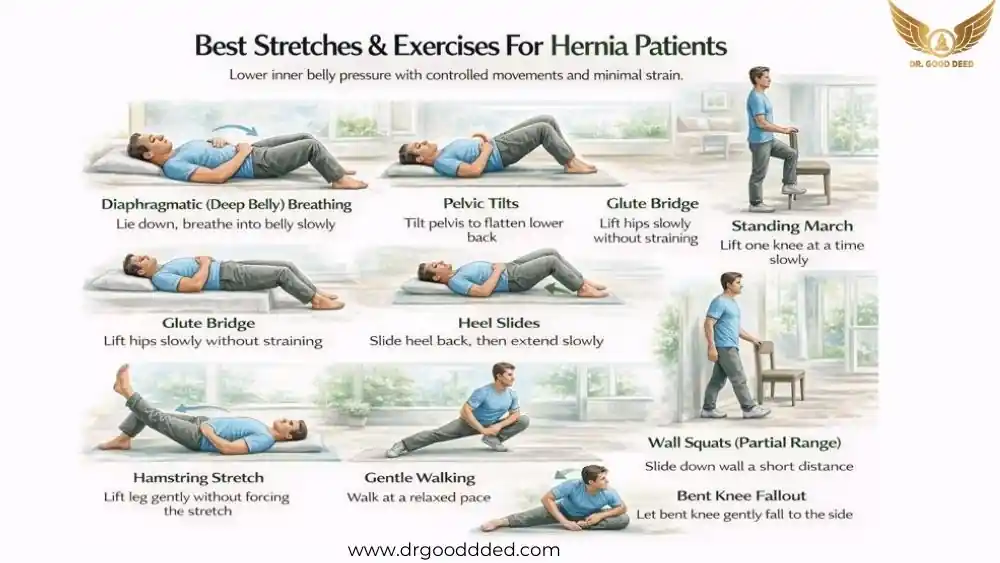
The best stretches & exercises focus on lowering pressure inside your abdomen. Inner belly pressure rises during breath-holding, fast movements, and heavy strain. These exercises for hernia patients avoid those triggers. Each movement stays slow and controlled.
Diaphragmatic (Deep Belly) Breathing
This exercise trains safe breathing. You lie on your back with your knees bent. One hand rests on your chest. The other rests on your belly. You breathe in through your nose and let your belly rise. Your chest stays mostly still. You breathe out through your mouth. This method lowers abdominal pressure. This breathing style in hernia recovery programs because it reduces strain during movement.
Pelvic Tilts
Pelvic tilts train deep core control. You lie on your back with your knees bent. You gently tighten your lower belly. You flatten your lower back into the floor. You hold for three seconds. Then you relax. This movement activates stabilizing muscles without pushing outward. These muscles support the abdominal wall during standing and walking.
Glute Bridge
You lie on your back with knees bent and feet flat. You squeeze your butt muscles and lift your hips slowly. You stop before any strain. You lower with control. Strong hip muscles reduce load on the lower belly and groin.
Clinical rehab programs often include this move for exercises for hernia patients because it builds support without direct abdominal strain.
Standing March
You stand tall and hold a chair if needed. You lift one knee at a time, move slowly, and keep your belly lightly tightened. This exercise improves balance and hip strength. It also trains your body to move without sudden pressure changes.
Seated Knee Lifts
You sit upright on a chair. Your feet stay flat. You lift one knee a few inches. You lower slowly. Then you switch sides. This exercise keeps strain low while strengthening hip muscles that help stabilize your pelvis.
Heel Slides
You lie on your back with your legs straight. You slide one heel toward your body while keeping your hips still. You slide it back out. This movement improves leg control and coordination. Physical therapy programs often use heel slides in early rehab for abdominal conditions.
Wall Squats (Partial Range)
You stand with your back against a wall. You slide down only a short distance, stop well before discomfort, hold briefly, and push back up. Partial wall squats strengthen your legs. Strong legs reduce strain during sitting and standing tasks.
Gentle Walking
Walking is one of the safest exercises for hernia patients . You walk at a relaxed pace, stay upright, and swing your arms naturally. Light walking improves circulation and digestion without raising abdominal pressure when posture stays correct.
Hamstring Stretch
Tight hamstrings pull on your pelvis and lower belly. You lie on your back, lift one leg with a bent knee, hold it behind your thigh, stretch gently, and avoid forcing the movement. This stretch reduces tension that can increase hernia discomfort.
Side Lunge Groin Stretch
You stand with feet wide, shift weight to one side, he other leg stays straight. You stop early and return to center. This stretch targets the groin area without deep strain. It helps people with groin weakness move more comfortably.
Bent Knee Fallout
You lie on your back with knees bent. You let one knee fall to the side, hips still, and bring it back. This exercise improves hip control and core stability. Rehab specialists often use it for controlled movement training.
These best stretches & exercises support daily movement. They reduce risk when done with slow control. They fit most hernia types when pain stays low.
Exercises That Are Good For Hiatal Hernia
Exercises that are good for hiatal hernia focus on posture and breathing. A hiatal hernia happens when part of the stomach pushes upward through the diaphragm muscle. Poor posture and increased belly pressure can worsen reflux symptoms linked to this condition. These exercises for hernia patients aim to reduce that pressure.
Diaphragmatic Breathing
This breathing method is essential for hiatal hernia care. You practice it while seated or standing. You keep your chest relaxed, let your belly expand on inhale, and breathe out slowly. This breathing style can improve diaphragm function and reduce reflux symptoms in some patients. Evidence is still limited, but results are promising.
Seated Posture Correction
You sit with feet flat and back straight. You gently pull your shoulders back; your chin stays level. Poor posture compresses the upper abdomen. Correct posture reduces upward pressure on the stomach. Doctors often advise posture training as part of non-surgical hiatal hernia management.
Chair Stretch
You sit on a sturdy chair. You raise both arms overhead. You stretch upward gently, and keep your ribs from flaring out. This movement opens the chest and reduces upper body tension that can worsen reflux symptoms.
Gentle Neck and Shoulder Rolls
You roll your shoulders backward slowly. You turn your head side to side with control. Tension in the neck and shoulders can affect breathing patterns. Relaxing these areas supports better diaphragm movement.
Standing Side Stretch
You stand tall. You lift one arm overhead. You lean slightly to the opposite side. You keep your belly lightly tightened. This stretch improves rib mobility and breathing comfort.
Slow Walking After Meals
You walk for ten to fifteen minutes after eating; keep your pace easy. Light walking can help with stomach emptying and reduce reflux esophagitis. episodes in some people. This is one of the most practical exercises that is good for a hiatal hernia when done correctly.
These exercises are good for hiatal hernia support symptom control. They do not fix the hernia. They help you move and breathe in ways that lower daily discomfort.
Exercises To Cope With Inguinal Hernia
Exercises to cope with an inguinal hernia focus on reducing stress in the groin area. An inguinal hernia develops where the lower belly meets the thigh. Weakness in pelvic and hip muscles increases strain at this point. The goal of these exercises for hernia patients is to improve muscle support without pushing downward.
Pillow Squeeze Exercise
You lie on your back with your knees bent, place a pillow between your knees, gently squeeze the pillow and hold for five seconds, and then you relax. This activates the inner thigh and pelvic muscles. These muscles help stabilize the groin. Surgeons often recommend this exercise before and after surgery because it avoids belly pressure.
Shoulder Bridge
This exercise looks simple but works important muscles. You lie on your back with your knees bent, squeeze your hips, and lift your pelvis slightly. You should stop before strain, and lower slowly. Strong hip muscles reduce the workload on the groin during walking and standing.
Hamstring Stretch
Tight hamstrings pull the pelvis backward. This increases groin strain. You lie on your back, lift one leg with a bent knee, hold behind the thigh, and stretch gently. This stretch improves movement balance and comfort.
Hip Abduction (Lying Down)
You lie on your side with legs straight. You lift the top leg slightly, keep your hips stacked, and lower slowly. This exercise strengthens outer hip muscles. These muscles help control leg movement and protect the groin during daily tasks.
Knee-to-Chest (Single Leg Only)
You lie on your back, bring one knee toward your chest, hold briefly, and lower slowly. You never bring both knees at once. Single-leg movement keeps pressure low while improving hip mobility.
Controlled Pelvic Floor Contractions
You gently tighten the muscles used to stop urine flow. You hold for two seconds, and relax fully. Pelvic floor strength supports the lower abdominal wall. Better pelvic floor control may reduce discomfort during movement. Evidence is still limited, but it is commonly used in rehab.
These exercises to cope with an inguinal hernia support safe daily movement. They work best when done slowly and stopped if pain increases.
Exercises That Are Good For Umbilical Hernia
Exercises that are good for an umbilical hernia aim to support the belly button area without pushing outward. An umbilical hernia forms when tissue pushes through a weak spot near the navel. Sudden pressure increases can worsen bulging. These exercises for hernia patients focus on controlled core engagement.
Core Bracing (Abdominal Tightening)
You gently tighten your belly as if preparing to cough. You do not hold your breath, hold for three seconds, and relax. This teaches your core to support the spine and belly during movement. It does not involve bending or crunching.
Heel Slides
Heel slides are safe for most hernia types. You lie on your back, slide one heel toward your body, keep your hips still, and slide it back. This movement builds leg control without stressing the belly.
Seated Marching
You sit upright on a chair. You lift one knee at a time, and move slowly. This strengthens hip flexors while keeping abdominal pressure low.
Leg Extensions While Seated
You straighten one leg while seated, hold briefly, and lower slowly. This exercise improves leg strength, which helps with standing and walking tasks.
Diaphragmatic Breathing
Breathing control remains essential. You breathe through your nose, your belly rises, and your chest stays relaxed. Proper breathing patterns reduce strain on weak abdominal tissue.
Gentle Stretching of Hips and Back
You stretch within comfort, avoid deep bends, and stop before pain. Flexible hips reduce stress on the belly during daily movement. These exercises that are good for umbilical hernia help you stay active without forcing the weak area.
Exercises To Do After Your Hernia Surgery
Exercises to do after your hernia surgery support healing and prevent complications. Movement reduces the risk of blood clots and stiffness. These exercises for hernia patients should only begin after doctor approval.
Deep Breathing Exercises
You take slow, deep breaths, expand your ribs, and exhale fully. This helps prevent lung problems after surgery. Hospitals commonly teach this exercise during recovery.
Short-Distance Walking
You walk several times a day, keep distances short, and increase time gradually. Walking improves circulation and bowel movement without stressing the repair site.
Ankle Pumps
You move your feet up and down while lying or sitting. This keeps blood flowing in the legs. It lowers clot risk.
Seated Leg Lifts
You sit upright, lift one leg at a time, and keep the movement slow. This maintains leg strength during early recovery.
Pelvic Tilts (After Clearance)
You only start this when approved. It helps restore core control without heavy strain.
Light Stretching
You stretch arms and legs gently, and avoid pulling near the surgical area. Stretching improves comfort and posture. These exercises to do after your hernia surgery help you return to daily life safely.
Exercises Hernia Patients Should Avoid
Certain movements sharply raise internal abdominal pressure, which can worsen hernia size or damage surgical repair. Activities that involve heavy lifting, breath holding, or sudden force place stress directly on weakened tissue.
Heavy Weightlifting
Lifting heavy weights raises pressure sharply. This can damage weak tissue or surgical repairs.
Sit-Ups and Crunches
These exercises force the belly outward. They are unsafe for most hernia types.
Planks
Planks require high abdominal tension. They often cause bulging.
High-Impact Exercises
Running and jumping create sudden force. This can worsen symptoms.
Sudden Twisting Movements
Fast twists stress weak spots. They increase injury risk.
Tips To Exercise Safely With A Hernia
Safety depends more on how you move than how much you move. Proper breathing, gradual progression, and early symptom awareness help prevent flare-ups and allow continued activity without aggravating the hernia.
Start Slow And Progress Gradually
Your body needs time to adapt. Fast progress leads to strain.
Avoid Holding Your Breath
Breath-holding increases abdominal pressure. Always breathe smoothly.
Use Proper Support Garments
Support belts may help during activity. Doctors sometimes recommend them for symptom control.
Stop if pain or bulging increases.
Pain is a warning sign. Stop and rest if symptoms rise.
FAQs
Can exercise make a hernia worse?
Yes, the wrong exercise can worsen bulging or pain. Safe exercises for hernia patients focus on control, breathing, and low pressure, which helps manage symptoms without increasing strain.
Are stretches safe for hernia patients?
Gentle stretches are usually safe when done slowly. You should avoid deep bending or forcing positions that raise belly pressure or cause discomfort during exercises for hernia patients .
Which exercises are safest before surgery?
Walking, breathing exercises, and light core bracing are often safest. These exercises for hernia patients maintain mobility without stressing the weak area.
When can I exercise after hernia surgery?
Timing varies by surgery type and healing. Doctors usually allow light movement early, but strength exercises wait until the tissue heals and medical clearance is given.
Is walking good for all types of hernia?
Walking is generally safe for most hernia types. It improves circulation and digestion when posture stays upright, and pace remains relaxed.
Can hernia exercises heal the hernia?
No exercise can close a hernia defect. Exercises for hernia patients help manage symptoms and support daily movement, but surgery remains the only permanent repair.
Should core exercises be avoided completely?
Core work is not forbidden. High-strain moves should be avoided. Gentle bracing and breathing-based core control are often recommended by clinicians.
Can yoga help with hernia symptoms?
Some modified yoga poses may help with flexibility and breathing. Deep bends and intense poses should be avoided unless approved by a medical professional.
How often should hernia patients exercise?
Light activity can be done daily. Short sessions reduce stiffness without overload. Rest days are important if soreness appears.
When should exercises be stopped immediately?
You should stop if sharp pain, increased bulging, nausea, or pressure appear. These signs suggest the activity is unsafe, and medical advice is needed.













Leave a Comment