



The healthy habits challenge gives you a short reset that targets food, movement, stress, and sleep. You fix daily actions that shape how your body and mind work. A healthy habits challenge works by simplifying choices and restoring basic rhythms like hydration, movement, nutrition, and rest. When these foundations improve, the body responds quickly, even within a few days.
This healthy habits challenge runs for five days. Each day has one clear focus. You act, stop overthinking, and let your body respond.
5 Day Healthy Habits Challenge
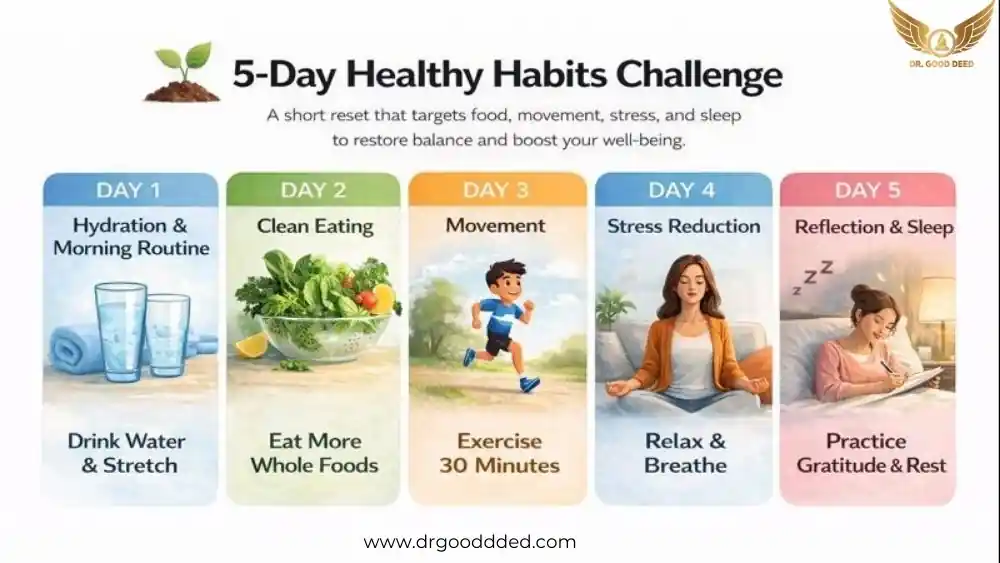
The 5-day healthy habits challenge acts as a system reboot. You are not fixing everything, but you are fixing signals. Signals like thirst, hunger, movement, and rest guide hormones and brain function. When signals improve, your body responds fast.
This healthy habits challenge avoids extreme rules. Extreme plans raise cortisol, the stress hormone, which is linked to poor sleep and fat gain. This plan does the opposite.
Day 1: Hydration and Morning Routine Reset
The first day of the healthy habits challenge focuses on hydration and mornings. Mild dehydration can reduce attention, raise fatigue, and slow digestion. Even small fluid loss affects cognitive performance.
You start your day with two glasses of water. Plain water works. Add electrolytes only if you sweat heavily or exercise. Doctors usually advise adjusting fluids based on body size and climate.
Delay caffeine for at least thirty minutes. Caffeine on an empty, dehydrated body can raise heart rate and anxiety. Mayo Clinic notes that caffeine sensitivity varies by person. Create a simple routine.
- Wake up. Drink water.
- Stretch for five minutes. Gentle stretching improves blood flow and joint movement.
- Avoid phones early. Screen exposure raises dopamine spikes, which can worsen focus later.
This day builds the base of the healthy habits challenge . When hydration improves, digestion, skin, and mental clarity often improve within one to two days.
Day 2: Clean Eating and Mindful Nutrition
Day two shifts food quality. Clean eating does not mean perfect eating. It means fewer processed foods and more whole foods. Diets high in ultra-processed foods are linked to higher inflammation and insulin resistance.
You focus on simple meals. Lean protein, vegetables, fruits, and whole grains. Eat slowly and stop when you feel satisfied, not full. Mindful eating helps regulate hunger hormones like ghrelin and leptin.
Avoid eating with screens. Distraction delays fullness signals because distracted eaters consume more calories without noticing.
This day of the healthy habits challenge supports stable blood sugar. Stable blood sugar reduces energy crashes and irritability. Even short-term dietary cleanup can lower bloating and improve gut comfort.
Day 3: Movement and Physical Activity
Movement does not require a gym. The third day of the healthy habits challenge focuses on daily motion. Even light activity improves cardiovascular markers when done consistently.
You aim for thirty minutes of movement. Break it into short sessions. Walk after meals. Stretch your hips and back. Bodyweight movements work well. Squats, wall push-ups, and marching in place improve muscle activation.
Avoid pushing into pain. Joint pain signals overload. Light movement increases circulation and supports lymphatic flow, which helps waste removal from tissues.
This day improves insulin sensitivity and mood. Exercise releases endorphins, which are natural mood regulators. The effect often appears the same day.
Day 4: Mental Reset and Stress Reduction
Chronic stress keeps the nervous system in alert mode, which disrupts sleep, digestion, and emotional control. Slow breathing and reduced sensory input can lower stress signals within minutes. Short mental breaks also improve decision-making by reducing cognitive fatigue. Limiting news and social media lowers anxiety triggers that keep stress hormones elevated throughout the day.
Day 5: Sleep, Reflection, and Habit Lock-In
Sleep supports memory, immune function, and hormone balance, making it essential for locking in new habits. Consistent sleep timing improves sleep quality more than total sleep hours alone.
Reflection helps the brain identify patterns worth keeping, which strengthens habit recall. Writing down what worked increases the chance of repeating those behaviors beyond the challenge.
Fitness and Wellness Challenge
Daily movement improves blood circulation, insulin response, and joint mobility, even at low intensity. Comparing structured workouts with general activity shows that consistent light movement can deliver similar health gains when done daily and without long breaks.
Simple Daily Movement Goals
Your goal is to move every day. Walk, stretch, or do light strength work. Aim for steps, not sweat. If you track steps, ten thousand is not required. Doctors often suggest starting lower and building gradually.
Light Exercise You Can Do at Home
Home movement removes excuses. You use your body weight and train balance and coordination.
Simple exercises include chair squats, wall push-ups, standing leg lifts, and gentle core work. These moves support joints and posture. Low-load strength training still improves muscle endurance. This keeps the fitness and wellness challenge safe and repeatable.
Recovery and Rest Habits
Recovery allows adaptation. Muscles rebuild during rest, not during movement. Sleep supports this process by releasing growth hormone. Stretching after movement reduces stiffness. Hydration supports muscle repair. If soreness lasts longer than two days, reduce intensity.
Nutrition Habits That Support Fitness
Protein supports muscle repair, and fiber supports digestion. Avoid heavy sugar before movement to prevent crashes. Balanced meals support steady energy.
Mental Health Habits Challenge
The mental health habits challenge addresses how your brain responds to stress, noise, and constant demand. Mental health does not change overnight, but stress markers such as cortisol can shift within days when routines calm the nervous system. Evidence is still limited on short challenges, yet early improvements often appear when stress inputs drop.
Daily Stress-Relief Practices
You practice short stress relief daily. Five minutes of slow breathing lowers heart rate and activates the parasympathetic nervous system, which controls rest and repair. Controlled breathing can reduce anxiety symptoms in the short term.
You also add quiet time, sit without music or screens, and silence allows your brain to reset sensory input. This helps attention and emotional regulation.
Journaling and Emotional Awareness
Writing helps you process thoughts before they loop. You write freely for five minutes without structure or judgment. Expressive writing can reduce emotional tension and improve sleep quality.
You name emotions instead of avoiding them. Naming emotions lowers their intensity by engaging the rational part of the brain. This supports emotional balance during the mental health habits challenge .
Reducing Screen Time and Mental Overload
Screens overload the brain with alerts and fast content. Reducing screen time lowers cognitive fatigue. Evening screen use is linked with delayed melatonin release, which harms sleep. You should turn off non-essential alerts and avoid screens one hour before bed. These steps reduce mental clutter and support focus.
Building Emotional Balance
Emotional balance means responding, not reacting. You pause before reacting to stress, breathe, and choose actions. This skill strengthens through repetition. It supports the long-term success of the healthy habits challenge by reducing burnout.
Self-Care Habits Challenge
The self-care habits challenge focuses on maintenance, not indulgence. Self-care means protecting basic needs so the body does not break down. Neglecting rest and recovery increases illness risk over time.
Morning Self-Care Rituals
Your morning sets your nervous system tone. You hydrate, stretch lightly, and breathe slowly. These actions reduce morning stress spikes. Sunlight exposure in the morning supports the circadian rhythm, which controls sleep and hormone release. Morning light improves sleep timing.
Evening Wind-Down Routines
Evening routines signal safety to the brain. You dim the lights and avoid heavy meals late. You stretch gently. Doctors often advise consistent sleep times to stabilize the circadian rhythm. While sleep needs vary, routine improves sleep quality across age groups.
Physical Self-Care Habits
Physical self-care includes posture, hygiene, and body awareness. Poor posture strains muscles and joints. Simple posture checks reduce tension headaches and back pain. Warm showers relax muscles by improving blood flow. Moisturizing skin protects the skin barrier, which reduces irritation and infection risk.
Emotional and Social Self-Care
You protect emotional energy. You set boundaries. You limit draining interactions when possible. Social connection matters, but forced interaction increases stress. Perceived support matters more than constant contact. This balance supports the self-care habits challenge without guilt or pressure.
Mindful Living Challenge
The mindful living challenge trains attention, which shapes habits. When attention improves, choices improve. Mindfulness does not mean constant calm. It means awareness without judgment. Mindfulness can reduce stress and improve emotional regulation, though effects vary.
Mindful Eating Habits
Mindful eating slows intake. You notice taste, texture, and fullness. This improves digestion by activating the parasympathetic nervous system. Mindful eating can reduce overeating, even without calorie tracking.
Practicing Gratitude Daily
Gratitude shifts focus from threat to safety. You note three small positives daily. They can be simple, like a good meal or fresh air. Gratitude practices can improve mood and resilience. Evidence remains moderate, but benefits appear consistent.
Being Present in Daily Activities
You do one task at a time. Multitasking increases errors and stress and reduces efficiency. Presence improves satisfaction and reduces mental fatigue.
Mindful Breathing and Awareness
You pause during the day and breathe slowly. Slow breathing lowers heart rate and blood pressure temporarily. This completes the mindful living challenge and reinforces calm awareness.
Who Should Try a Healthy Habits Challenge?
Short habit resets benefit people who feel stuck, overwhelmed, or inconsistent. Behavior change research shows that small, time-bound challenges improve confidence and help restart routines without triggering guilt or burnout.
Beginners to Healthy Living
If you feel overwhelmed by health advice, this plan gives structure without complexity. Small steps reduce dropout rates, according to behavior change research.
People Feeling Burned Out or Stuck
Burnout often comes from constant pressure. This challenge removes overload and restores basic rhythms like sleep and hunger cues.
Anyone Wanting a Simple Reset
Short resets help break negative patterns. Even when evidence is limited, behavioral science supports short wins to rebuild motivation.
FAQs
Is a 5-day healthy habits challenge effective?
A 5-day healthy habits challenge can improve energy, focus, and sleep awareness. Research shows short interventions boost motivation, though long-term benefits require continued practice.
Can beginners follow this challenge?
Yes, beginners can follow this healthy habits challenge safely. All actions stay low risk, flexible, and based on daily routines rather than strict programs.
Do I need exercise equipment for this challenge?
No equipment is required for the fitness and wellness challenge . Bodyweight movements and walking provide enough stimulus for health benefits in most people.
Can this improve mental health in 5 days?
The mental health habits challenge may reduce stress and mental overload within days. Evidence supports short-term mood improvements, but it does not replace professional care.
What if I miss one day of the challenge?
Missing a day does not cancel the healthy habits challenge . Resume the next day. Consistency over time matters more than perfection.
Can I repeat the 5-day challenge?
Yes, repeating the 5-day healthy habits challenge monthly can reinforce routines. Habit research shows repetition strengthens behavior patterns.
Is this suitable for busy professionals?
This self-care habits challenge fits busy schedules because tasks take minutes, not hours, and integrate into daily life.
How long does it take for habits to stick?
Habit formation varies. Studies suggest several weeks of repetition. This healthy habits challenge acts as a starting phase, not a final solution.
Can fitness and self-care be combined in one challenge?
Yes, the fitness and wellness challenge and self-care practices work best together by balancing effort with recovery.
When should a habit challenge be modified or stopped?
Stop or modify the healthy habits challenge if pain, illness, or medical conditions worsen. Doctors usually recommend personalized adjustments based on health history.








Leave a Comment