

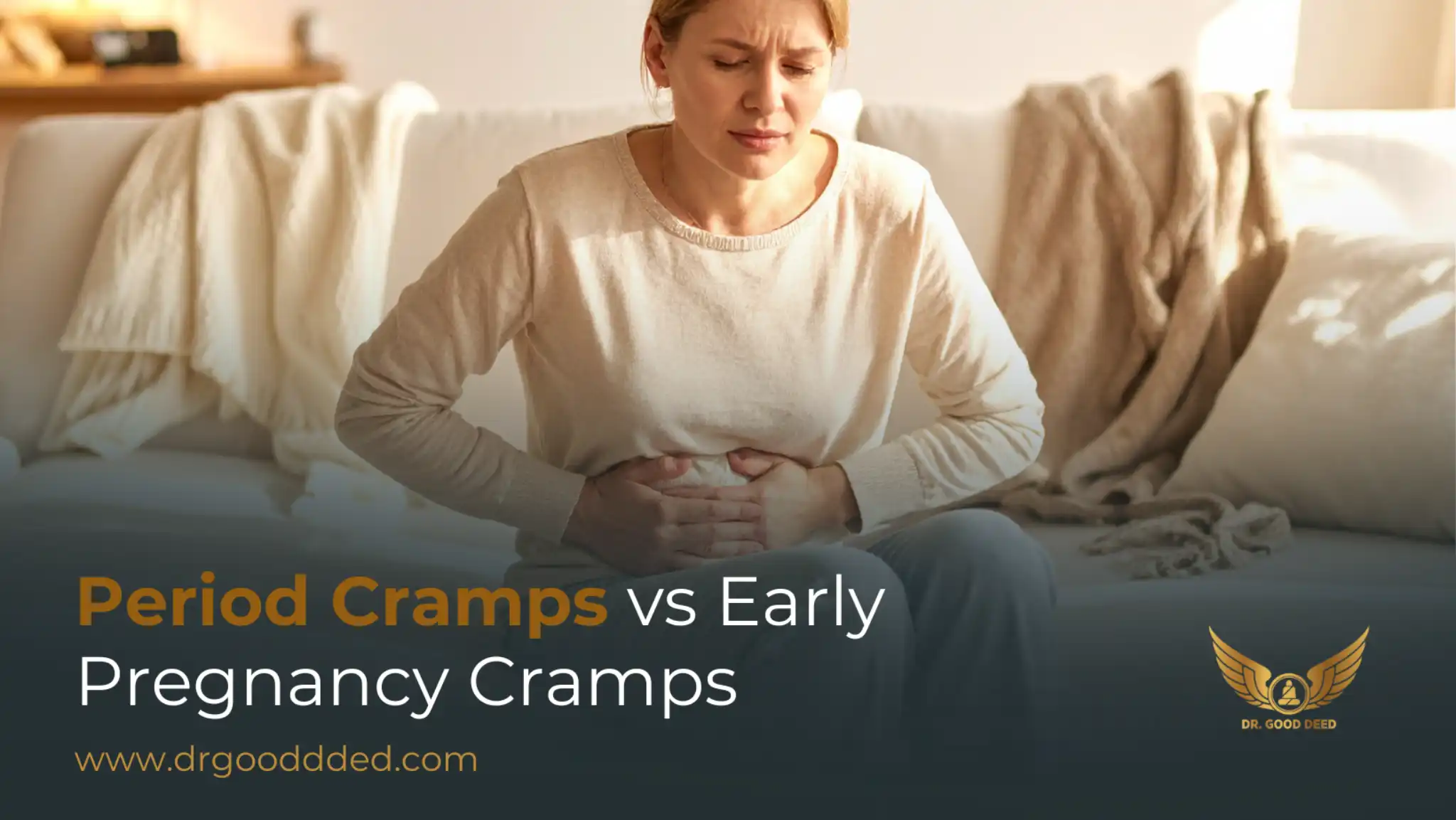

Period pain starts when the uterus contracts to shed its lining, driven by prostaglandins that reduce blood flow and trigger muscle tightening. Early pregnancy cramps happen because the uterus increases blood supply, stretches supporting ligaments, and responds to rising progesterone after implantation.
Period cramps usually come with predictable bleeding and stronger waves of pain. Early pregnancy cramps stay milder, last shorter, and often appear without bleeding as the body adjusts to pregnancy-related changes.
Difference Between Period Cramps and Pregnancy Cramps
The difference between period cramps and pregnancy cramps starts at the biological level. Your uterus behaves differently in each case.
Hormonal Causes
Period cramps start because prostaglandins increase. Prostaglandins are hormone-like chemicals that cause muscle tightening. Higher prostaglandin levels reduce blood flow to the uterine tissue, which causes pain.
Early pregnancy cramps develop for different reasons. Progesterone rises sharply after implantation. Progesterone relaxes smooth muscle and slows digestion. This can cause pressure, bloating, and mild cramping. Progesterone also increases blood supply to the uterus, which stretches tissue and creates discomfort. These hormonal shifts explain many causes of cramps in early pregnancy .
Timing in the Menstrual Cycle
Period cramps usually begin one to two days before bleeding starts. They peak during the first two days of menstrual flow. The pain then fades as prostaglandin levels drop.
Early pregnancy cramps can appear earlier. You feel pregnancy cramps before a missed period , often six to ten days after ovulation. This timing matches implantation, when the fertilized egg attaches to the uterine wall. Implantation timing varies widely, which explains why some feel cramps early while others feel nothing.
Intensity and Duration
Period cramps often feel stronger and come in waves. They may last two to three days and sometimes longer in people with heavy periods.
Early pregnancy cramps tend to feel mild and steady. They often last minutes to hours, not days. Cramping linked to implantation or early uterine growth usually resolves on its own. Severe or worsening pain does not fit the typical early pregnancy cramps and needs medical review.
Period vs. Early Pregnancy Symptoms
Pain rarely comes alone. Other symptoms help separate period cramps from early pregnancy cramps .
Bleeding Patterns
Bleeding offers one of the clearest differences. Period cramps usually appear with red bleeding that becomes heavier over hours. The flow follows a predictable pattern if your cycle stays regular.
With early pregnancy cramps , bleeding often does not occur. If spotting happens, it stays light. It may look pink or brown and last one or two days. Implantation spotting occurs in a minority of pregnancies and never matches normal menstrual flow. Heavy bleeding with cramps does not match typical causes of cramps in early pregnancy .
Breast Changes
Hormones affect breast tissue differently. Before a period, breasts may feel sore or swollen. Once bleeding begins, that soreness often improves.
With early pregnancy cramps , breast tenderness usually increases over time. Areolas may darken, and veins may appear more visible. Rising estrogen and progesterone increase blood flow to breast tissue early in pregnancy. This change does not reverse quickly.
Fatigue and Nausea
Period cramps may cause short-term tiredness; rest often helps. Nausea remains uncommon.
Early pregnancy cramps often come with deep fatigue that sleep does not fix. Nausea may appear due to rising human chorionic gonadotropin, also called hCG. hCG rises rapidly after implantation, which explains why nausea can appear even before a missed period.
Early Pregnancy Cramps vs Period Pain
How pain feels and where it sits also matter.
Location of Cramping
Period cramps usually sit low and centered in the pelvis. Pain may spread to the lower back or thighs. This pattern aligns with uterine contractions pushing tissue outward.
Early pregnancy cramps may feel slightly higher or more spread out. Some people notice one-sided pulling sensations as ligaments stretch. Obstetric imaging studies confirm that early uterine growth changes ligament tension, which explains this pain pattern.
Type of Pain (Dull vs Sharp)
Period cramps often feel tight, squeezing, or throbbing. The pain comes in waves as contractions repeat.
Early pregnancy cramps usually feel dull, aching, or pulling. Sharp pain does not fit the common causes of cramps in early pregnancy . Sharp or stabbing pain needs evaluation because it may signal ovarian cysts or ectopic pregnancy.
Pain With or Without Bleeding
Period cramps almost always come with bleeding. When cramps appear without bleeding, pregnancy becomes more likely. Early pregnancy cramps often occur without any bleeding at all. When spotting occurs, it stays light.
What Causes Cramping In Early Pregnancy
Early pregnancy cramps happen because your body starts major internal changes very fast. Most early cramping comes from normal physical adjustments, not danger. Still, understanding the exact reasons helps you judge what feels normal.
Implantation
One of the most studied causes of cramps in early pregnancy is implantation. This happens when the fertilized egg attaches to the uterine lining. The lining has many blood vessels, and this attachment can irritate nearby tissue.
You may feel mild pulling or pressure that lasts a few hours. Implantation cramps are usually lighter than period cramps and do not worsen over time. Bleeding may not happen at all.
Uterine Growth
The uterus begins expanding earlier than most people realize. Even before a missed period, muscle fibers stretch and blood flow increases. This stretching explains many early pregnancy cramps , especially when you change position or stand quickly.
Imaging studies in early pregnancy confirm measurable uterine growth within weeks. These cramps feel dull and deep, not sharp.
Hormonal Changes
Hormones shift rapidly after conception. Progesterone relaxes smooth muscles, including those in the uterus and intestines. This relaxation can cause gas buildup and pressure that feels like cramping.
Many causes of cramps in early pregnancy actually involve digestion slowing down. This overlap explains why cramps may ease after bowel movements.
Pregnancy Cramps Before Missed Period
Pregnancy cramps before missed period often create confusion because bleeding has not started yet. Medical literature confirms that symptoms can appear before hormone levels trigger a positive test.
Implantation Timing
Implantation usually occurs six to ten days after ovulation. This timing falls before your expected period. Mild early pregnancy cramps during this window match implantation activity. Implantation does not happen on the same day for everyone, which explains symptom variation.
Mild vs Concerning Cramps
Normal pregnancy cramps before missed period stay mild and stable. They do not increase daily. Concerning cramps, they feel sharp, one-sided, or severe.
How Early Symptoms Can Appear
Some people feel symptoms very early due to faster hormone rises. Sensitive nerve endings in the uterus may react quickly. Symptom onset varies widely and does not predict pregnancy outcome. Early pregnancy cramps can appear even when tests stay negative for days.
Period Cramps: Causes And Triggers
Period cramps result from strong uterine contractions triggered by prostaglandins. Higher prostaglandin levels reduce oxygen supply to the uterine muscle, which increases pain intensity and explains nausea or bowel changes during menstruation.
Uterine Contractions
During menstruation, the uterus contracts to shed its lining. These contractions compress blood vessels. Reduced oxygen flow causes pain. Stronger contractions cause stronger period cramps , which explains why pain often comes in waves.
Prostaglandins
Prostaglandins drive contraction strength. Higher levels cause tighter muscle squeezing. People with severe period cramps often have higher prostaglandin levels in menstrual fluid. These chemicals also cause nausea and diarrhea in some cases.
Underlying Conditions
Certain conditions worsen pain. Endometriosis causes tissue growth outside the uterus. Fibroids add pressure inside the uterine wall. In these cases, period cramps last longer and feel more intense. Pain that disrupts daily life needs medical review.
When To Take A Pregnancy Test
Testing too soon after early pregnancy cramps often fails because hCG may not yet reach detectable levels, even when implantation has already occurred.
Best Time After Cramping Starts
Doctors recommend waiting until the first missed period. hCG levels rise enough by then to detect pregnancy. Testing during early pregnancy cramps alone often leads to false negatives.
Accuracy Before Missed Period
Early tests can detect low hormone levels, but results vary. Accuracy improves each day after implantation. Pregnancy cramps before missed period do not guarantee a positive result.
When To Retest
If the first test stays negative, retest after three to five days. Hormone levels double every two to three days in early pregnancy. Retesting improves reliability. Pain becomes concerning when it breaks normal patterns. Severe, one-sided pain or cramps with heavy bleeding fall outside normal period cramps and typical early pregnancy changes and require medical evaluation.
When Cramps Could Be A Problem
Pain becomes concerning when it breaks normal patterns. Severe, one-sided pain or cramps with heavy bleeding fall outside normal period cramps and typical early pregnancy changes and require medical evaluation.
Severe Or One-Sided Pain
Sharp pain on one side raises concern for ectopic pregnancy or ovarian cysts. These conditions require urgent care. Severe pain does not match typical early pregnancy cramps or period cramps .
Cramps With Heavy Bleeding
Heavy bleeding with clots suggests miscarriage or other conditions. Soaking pads every hour is not normal. Medical guidelines stress immediate evaluation in such cases.
Signs Of Ectopic Pregnancy
Symptoms include shoulder pain, dizziness, and sharp abdominal pain. Ectopic pregnancy can rupture early. Early care saves lives.
When To See A Doctor
Medical care is needed when pain worsens instead of improving. Fever, dizziness, or abnormal discharge signals infection, bleeding, or pregnancy complications that cannot be confirmed or ruled out at home.
Persistent Or Worsening Pain
Pain that intensifies daily needs evaluation. Normal period cramps and early pregnancy cramps should ease, not escalate.
Fever Or Dizziness
Fever may signal infection. Dizziness may suggest blood loss. Both require prompt care according to clinical guidelines.
Unusual Discharge Or Bleeding
Green, foul-smelling discharge suggests infection. Dark, heavy bleeding also needs assessment. These signs do not match normal causes of cramps in early pregnancy .
FAQs
Are Early Pregnancy Cramps Similar To Period Cramps?
Early pregnancy cramps and period cramps can feel similar at first. Pregnancy pain stays milder, lasts shorter, and often lacks bleeding, which helps tell them apart over time.
Can Pregnancy Cramps Happen Before A Missed Period?
Yes, pregnancy cramps before a missed period can occur due to implantation and hormonal changes. These cramps usually stay mild and do not increase each day.
Where Are Early Pregnancy Cramps Usually Located?
Early pregnancy cramps usually sit low in the belly but may feel slightly higher or off-center compared to period cramps due to ligament stretching.
Do Pregnancy Cramps Feel Different From Period Cramps?
Yes. Period cramps feel tight and wave-like. Early pregnancy cramps feel dull or pulling. Sharp pain does not fit normal pregnancy patterns.
Can Implantation Cause Cramping Without Bleeding?
Yes. Implantation often causes mild early pregnancy cramps without any spotting. Medical sources note bleeding occurs in only a minority of cases.
How Early Can Pregnancy Cramps Start?
Early pregnancy cramps can start six days after ovulation. Timing depends on implantation and hormone rise.
Should I Worry About Cramping In Early Pregnancy?
Mild cramps are common. Severe pain, one-sided pain, or bleeding needs care. These patterns do not match normal causes of cramps in early pregnancy .
Can Stress Cause Cramps That Feel Like Pregnancy?
Stress can tense abdominal muscles and disrupt digestion. This tension can mimic period cramps or mild early pregnancy cramps , especially during hormonal shifts.
When Should I Take a Pregnancy Test After Cramps?
Wait until your missed period for best accuracy. Testing during pregnancy cramps before a missed period often give false negatives.
When Do Cramps Indicate a Medical Emergency?
Severe pain, dizziness, shoulder pain, or heavy bleeding require urgent care. These signs fall outside the normal difference between period cramps and pregnancy cramps patterns.







Leave a Comment