

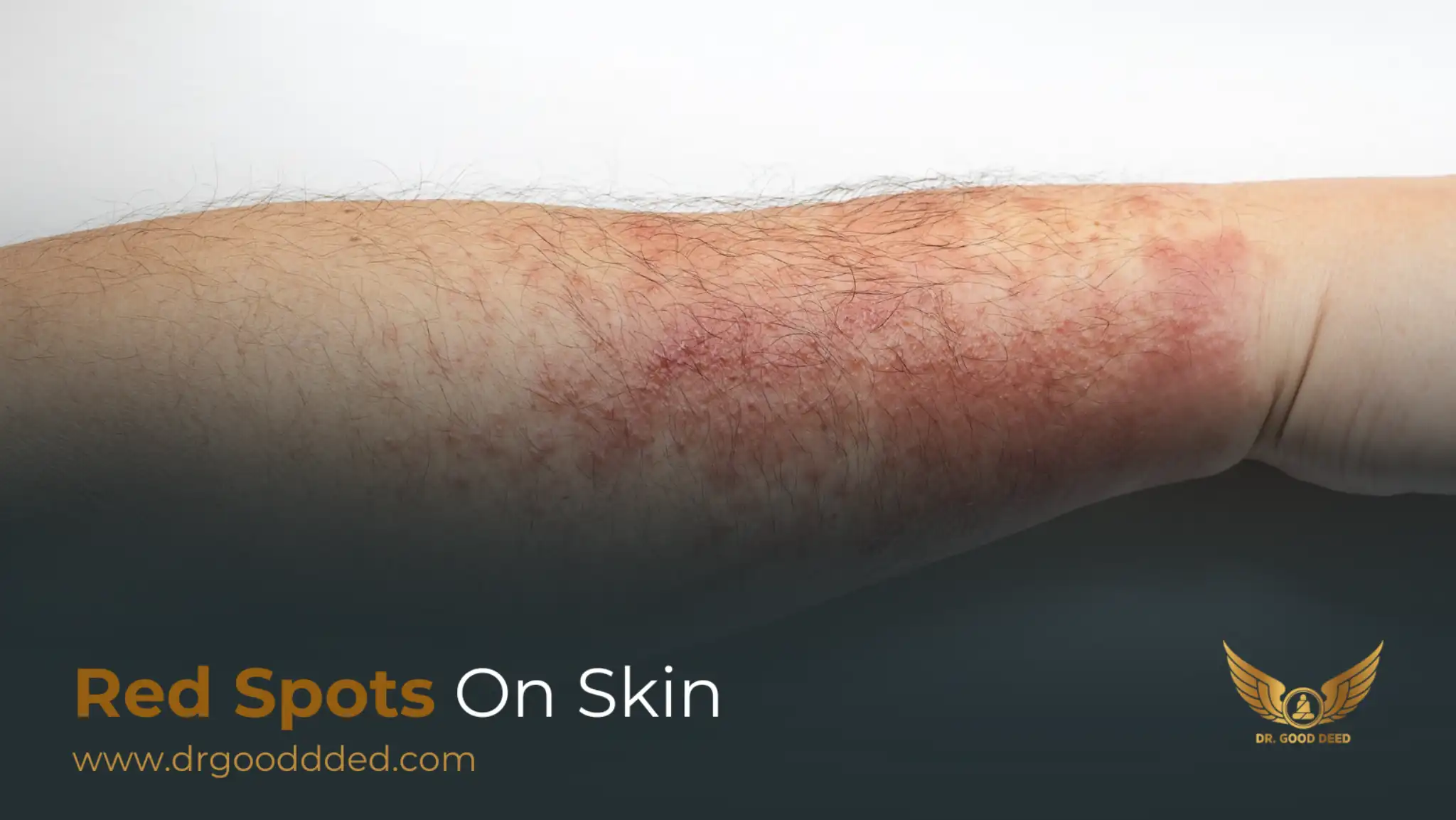

Red spots on the skin appear when blood flow, inflammation, infection, or immune activity changes the surface of your skin. You may see flat dots, raised bumps, patches, or clustered marks. Some fade in hours, while others stay for weeks. Most red spots on the skin are harmless. A small number signals infection, blood disorders, or immune disease. What matters most is pattern, speed, location, and added symptoms like fever or pain.
20 Causes of Red Spots on Skin
Red spots form when skin blood vessels widen, rupture, or react to inflammation. The cause may be external, like heat or allergens, or internal, like infection or immune imbalance. Pattern, texture, and speed of change help separate mild causes from serious ones.
Heat Rash (Miliaria)
Heat rash forms when sweat ducts are blocked. Sweat leaks into the skin. You see tiny red bumps or dots. Babies get it often. Adults get it during hot weather or exercise. It may itch or sting. Cooling the skin helps, and loose clothing reduces risk. This cause stays shallow and clears in days.
Allergic Contact Dermatitis
Your skin reacts after touching a trigger. Common triggers include soaps, plants, metals, and fragrances. Red spots on the skin appear where contact occurred. Borders look sharp, blisters may form, and the itching feels intense. Avoiding the trigger stops the reaction because repeated exposure worsens future reactions.
Hives (Urticaria)
Hives are raised, soft, and fast-moving. They change shape within hours. You feel a strong itching. Food, infection, stress, or medicine may trigger them. Red spots on the skin from hives fade when pressed. They often resolve within a day. Chronic hives last longer and are linked to immune activity.
Insect Bites
Bites cause small raised marks with redness around them. The center may show a puncture. Itching is common, and scratching increases swelling and infection risk. Flea and bedbug bites appear in clusters. Mosquito bites appear alone. These red spots on the skin usually fade within days.
Acne
Acne forms when pores clog with oil and dead skin. Bacteria cause inflammation. You see red pimples, pustules, or nodules. Hormones raise risk. Adults get acne, too. Picking spreads bacteria and leaves scars. Acne is not an infection. It is an inflammatory condition.
Folliculitis
Folliculitis affects hair follicles. Bacteria or fungi invade after shaving, friction, or sweating. You see red bumps centered on hairs. Mild cases itch. Deeper cases hurt. Keeping skin clean lowers risk, and most cases resolve with basic care.
Ringworm (Fungal Infection)
Ringworm causes circular red spots on the skin with clear centers. Edges look scaly, and spreads by skin contact or shared items. It itches. Antifungal creams treat it. Steroid creams make it worse. This infection stays on the surface but spreads if ignored.
Eczema (Atopic Dermatitis)
Eczema causes dry, red, itchy patches. You may see cracks or oozing. It often starts in childhood. Allergies and asthma are linked to it. Skin barrier weakness plays a role. Genetics and immune signals drive flares.
Psoriasis
Psoriasis creates thick red plaques with white or silver scales. It favors elbows, knees, and the scalp. It is not contagious. Immune cells push skin growth too fast. Stress and infections trigger flares. Long-term care is needed to control symptoms.
Rosacea
Rosacea affects the face. You see lasting redness, flushing, and small bumps. Heat, alcohol, and spicy food worsen it. Blood vessels dilate too easily. Rosacea does not itch much. Early care reduces progression.
Chickenpox
Chickenpox causes itchy red spots on the skin that turn into blisters. Fever appears first. Spots come in waves. Vaccination prevents most cases. Adults face more severe illness as complications rise with age.
Shingles
Shingles comes from the reactivated chickenpox virus. Pain starts before the rash. Blisters appear in a stripe on one side. Nerve pain can last months. Early antiviral treatment reduces severity. Risk rises after age fifty.
Measles
Measles starts with fever, cough, and red eyes. A rash follows and spreads from the face to the body. Red spots on the skin merge into patches. This infection is serious, and vaccination prevents it. WHO reports show outbreaks where vaccination rates drop.
Impetigo
Impetigo is a bacterial skin infection. It forms red sores that ooze and crust. The crust looks honey colored. It spreads easily among children. Antibiotics shorten illnesses and limit the spread.
Petechiae
Petechiae look like tiny red or purple dots. They do not fade when pressed. Bleeding under the skin causes them. Infection, platelet disorders, or trauma may trigger them. Sudden onset with fever needs urgent care.
Purpura
Purpura forms larger purple-red patches. Blood leaks from vessels. Causes include clotting problems and immune disease. Pain or fever raises concern. Evaluation is important.
Cherry Angiomas
Cherry angiomas are bright red dots. They come from small blood vessels. They increase with age. They are harmless. Treatment is optional unless bleeding occurs.
Vasculitis
Vasculitis means inflamed blood vessels. Red spots on the skin appear with pain or burning. You may also feel fever or fatigue. Organs can be involved. Hence, early treatment limits damage.
Drug Rash
Some medicines trigger immune skin reactions. Antibiotics and seizure drugs are common causes. Rash may spread quickly. Fever may appear. Stopping the drug under medical care is key.
Skin Cancer (Rare but Serious)
Some skin cancers look red. They may bleed, crust, or fail to heal. Growth over weeks matters. Pain is not required. Early checks save lives.
Allergic Reaction Red Spots
Allergic reactions are one of the fastest causes of red spots on the skin . Your immune system reacts to a substance it thinks is harmful. The skin response can appear within minutes or hours. These reactions often itch, swell, and change shape. They usually improve once the trigger is removed, but some reactions worsen quickly and need care.
Food Allergies
Food allergies can trigger sudden red spots on the skin , often as hives. Common triggers include nuts, shellfish, eggs, and milk. The spots appear raised and pale in the center. Swelling of lips or eyelids may occur. Vomiting or breathing trouble signals danger. Food allergy reactions can escalate fast, even if past reactions were mild.
Medication Reactions
Medicines can cause widespread red spots on the skin , sometimes days after starting a drug. Antibiotics and anti-seizure drugs are common triggers. The rash may feel warm and tender. Fever or peeling skin suggests a severe reaction. Doctors usually advise stopping the suspected drug and switching treatment. Dosage and risk vary by age and condition.
Contact Allergies (Soaps, Cosmetics, Metals)
Contact allergies affect the exact area touched. You see clear borders where skin meets the trigger. Nickel, fragrances, and preservatives cause many cases. These small red spots on the skin may form blisters and crack if exposure continues. Patch testing helps confirm the cause when reactions repeat.
Insect Sting Allergies
Stings from bees or wasps can cause large red swelling. The area feels hot and painful. In allergic people, red spots on the skin may spread far from the sting. Dizziness or throat tightness means emergency care is needed. Prior mild reactions do not rule out severe future reactions.
How Allergic Rashes Typically Look
Allergic rashes often look raised and uneven. Color ranges from pink to deep red. Pressing the skin may cause fading. These small red spots on the skin usually itch more than they hurt. Shape and location shift over hours.
Red Spots on Skin Spreading
Spreading red spots suggest an active process rather than a static skin change. Infections spread through tissue or blood, while immune reactions spread through chemical signals. Speed of spread often matters more than size when judging risk.
Viral Infections
Viruses cause rashes that start in one area and spread across the body. Fever, fatigue, and aches often come first. Measles and chickenpox are classic examples. These red spots on the skin usually follow a set pattern and timing.
Bacterial Skin Infections
Bacterial infections cause redness that expands daily. The skin feels warm, painful, and fever may occur. Cellulitis is a common example. Early antibiotics stop the spread. Delayed care raises the risk of blood infection.
Worsening Allergic Reactions
Allergic rashes can expand within hours, and swelling increases. Red spots on the skin spreading with facial swelling or breathing trouble is an emergency. This pattern signals systemic allergy, not a local rash.
Autoimmune Skin Conditions
Autoimmune diseases cause repeated flares. The rash spreads in predictable areas. Psoriasis and lupus are examples. These red spots on the skin often return under stress or illness. Long-term monitoring is needed.
When Spreading Is a Warning Sign
Rapid spread with pain, fever, or bruising is serious. Red spots on the skin spreading with purple areas may reflect blood vessel or clotting problems. Urgent evaluation matters.
Diagnosis of Red Spots on Skin
Diagnosing red spots relies on pattern recognition rather than guessing. Doctors match appearance, timing, and symptoms with known disease pathways. Tests are used only when the visual exam and history do not fully explain the rash.
Medical History and Symptom Review
Doctors ask when the rash started, how fast it changed, and what symptoms followed. Recent illness, travel, or new products matter. Timing often narrows causes more than tests.
Physical Skin Examination
Color, texture, and location guide decisions. Doctors press the skin to see if redness fades. Distribution patterns help separate infection from allergy. This step drives most diagnoses.
Allergy Testing
Allergy testing helps when reactions repeat. Patch tests check contact triggers. Blood tests assess immune response. Results guide avoidance plans.
Blood Tests
Blood work checks infection markers, platelets, and inflammation. Petechiae or purpura often require blood tests. The diagnosis of red spots on the skin sometimes depends on these results.
Skin Biopsy
A biopsy removes a small skin sample. Lab analysis confirms vasculitis, cancer, or autoimmune disease. This test is used when appearance and history conflict.
When to See a Doctor for Red Spots on Skin?
Medical care becomes necessary when red spots signal systemic stress, infection, or bleeding disorders. Fever, pain, rapid spread, or skin bleeding point to problems beyond the skin itself and should never be ignored.
Red Spots With Fever
Fever suggests infection or an immune reaction. Measles, shingles, and bacterial infections need care. Delay increases complications.
Rapidly Spreading Rash
A rash that doubles in size within hours needs attention. Red spots on the skin spreading quickly may signal an allergy or an infection.
Red Spots With Bleeding or Bruising
Bleeding under the skin points to clotting or vascular problems. Petechiae need urgent checks, especially with fever.
Rash That Does Not Improve
Rashes lasting more than two weeks need review. Chronic inflammation or cancer may be present.
Red Spots in Infants or the Elderly
Young and older skin reacts faster and heals more slowly. Risks rise in these groups.
Treatment Options for Red Spots on Skin
Treatment works only when it targets the root cause. Anti-itch care helps allergies, antimicrobials treat infections, and immune calming therapies help chronic disease. Using the wrong treatment can worsen some rashes instead of healing them.
Home Care and Symptom Relief
Cool compresses reduce itch. Gentle cleansers protect skin. Avoid scratching to limit infection.
Antihistamines
Antihistamines reduce itch and swelling. Doctors usually prescribe them for allergies and hives. Drowsiness may occur.
Topical Creams and Ointments
Steroid creams reduce inflammation. Antifungal creams treat fungal acne. Use under guidance to avoid skin thinning.
Antibiotics or Antivirals
Bacterial infections need antibiotics. Viral conditions like shingles respond to antivirals. Early treatment works best.
When Specialist Care Is Needed
Dermatologists manage chronic or unclear cases. Vasculitides and cancer require specialist teams.
How to Prevent Red Spots on Skin?
Prevention focuses on protecting the skin barrier and avoiding known triggers. Consistent skin care, heat control, and early management of chronic conditions reduce repeat flare-ups and limit skin damage over time.
Avoiding Known Allergens
Avoid triggers once identified. Read labels carefully. Test new products first.
Proper Skin Hygiene
Clean skin gently. Moisturize daily. This protects the skin barrier.
Managing Chronic Skin Conditions
Follow care plans. Track triggers. Regular reviews improve control.
Sun and Heat Protection
Use sunscreen. Wear breathable clothing. Heat control prevents flare-ups.
FAQs
What Are The Most Common Causes Of Red Spots On Skin?
Allergies, infections, eczema, and acne cause most cases. The 20 causes of red spots on skin explain nearly all everyday rashes seen in clinics.
Are Small Red Spots On Skin Dangerous?
Most small red spots on the skin are harmless. Petechiae or spreading rashes with fever need evaluation because they may signal blood or infection issues.
Can Allergies Cause Red Spots To Spread?
Yes. Allergic reactions often cause red spots on the skin spreading fast, especially hives. Swelling or breathing symptoms require emergency care.
When Should Red Spots On Skin Be Checked By A Doctor?
Seek care for fever, pain, bleeding, or rapid spread. Persistent rashes also need review. Early diagnosis of red spots on the skin prevents complications.
Can Stress Cause Red Spots On Skin?
Stress worsens eczema, hives, and psoriasis. It triggers immune signals that inflame skin but does not cause infections directly.
Are Red Spots Always A Sign Of Infection?
No. Many red spots on the skin come from allergic or immune causes. Infection is only one possibility among many.
What Do Cancerous Red Spots Look Like?
They may bleed, crust, or grow steadily. They do not heal. Any changing red lesion needs professional assessment.
How Are Red Spots On the Skin Diagnosed?
Doctors use history, exam, and selective tests. The diagnosis of red spots on skin focuses on pattern and timing, not guessing.
Can Red Spots Go Away On Their Own?
Yes. Many allergic or heat-related rashes fade in days. Chronic conditions often return without management.
What Treatments Work Best For Red Skin Rashes?
Cause-based treatment works best. Creams help with inflammation. Avoiding triggers prevents repeat red spots on the skin .










Leave a Comment