



Average jogging speed for most adults falls between 4 and 6 miles per hour, which equals about 6.4 to 9.7 kilometers per hour. This range supports heart health, stamina, and joint safety when done with good form. Doctors and exercise scientists often group jogging into moderate-intensity activity. The moderate-intensity movement is a level where you breathe faster but can still speak short sentences.
Normal Jogging Pace
A normal jogging pace sits clearly between brisk walking and running. It feels steady and controlled. Your body stays relaxed instead of tense. You should not feel like you are chasing speed.
What Counts as Jogging vs Walking
Walking always keeps one foot on the ground. Jogging includes a brief moment when both feet leave the ground. This flight phase increases impact and energy use. This small change raises heart rate and oxygen use more than walking at the same time length. That is why average jogging speed leads to stronger heart and lung training compared to walking.
Average Jogging Speed in mph and km/h
For healthy adults, average jogging speed often lands near 5 miles per hour or 8 kilometers per hour. Some people jog slower at 4 mph. Others stay closer to 6 mph. Moderate jogging usually equals 6 to 10 METs, which means the body uses six to ten times more energy than at rest. Evidence is still limited on exact cutoffs, so these numbers act as guidance, not strict rules.
How Jogging Pace Should Feel
A jog should feel smooth. Breathing deepens but stays calm. You can talk in short phrases, and your shoulders will stay relaxed. If your chest burns or legs feel heavy early, your average jogging speed may be too high. A normal jogging pace allows you to finish feeling worked, not drained.
Heart Rate Zones During Jogging
Jogging usually places your heart in a moderate zone, around 60 to 75 percent of your maximum heart rate. This zone supports endurance and blood vessel health. Exact heart rate targets vary, so doctors often advise using effort and breathing cues instead of numbers alone. At an average jogging speed , most people naturally enter this safe zone.
Jogging Speed for Beginners
Your body needs time to adapt to impact, breathing demand, and muscle use. Starting at a slower pace helps bones, tendons, and lungs adjust together. This lowers injury risk and makes it easier to build a habit you can keep long term.
Ideal Jogging Speed for First-Time Runners
Many beginners feel comfortable at 4 to 4.5 mph. That speed may look slow on paper, but it allows joints and muscles to adapt. Beginners who start too fast face higher rates of shin splints and knee pain. A lower average jogging speed early reduces that risk.
Run-Walk Method for Beginners
The run-walk method blends jogging with walking breaks. You might jog for one minute, then walk for two minutes. This approach lowers stress on bones and tendons. This method improves aerobic fitness while limiting injury. It also helps beginners find a stable jogging speed for beginners without pressure.
Common Beginner Mistakes With Pace
One common mistake is copying other people’s speed. Another mistake is chasing distance too soon. Both increase injury risk. Many beginners also ignore breathing signals. If breathing feels sharp, slow down. Average jogging speed should feel repeatable several times per week.
How Long Beginners Should Jog
Time matters more than speed at first. Ten to twenty total minutes works well, including walk breaks. Over weeks, you can increase jogging time. Speed often improves on its own as fitness grows. Doctors usually advise increasing weekly training time slowly to avoid overload.
Average Jogging Speed by Age
Age affects recovery speed, muscle power, and joint flexibility, which all influence pace. While younger bodies often handle faster movement, older adults still gain strong health benefits at slightly slower speeds. The key factor is effort level, not age alone.
Average Jogging Speed in Teens and Young Adults
Teens and people in their twenties often jog closer to 5.5 or even 6 mph. Growth hormones and muscle mass support faster movement. Even so, sports injury data shows young runners still face overuse injuries when they push speed daily. Keeping an average jogging speed moderate supports long-term health.
Average Jogging Speed in Adults (30s–40s)
Many adults in their thirties and forties jog around 4.5 to 5.5 mph. Work stress, sleep, and recovery affect pace. Strength training helps maintain speed in this age group. Resistance training slows power loss and supports average jogging speed in aging muscles.
Average Jogging Speed in Older Adults (50+)
Older adults often jog closer to 4 to 5 mph. That speed still improves heart health and balance. Joint care becomes more important. Warm-up time often needs to increase. Evidence on exact limits remains limited, but consistent moderate jogging shows clear cardiovascular benefits at any age.
How Age Affects Endurance and Pace
With age, muscles recover more slowly. Tendons stiffen. Endurance can remain strong with smart pacing. Many long-term joggers maintain a stable average jogging speed by focusing on comfort and form instead of chasing faster times.
Jogging Pace vs Running Pace
Jogging and running often get mixed up, but your body feels the difference fast. The line between them depends on effort, breathing, and control, not ego.
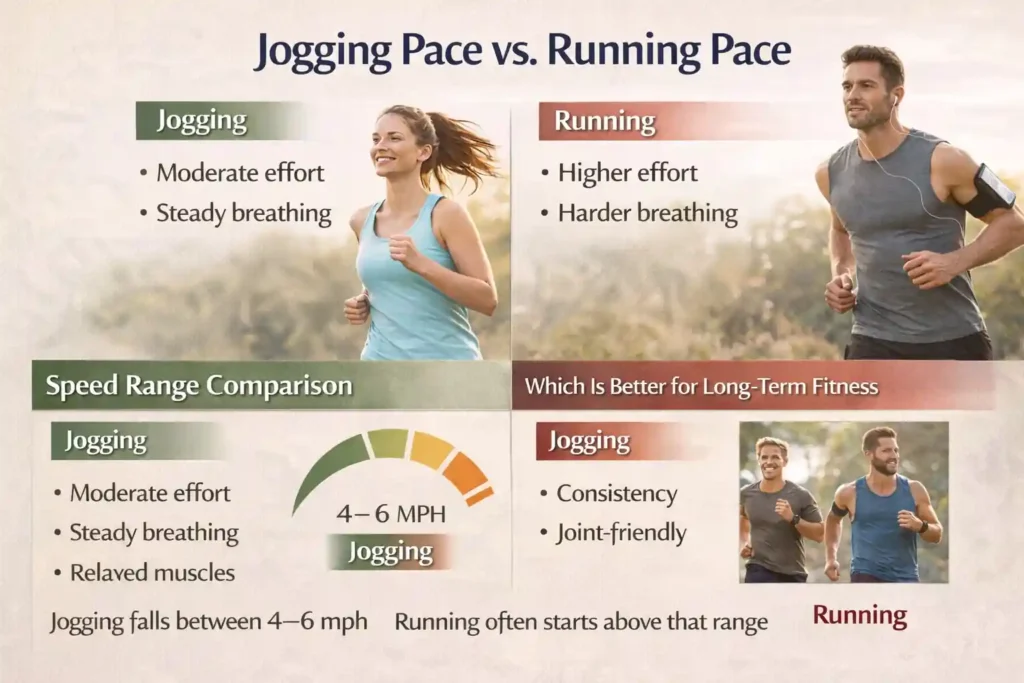
Key Differences Between Jogging and Running
Jogging keeps the effort moderate. Breathing stays steady, and muscles stay relaxed. Running raises effort and impact. Breathing becomes faster and deeper. Sports medicine research shows running increases joint load more than jogging at the same duration. That is why average jogging speed works better for long-term fitness for most people. A normal jogging pace supports daily movement without high stress.
Speed Range Comparison
Jogging usually falls between 4 and 6 mph. Running often starts above that range. Some trained runners jog faster, but the effort still feels easy. When speed forces you to lean forward and tighten your arms, you have crossed your personal average jogging speed .
When Jogging Becomes Running
Jogging turns into running when talking becomes hard, and breathing turns sharp. Impact also feels stronger. This change happens at different speeds for different people. That is why doctors suggest listening to effort cues instead of chasing fixed numbers.
Which Is Better for Long-Term Fitness
Jogging supports consistency. Running boosts performance. For health, joints, and habit building, jogging wins. Many long-term exercisers stay active longer by holding a stable average jogging speed instead of pushing hard every session.
Jogging Speed for Weight Loss
Fat loss depends more on total activity over time than on short bursts of speed. A pace you can repeat several days a week burns more calories overall than pushing too hard and needing a long recovery. Consistency always beats intensity here.
Best Jogging Pace to Burn Fat
Moderate effort burns fat efficiently. Exercise science research shows fat use stays high at moderate intensity. A normal jogging pace keeps heart rate in a zone where fat and carbs both fuel movement. Evidence on exact fat-burning speeds remains limited, so comfort matters more than precision.
Jogging Duration vs Speed for Weight Loss
Longer sessions often burn more total calories than short, fast ones. A 40-minute jog at average jogging speed may burn more fat than a 15-minute hard run. Doctors usually suggest increasing duration before speed for safer fat loss.
Calories Burned While Jogging
Calories burned depend on body weight, speed, and time. A 155-pound adult burns about 280 calories in 30 minutes at 5 mph. Heavier bodies burn more. Speed increases burn rate, but time still plays a bigger role in jogging speed for weight loss .
Jogging Frequency for Sustainable Fat Loss
Three to five jogging sessions per week work for many people. Rest days help recovery. Overtraining slows fat loss by raising stress hormones. A steady average jogging speed supports balance and consistency.
Factors That Affect Your Jogging Speed
Your pace changes daily based on sleep, stress, terrain, weather, and footwear. Even hydration levels can affect how fast your heart rate rises.
Fitness Level and Experience
Experienced joggers use oxygen better. Their muscles waste less energy. This allows a higher average jogging speed with the same effort. Beginners improve fast at first as the heart adapts.
Body Weight and Body Composition
Extra body weight increases energy cost. Muscle helps power movement. Fat adds load. These factors explain why two people jogging together feel different levels of effort at the same speed.
Terrain and Surface
Hills’ slow pace, trails demand balance, and treadmills often feel easier. Always compare speed on similar surfaces. Average jogging speed on a treadmill often differs from outdoor pace.
Weather and Temperature
Heat raises heart rate. Cold stiffens muscles. Wind adds resistance. Research on heat stress shows pace often drops to protect the body. Slower speed in harsh weather is normal.
Footwear and Running Form
Supportive shoes reduce strain. Poor form wastes energy. Small changes in posture and stride often raise average jogging speed without more effort.
How to Improve Your Jogging Speed Safely
Speed improves when the heart, muscles, and joints strengthen together. Gradual changes allow tissues to adapt without breakdown. Safe improvement comes from patience, structured effort, and listening to early warning signs from your body.
Gradual Pace Progression
Increase speed in small steps. Adding 0.1 mph every few weeks allows tissues to adapt. Injury data shows that gradual progress lowers risk. Average jogging speed improves best when changes stay small.
Interval Jogging Techniques
Intervals mix easy jogging with short, faster efforts. For example, jog easily for five minutes, then slightly faster for one minute. This trains the heart without overload and improves jogging speed for beginners and experienced joggers alike.
Strength Training for Runners
Strong legs push better. A strong core keeps posture stable. Strength training preserves power and supports pace. Two short sessions per week help maintain average jogging speed .
Proper Warm-Up and Cool-Down
Warm muscles move better. Cool-downs support recovery. Skipping these steps increases stiffness and injury risk, which slows progress.
When Jogging Speed Becomes a Problem
Speed becomes harmful when it causes pain, dizziness, or ongoing fatigue. These signs often show that recovery is not keeping up with effort. Slowing down early prevents injuries that could stop training for weeks or months.
Shortness of Breath or Dizziness
These signs mean slow down or stop. They may signal low fitness, dehydration, or medical issues. Average jogging speed should feel controlled, not scary.
Joint or Muscle Pain
Sharp pain is not normal. It often signals overload. Adjust pace, shoes, or rest. Persistent pain needs medical review.
Overtraining and Burnout
Chasing speed daily drains motivation and recovery. Easy jogs protect mental health and physical progress.
FAQs
What Is a Normal Jogging Speed for Adults?
A normal jogging pace for adults usually ranges from 4 to 6 mph. This speed supports heart health, endurance, and joint safety when maintained with relaxed breathing and good form.
Is Jogging at 5 mph Considered Slow?
Jogging at 5 mph fits squarely within the average jogging speed for adults. It is not slow if it allows steady breathing, consistent training, and recovery without joint pain.
What Is a Good Jogging Pace for Beginners?
A safe jogging speed for beginners often falls between 4 and 4.5 mph. This pace helps the heart adapt while reducing injury risk and improving confidence.
Does Jogging Speed Matter for Weight Loss?
Jogging speed for weight loss matters less than total time and consistency. A moderate pace done often burns more calories long-term than fast jogging done rarely.
How Does Age Affect Jogging Speed?
Average jogging speed by age tends to decline slightly due to slower recovery and muscle changes. Regular training and strength work help reduce this decline significantly.
Is Jogging Better Than Running for Fitness?
Jogging supports long-term fitness for most people. It lowers injury risk, improves heart health, and allows frequent training compared to harder running sessions.
How Long Should I Jog at an Average Pace?
Most adults benefit from 20 to 40 minutes at an average jogging speed . Shorter or longer sessions also work, depending on fitness level and recovery ability.
Can Jogging Speed Improve Over Time?
Yes. With consistent training, your heart and muscles adapt. Over weeks and months, average jogging speed often increases naturally without forcing effort.
Is It Okay to Jog Slower Than Average?
Yes. Jogging slower than average jogging speed still improves health, burns calories, and protects joints. Comfort and consistency matter more than numbers.
When Should Jogging Speed Be Reduced?
Reduce speed during pain, illness, extreme heat, or heavy fatigue. Slowing down protects recovery and helps maintain long-term progress without setbacks.












Leave a Comment