


Pain behind ear usually comes from nerves, Ear infection, muscles, joints, or nearby bones. The area behind your ear holds nerves, lymph nodes, and the mastoid bone. When one structure gets irritated, pain spreads fast. Pain behind ear can feel sharp, dull, or throbbing. It may stay on one side or spread to the head and neck. Some causes stay mild. Others need urgent care. Knowing the cause early lowers risk and shortens recovery.
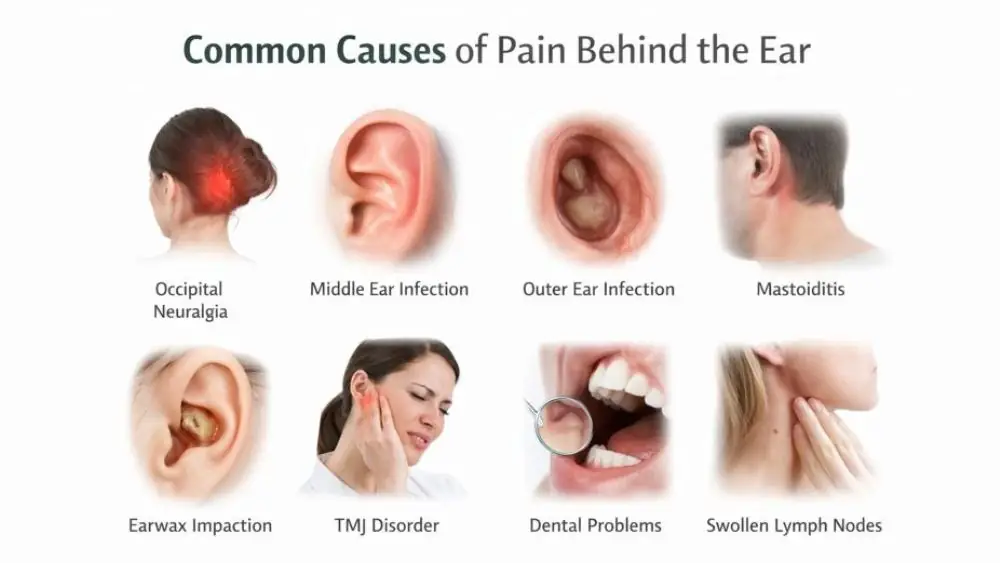
10 Common Causes of Pain Behind the Ear
Pain behind ear usually starts when nerves, bones, joints, or soft tissues near the ear get irritated or infected. The causes range from simple muscle strain to serious infections like mastoiditis. Knowing the exact trigger matters because treatment differs widely for nerve pain, infection, or jaw problems. Ignoring the cause allows pain to spread or return.
Occipital Neuralgia
Occipital neuralgia is nerve irritation at the back of your head. These nerves pass close to the ear. When they flare, pain behind ear feels sharp or electric. Touching your scalp may hurt. Nerve compression from tight neck muscles is a common trigger. Poor posture and long screen time increase risk.
Middle Ear Infection (Otitis Media)
A middle ear infection causes pressure inside the ear. That pressure often spreads backward. You may feel pain behind ear along with fullness or hearing loss. Fluid buildup stretches the eardrum and nearby tissues. Children face this more, but adults still get it.
Outer Ear Infection (Otitis Externa)
This infection affects the ear canal skin. Swelling pushes against nearby structures. That pressure leads to pain behind ear in some cases. Water exposure and small skin cuts raise the risk. Severe cases cause redness behind the ear.
Mastoiditis
Mastoiditis is an infection of the mastoid bone. This bone sits right behind your ear. Pain is deep and constant. Swelling and redness often appear. Mastoiditis usually follows untreated ear infections. This cause of pain behind ear needs urgent care.
Earwax (Cerumen) Impaction
Earwax protects your ear. Too much wax blocks sound and traps pressure. That pressure may cause pain behind ear and muffled hearing. Cotton swab use pushes wax deeper, raising impaction risk.
Temporomandibular Joint (TMJ) Disorder
The jaw joint sits close to your ear. When strained, pain spreads backward. Many people report pain behind ear on one side with jaw clicking or chewing pain. Jaw clenching during stress worsens symptoms. Joint inflammation often refers to pain in the ear region.
Dental Problems
Tooth infections irritate shared nerve pathways. A deep cavity or abscess can cause pain behind ear even without tooth pain. Upper molars cause this most because nerve overlap between teeth and ear structures causes ear pain.
Sinus Infections
Sinus pressure builds in facial cavities. That pressure can push pain toward the ear and behind it. Pain behind ear from a sinus infection feels dull and deep. Head movement often worsens it.
Muscle Strain in Neck or Jaw
Tight neck muscles compress nerves. This leads to aching pain behind the ear. Poor sleep position and phone use are common triggers. Posture correction reduces symptoms.
Swollen Lymph Nodes
Lymph nodes fight infection. When swollen, they press on the surrounding tissue. That pressure causes tender pain behind ear . Viral infections often trigger this response.
Pain Behind the Ear Symptoms
The symptoms of pain behind the ear depend on the cause. Some signs point to nerves. Others suggest infection or inflammation. Knowing these patterns helps early care.
Sharp or Stabbing Pain
Nerve-related pain feels sudden and sharp. It may shoot upward or downward. Touch or cold air can trigger it. This pattern often links to occipital neuralgia and TMJ strain.
Dull or Throbbing Pain
Infections cause dull or pulsing pain. Pressure builds slowly. Pain behind the ear from infection often worsens at night. Throbbing pain suggests inflammation.
Pain with Head Movement
Muscle or joint causes hurt more with motion. Turning your head may increase pain behind your ear . Stretching may feel tight or sore.
Pain with Fever or Ear Discharge
Fever signals infection. Fluid leaking from the ear is serious. These symptoms of pain behind the ear need medical review. Studies show delayed care raises complication risk.
Diagnosing Pain Behind the Ear
Correct diagnosis prevents repeat pain. Diagnosing pain behind your ear follows a stepwise evaluation. Doctors rule out serious causes first.
Physical Examination
The doctor checks tenderness, swelling, and skin color. They feel the lymph nodes and neck muscles. Jaw movement is tested, which often identifies muscle or joint causes of pain behind the ear .
Ear Examination (Otoscopy)
An otoscope lets the doctor see inside your ear. Redness, fluid, or bulging shows infection. Wax buildup appears clearly. This exam is key in diagnosing pain behind your ear linked to ear disease.
Dental and Jaw Evaluation
Your bite and jaw movement get checked. Teeth are tapped for sensitivity. Dental imaging may be needed. Many cases of pain behind the ear on one side trace back to jaw or tooth issues.
Imaging Tests
Imaging is not routine. Doctors order scans when pain persists or worsens. CT scans show bone infection. MRI shows nerve inflammation. Imaging improves accuracy when basic exams fail. This step supports precisely diagnosing pain behind your ear .
Treating an Ear Infection
Treating an ear infection correctly prevents spread to nearby bone and nerves. Not all ear infections need antibiotics, and misuse increases resistance. Supportive care, pain control, and close follow-up are just as important as medication in reducing pain behind ear linked to infection.
Antibiotic Treatment
Doctors usually prescribe antibiotics only when a bacterial infection is likely. Viral ear infections do not improve with antibiotics. Unnecessary antibiotics increase resistance and side effects. For confirmed bacterial cases, treating an ear infection early lowers the risk of mastoiditis and long-term hearing issues. Dosage varies by age and health status, so doctors adjust it carefully.
Pain Relief Medications
Pain control helps you rest while healing. Doctors usually recommend over-the-counter pain relievers. These reduce swelling and nerve irritation. Proper pain control improves sleep and immune response. Pain relief does not treat infection, but it supports recovery during the treatment of an ear infection .
Home Care Measures
Warm compresses increase blood flow and ease pressure. Keeping your head elevated reduces fluid buildup. Hydration thins mucus and supports drainage. These steps support medical care and reduce pain behind ear intensity during healing.
Treatment Options for Pain Behind the Ear
Treatment works best when it targets the root cause, not just the pain. Nerve irritation, TMJ disorders, dental infections, and muscle strain each need different care plans. Tailored treatment reduces repeat episodes of pain behind ear and lowers long-term nerve sensitivity.
Treatment for Nerve-Related Pain
Nerve pain responds poorly to simple painkillers alone. Doctors may suggest nerve-calming medicines or targeted injections. Physical therapy helps reduce nerve compression. Posture correction reduces nerve irritation and lowers repeated pain behind ear over time.
TMJ Disorder Management
Jaw rest reduces joint strain. Soft foods limit joint stress. Night guards protect against teeth grinding. Imaging studies show TMJ inflammation often refers pain behind the ear. Managing jaw habits reduces pain behind ear on one side linked to TMJ problems.
Dental Treatments
Dental infections need direct care. Fillings, root canal treatment, or extraction may be needed. Ignoring dental causes allows infection to spread along nerve paths. Early treatment resolves pain behind ear that does not respond to ear-focused care.
Physical Therapy and Posture Correction
Therapists teach neck strengthening and stretching. Correct screen height reduces muscle strain. Posture changes lower neck tension and nerve pressure. This approach reduces recurring pain behind ear tied to muscle imbalance.
When to See a Doctor
Medical care becomes necessary when pain behind ear does not improve, worsens, or appears with warning signs. Fever, discharge, neurological symptoms, or severe swelling suggest complications. Early evaluation prevents permanent hearing damage and nerve injury.
Pain Lasting More Than a Few Days
Pain that does not improve suggests infection or nerve involvement. Chronic pain often means the cause was missed. Early evaluation improves outcomes and prevents long-term nerve sensitivity.
Fever or Ear Discharge
Fever signals infection spread. Ear discharge may mean a ruptured eardrum or severe infection. These signs require prompt evaluation. Delayed care is associated with higher rates of mastoid involvement.
Worsening or Severe Pain
Rapidly worsening pain suggests inflammation or bone involvement. Mastoiditis pain often increases instead of easing. Severe pain behind ear should never be ignored.
Neurological Symptoms
Dizziness, facial weakness, or vision changes are red flags. These signs may indicate nerve compression or deeper infection. Immediate care prevents permanent damage.
Preventing Pain Behind the Ear
Prevention focuses on reducing strain, infection risk, and nerve irritation. Proper ear care, good posture, and early treatment of colds and dental issues lower recurrence. These habits reduce exposure to the 10 most common causes of pain behind the ear .
Ear Hygiene and Care
Keep your ears dry after swimming. Avoid inserting objects into the ear canal. Research shows cotton swabs increase wax impaction and infection risk. Proper hygiene lowers infection-related pain behind ear .
Managing Jaw and Neck Strain
Limit prolonged phone and laptop use. Adjust screen height to eye level. Stretch your neck daily. Muscle studies show regular stretching reduces nerve compression behind the ear.
Preventing Ear Infections
Treat nasal allergies early. Avoid smoking exposure. Vaccinations reduce infection risk in children. Prevention lowers the chance of 10 causes of pain behind the ear linked to infection.
FAQs
What causes pain behind the ear on one side?
Pain behind ear on one side often comes from TMJ disorders, dental infections, or nerve irritation. These causes affect one nerve or joint, which explains why the pain does not spread evenly.
Can an ear infection cause pain behind the ear?
Yes. Middle and outer ear infections increase pressure and inflammation. That pressure can extend to nearby bone and tissue, leading to pain behind ear , especially if treatment is delayed.
Is pain behind the ear related to headaches?
Yes. Nerve and muscle tension headaches often share pathways with the ear nerves. Tight neck muscles can cause headaches that radiate and create pain behind ear at the same time.
Can TMJ disorder cause pain behind the ear?
TMJ disorder frequently causes pain behind ear due to joint inflammation and shared nerve supply. Jaw movement, chewing, or clenching often makes the pain worse.
Is pain behind the ear a sign of mastoiditis?
It can be. Mastoiditis causes deep, persistent pain behind ear with swelling and fever. This condition usually follows untreated ear infections and needs urgent medical care.
When should I worry about pain behind my ear?
You should worry if pain worsens, lasts several days, or comes with fever or discharge. Early diagnosis of pain behind your ear prevents serious complications.
Can swollen lymph nodes cause pain behind the ear?
Yes. Swollen lymph nodes press on the surrounding tissue. This causes tenderness and pain behind the ear , especially during infections like colds or throat illnesses.
How long does pain behind the ear usually last?
Mild muscle or nerve-related pain behind ear may last for days. Infection-related pain lasts longer without care. Proper treatment shortens recovery time.
Can stress or posture cause pain behind the ear?
Stress increases muscle tension. Poor posture compresses nerves. Both factors can trigger recurring pain behind ear , especially during long work hours.
Which doctor should I see for pain behind the ear?
Start with a primary care doctor. ENT specialists handle ear conditions. Dentists address jaw and tooth issues. Correct referral improves the diagnosis of pain behind your ear .










Leave a Comment