


Diarrhea rarely needs a prescription to resolve. The body clears most causes on its own within 72 hours when you give fluids with the right electrolyte balance, gut-resting food, and enough rest for the lining to repair itself. The home remedies for diarrhea that fail are the ones that address symptoms without addressing fluid loss.
If symptoms go beyond 3 days or warning signs appear, a doctor can identify the exact cause (bacterial, viral, parasitic, or inflammatory) and recommend targeted treatment. The most effective home remedies for diarrhea bridge the gap between onset and natural recovery.
This article covers 15 natural remedies, what to drink, what to eat, dehydration warning signs, and when to stop treating at home.
Do Home Remedies for Diarrhea Really Work?
Yes, mild diarrhea improves within 1–3 days with proper hydration, rest, and dietary changes. Most viral causes (the most common type) clear on their own. Home remedies for diarrhea support the body through that process.
Home care works well for:
- Diarrhea lasting fewer than 3 days
- No blood in the stool
- Able to keep fluids down
- No high fever (below 101°F / 38.5°C)
- Mild to moderate symptoms in otherwise healthy adults
Stop home treatment and see a doctor if:
- Diarrhea continues beyond 3 days
- Stool contains blood or is black and tarry
- Fever exceeds 101°F (38.5°C)
- Severe abdominal cramping that doesn’t ease
- Signs of significant dehydration appear
15 Natural Remedies for Diarrhea

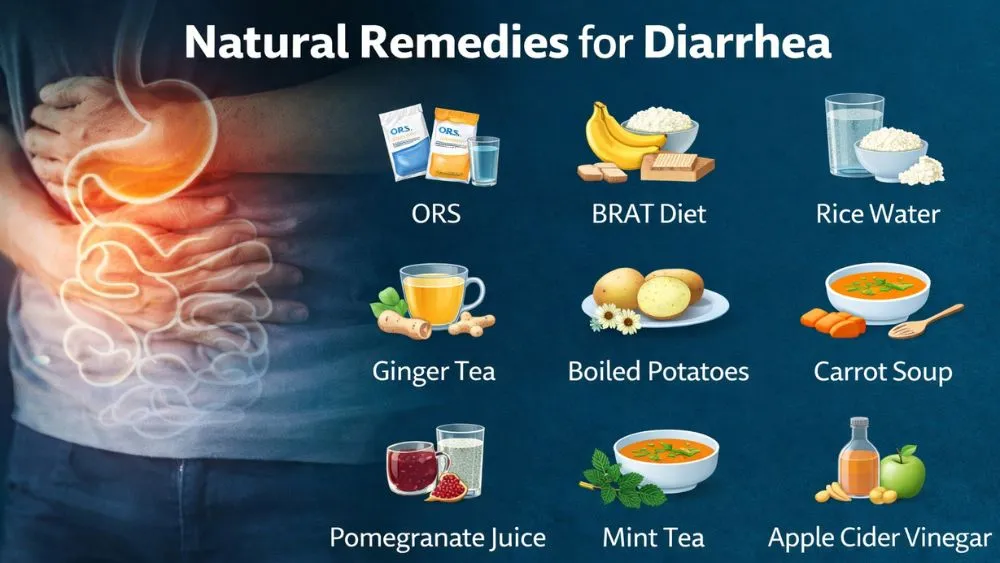
The 15 natural remedies for diarrhea below are ranked by clinical relevance; the ones with the most evidence come first.
1. ORS — The Most Important Remedy
ORS for diarrhea at home is the single most effective tool available. Plain water doesn’t replace sodium and potassium lost through loose stool. Without electrolytes, cells can’t absorb the water you drink, and dehydration continues even when you’re drinking plenty.
WHO-formulated ORS contains sodium, potassium, glucose, and chloride in specific ratios that activate sodium-glucose co-transporters in the gut. These transporters pull water back into the bloodstream. That’s a mechanism plain water can’t replicate.
Drink 200–400 ml of ORS after each loose stool. Sip slowly if nausea is present.
2. Increase Fluid Intake — Beyond Water
If ORS sachets aren’t available, these fluids come next:
- Coconut water is a natural source of potassium and sodium, gentle on an irritated gut
- Clear broths replace sodium and add minimal calories
- Diluted apple juice performs as well as commercial electrolyte drinks in mildly dehydrated children
Avoid drinking large amounts at once. 2–3 tablespoons every 5 minutes is easier on the gut than gulping.
3. BRAT Diet
Banana, rice, applesauce, and toast. Each item has a specific role:
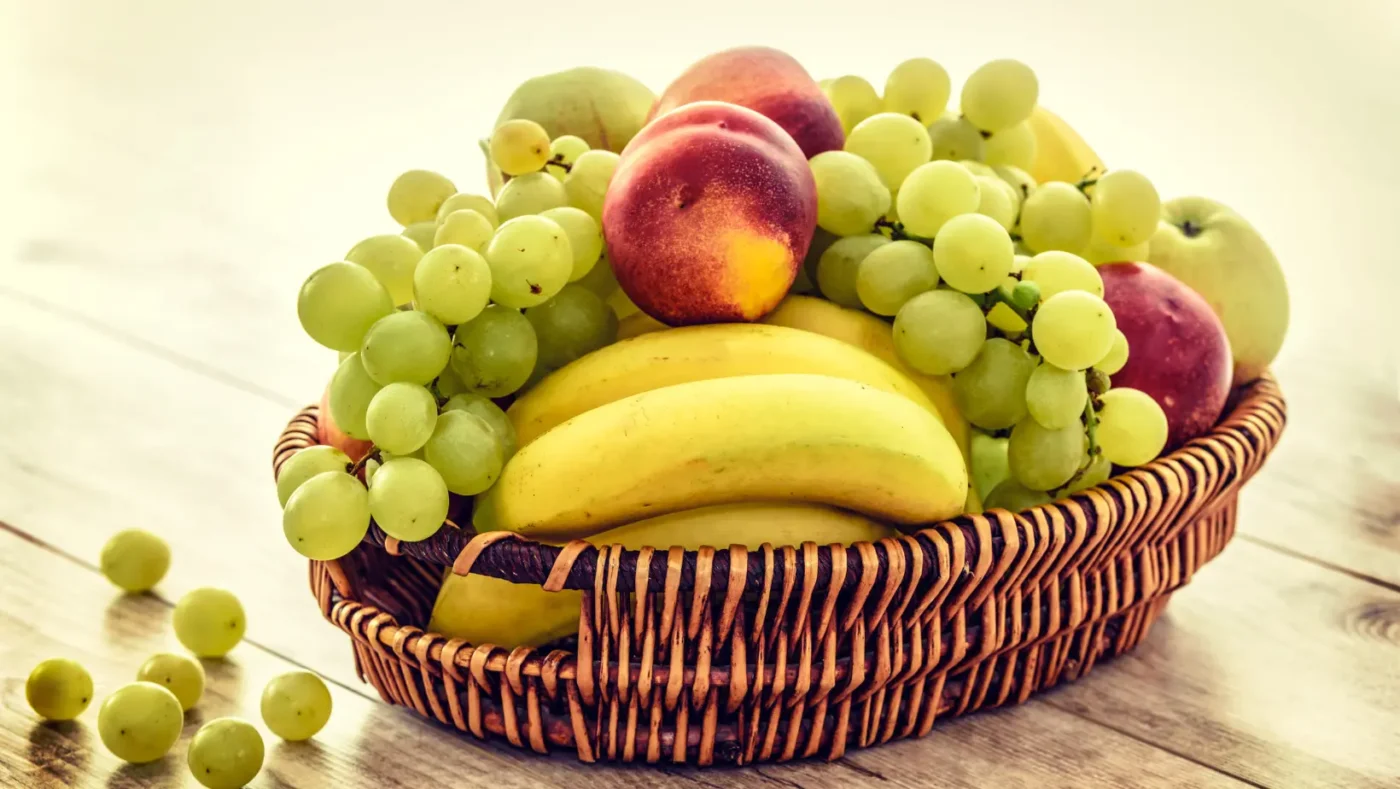
- Banana has pectin, which slows gut motility; potassium replaces what diarrhea removes
- White rice — low fiber, binds stool, digests without residue
- Applesauce — contains pectin; easier to absorb than whole apples
- Toast — absorbs excess stomach acid; sodium in salted toast helps electrolyte balance
Start with small amounts. If your stomach is still active, even BRAT foods may pass through quickly. Wait until vomiting fully stops before eating solids.
4. Plain Yogurt with Live Cultures
Yogurt containing Lactobacillus rhamnosus GG or Lactobacillus acidophilus is one of the better-studied home remedies for diarrhea tied to antibiotic use or viral gastroenteritis. Probiotics can reduce diarrhea duration by approximately 25 hours.
Use full-fat plain yogurt with “live and active cultures” on the label. Flavored yogurts have too much sugar, and high sugar draws more water into the intestines and worsens diarrhea.
5. Ginger Tea
Ginger contains gingerols and shogaols, compounds that reduce intestinal inflammation and slow gut motility. Slower motility means more water absorption before stool exits.
Steep 1 inch of fresh ginger in hot water for 10 minutes. Drink warm. Drink ginger tea 2–3 times daily during active diarrhea. Dried ginger powder works too; ½ teaspoon in hot water.
6. Rice Water
Rice water is the starchy liquid left after cooking rice. It contains glucose polymers that feed the sodium-glucose transport system in the gut, similar to, though weaker than, ORS. Rice water reduces stool output by up to 36% in children with diarrhea.
Cook ½ cup of white rice in 6 cups of water for 20 minutes. Strain the liquid. Drink warm throughout the day. Add a small pinch of salt to improve electrolyte content.
7. Chamomile Tea
Chamomile contains anti-inflammatory compounds (bisabolol and apigenin) that calm intestinal muscle spasms. This makes it particularly useful when diarrhea comes with painful cramping.
Steep 1 chamomile tea bag for 7 minutes. Drink 3 times daily. Avoid if allergic to ragweed; both belong to the same plant family, and cross-reactions occur.
8. Boiled Potatoes (Plain)
Plain boiled potatoes are one of the best-tolerated solid home remedies for diarrhea. They’re low in fiber, high in starch, and mildly alkaline, which helps neutralize the acidic environment that the irritated gut creates.
No butter, no oil, no salt beyond a small pinch. Fat slows gastric emptying and worsens diarrhea. Plain is the only right way here.
9. Carrot Soup
Cooked carrots contain pectin (the same gut-slowing fiber found in bananas and applesauce). A small clinical study in Germany found that carrot soup reduced diarrhea duration in children when used alongside rehydration.
Boil 500g of carrots until very soft. Blend with the cooking water. Add a pinch of salt. Serve warm. The soft fiber binds stool without the roughage that raw vegetables would add.
10. Psyllium Husk (Small Doses)
Psyllium is a soluble fiber that absorbs water in the gut. In small doses, it adds bulk to loose stool. This is the opposite of its use for constipation (where higher doses are used).
Take ½ teaspoon of psyllium husk in 200ml of water, once daily. Drink it immediately; it gels fast. Don’t use psyllium if you’re already dehydrated. It absorbs available gut water and makes dehydration worse without sufficient fluid intake.
11. Pomegranate Juice
Pomegranate contains punicalagins and ellagic acid that inhibit several diarrhea-causing bacteria, including E. coli and Salmonella. Clinical human trials are limited, but antimicrobial properties are documented.
Drink 100ml of pure pomegranate juice (no added sugar) twice daily. This is one of the least-covered home remedies for diarrhea in mainstream health content and one of the more interesting options when food poisoning is the suspected cause.
12. Mint Tea
Peppermint contains menthol, which relaxes intestinal smooth muscle and reduces cramping. It doesn’t stop diarrhea directly, but reduces the painful spasms that accompany it.
Steep 1 teaspoon of dried peppermint leaves for 5 minutes. Drink after meals. Skip this if you have GERD, menthol relaxes the lower esophageal sphincter and worsens acid reflux.
13. Apple Cider Vinegar (Limited Evidence)
ACV appears in nearly every list of home remedies for diarrhea. Clinical evidence is thin. The proposed mechanism is that its acetic acid creates an unfavorable pH environment for bacteria like E. coli.
If you try it, add 1 tablespoon diluted in 8 oz of water, once before meals. Don’t use it straight because the acidity irritates the esophagus. This is one of the weaker remedies on this list so don’t rely on it as a primary strategy.
14. Avoid Dairy Temporarily
This is a remedy through removal, not addition. Viral diarrhea temporarily reduces lactase enzyme production in the gut lining. Lactase breaks down lactose in dairy. Without it, dairy passes undigested into the colon, ferments, and produces more gas, cramping, and loose stool.
Skip all dairy for 48–72 hours after diarrhea starts. Exception: plain yogurt with live cultures, which contains already-broken-down lactose and doesn’t require lactase to digest.
15. Rest and Gut Recovery
Your gut lining replaces itself every 3–5 days under normal conditions. During active diarrhea, that turnover speeds up, but only if blood flow to the gut is maintained. Physical activity diverts blood to muscles. Rest keeps circulation focused on gut recovery.
At least 8–9 hours of sleep during active illness. Avoid physical exertion. This is how gut lining repairs itself.
What to Drink for Diarrhea
What to drink for diarrhea is the most critical decision you make in the first 24 hours.
Best options (ranked):
- ORS solution: first choice, always
- Coconut water: natural electrolytes, potassium-rich
- Clear broth: sodium, warmth, and calories
- Rice water: Starch-based electrolyte support
- Chamomile or ginger tea: Hydration and has gut-calming compounds
Avoid completely:
- Caffeinated drinks: caffeine stimulates gut motility and makes diarrhea worse
- Alcohol has a strong dehydrating effect
- Carbonated drinks: CO2 gas bloats the gut and adds osmotic pressure
- Full-sugar fruit juices: High fructose pulls more water into the intestines
Knowing what to drink for diarrhea matters as much as knowing what to eat. The wrong drink actively extends recovery time.
ORS for Diarrhea at Home: How to Make It
When pharmacy ORS sachets aren’t available, make it yourself. ORS for diarrhea at home:
- 1 liter of clean water (boiled and cooled if tap quality is uncertain)
- 6 teaspoons of sugar
- ½ teaspoon of salt
Stir until fully dissolved. Drink throughout the day; 200ml after each loose stool.
| Why the ratio matters: Too much salt causes hypernatremia (sodium overload). Too little means the transport mechanism doesn’t activate properly. The sugar-to-sodium ratio is what drives water absorption in the gut, not the volume alone. This specific ratio matches the WHO formula used globally in diarrhea treatment programs. |
Don’t add more sugar to improve the taste. Don’t halve the salt to make it “safer.” The formula works because of its balance, not despite it.
Foods to Eat When You Have Diarrhea
The best foods to eat when you have diarrhea are low in fiber, low in fat, and easy to digest:
- Bananas
- White rice (not brown; excess fiber worsens diarrhea)
- Applesauce
- Plain toast
- Boiled potatoes (no butter)
- Plain oatmeal with water
These foods share one feature: they move through a damaged gut without triggering more irritation. Start with ½ cup portions. Larger amounts overwhelm an already-stressed digestive system.
Diarrhea and Dehydration Treatment
Diarrhea and dehydration treatment starts with recognizing dehydration before it becomes severe.
Early warning signs:
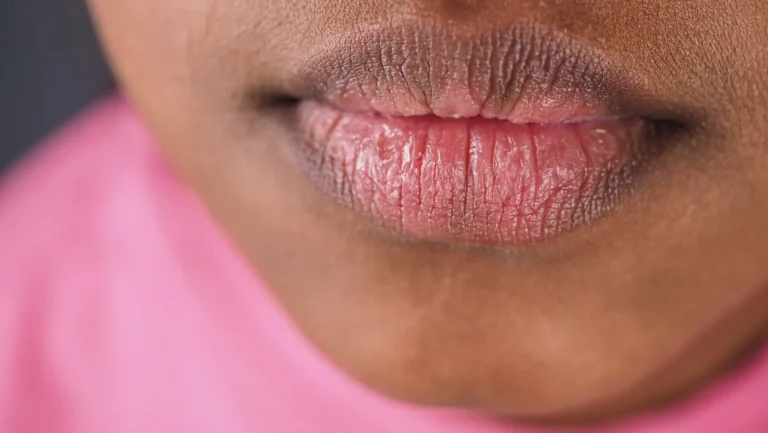
- Dry mouth and sticky saliva
- Urine is darker than pale yellow
- Urinating fewer than 3 times in 8 hours
- Fatigue disproportionate to activity
Severe dehydration signs (need urgent care):
- No urination for 8+ hours
- Sunken eyes
- Skin that doesn’t spring back when pinched
- Confusion or extreme weakness
IV fluids are required when the person can’t keep any fluid down, severe dehydration signs appear, or the patient is an infant, elderly adult, or pregnant.
High-risk groups for rapid dehydration:
- Children under 5: smaller body mass means faster fluid loss proportionally
- Adults over 65: reduced kidney efficiency and lower thirst sensation
- Pregnant women: reduced blood volume buffer; dehydration affects fetal circulation
Diarrhea and dehydration treatment at home only works when the person can swallow and absorb fluids. Once that fails, home treatment has reached its limit.
When to See a Doctor
Stop using home remedies for diarrhea and get medical care if:
- Diarrhea continues beyond 3 days with no improvement
- Blood or mucus appears in stool
- Fever above 101°F (38.5°C)
- Severe or worsening abdominal pain
- Any dehydration sign in a child, elderly adult, or pregnant woman
- Diarrhea started after returning from international travel (may indicate Giardia, Cryptosporidium, or Shigella)
Travel-related diarrhea sometimes needs specific antibiotic treatment, not probiotics and rice water.
What NOT to Do During Diarrhea
These mistakes extend recovery time:
- Taking anti-diarrheal drugs (loperamide) when infection is suspected: These slow the gut and trap bacteria inside, making bacterial infections like Salmonella worse
- Eating fatty, fried, or spicy foods: Fat slows gastric emptying and increases intestinal irritation
- Drinking high-sugar beverages: Sugar concentration above 3% in fluids draws water into the intestines, worsening fluid loss
- Stopping fluids because of nausea: Nausea doesn’t remove the dehydration risk; small sips every few minutes still help
FAQs
What is the fastest home remedy for diarrhea?
ORS is the fastest-acting home remedy for diarrhea. It starts rehydrating cells within 20–30 minutes of the first sip by activating sodium-glucose co-transporters in the gut wall. For reducing stool frequency specifically, psyllium husk (½ tsp in water) adds bulk and slows output within 1–2 hours.
Can probiotics stop diarrhea?
Yes, specifically Lactobacillus rhamnosus GG and Saccharomyces boulardii. A 2010 Cochrane review of 63 trials found these strains reduce diarrhea duration by about 25 hours. Generic “probiotic yogurt” helps too, but produces smaller, slower results than targeted strains.
How long does diarrhea last normally?
Viral diarrhea: 1–3 days. Bacterial diarrhea (Salmonella, Campylobacter): 3–7 days. Food poisoning from toxins (Staph aureus): 24–48 hours. Diarrhea from antibiotics: up to 2 weeks. Any case beyond 3 days needs medical evaluation regardless of cause.
Is coconut water good for diarrhea?
Yes, for mild diarrhea in adults. Coconut water contains potassium (600mg per cup) and natural sodium. It’s not a substitute for ORS in severe diarrhea because sodium concentration is too low. Use it as a supplement, not a replacement, when losses are significant.
Can I drink milk during diarrhea?
No. Diarrhea temporarily reduces lactase enzyme output, making dairy undigestible. Undigested lactose ferments in the colon and produces more gas, bloating, and loose stool. Wait 48–72 hours after symptoms stop before reintroducing milk or cheese.
Is rice water effective?
Yes. Rice water reduces stool output with 36% reduction in children. It works through glucose polymers that activate gut water absorption. Add a small pinch of salt to improve its electrolyte content. It’s not as effective as ORS but is widely available and safe for all ages.
Can stress cause diarrhea?
Yes. The gut-brain axis is direct and documented. Stress activates the hypothalamic-pituitary-adrenal (HPA) axis, which speeds up colonic contractions. This is why people with anxiety or IBS experience diarrhea before stressful events. Chronic stress-related diarrhea doesn’t respond to home remedies for diarrhea; it needs gut-brain treatment strategies.







Leave a Comment