

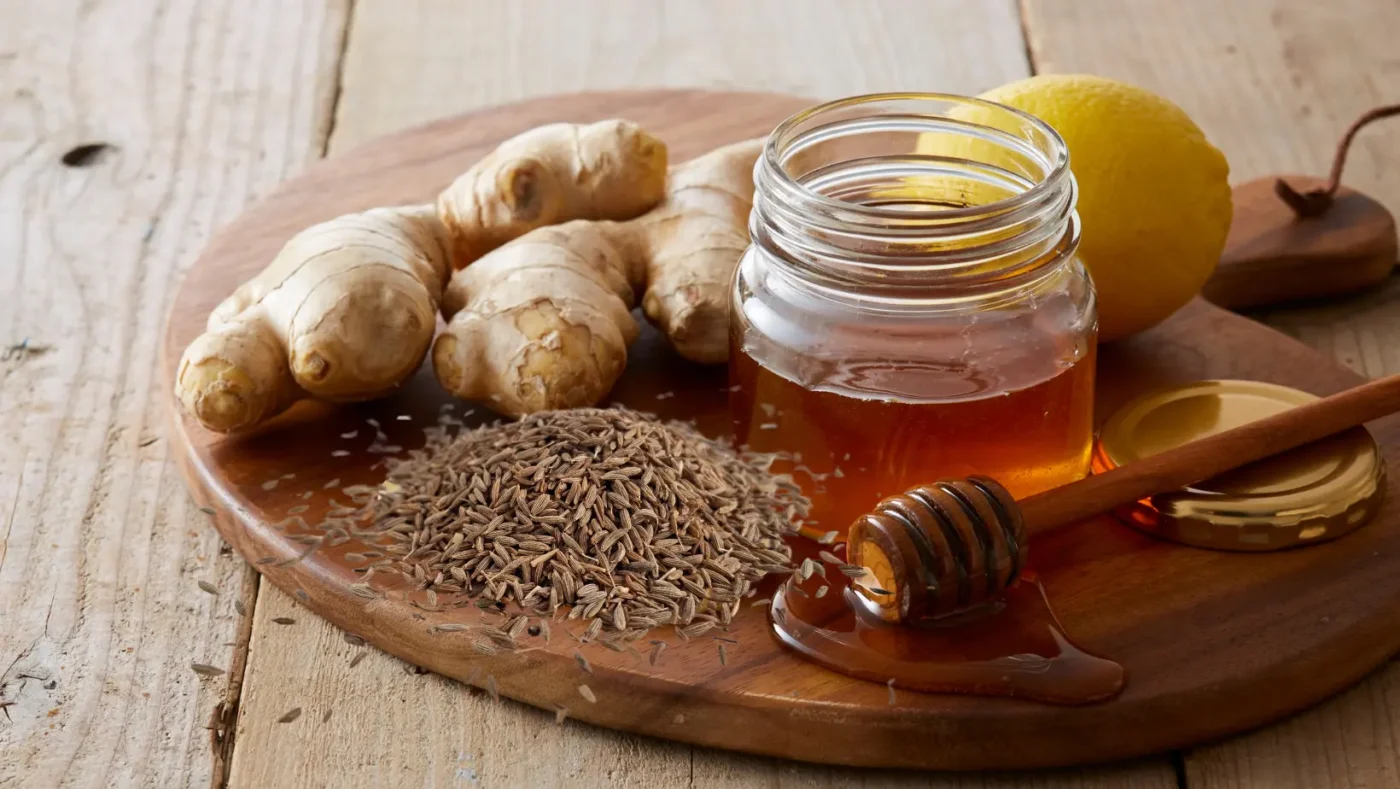

Indigestion is a nagging upper belly discomfort, bloating, or burning that hits after meals, and it affects roughly 25% of people at some point. The home remedies for indigestion, such as ginger, fennel, and a lighter diet, can resolve indigestion within hours.
Persistent or worsening symptoms always deserve professional evaluation. A gastroenterologist can run a simple breath test for H. pylori, an ultrasound for gallstones, or an endoscopy if something structural is suspected.
This article covers 10 proven remedies, what to eat, gas-relief strategies, and the red flags that mean it’s time to see a doctor.
What Is Indigestion?
Indigestion means discomfort in the upper abdomen, which causes bloating, nausea, or a burning sensation that comes on during or after eating.
Two things you should not confuse with indigestion:
- Indigestion is not acid reflux: Reflux involves heartburn that travels up the chest. Indigestion sits in the stomach area.
- Indigestion is not an ulcer: Ulcers cause a specific gnawing pain, often between meals. Most indigestion has no ulcer involved.
How to Relieve Indigestion Naturally
Mild indigestion responds well to smaller meals, herbal teas, and avoiding trigger foods without any prescription.
Fastest actions:
- Eat smaller portions at each meal
- Avoid fatty and spicy foods during flare-ups
- Try ginger or peppermint tea
- Stay upright for at least 30 minutes after eating
Lying down right after a meal pushes stomach contents toward the esophagus.
10 Remedies That Work for Indigestion Relief


The 10 remedies that work for indigestion relief below are ranked by speed and evidence.
1. Ginger for Faster Stomach Emptying
Ginger speeds up gastric emptying, so food moves out of your stomach faster instead of staying there and fermenting. Hence, it reduces nausea and bloating after meals.
A 2011 study in the European Journal of Gastroenterology & Hepatology found that ginger accelerated gastric emptying by 50% compared to a placebo. That’s a significant result.
Steep 1 inch of fresh ginger in hot water for 10 minutes. Drink 20 minutes before or after meals. Fresh ginger works faster than ginger powder capsules.
2. Peppermint Tea
Peppermint’s menthol relaxes the lower esophageal sphincter and intestinal muscles, reducing cramping and gas pressure in the stomach.
If you have GERD (chronic acid reflux), skip peppermint. Relaxing that sphincter lets acid flow up. For indigestion without reflux, it’s peppermint is one of the best home remedies for indigestion available.
3. Chamomile Tea
Chamomile contains apigenin, an anti-inflammatory compound that calms gut muscle spasms. It’s especially useful when indigestion comes with stress, because chamomile also mildly lowers cortisol levels.
Steep a chamomile tea bag for 5–7 minutes. Drink warm. Avoid chamomile if you’re allergic to plants in the daisy family (ragweed, chrysanthemums).
4. Baking Soda — Occasional Use Only
½ teaspoon of baking soda in 4 oz of water neutralizes stomach acid within minutes. It works fast. It releases CO2 as it neutralizes acid, which causes burping. That’s actually part of the relief.
Use this sparingly. Baking soda is high in sodium, and regular use raises blood pressure. If you have kidney disease or heart conditions, you should avoid it entirely. This is not your daily home remedy for indigestion.
5. Apple Cider Vinegar (Diluted)
If your indigestion comes from low stomach acid (not high acid), diluted ACV helps. Low stomach acid means food digests slowly and ferments, causing bloating and discomfort.
Mix 1 tablespoon of raw ACV in 8 oz of water. Drink before meals. If it makes symptoms worse, your acid levels are fine or already high. If you have chronic indigestion, you have low stomach acid, not high.
6. Fennel Seeds for Indigestion and Gas
Fennel contains anethole, a compound that relaxes intestinal muscles and reduces gas production. In India, restaurants serve fennel seeds after meals as a standard digestive aid to prevent indigestion.
Chew ½ teaspoon of raw fennel seeds after meals. Or steep 1 teaspoon in hot water for fennel tea. Indigestion and gas home remedies don’t get simpler than this.
7. Aloe Vera Juice
Aloe vera juice (food-grade, inner fillet only) soothes an irritated stomach lining. A 2015 study in the Journal of Traditional Chinese Medicine found that aloe vera syrup reduced heartburn, flatulence, and belching symptoms over a 4-week period.
Drink 1–2 oz before meals. Avoid aloe vera products that include the latex layer (outer leaf), which acts as a harsh laxative.
8. Warm Lemon Water
Warm lemon water mildly stimulates bile production from the liver. Bile breaks down fats. If your indigestion comes after fatty meals, warm lemon water 15 minutes before eating helps prep your digestive system.
Don’t drink it cold because cold liquids slow gastric motility.
9. Light Walking After Meals
A 10–15 minute walk after eating increases gastric motility, the muscular contractions that move food through your gut. A 2011 study in the Journal of Gastrointestinal and Liver Diseases confirmed that post-meal walking significantly reduced bloating and indigestion symptoms.
Intense exercise post-meal diverts blood flow away from the gut. Walking is enough.
10. Over-the-Counter Antacids
Antacids like calcium carbonate (Tums) or magnesium hydroxide (Milk of Magnesia) neutralize stomach acid within minutes. They’re safe for short-term use.
Overusing antacids causes acid rebound; your stomach produces more acid to compensate when the antacid wears off. Use them for occasional flare-ups, not as a daily fix.
Herbal Remedies for Indigestion
Herbal remedies for indigestion work well for mild cases. The ones with actual clinical backing:
- Ginger: Gastric motility and anti-nausea (covered above)
- Peppermint oil capsules (enteric-coated): A 2014 meta-analysis in the Journal of Clinical Gastroenterology found that enteric-coated peppermint oil reduced functional dyspepsia symptoms better than a placebo
- DGL licorice (deglycyrrhizinated) soothes the stomach lining. The deglycyrrhizinated form doesn’t raise blood pressure like regular licorice
- Caraway oil is used in combination with peppermint in Iberogast, a European herbal formulation with 30+ years of clinical use for functional dyspepsia
| What herbal remedies for indigestion won’t fix: H. pylori infection, gallstones, or peptic ulcers. If indigestion is severe or persistent, you need medical attention. |
Foods That Help Indigestion
Foods that help with indigestion are low in fat and easy for the stomach to process quickly.
Best options:
- Bananas have low acid, gentle on the stomach lining
- Oatmeal absorbs excess stomach acid
- Plain yogurt with live cultures, such as Lactobacillus strains reduce bloating and improves gut motility
- White rice has low fiber, fast to digest
- Boiled potatoes are bland, alkaline, filling without triggering acid
Avoid during flare-ups:
- Fried and fatty foods: Fat slows gastric emptying by up to 40%
- Excess caffeine: Stimulates acid production
- Carbonated drinks: CO2 gas stretches the stomach and worsens bloating
- Large meals: Volume alone triggers indigestion in people with functional dyspepsia
To resolve indigestion, you need foods that help indigestion move through the stomach fast. Foods that trigger it do the opposite.
Indigestion and Gas Home Remedies
Gas trapped in the digestive system is often the reason indigestion feels so uncomfortable. The pressure is real.
Common causes of indigestion and gas together:
- Eating too fast (swallowing air)
- Overeating at one sitting
- High-fat meals (slow emptying causes more fermentation, which leads to more gas)
- Carbonated beverages
Indigestion and gas home remedies that work:
- Simethicone (Gas-X) breaks gas bubbles in the gut, safe for most people
- Fennel tea or seeds reduces gas production at the source
- Gentle abdominal massage: Clockwise motion following the colon path moves trapped gas toward the rectum
- Activated charcoal absorbs intestinal gas, but also absorbs medications, so don’t combine with any drugs
When you try the clockwise abdominal massage, your colon runs in a specific direction, which relaxes your colon.
Chronic Indigestion Home Treatment: When It’s Not Just Gas
If indigestion happens more than twice a week for two or more weeks, you need medical treatment. Chronic indigestion home treatment only works if the underlying cause isn’t structural.
Possible causes of chronic indigestion:
- Functional dyspepsia: Gut hypersensitivity with no physical damage (most common)
- GERD: Acid reflux causing upper abdominal symptoms
- H. pylori infection: Bacterial infection requiring antibiotics (a breath test or stool test diagnoses this)
- Gallstones: Pain usually in upper right abdomen after fatty meals
- Peptic ulcer: Gnawing pain that sometimes improves after eating
Chronic indigestion home treatment helps with functional dyspepsia. It won’t cure H. pylori or dissolve gallstones. That needs a doctor.
See a doctor immediately if indigestion comes with:
- Unexplained weight loss
- Vomiting that won’t stop
- Black or tarry stools (sign of internal bleeding)
- Severe or worsening abdominal pain=
When Indigestion Could Be a Heart Problem
Upper abdominal discomfort, especially with sweating, shortness of breath, or chest pressure, can signal a heart attack. This is more common in older adults, diabetics, and women, who often present with atypical heart attack symptoms rather than classic chest pain.
Call emergency services immediately if you have:
- Crushing or heavy chest pressure
- Pain radiating to the left arm or jaw
- Cold sweats alongside stomach discomfort
- Sudden dizziness or nausea with no food trigger
Indigestion doesn’t cause sweating. If you’re sweating with your stomach pain, stop reading home remedy articles and call for help.
FAQs
What is the fastest home remedy for indigestion?
Baking soda (½ tsp in 4 oz of water) neutralizes stomach acid within 5 minutes. It’s the fastest-acting home remedy for indigestion available without a prescription. Don’t use it more than twice a week; high sodium content becomes a problem with daily use.
Does drinking water help indigestion?
Yes, but only warm water. Cold water slows gastric motility and can worsen bloating. Warm water helps dilute stomach acid and moves food through the gut faster. Drink 6–8 oz of warm water 30 minutes after a meal for best results.
Are herbal remedies safe for indigestion?
Yes, for mild and occasional indigestion. Ginger, chamomile, and DGL licorice are safe for most adults. Peppermint is unsafe if you have GERD. None of these treat structural problems like ulcers or gallstones; get tested if symptoms are chronic.
What foods should I avoid with indigestion?
Fried foods, full-fat dairy, carbonated drinks, raw onions, and tomato-based sauces. These four slow gastric emptying or increase acid production. Caffeine above 200mg daily also worsens functional dyspepsia in studies.
Can stress cause indigestion?
Yes. Stress activates the hypothalamus, which increases acid secretion and slows gastric motility. Psychological stress doubles the risk of functional dyspepsia. Home remedies for indigestion caused by stress work better when paired with stress reduction.
How long should indigestion last?
Occasional indigestion clears in 2–3 hours. Food-triggered episodes usually resolve within 4 hours. If symptoms last beyond 24 hours or recur more than twice a week, that’s chronic dyspepsia and needs evaluation; home remedies for indigestion alone won’t solve it.
Is indigestion the same as acid reflux?
No. Acid reflux (GERD) involves stomach acid moving into the esophagus, causing heartburn that rises into the chest or throat. Indigestion stays in the upper abdomen. They can occur together, but they’re different conditions with different triggers and treatments.










Leave a Comment