



Tonsillitis is an infection of the tonsils, the two soft tissue pads at the back of your throat. It causes a sore throat, swollen glands, and sometimes fever. Most viral cases clear up on their own in 5 to 7 days.
Home remedies for tonsillitis ease the pain and support recovery during that window. Salt water, warm fluids, rest, and pain relief cover the basics. Home remedies for tonsillitis are real tools, but they work best when you know what type of infection you are dealing with. Viral cases need time. Bacterial cases need antibiotics.
If symptoms cross into difficulty breathing, one-sided swelling, or two weeks without improvement, early medical treatment prevents complications that are far harder to fix than the original infection.
Can Tonsillitis Be Treated at Home?
Yes, viral tonsillitis responds well to supportive home care. Rest, warm fluids, saltwater gargles, and pain relievers manage most symptoms while the immune system does the actual work.
Bacterial tonsillitis needs antibiotics. You can use home remedies for tonsillitis alongside the prescription, but they do not replace it.
Here is the split:
- Viral tonsillitis: No medication needed. Supportive care only.
- Bacterial tonsillitis (strep): Antibiotics required. Home care helps with comfort.
- Severe symptoms: Difficulty breathing or swallowing saliva needs urgent evaluation, not home treatment.
15 Home Remedies for Tonsillitis
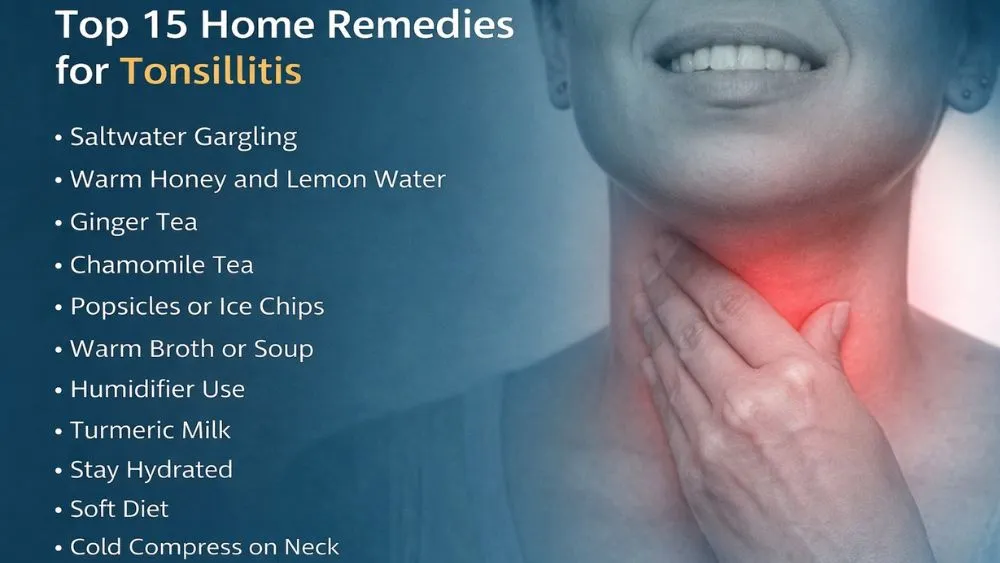
These 15 home remedies for tonsillitis are organized by how they work. Some target pain. Some fight inflammation. Some just keep things comfortable while the body heals.
1. Saltwater Gargling
Dissolve half a teaspoon of salt in a glass of warm water. Gargle for 30 seconds, spit, repeat. Do this 3 to 4 times a day. Salt draws fluid out of swollen tissue through osmosis, which reduces swelling. It also creates a mildly hostile environment for bacteria. This is one of the oldest and most validated home remedies for tonsillitis, and it works.
2. Warm Honey and Lemon Water
Honey coats the throat and reduces irritation. It contains hydrogen peroxide as a natural byproduct, which gives it mild antibacterial action. Lemon adds vitamin C. Combine one tablespoon of raw honey and juice from half a lemon in warm water. Drink two to three times daily. Do not give honey to children under 1 year old, there is a risk of botulism.
3. Ginger Tea
Fresh ginger contains gingerols and shogaols, compounds that reduce inflammatory responses in the throat tissue. Slice a thumb-sized piece of fresh ginger, boil for 10 minutes, add honey. Drink warm. Ginger tea works better fresh. Bottled ginger drinks have too little of the active compounds to make a difference.
4. Chamomile Tea
Chamomile relaxes the muscles around the throat and has mild anti-inflammatory properties. It also helps with sleep, which matters because the body repairs most actively during deep sleep. Two cups a day is enough. Chamomile is safe for children over 5 years old in small amounts.
5. Popsicles or Ice Chips
Cold numbs the throat. This is especially useful for children who resist other remedies. The cold reduces blood flow to the inflamed area temporarily, which brings down swelling. Plain popsicles without citric acid are better choices. Avoid orange or lemon-based popsicles because the acid irritates already raw tonsil tissue.
6. Warm Broth or Soup
Warm chicken or vegetable broth keeps the throat lubricated, delivers sodium to maintain hydration, and goes down without causing pain. Eating is hard with tonsillitis. Broth solves the calorie and fluid problem at once. It is one of the most practical home remedies for tonsillitis for both adults and kids.
7. Humidifier Use
Dry air makes throat pain worse. A cool-mist humidifier in the bedroom keeps moisture in the air, which prevents the throat lining from drying out overnight. Clean the humidifier every 2 days. A dirty humidifier grows mold and pushes it into the air, making respiratory symptoms worse instead of better.
8. Rest and Voice Rest
The immune system fights infection most effectively when the body is not under physical strain. Rest is not optional. It is treatment. Voice rest matters too. Talking strains already inflamed throat muscles and slows tissue recovery. This is especially relevant for teachers, singers, and anyone who speaks professionally.
9. Stay Hydrated
Dehydration thickens mucus and dries out the throat lining, both of which worsen pain. Aim for 8 to 10 glasses of water daily. Warm water is more soothing than cold water for most adults. Children need less, roughly 5 to 6 glasses, depending on age. Hydration is not exciting advice, but it is one of the most effective home remedies for tonsillitis in practice.
10. Medicated Lozenges
Lozenges containing benzocaine or menthol temporarily numb the throat and reduce the pain of swallowing. They do not treat the infection. They buy 15 to 30 minutes of comfortable eating or drinking. Do not give benzocaine lozenges to children under 2 years old. Benzocaine can cause methemoglobinemia, a rare but serious blood disorder, in very young children.
11. Over-the-Counter Pain Relievers
Paracetamol (acetaminophen) reduces fever and throat pain. Ibuprofen reduces inflammation directly. Both work. Ibuprofen works slightly better for tonsillitis-related swelling because it targets the inflammatory process. Take as directed on the label. Do not give aspirin to children under 16 because of the risk of Reye’s syndrome, a rare but dangerous liver and brain condition.
12. Avoid Irritants
Cigarette smoke, whether yours or secondhand, inflames an already raw throat. Pollution, dust, and dry heated air do the same. Stay away from smoky environments until the tonsils are fully healed. For smokers, tonsillitis is the body telling you directly how much smoke damages throat tissue.
13. Soft Diet
Swallowing hard or scratchy food tears at inflamed tonsil tissue. Stick to soft foods that slide down without friction. Mashed potatoes, oatmeal, scrambled eggs, and smooth yogurt are good options. This is practical management, not a cure, but it stops unnecessary pain at every meal.
14. Turmeric Milk (Limited Evidence)
Turmeric contains curcumin, which reduces inflammation at a molecular level. The evidence for turmeric milk specifically treating tonsillitis is thin. But as a warm drink before bed, it combines the soothing effect of warm milk with whatever anti-inflammatory benefit curcumin provides. One glass per night is reasonable. Do not expect dramatic results.
15. Cold Compress on Neck
A cold pack or a cloth soaked in cold water placed on the outside of the neck reduces swelling in the lymph nodes under the jaw. These nodes swell during tonsillitis because they are processing the infection. External cooling helps with the ache and visible swelling. Apply for 10 minutes at a time, not longer.
What to Eat With Tonsillitis
What to eat with tonsillitis is mostly about texture, not nutrition. The throat is too inflamed for anything rough or sharp.
Best options:
- Mashed potatoes: Soft, filling, easy to swallow
- Oatmeal: Smooth when cooked well, provides sustained energy
- Yogurt: Soft, cool, and contains probiotics that support immune response
- Scrambled eggs: Soft protein that does not require chewing
- Smooth soups: Warmth soothes, liquid format prevents friction
- Ripe banana: Soft enough to swallow with minimal chewing
Avoid:
- Toast, crackers, chips: Scratchy edges drag against inflamed tissue
- Spicy food: Capsaicin increases throat irritation
- Citrus fruits: High acid content stings raw tonsils
- Very hot beverages: Heat increases blood flow to the area, worsening swelling
The goal for what to eat with tonsillitis is to maintain calorie intake without adding pain at mealtimes.
What Drink With Tonsillitis
What you drink with tonsillitis matters as much as food. The wrong drink makes every sip painful.
Recommended:
- Warm water with honey: Coats and soothes
- Herbal teas (chamomile, ginger, licorice root): Anti-inflammatory warmth
- Warm broth: Hydration plus electrolytes
- Diluted fruit juice: Hydration without high acid concentration
- Coconut water: Natural electrolytes, neutral pH, easy on the throat
Avoid:
- Carbonated drinks: Fizz irritates inflamed mucous membranes
- Alcohol: Dehydrates and inflames tissue further
- Excess caffeine: Dehydrating and stimulates acid production
- Cold citrus drinks: Temperature and acid both cause pain
Warm licorice root tea: Licorice root contains glycyrrhizin, which has documented antiviral properties and coats throat tissue. It is particularly good to drink with tonsillitis in viral cases. Avoid it in people with high blood pressure.
Bacterial Tonsillitis Home Care
Bacterial tonsillitis home care is about managing symptoms while antibiotics do the heavy lifting. Home remedies help. They do not cure strep.
If a doctor diagnoses strep throat:
- Complete the full antibiotic course, usually 10 days of penicillin or amoxicillin. Stopping early because you feel better is how antibiotic resistance develops.
- Replace your toothbrush 48 hours after starting antibiotics. Bacteria live on the bristles and reinfect you.
- Stay home from school or work for at least 24 hours after starting antibiotics. Strep spreads through droplets and saliva.
- Wash your hands frequently and avoid sharing utensils or cups.
Bacterial tonsillitis home care without antibiotics is not enough. Untreated strep can lead to rheumatic fever, which permanently damages heart valves. That is not a small risk to take with natural remedies alone.
How Long Does Tonsillitis Last?
- Viral tonsillitis: 5 to 7 days with home care.
- Bacterial tonsillitis with antibiotics: Fever drops in 24 to 48 hours. Full recovery in 3 to 5 days.
- Recurring tonsillitis: More than 7 episodes per year, or 5 episodes per year for 2 consecutive years, qualify for tonsillectomy evaluation by an ENT specialist.
The American Academy of Otolaryngology defines “recurrent” tonsillitis as 7 or more infections in one year. If you hit that number, you need medical treatment.
When to See a Doctor Immediately
Stop using home remedies for tonsillitis and get medical care right away if:
- Difficulty breathing or noisy breathing
- Trouble swallowing saliva (drooling in a child is a warning sign)
- Fever above 102°F (39°C)
- Severe pain on one side only (this may be a peritonsillar abscess, a pocket of pus next to the tonsil)
- Visible swelling on one side of the neck
- Symptoms that are still getting worse after 10 days
Peritonsillar abscess needs drainage. It does not respond to home remedies for tonsillitis or even standard antibiotics alone. Untreated strep can develop into rheumatic fever within 2 to 4 weeks of the original infection.
FAQs
Can tonsillitis go away without antibiotics?
Yes, but only if it is viral. Viral tonsillitis clears on its own in 5 to 7 days. Bacterial tonsillitis, specifically strep, does not resolve reliably without antibiotics. Untreated strep carries a real risk of rheumatic fever, which damages heart valves permanently, so skipping antibiotics for confirmed bacterial cases is not safe.
Are cold foods good for tonsillitis?
Yes, for pain relief only. Cold foods like popsicles and ice cream numb the throat temporarily by reducing nerve sensitivity and constricting blood vessels. The relief lasts 10 to 20 minutes. Avoid citrus-based cold items because the acid stings. Plain dairy-based or water-based cold foods work best.
Is honey effective for tonsillitis?
Yes, for symptom relief. Raw honey contains hydrogen peroxide and methylglyoxal, both of which have antimicrobial properties. A 2021 review in Antibiotics journal confirmed honey’s effectiveness against Streptococcus bacteria in lab settings. It does not replace antibiotics, but one tablespoon before meals genuinely reduces throat soreness.
Can I exercise with tonsillitis?
No. Exercise raises core body temperature and redirects blood flow away from immune function. Physical strain also increases cortisol, which suppresses the immune response directly. Rest until fever is gone and swallowing is pain-free. Returning to exercise too early extends recovery time by 2 to 4 additional days in most cases.
How do I know if it’s bacterial?
The Centor criteria are four clinical signs doctors use: fever above 100.4°F, swollen lymph nodes in the neck, white patches on the tonsils, and absence of cough. Three or more of these signs point strongly to bacterial tonsillitis. A rapid strep test at a clinic confirms it in 5 minutes. Do not self-diagnose and self-prescribe antibiotics.
Can tonsillitis recur?
Yes. Some people get recurrent tonsillitis, defined as 7 or more infections in one year. Recurrent cases often involve the same bacteria colonizing the tonsil tissue repeatedly. At that point, home remedies for tonsillitis are a temporary fix. An ENT evaluation for tonsillectomy becomes the appropriate next step







Leave a Comment