

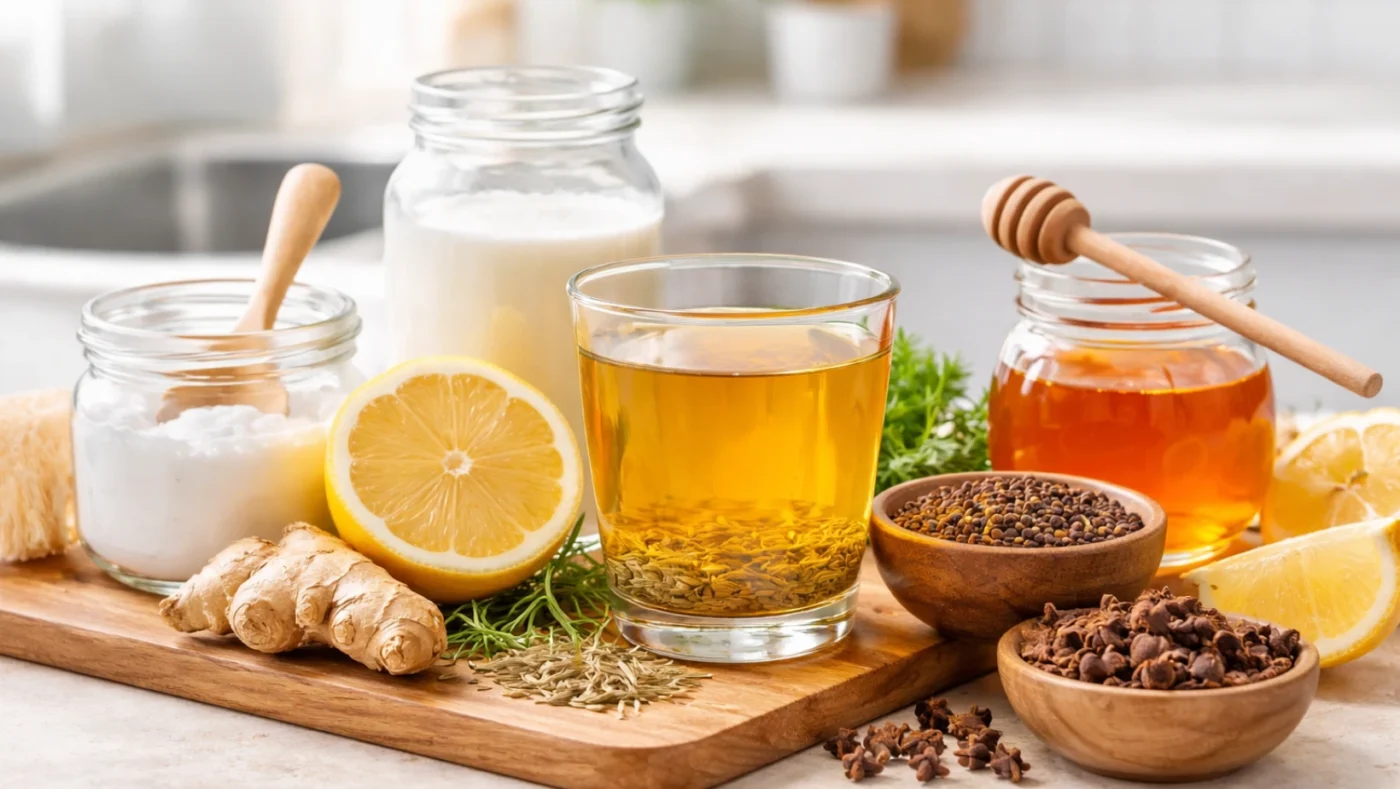

Hyperacidity happens when your stomach produces more acid than it needs. The result is burning in the chest, bloating, sour burps, and sometimes pain right below the ribs.
Hyperacidity responds well to home care when the cause is dietary or stress-related. Cold milk neutralizes. Ginger reduces inflammation. Posture keeps acid down. Small meals prevent overflow.
But none of these work if the root cause is H. pylori, GERD, or a structural problem with the lower esophageal sphincter. Use a home remedy for hyperacidity for immediate relief.
If symptoms return every week or last beyond 2 weeks, a proper diagnosis changes everything. Treating GERD the same way you treat one-time spicy-food acidity is the most common mistake people make.
How to Calm Severe Acidity Without Medication
How to calm severe acidity without medication starts with three immediate steps: Drink cool water or coconut water, eat a banana, and stay upright. Do not lie down. Sip chamomile or ginger tea slowly. Avoid trigger foods for the next 24 hours.
If symptoms stay for more than 2 to 3 days or come back every week, see a doctor. Frequent acidity that does not respond to home care points to GERD, H. pylori infection, or a peptic ulcer, none of which resolve on their own.
15 Natural Home Remedies for Hyperacidity
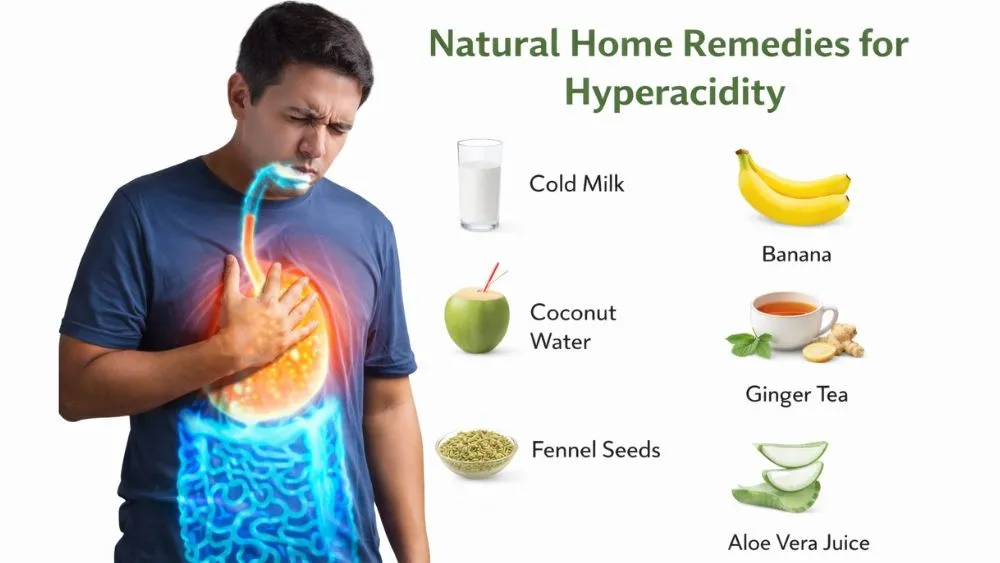
The 15 natural home remedies for hyperacidity below are ranked from most immediate relief to long-term supportive care.
1. Cold Milk
Cold milk neutralizes stomach acid fast. The calcium in milk acts as a temporary antacid. One glass of cold, plain, low-fat milk works best. Avoid flavored milk or full-fat milk because fat stimulates more acid production.
2. Banana
Bananas coat the stomach lining with a protective layer of mucus. They also contain potassium, which helps control acid levels. Eat one ripe banana on an empty stomach or right when the burning starts.
3. Coconut Water
Coconut water has a natural pH of around 5.5, which is slightly acidic, but its electrolyte content, especially potassium and magnesium, soothes the stomach lining and reduces irritation. It works better than plain water for immediate relief. One glass, sipped slowly, is enough.
4. Ginger Tea
Ginger reduces inflammation in the stomach lining. It also speeds up gastric emptying, meaning food moves out of the stomach faster, which reduces acid pooling. Boil one small slice of fresh ginger in water for 5 minutes. Strain and sip warm, not hot. This is one of the most effective home remedy for hyperacidity options for post-meal discomfort.
5. Fennel Seeds (Saunf)
Fennel seeds relax the muscles of the digestive tract. This reduces spasms and gas that often come with acidity. Chew half a teaspoon of fennel seeds after meals, or boil them in water and drink the strained liquid. Most Indian households use this daily. It works.
6. Aloe Vera Juice
Aloe vera gel contains compounds called anthraquinones that reduce stomach acid secretion. It also soothes an irritated esophagus (the tube connecting your throat to your stomach). Drink 20 ml of pure aloe vera juice 20 minutes before meals. Avoid aloe vera products with added sugar or preservatives.
7. Chamomile Tea
Chamomile reduces muscle spasms in the digestive tract and calms overactive acid secretion. Studies on chamomile extract show it reduces gastric acid levels when consumed regularly. One cup before bedtime is particularly useful for people with nighttime acid reflux.
8. Tulsi Leaves
Tulsi (holy basil) reduces the secretion of stomach acid and increases mucus production in the stomach. More mucus means better protection of the stomach wall. Chew 4 to 5 fresh tulsi leaves on an empty stomach. Do not boil them for long because heat destroys some of the active compounds.
9. Buttermilk
Buttermilk contains lactic acid, not the kind that causes problems, but the kind that balances stomach pH and supports good gut bacteria. A glass of plain buttermilk with a pinch of cumin powder after lunch is a traditional South Indian practice that reduces post-meal acidity.
10. Cumin Water
Cumin seeds stimulate the production of digestive enzymes and reduce acid buildup. Boil one teaspoon of cumin seeds in two cups of water. Strain and drink after cooling slightly. Cumin water also reduces bloating, which often comes with hyperacidity.
11. Licorice (DGL)
Deglycyrrhizinated licorice (DGL) is a processed form of licorice root that protects the stomach lining. It stimulates mucus secretion and reduces acid damage to the esophagus. DGL chewable tablets are widely available. This is not regular licorice candy. Regular licorice can raise blood pressure. DGL does not have that risk.
12. Apple Cider Vinegar (Diluted)
Apple cider vinegar (ACV) works for a specific type of acidity: low stomach acid that causes food to ferment and produce gas, which then mimics hyperacidity symptoms. One teaspoon of raw ACV in a glass of warm water before meals helps in those cases. Do not use this if you have confirmed high acid production or an ulcer.
13. Baking Soda (Occasional Use Only)
Half a teaspoon of baking soda in a glass of water neutralizes acid within minutes. But this is a once-in-a-while option only. Baking soda contains sodium. Regular use raises blood pressure and disrupts stomach pH balance long-term. Use it when you have no other option and the burning is severe. Not daily.
14. Eat Small, Frequent Meals
Large meals force the stomach to produce large amounts of acid at once. Eating five to six small meals across the day keeps acid production steady and low. This is a lifestyle fix, not a quick remedy, but it prevents acid buildup better than any drink.
15. Stay Upright After Eating
Gravity keeps stomach acid in the stomach. The moment you lie down after eating, acid moves toward the esophagus. Stay upright for at least 2 hours after meals. A gentle walk for 15 to 20 minutes after eating speeds up digestion and reduces acid pooling.
Best Drinks to Reduce Hyperacidity
The best drinks to reduce hyperacidity work by either neutralizing acid, protecting the stomach lining, or slowing acid production.
Drink these:
- Coconut water (electrolyte balance)
- Ginger tea (reduces inflammation)
- Chamomile tea (calms acid secretion)
- Fennel water (relaxes digestive muscles)
- Lemon water in mild cases only (despite being acidic, lemon triggers an alkaline response after digestion)
Avoid these completely:
- Coffee (triggers acid secretion and relaxes the lower esophageal sphincter)
- Soda and carbonated drinks (the bubbles expand in the stomach and push acid upward)
- Alcohol (directly damages the stomach lining and increases acid production)
- Citrus juices if symptoms are severe (orange juice and tomato juice worsen an already irritated esophagus)
Hyperacidity Due to Stress: Natural Treatment
Hyperacidity due to stress natural treatment works differently than food-based acidity because the cause is hormonal, not dietary.
When you are stressed, your brain signals the adrenal glands to release cortisol. Cortisol increases stomach acid secretion. It also slows digestion, so food sits in the stomach longer and ferments. This double effect is why stress-induced acidity feels more persistent and harder to manage with food alone.
Natural management:
- Deep breathing for 5 minutes before meals lowers cortisol enough to reduce acid secretion
- Yoga, specifically poses like Vajrasana (sitting on heels after meals), supports digestion and reduces stress hormones
- Mindful eating: eating slowly and without screens reduces the “fight or flight” response during meals
- Adequate sleep: less than 6 hours of sleep raises cortisol levels the next day, which worsens acidity
- Reduce caffeine: cortisol and caffeine together spike acid more than either alone
A home remedy for hyperacidity from stress works best when combined with stress reduction, not just stomach-soothing foods.
Hyperacidity After Spicy Food: Home Cure
Hyperacidity after spicy food home cures need to happen fast. Capsaicin in chili irritates the stomach lining and triggers a rapid acid spike.
Immediate steps:
- Drink one glass of cold milk within 10 minutes of noticing symptoms
- Eat one banana to coat the stomach lining
- Stay upright, do not sit bent or lie down
- Sip fennel water or ginger tea slowly over the next 30 minutes
- Avoid eating anything else spicy for the next 24 hours
Do not drink water rapidly. Gulping water dilutes stomach acid momentarily, but then the stomach compensates by producing more. Sipping is better.
Foods to Eat When You Have Hyperacidity
- Oatmeal: absorbs excess acid and keeps you full without triggering more
- Steamed vegetables: broccoli, carrots, and zucchini are low-acid and easy to digest
- Brown rice: complex carbs digest slowly and do not spike acid
- Non-citrus fruits: banana, papaya, melons, and pear
- Yogurt with live cultures: supports gut bacteria that regulate acid balance
Foods to Avoid
- Fried and oily foods (slow digestion, increase acid)
- Spicy foods with chili or black pepper in excess
- Carbonated drinks
- Chocolate (relaxes the valve between the esophagus and stomach, letting acid escape upward)
- Mint in large amounts (same valve-relaxing effect as chocolate, though mild)
- More than 2 cups of coffee per day
When Hyperacidity May Be Something More Serious
Symptoms lasting more than 2 weeks need medical attention. A home remedy for hyperacidity stops being enough when:
- You have difficulty swallowing solid or liquid food
- You lost weight without trying
- Vomiting happens repeatedly or contains blood
- Acid symptoms wake you up from sleep regularly
- Chest pain comes with acidity (always rule out cardiac causes first)
These symptoms point toward GERD (Gastroesophageal Reflux Disease), peptic ulcer disease, or H. pylori bacterial infection. H. pylori affects roughly 44% of the global population and causes chronic acid symptoms that do not respond to any home care.
FAQs
What is the fastest home remedy for hyperacidity?
Cold milk works within 5 minutes because calcium directly neutralizes hydrochloric acid in the stomach. A banana works within 10 minutes by coating the stomach wall. Both together give faster relief than either alone. This home remedy for hyperacidity requires no preparation.
Can stress cause hyperacidity?
Yes. Stress raises cortisol, which directly increases stomach acid secretion. Cortisol also slows gastric emptying, so food ferments and produces extra gas. People under chronic stress produce 30 to 40% more stomach acid than those who are not. Stress management reduces acid better than dietary changes alone in these cases.
Is baking soda safe for acidity?
Baking soda is safe for occasional use only. One dose is half a teaspoon in a glass of water. Using it more than three times a week raises sodium levels, disrupts stomach pH balance, and causes rebound acidity where the stomach overproduces acid after the baking soda wears off.
How long does hyperacidity last?
Acidity from a single trigger (spicy meal, stress, alcohol) clears in 2 to 4 hours with a proper home remedy for hyperacidity. Acidity from a stomach infection or GERD lasts weeks to months without treatment. If symptoms persist beyond 3 days despite home care, that is not simple hyperacidity.
Can hyperacidity damage the stomach?
Yes. Chronic untreated hyperacidity erodes the stomach lining over months and causes gastritis or peptic ulcers. Acid that reaches the esophagus repeatedly causes Barrett’s esophagus, a condition that increases esophageal cancer risk. This is why frequent acidity needs diagnosis, not just a home remedy for hyperacidity.









Leave a Comment