

An esthetician’s work centers on skin tightening, skin safety, and visible skin improvement. You rely on an esthetician when acne persists, the texture feels rough, or aging signs appear early.
An esthetician focuses only on skin, and this role does not cover hair or nails. Training covers skin anatomy (skin structure), infection control, and product chemistry. Consistent, noninvasive skin care improves barrier function (skin’s protective layer) and reduces inflammation when done correctly.
12 Are the Duties of an Esthetician?
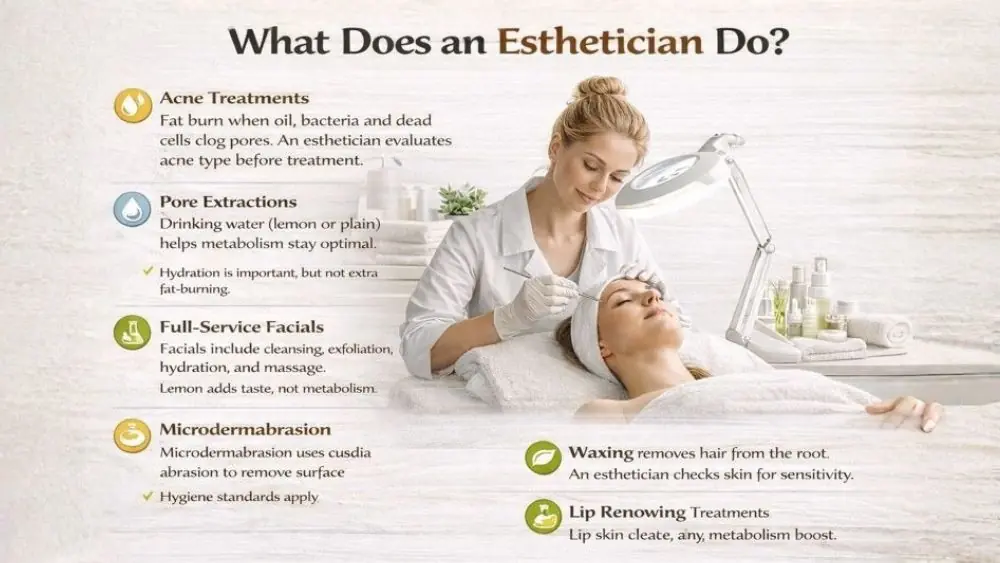
An esthetician performs skin-focused services that protect the skin barrier, control inflammation, and improve surface texture. These duties stay within state law and avoid medical diagnosis or prescription treatment. The work relies on skin biology, sanitation standards, and correct product use to prevent damage.
Acne Treatments
Acne forms when oil, bacteria, and dead cells clog pores. An esthetician evaluates acne type before treatment. Comedonal acne means clogged pores. Inflammatory acne means redness and swelling.
Gentle cleansing and controlled exfoliation help reduce lesion count. You should know evidence remains limited for severe cystic acne, which needs a dermatologist. An esthetician supports care but does not replace medical treatment.
Pore Extractions
Extractions remove trapped oil and debris. A skilled esthetician uses sterile tools and light pressure. CDC-aligned infection control guidance stresses tool sanitation to prevent skin infections. Poor extractions increase scarring risk. This service works best after proper skin softening.
Full-Service Facials
Facials include cleansing, exfoliation, hydration, and massage. An esthetician adjusts products based on skin type. Barrier-safe moisturizers reduce dryness and irritation. Facials support skin comfort rather than instant transformation.
Wraps, Scrubs, and Peels
Body scrubs remove surface dead cells. Wraps improve moisture retention. An esthetician avoids broken skin. Chemical peels vary in strength; light peels improve texture with low risk when used correctly. Evidence remains limited for deep peels outside medical settings.
Microdermabrasion
Microdermabrasion uses controlled abrasion to remove surface cells. An esthetician selects suction strength carefully. Short-term brightness benefits with minimal downtime. You should avoid this service with active rosacea (chronic facial redness).
Laser Treatments
Laser services depend on state rules. Some states require medical supervision. An esthetician with advanced training may assist. Lasers alter hair follicles and pigment, but results vary by skin tone. Risk rises without proper training.
Waxing
Waxing removes hair from the root. An esthetician checks skin for sensitivity. Hygiene standards apply due to open follicles after waxing. Proper aftercare lowers infection risk.
Lash Extensions, Lifts, and Tints
Eye-area services require caution. An esthetician uses eye-safe products only. Ophthalmology safety reviews warn that improper adhesives irritate. Patch testing reduces risk.
Makeup Application
Makeup application starts with skin prep. An esthetician selects non-comedogenic products, meaning they do not clog pores. This method supports this approach for acne-prone skin.
Facial Peels
Facial peels resurface skin using acids. Strength depends on training. An esthetician stays within licensed limits. Evidence supports mild peels for tone improvement. Deeper peels require medical care.
Hair Removal
Hair removal includes waxing and advanced methods. An esthetician avoids inflamed skin. Proper technique prevents burns and ingrown hairs.
Lip Renewing Treatments
Lip skin lacks oil glands. An esthetician uses mild exfoliation and occlusives (moisture-sealing agents); petrolatum-based products reduce water loss effectively.
Where Do Estheticians Work?
An esthetician works in environments that range from relaxation-based settings to medically supervised clinics. The workplace affects service limits, client type, and daily pace. Hygiene rules and licensing laws apply in every setting, regardless of location or job title.
Spas and Salons
Spas focus on relaxation and maintenance care. An esthetician provides facials, waxing, and body services. Client comfort and hygiene matter most. These settings suit entry-level professionals.
Medical Spas and Dermatology Clinics
Medical spas operate under clinical oversight. An esthetician may assist with acne programs and aging treatments combined care for chronic skin issues. Evidence remains limited for cosmetic outcomes without medical input.
Wellness Centers and Resorts
Resorts serve short-term guests. An esthetician delivers results that feel immediate, like hydration and soothing care. Treatments remain surface-level for safety.
Freelance and Self-Employment
Independent work requires business skills. An esthetician handles scheduling, sanitation, and client education. Regulations still apply outside salons.
Retail and Skincare Brands
Brands hire skin experts for education and sales. An esthetician explains ingredient function and skin reactions. This role relies on science-based knowledge, not sales claims.
Esthetician vs. Cosmetologist
An esthetician specializes in skin health, while a cosmetologist divides training across hair, nails, and basic skin care. The difference matters because advanced skin treatments require focused education. Mixing these roles can lead to unsafe services and legal issues.
Difference in Scope of Practice
An esthetician works only on skin. This includes the face and body. The focus stays on skin health, texture, and function. A cosmetologist works on hair, nails, and skin at a surface level. The responsibilities of a licensed esthetician go deeper into skin analysis and corrective care. A cosmetologist spreads time across many beauty services, which limits depth in skin science.
Training and Licensing Differences
Training hours differ widely. An esthetician program focuses on skin anatomy (skin layers), ingredient safety, and infection control. A cosmetologist program spends many hours on hair cutting, coloring, and nail care because focused skin training improves treatment accuracy. This explains why an esthetician handles complex skin concerns better.
Services Each Professional Can Perform
An esthetician performs advanced facials, extractions, peels, and skin treatments allowed by state law. A cosmetologist performs hair services, manicures, pedicures, and basic skin care. Some overlap exists, but advanced skin work belongs to the treatments and services of the esthetician category.
Career Path and Job Focus Comparison
If you enjoy skin science, the esthetician path fits better. If you enjoy variety across beauty services, a cosmetologist path suits you. Long-term growth depends on specialization. Skin-focused careers often move toward medical settings.
How to Become an Esthetician
Becoming an esthetician requires formal schooling, hands-on training, and state licensure. Education focuses on skin anatomy, infection control, and treatment safety. Skipping training steps limits legal practice and increases risk to clients.
Required Education and Training Hours
You must attend a state-approved school. Training hours range from 300 to over 1,500, depending on location. An esthetician studies skin disorders, sanitation, and product chemistry because proper training reduces treatment complications.
Licensing and Certification Process
After graduation, you apply for licensure. A licensed esthetician passes written and practical exams. Exams test skin knowledge and safe technique. Licenses require renewal. Continuing education keeps skills current.
State Exam Requirements
State exams cover sanitation, skin analysis, and treatment steps. Practical exams test real technique. An esthetician must demonstrate control and hygiene. These exams protect public health.
Entry-Level Job and Experience Building
Most graduates start with basic services. An esthetician gains speed and confidence through repetition. Client trust grows with consistent results. Experience matters more than quick promotion.
Career Growth and Opportunities for Estheticians
Career growth for an esthetician depends on continued education and specialization. Advanced roles allow deeper treatments, teaching, or clinical support work. Income and responsibility increase with skill level, not just years of experience.
Advanced Esthetician or Master Esthetician Roles
Some states offer advanced licenses. An esthetician with this credential performs deeper treatments. Extra education applies. Evidence from dermatology training programs shows that advanced skills improve treatment safety.
Specialization in Medical or Clinical Esthetics
Medical esthetics focuses on acne, pigmentation, and aging skin. An esthetician often works with dermatologists because combined care improves outcomes for chronic skin issues. Evidence remains limited for cosmetic-only care in severe cases.
Teaching and Training Opportunities
Experienced professionals teach at schools. An esthetician explains theory and practice. Teaching requires instructor licensing. This role suits those who enjoy education.
Starting Your Own Practice
Owning a practice requires business planning. An esthetician manages clients, supplies, and compliance. Success depends on skill and reputation. Regulations still apply.
Who Should Consider a Career as an Esthetician
This career suits people who value precision, hygiene, and long-term skin improvement. An esthetician must enjoy close client interaction and ongoing learning. The role rewards consistency and attention to detail more than creativity alone.
People Interested in Skincare and Beauty
You should enjoy learning about skin. An esthetician studies ingredients and reactions. Curiosity supports long-term success.
Those Who Enjoy Helping Others
Clients seek comfort and improvement. An esthetician supports confidence through safe care. Results matter emotionally to clients.
Individuals Seeking Flexible Career Options
Schedules vary by setting. An esthetician may work part-time or full-time. Flexibility attracts many professionals.
FAQs
What exactly does an esthetician do daily?
An esthetician performs treatments, cleans tools, reviews skin progress, and educates clients. Daily work balances hands-on care with safety checks and proper sanitation to prevent infection.
Are estheticians considered medical professionals?
An esthetician is not a medical professional. The role focuses on cosmetic skin care. Medical diagnosis and prescriptions remain the responsibility of licensed healthcare providers.
What treatments can a licensed esthetician perform?
A licensed esthetician performs facials, waxing, extractions, peels, and approved device treatments. Services depend on state law and additional training requirements.
Do estheticians need a license?
Yes. An esthetician must hold a valid state license. Licensing protects clients by enforcing training standards, sanitation rules, and ethical practice.
Can estheticians treat acne and aging skin?
An esthetician supports acne and aging care through safe treatments and product guidance. Severe conditions need a dermatologist’s care. Evidence supports combined approaches for better results.
Is being an esthetician a good career choice?
This career suits those who enjoy skin care, client interaction, and learning. Income and growth depend on skill, setting, and continued education.
How long does it take to become an esthetician?
Training usually takes several months to one year. Program length depends on state requirements and school schedules.
Can estheticians work in dermatology clinics?
Yes. An esthetician may work in dermatology clinics under medical oversight. Duties focus on supportive skin treatments and patient education.












Leave a Comment