


The benefits of walnut oil start with its healthy fat content and reach your heart, blood vessels, skin, and brain. Walnut oil is pressed from walnuts and is rich in unsaturated fats, including omega-3 fatty acids (healthy fats that support your heart and brain).
One tablespoon gives about 1.4 grams of alpha linolenic acid, a plant based omega 3 that your body cannot make on its own.
Research on whole walnuts links regular intake with lower LDL cholesterol, better blood fat patterns, and lower heart disease risk. Because walnut oil keeps many of the same fats, you can expect related walnut oil health benefits , although studies on the oil alone are still fewer. You should see the current benefits of walnut oil as support for overall health, not as a standalone treatment.
Health groups such as WHO and major heart foundations say that you should replace saturated fats and trans fats with unsaturated fats from plant oils and nuts. Walnut oil fits this advice well when you use it in place of butter or hard frying fats and keep total fat intake within suggested limits.
Walnut Oil Health Benefits
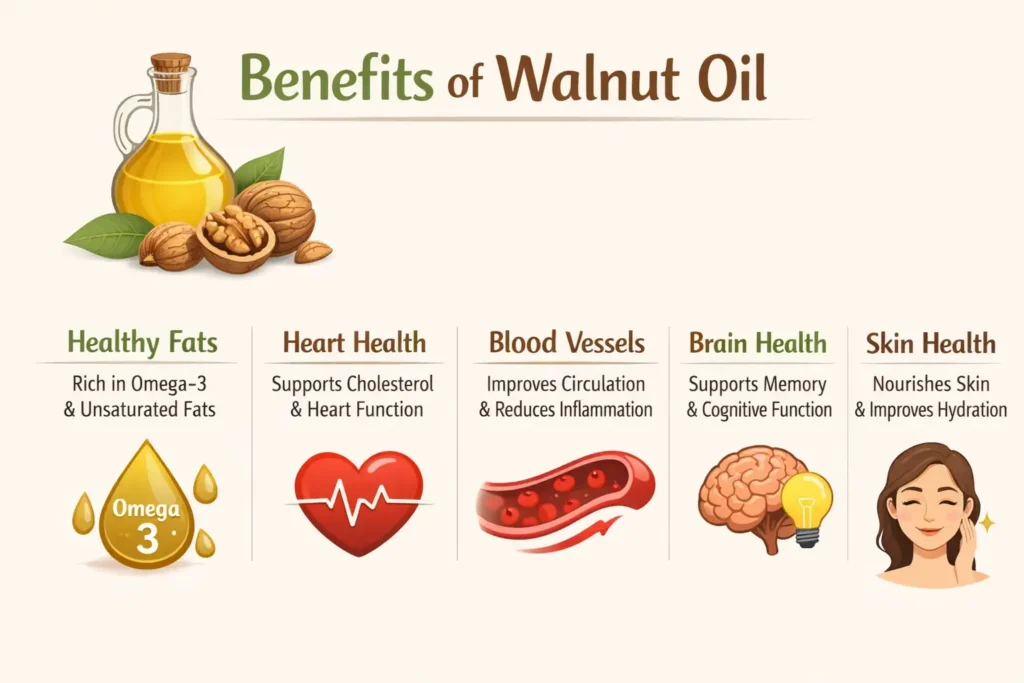
When you use walnut oil in smart amounts, the benefits of walnut oil touch several key parts of your body. These walnut oil health benefits come mainly from its unsaturated fats, its omega-3 ALA, and its natural antioxidant content.
Rich In Omega-3 Fatty Acids
Walnut oil is one of the plant oils with meaningful ALA omega-3 content. ALA (alpha-linolenic acid) is an essential fatty acid, which means your body must get it from food instead of making it itself.
Each spoon of walnut oil adds ALA without extra sugar or protein. This supports walnut oil omega-3 benefits , such as better fat balance in your blood and support for cell membranes. It can help if you do not eat fish but still want some omega-3-related benefits of walnut oil .
Supports Heart And Artery Health
Trials show that walnuts can lower LDL cholesterol and improve overall lipid profiles when they are part of a heart-friendly eating plan. Lower LDL means less cholesterol available to build plaque inside arteries.
Because walnut oil carries the same types of unsaturated fats, experts think many heart-related benefits of walnut oil come from swapping it in for butter or ghee, not from adding it on top of your current fat intake. This matches guidance that unsaturated fats, especially polyunsaturated fats, are better choices for heart health.
Helps Lower Inflammation
Inflammation is your body’s normal response to injury or infection, but long-term low-level inflammation can contribute to heart disease and other long-term problems. Research on unsaturated fats and plant-based ALA suggests that higher intakes can ease some blood markers of inflammation, although results differ between studies.
Walnut oil contains these fats, so walnut oil anti-inflammatory benefits are likely, yet direct oil trials are limited. It is safer to see walnut oil as one part of an overall anti-inflammatory eating pattern, together with fruits, vegetables, whole grains, and regular movement.
Improves Blood Vessel Function
Healthy arteries can relax and widen when your muscles need more blood, for example during brisk walking. Diets that include walnuts have shown better vessel flexibility and improved blood flow-related markers.
By replacing solid animal fats with walnut oil in your meals, you may support similar benefits of walnut oil for your blood vessels. Still, most data come from whole nuts, so the exact effect of the oil alone remains less clear.
Enhances Antioxidant Levels
Walnut oil offers vitamin E and other antioxidant compounds. Antioxidants help protect cells from free radicals, which are unstable molecules formed during normal metabolism or from pollution and smoking.
The antioxidant part of the benefits of walnut oil may support long-term skin and vessel health. Some small studies suggest that diets rich in walnuts improve antioxidant status in the blood, although separate data for walnut oil are smaller and still growing.
May Support Brain Function
Your brain tissue is rich in fat and depends on healthy fats and steady blood flow. Omega-3 ALA, vitamin E, and polyphenols from walnuts have been linked with better brain aging in some population studies, but these results do not prove direct cause and effect.
You can see brain-related benefits of walnut oil as possible background support. They do not replace medical care. If you notice quick changes in memory, mood, or thinking, you should talk with a doctor, since many other medical conditions can play a role.
Walnut Oil Nutritional Benefits
The benefits of walnut oil also come from its overall nutrient profile. When you understand the walnut oil nutritional benefits , you can decide where it fits in your daily eating pattern instead of simply pouring more oil on your plate.
What Makes Walnut Oil Nutrient Dense?
Walnut oil is almost pure fat, so it is high in calories, yet most of this fat is unsaturated and includes both omega-3 and omega-6 fatty acids. Health bodies suggest that these fats are better for your heart than saturated fat, as long as your total fat intake stays moderate.
This mix is a key part of the walnut oil nutritional benefits and helps explain why many dietitians talk about the benefits of walnut oil instead of treating it as just another cooking fat.
Vitamin And Mineral Profile
Walnut oil gives you vitamin E, which helps protect cell membranes, including the outer layer of your skin and the lining of blood vessels. Some cold-pressed products may also keep small amounts of vitamin K and other fat-soluble plant compounds from the nut.
You will not get the fiber or minerals, such as magnesium, that sit in the walnut itself. For full walnut oil health benefits , it often makes sense to use both walnut oil and whole walnuts in your week, so you enjoy the different benefits of walnut oil and the extra nutrients from the nut.
Polyphenols And Plant Compounds
Cold-pressed walnut oil keeps small amounts of polyphenols. Polyphenols are natural plant chemicals that help lower oxidative stress, which means they help reduce cell damage from free radicals. Studies on walnuts show strong antioxidant activity, but oil studies are fewer, so some information is still limited. You can still expect mild support because these plant compounds add to the benefits of walnut oil and help support overall walnut oil nutritional benefits .
Comparison: Walnut Oil vs Whole Walnuts
Whole walnuts give fiber, protein, and minerals. Walnut oil gives healthy fats without the extra nutrients from the solid nut. If you only need omega 3 ALA, oil works well. If you want minerals like magnesium, manganese, and copper, whole nuts work better.
How Walnut Oil Fits Into A Balanced Diet
You can mix walnut oil into cold cereal, drizzle it over roasted vegetables, or stir it into yogurt. These simple steps add ALA, vitamin E, and plant compounds without changing your meals too much.
You should still follow general fat intake advice from health agencies because too much oil adds calories. When used wisely, the mix of fats explains why walnut oil nutritional benefits fit into heart smart eating patterns.
Walnut Oil For Skin
Many people also use walnut oil for skin because of its softness and mild absorption. The fatty acids and vitamin E support the outer skin layer, called the stratum corneum, helping it stay smooth and flexible.
Moisturizing Benefits For Dry Skin
The oil helps slow water loss from the skin. This helps dry skin, especially around elbows, knees, and hands. When your skin holds more water, you notice smoother texture. This moisture support is one of the simple benefits of walnut oil that you can see quickly.
Anti-Aging Effects On Fine Lines
Dry skin can make fine lines look deeper. Omega-3 fats and vitamin E help soften the look of these lines by supporting the skin barrier and lowering free radical stress.
Early lab studies on walnut extracts show antioxidant action, but evidence from oil on human skin is still small. You can see the anti-aging effect as gentle support instead of a cure. This careful view keeps the walnut oil health benefits clear and safe.
Skin Barrier Strengthening
Your skin barrier works like a shield. Healthy fats fill small gaps between skin cells. When these gaps stay filled, your skin loses less water and handles washing and weather changes better. Barrier protection is a steady part of the benefits of walnut oil for skin care.
Antimicrobial and Acne Benefits
Walnut oil has mild antimicrobial properties. This may help certain skin types that deal with surface germs. Still, acne has many causes, so walnut oil cannot fix it alone. Sensitive or acne-prone skin should always patch test first. When used carefully, it can support walnut oil for skin routines for some people.
How To Apply Walnut Oil Safely
Use a few drops on damp skin. Always test on a small patch first. If you see redness or itching, stop at once. Using less oil more often works better than using a large amount at once. Safe use helps you enjoy the benefits of walnut oil without irritation.
Walnut Oil For Hair Health
Walnut oil can support your scalp and hair strands. Its fatty acids coat the hair surface and protect it from dryness and friction.
Nourishes Hair Follicles
Gentle scalp massage with walnut oil boosts surface circulation. This helps bring nutrients to hair roots. While this does not make hair grow faster overnight, it supports steady hair health and adds to the benefits of walnut oil for daily care.
Helps Reduce Scalp Inflammation
A dry or itchy scalp can feel sore. Omega-3 fats may help lower scalp irritation. This links to the anti-inflammatory benefits of walnut oil known from diet research. When the scalp feels calmer, flakes may lessen.
Supports Shine And Growth
Walnut oil coats hair strands and helps them reflect more light. This gives a natural shine and may lower breakage. Less breakage means hair keeps its length more easily. These visible changes stand among popular walnut oil health benefits for personal care.
DIY Walnut Oil Hair Mask
Blend a small amount of walnut oil with plain yogurt. Spread it through your hair and leave it on for 20 minutes, then wash with a mild shampoo. This simple mask helps soften rough strands and makes the benefits of walnut oil easier to notice.
Walnut Oil Omega-3 Benefits
Your body uses omega-3 fats to support heart, brain, and joint health. Walnut oil contains ALA, which your body can convert in small amounts to EPA and DHA. This process varies from person to person.
Plant-Based ALA Omega 3 Explained
ALA supports cell health and helps balance your fat intake. For people who do not eat fish, walnut oil offers a practical way to add ALA. This is why walnut oil omega-3 benefits are valued in vegan diets.
Heart Protective Effects
ALA may help reduce blood fats and support better heart rhythm patterns. Research on whole walnuts shows lower LDL and better blood vessel flexibility. Oil studies are smaller, but ALA still plays a clear role in the overall benefits of walnut oil for heart support.
Anti-Inflammatory Impact
Omega-3 fats can lower inflammatory markers in some people. This supports your joints, heart, and blood vessels. Although evidence varies, ALA intake appears helpful when paired with a balanced diet. This is part of the anti-inflammatory benefits of walnut oil that many people aim for.
Comparison: Walnut Oil vs Olive Oil Omega 3
Olive oil has almost no ALA. Walnut oil has more ALA but is less stable under heat. Many people use olive oil for cooking and walnut oil for cold meals. This helps you enjoy both walnut oil’s omega-3 benefits and olive oil’s strengths.
Walnut Oil Anti-Inflammatory Benefits
The anti-inflammatory side of the benefits of walnut oil comes from its mix of unsaturated fats and polyphenols.
How Walnut Oil Reduces Inflammation
ALA helps your cells make fewer pro-inflammatory compounds. Polyphenols help reduce oxidative stress. Together, these actions add gentle walnut oil anti-inflammatory benefits when included in a whole food diet.
Joint And Muscle Relief
Long-term inflammation can affect joints. Walnut oil cannot treat joint diseases, but steady ALA intake may support comfort in some people.
Immune-Supporting Effects
Lower inflammation helps your immune system work in a balanced way. This is another way walnut oil health benefits support general wellness.
Best Ways To Consume Walnut Oil
Use walnut oil on salads, cooked grains, dips, or fruit bowls. Heat lowers ALA, so cold uses work best. This protects more benefits of walnut oil in each meal.
How To Use Walnut Oil
You can use walnut oil in food, on your skin, or on your hair.
In Cooking And Salad Dressings
Add it to salads or drizzle it on cooked vegetables. Avoid high heat so you keep walnut oil nutritional benefits and omega-3 fats.
Topical Use For Skin And Scalp
Rub a few drops on damp skin or massage into the scalp before shampoo. These small steps help deliver routine benefits of walnut oil without overuse.
Supplements And Capsules
Capsules help people who do not like the taste. They offer controlled amounts, but you should still follow your doctor’s advice. They cannot replace whole foods.
Safe Daily Intake Guidelines
Most adults use one to two tablespoons per day from meals. Needs vary by age, health, and activity. Doctors usually guide intake for people with heart disease or other long term conditions.
Possible Side Effects And Precautions
Even with the many benefits of walnut oil , some people must be careful.
Allergy Considerations
If you have a walnut or tree nut allergy, do not use walnut oil. Even refined oil may hold small proteins that can trigger reactions.
Interactions With Medications
If you take blood thinners or cholesterol drugs, talk with your doctor before increasing walnut oil. Changes in fat intake can affect your treatment plan.
Storage And Rancidity Risks
Walnut oil spoils faster than many oils. Keep it in a dark bottle and store it in a cool place. Spoiled oil smells sharp and should not be used. Proper storage protects the benefits of walnut oil .
Who Should Avoid Walnut Oil
People with nut allergies, infants, and those on very restricted fat diets should avoid it unless a doctor advises otherwise.
FAQs
Is Walnut Oil Good For Daily Use?
Yes. Daily use helps you enjoy walnut oil health benefits , especially when used in place of saturated fats, but you should keep your intake within safe limits set by your doctor.
Can Walnut Oil Help With Weight Loss?
It cannot cause weight loss on its own. Walnut oil helps you stay full longer and supports fat balance, which adds to the general benefits of walnut oil during a healthy plan.
Is Walnut Oil Better Than Olive Oil?
Both oils are healthy. Walnut oil gives ALA omega-3, and olive oil gives monounsaturated fat. You can use both to enjoy walnut oil’s nutritional benefits along with olive oil strengths.
Can Walnut Oil Improve Cholesterol?
Replacing saturated fats with walnut oil may help lower LDL cholesterol. This effect is part of walnut oil’s health benefits , but results vary by diet and lifestyle.
Does Heating Walnut Oil Destroy Nutrients?
High heat harms ALA. Cold use protects walnut oil’s omega-3 benefits , so it is better in salads and dips instead of for frying.
Is Walnut Oil Safe For People With Nut Allergies?
No. People with nut allergies should avoid it. Even small amounts of walnut protein can cause reactions despite the many benefits of walnut oil .
Can Walnut Oil Be Used on Sensitive Skin?
Some people tolerate it well, but sensitive skin should always be patch tested first. When used carefully, it may support walnut oil for skin routines.
How Much Walnut Oil Should I Consume Per Day?
Most adults can use one to two tablespoons in food. Needs vary, so your doctor can guide you to the right amount to gain walnut oil’s anti-inflammatory benefits safely.
Is Walnut Oil a Good Source Of Omega-3 for Vegans?
Yes. Walnut oil gives plant-based ALA and supports walnut oil omega-3 benefits for vegans who do not get EPA or DHA from fish.
Does Walnut Oil Help With Inflammation-Related Conditions?
It may help support lower inflammation when used in a balanced diet. The benefits of walnut oil work best with other healthy habits, not as a single treatment.











Leave a Comment