


Walnuts and almonds are two nuts you see in nearly every store. Both give healthy fats, plant protein, and helpful minerals. Regular nut intake is associated with a lower risk of heart disease and type 2 diabetes, but nuts do not cure illness and must be incorporated into a balanced lifestyle.
When you understand how walnuts or almonds differ in taste, calories, vitamins, and brain support, you can pick the nut that fits your goals instead of guessing.
The difference between walnuts and almonds
The difference between walnuts and almonds starts with what you see and ends with how your heart, brain, and weight respond. Shape, crunch, and flavor change from nut to nut, and the mix of fats, protein, and vitamins inside is not the same.
Appearance, Taste, And Texture Comparison
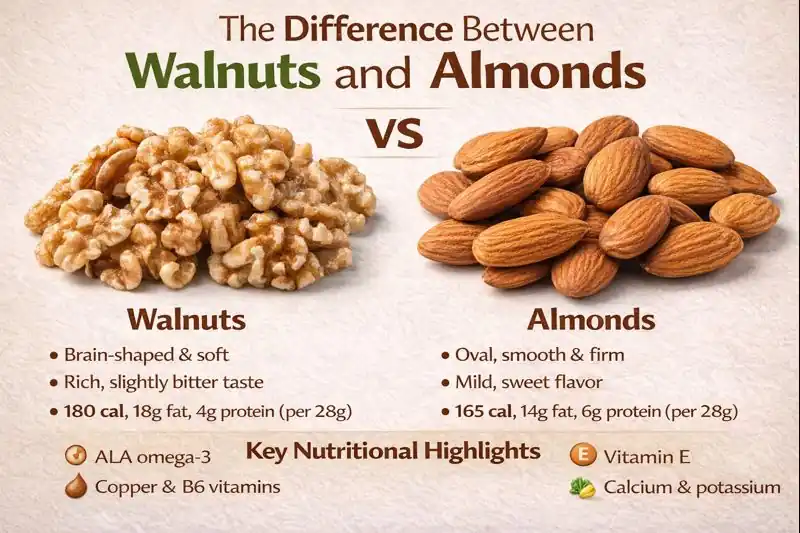
On your plate, walnuts resemble small, brain-shaped halves with many folds and a soft bite. They taste rich and slightly bitter. You can chew them even if your teeth feel a bit weak.
Almonds are smooth and oval with brown skin, a mild sweet flavor, and a firm crunch. If you enjoy a gentle taste, you may lean towards more almonds in your snack. If you like a stronger nut flavor, you might prefer a mix that holds more walnuts .
Calorie And Macronutrient Differences
Scientists describe walnuts’ nutrition and almonds in grams. A 28-gram handful of walnuts has about 180 calories, 18 grams of fat, 4 grams of protein, and under 4 grams of carbs, mostly fiber.
The same amount of almonds gives roughly 165 calories, 14 grams of fat, 6 grams of protein, and a little more fiber and carbs.
These facts explain why almonds vs walnuts protein comparisons usually favor almonds , while walnuts carry a bit more energy per bite.
Vitamin & Mineral Profile Comparison
The difference between walnuts and almonds is also clear in vitamins and minerals. Research summaries show that walnut nutrition provides magnesium, copper, manganese, and B vitamins such as B6 and folate. These support nerve signals and red blood cell formation.
Almonds’ nutrition stands out for vitamin E, magnesium, calcium, and potassium. These nutrients help control blood pressure, muscle function, and cell protection.
Omega-3 Vs Omega-6 Differences
A key part of walnuts’ benefits comes from their high content of ALA, a plant omega-3 fatty acid. Reviews in heart and brain journals link higher ALA intake lower risk of cardiovascular disease and possibly better thinking skills, though the effect is modest and not consistent across every study.
Almonds contain almost no omega-3. They supply useful monounsaturated and omega-6 fats that still help when they replace saturated fat in your meals.
Price And Accessibility Comparison
In most shops, you can buy almonds all year round as whole nuts, slices, flour, butter, and milk. That makes it easy to add almonds to breakfast, baking, and smoothies.
Walnuts usually appear as halves or pieces and spoil faster because their omega-3 fats are delicate and break down with heat, light, and air.
Fresh shelled walnuts may cost more and keep best in the fridge. For simple snacking, walnuts and almonds work well, but for cooking variety, many people rely more on almonds .
Which Nut Is More Filling?
Satiety means how long you feel full after eating. Trials where people ate almonds as snacks found better fullness and improved blood sugar responses than high-carb snacks, as long as total calories stayed under control.
These results support the benefits of almonds for weight management and blood sugar control. Smaller studies with walnuts report less hunger and changes in brain responses to food images, but sample sizes are small, and more research is needed.
In daily life, both nuts can help you feel satisfied. The better choice between walnuts and almonds is usually the one that keeps you away from sugary or fried snacks.
Walnuts Vs Almonds Benefits
When you compare walnuts vs almonds benefits , it helps to break things down into heart, brain, inflammation, weight, and blood sugar. Groups like the American Heart Association and national dietary guidelines suggest small daily portions of mixed nuts for people without allergies, instead of one strict serving for everyone.
Benefits Of Walnuts For Heart, Brain, And Inflammation
Several controlled feeding trials show that diets rich in walnuts lower LDL (“bad”) cholesterol and triglycerides and improve artery function compared with similar diets without walnuts .
This pattern helps explain why walnuts’ benefits include a lower long-term risk of heart disease in large population studies. The mix of ALA omega-3, vitamin E, and polyphenols also reduces inflammatory markers and oxidative stress, although results still vary between trials.
Benefits Of Almonds For Weight Loss And Blood Sugar
On the other hand, almonds’ benefits are strong for weight and glucose control. Trials that added daily almonds to calorie-aware eating plans often report better weight maintenance, smaller waist size, and improved HbA1c, a blood test that reflects average glucose over several months.
Some research in people with prediabetes shows mixed results when almonds increase total calories, so you still need to swap them for less healthy snacks rather than simply adding them on top.
Overall, the protein, fiber, and fat in almonds help slow digestion and reduce blood sugar spikes after meals. Review papers also mention almonds for brain health , because vitamin E and magnesium help protect nerve cells and support steady energy, although they never replace medical care.
Antioxidant Differences
Antioxidants protect cells from oxidative stress, which can speed aging and worsen long-term disease. Walnuts carry polyphenols, vitamin E, and other compounds that show strong antioxidant and anti-inflammatory activity in lab tests and small trials.
Almonds are one of the richest natural sources of vitamin E, and human studies link regular almond intake with smoother skin and fewer signs of sun-related damage in older adults.
Digestive And Gut Health Benefits
Gut bacteria ferment nut fiber and plant chemicals into short-chain fatty acids, which feed the cells lining your colon and may calm inflammation. Studies where people ate walnuts daily show shifts toward more beneficial bacteria and lower inflammation markers, although sample sizes remain modest.
Similar work with almonds finds increases in friendly bacteria and better stool quality, but some people report gas or bloating when portions are large.
If your gut is sensitive, it is safer to start with a small handful of walnuts or almonds and increase slowly while you drink enough water. You can then see how your body reacts instead of jumping straight to a big serving.
Which Nut Supports Longevity Better?
Long-term studies that follow thousands of adults show that people who eat nuts, including walnuts or almonds , a few times per week, tend to have lower death rates from heart disease and all causes than people who rarely eat nuts.
Because walnuts provide more omega-3 and strong anti-inflammatory compounds, they may offer a slight edge for healthy aging of the heart and brain. Almonds may help more with weight, blood pressure, and blood sugar, which also shape lifespan.
Walnuts Vs Almonds For Brain Health
Brain wellness depends on steady blood flow, stable glucose, and protection from inflammation. Both nuts support these areas, but each one helps differently.
Effect Of Walnuts On Memory And Cognitive Function
ALA omega-3 in walnuts supports cell membranes in the brain. When membranes stay flexible, nerve cells send signals more smoothly. Animal studies show better learning and memory after long-term walnut intake, although human results vary and the benefits are modest rather than dramatic.
The extra polyphenols in walnuts may also reduce inflammation in brain tissue. This is one reason many researchers connect walnuts to brain health in discussions about healthy aging. Still, experts caution that walnuts cannot prevent dementia and should only be seen as one part of a brain-friendly diet.
Effect Of Almonds On Mental Alertness
Vitamin E in almonds protects neurons from oxidative damage. Low vitamin E levels are linked with poorer memory in older adults, although raising vitamin E does not guarantee improvement.
The magnesium in almonds helps with nerve function and stable energy. Some studies report better attention and fewer dips in mood when almonds replace sugary snacks. The effect is not huge, but it can help during long study or work sessions.
Which Nut Is Better for Long-Term Brain Aging
For long-term aging, omega-3s and antioxidants matter. Walnuts supply more ALA and a broader mix of polyphenols, so they may help more with inflammation and memory support. Almonds still add strong vitamin E support.
Best Serving Size For Brain Health
Most trials use around 28 grams per day, which is a small handful. Larger servings raise calories too much. Health groups like Mayo Clinic remind people that nuts are dense foods, so portion control protects your weight while still giving benefits.
Can Walnuts Or Almonds Improve Focus?
Focus depends on sleep, stress, hydration, and blood sugar. Neither nut works like a stimulant, but both support a steady mind. The fat and protein in walnuts and almonds prevent sugar spikes and crashes. The omega-3 in walnuts and vitamin E in almonds may protect nerve cells over time.
Walnuts Vs Almonds Nutrition
Both nuts offer high energy and helpful micronutrients, but they differ in fat type, protein, and vitamin details. Knowing these differences helps you match your goals with your snack choices.
Calories Per 100 Grams
Walnuts contain approximately 654 calories per 100 grams, while almonds have 578. This gap explains why calorie tracking matters when you add walnuts or almonds to your daily meals.
Healthy Fats Comparison
The main feature of walnuts is ALA omega-3. This supports heart and brain function and may reduce inflammation markers in clinical studies.
Almonds provide mostly monounsaturated fats, which support lower LDL cholesterol. Both nuts help when they replace butter or fried snacks.
Protein, Fiber, And Carb Comparison
Almonds vs walnuts protein numbers show almonds offer more. A 28-gram serving of almonds gives about 6 grams of protein and more fiber, while walnuts give around 4 grams of protein and less fiber. More protein explains why almonds often feel more filling and support weight control.
Vitamin E, Magnesium, Potassium Comparison
Almonds contain more vitamin E, which protects cells from oxidative damage. They also hold more magnesium and potassium, which help nerves, muscles, and blood pressure. Walnuts still provide helpful minerals, but not at the same levels.
Glycemic Index And Blood Sugar Impact
Both nuts have a very low glycemic index and do not spike your blood sugar. Almonds may reduce post-meal glucose when eaten with carbohydrate foods. Walnuts help indirectly by supporting appetite control.
Which Nut Supports Muscle Recovery Better
If you want higher protein and magnesium for muscles, almonds vs walnuts protein comparisons favor almonds. But walnuts offer omega-3, which can reduce inflammation after exercise. Using both gives balanced recovery support.
Almonds Vs Walnuts Protein
Protein affects muscles, hormones, and immune function. Nuts offer plant-based support, but amounts differ.
Protein Content Per Serving
Almonds have more protein than walnuts . This is why fitness-focused readers often include almonds vs walnuts protein comparisons when planning snacks.
Complete Vs Incomplete Protein Profile
Both nuts give incomplete plant protein, meaning they lack some essential amino acids. Doctors and dietitians explain that this is fine as long as you eat mixed protein sources throughout the day.
Best Nut For Muscle Building
For muscle building, almonds help more because they offer more protein and magnesium. Walnuts still support recovery with omega-3 and antioxidants.
Protein Absorption Differences
Current studies show no major difference in absorption between walnuts and almonds . Digestion slows because of fat and fiber, but this helps steady energy.
Combining Nuts For Better Protein Benefit
A mix of walnuts and almonds with yogurt, oats, or smoothies creates a more complete amino acid intake. This supports muscles and keeps hunger under control.
Best Nut For Weight Loss
Nuts help weight control when eaten in controlled portions because they reduce hunger and replace snacks high in sugar.
Which Nut Provides Better Satiety
Due to higher protein and fiber, almonds’ benefits for fullness are strong. Walnuts’ benefits include rich fats that also lower hunger, but almonds may last longer.
Calorie Density Comparison
Walnuts have slightly more calories than almonds . If calorie control is strict, almonds might fit better.
How Each Nut Affects Appetite Hormones
Studies show walnuts can change brain responses to food images, while almonds slow stomach emptying and support balanced hunger hormones. Both help you avoid overeating.
Digestion Speed And Impact On Snacking
Because both nuts digest slowly, they help break snack cycles. A small handful of walnuts or almonds can prevent cravings later.
Which Nut Reduces Belly Fat Better
Neither nut melts belly fat directly. But almonds’ benefits for blood sugar and fullness, along with walnuts’ benefits for appetite control, support long-term fat loss when paired with a balanced diet.
FAQs
Which nut has more protein?
Almonds vs walnuts protein comparisons show almonds give more protein. This helps with fullness and muscle support when combined with balanced meals and proper hydration.
Are walnuts better for brain health?
Many researchers connect walnuts or brain health because walnuts offer ALA omega-3 and antioxidants. These may support aging brains, though evidence is moderate, and they are not a cure.
Do almonds help with memory?
Some experts recommend almonds for brain health because vitamin E protects nerve cells. Benefits are mild but can support overall wellness when combined with varied foods.
Which nut is better for weight loss?
Both help when portions stay controlled. Almonds’ benefits include higher protein and fiber, while walnuts’ benefits include improved appetite control in some studies.
Which nut should I choose daily?
A balanced rotation of walnuts or almonds gives omega-3, vitamin E, minerals, and protein without over-relying on one nut. This only supports general health.













Leave a Comment