



Probiotics are live helpful microbes, often certain bacteria or yeast, that give a health benefit when you take enough of them. Prebiotics are special carbohydrates and fibers that your body does not digest, but your gut microbes use as food.
When you understand probiotics and prebiotics , you can read food labels better, choose the right yogurt or fiber, and avoid wasting money on random products. Both can support digestion, immunity, and overall comfort, but they are not cures, and they do not work the same way for every person.
Difference Between Probiotics And Prebiotics
Probiotics are the helpful microbes inside your gut. Prebiotics are the food that keeps these guests active. That is the real difference between probiotics and prebiotics , and knowing it protects you from confusing marketing.
What Probiotics Do
Probiotics are live microbes that you swallow in food or pills. In the gut, they can compete with harmful germs, support the gut lining, and affect immune cells. Specific strains may help some types of diarrhea and some cases of irritable bowel syndrome, although effects are strain-specific and not guaranteed.
So the real benefits of probiotics include support for digestion, possible help during or after antibiotics, and modest support for immunity in certain situations. Results depend on the strain, dose, and your baseline gut microbes.
What Prebiotics Do
Prebiotics are fibres and related compounds that your small intestine does not fully digest. Your gut bacteria break them down in the large intestine and make short-chain fatty acids [tiny fat-like molecules that feed gut cells].
Key benefits of prebiotics include better stool bulk, softer stool texture, and support for regular bowel habits. They help useful bacteria like Bifidobacteria and Lactobacilli grow, which can crowd out less friendly species and may lower low-grade gut inflammation. Studies also link prebiotic fibers with better blood sugar control and cholesterol, although the strength of evidence varies by fiber type and condition.
How They Work Together
When you use probiotics and prebiotics at the same time, you supply both the helpful microbes and the fuel they prefer. Probiotic strains arrive in the gut, and prebiotic fibers help them and your existing good microbes grow and stay active. This partnership can improve the balance of your microbiome [the full mix of microbes in your gut] over time.
Key Differences (Strain Vs Fiber)
Probiotics are defined at the strain level, such as Lactobacillus rhamnosus GG. Each strain can have different actions and different study data. Prebiotics are defined more by the type of fiber, such as inulin, fructo-oligosaccharides, or galacto-oligosaccharides.
Common Misconceptions
You may believe that all probiotics are equal. That is not true. Clinical guidelines point out that one strain can help in a condition, while another does nothing there. You may think prebiotic fiber is just for constipation. In reality, studies link it to multiple gut and metabolic effects, although not every person will feel a clear change.
Benefits Of Probiotics And Prebiotics For Gut Health
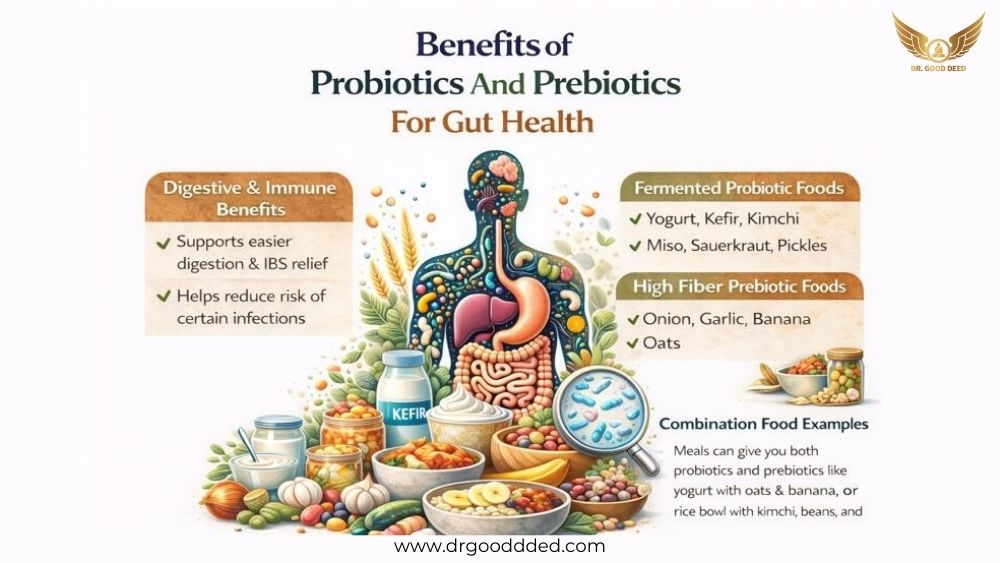
The gut effects of probiotics and prebiotics show up in several linked areas. Researchers study digestion, immunity, nutrient handling, inflammation, and the overall mix of microbes rather than just one symptom.
Digestive Support
You may notice easier digestion when your gut microbes are in better balance. The benefits of probiotics in studies include reduced risk of certain infectious diarrhea, lower chance of antibiotic-related diarrhea in some groups, and symptom relief in parts of irritable bowel syndrome. Results differ by strain and by person, and not all trials show benefit.
Prebiotic fibers support stool bulk and softness. That is one of the practical benefits of prebiotics for people who tend toward mild constipation. Doctors still stress fluids, movement, and an overall high fibre diet, along with any single product.
Immune Benefits
Because most immune tissue sits along the gut wall, probiotics and prebiotics can affect immune signals. Some trials show fewer mild respiratory infections or shorter duration when specific strains are used, though other trials do not find clear effects, so the overall result is modest.
Improved Nutrient Absorption
A healthy gut lining absorbs vitamins and minerals more efficiently. Certain probiotic strains can make vitamin K and some B vitamins. Fermentation of prebiotics makes acids that feed gut cells, which may support this lining.
Reduced Gut Inflammation
Short-chain fatty acids from prebiotic fermentation can calm local immune cells and support repair of the gut barrier. This is one reason gut health probiotics and prebiotics appear in research on inflammatory bowel conditions, although evidence is mixed and often limited to small trials. Doctors do not treat serious diseases with them alone but may use them as an extra tool.
Microbiome Diversity
Higher diversity in gut microbes often links with better resilience. Over time, probiotics and prebiotics can increase helpful groups like Bifidobacteria and Lactobacilli and lower some less helpful species. This pattern appears in many studies, though not every person gets the same shift.
Foods With Probiotics And Prebiotics
You meet probiotics and prebiotics every day in normal meals, even if you never touch a capsule.
Fermented Probiotic Foods (Yogurt, Kefir, Kimchi)
Yogurt with live cultures, kefir, some types of sauerkraut, kimchi, miso, and certain pickles are classic foods with probiotics . Labels that say “live and active cultures” suggest the product still holds helpful microbes when you eat it. Heat-treated jars often do not.
High Fiber Prebiotic Foods (Onion, Garlic, Banana, Oats)
Onions, garlic, leeks, asparagus, bananas, oats, barley, beans, and lentils are common foods with prebiotics . Their fibers resist digestion in the small intestine and reach the colon, where microbes ferment them. Regular intake supports a steady supply of fuel for your gut bacteria.
Combination Food Examples
Simple meals can give you both probiotics and prebiotics at once. A bowl of live culture yogurt with oats and sliced banana is a quick example. A rice bowl with kimchi, plus beans and garlic, is another. These patterns give gut health probiotics and prebiotics support without relying on pills.
Simple Daily Food Swaps
You can swap sweetened yogurt for plain yogurt with fruit to increase probiotics and prebiotics while lowering added sugar. Replacing white bread with whole-grain bread or oats raises prebiotic fiber intake. Over time, these steps matter as much as many probiotics supplements .
Serving Guidance
Most healthy adults aim for several servings of foods with probiotics and foods with prebiotics spread across the week, along with a generally high-fiber pattern. Exact amounts vary by age, health, and tolerance, so your doctor or dietitian can adjust targets for you.
Probiotics And Prebiotics Supplements
Food is the base, yet probiotics and prebiotics in capsule or powder form can help in selected cases when guided well. Clinical groups stress that you should match the product to your goal instead of choosing only by brand or advertising.
When Supplements Help
Probiotics supplements may help when you are on antibiotics, have certain types of infectious diarrhea, or have symptoms of irritable bowel syndrome, but only for specific strains that have been tested in those settings.
Prebiotics supplements can help if you struggle to reach daily fiber from food or need a carefully measured fiber type. Dosage varies by age and condition, so medical advice is important.
Picking Probiotic Strains
Good probiotic supplements list the full strain name, the CFU count at the end of shelf life, and clear storage rules. More CFUs are not always better, and strain choice matters more than a long ingredient list.
Choosing Prebiotic Fibers
Quality prebiotic supplements state the type of fiber clearly, such as inulin, fructo-oligosaccharides, or galacto-oligosaccharides. You usually start with a small amount and increase slowly so your gut has time to adapt. This stepwise rise helps limit gas and cramping.
Pros And Cons Of Supplements
Supplements make it easy to track what you take and are useful in research. The downsides include cost, variable quality, and the risk of mild side effects such as gas or bloating at the start.
In people with weak immune systems, rare but serious infections from probiotics are reported, so extra care is needed.
Safety & Storage Tips
You should store probiotics and prebiotics according to the label. Some capsules need the fridge, while others stay stable at room temperature. Because supplements are not tightly regulated, independent testing seals and advice from your healthcare team are important before long-term use of probiotic supplements or prebiotic supplements , especially if you take other medicines or have chronic illness.
Gut Health — Probiotics And Prebiotics Mechanisms
Scientists study how probiotics and prebiotics work at the microscopic level, not just how you feel day to day. Many of these mechanisms come from lab and clinical research, and some areas still have limited evidence that needs more trials.
Increase Bacterial Diversity
A diet rich in probiotics and prebiotics can increase the variety of helpful bacteria in your colon. Higher diversity is often linked with better resilience after stress or antibiotics, although this link is not perfect for every person.
Strengthen Gut Barrier
Some probiotic strains and prebiotic fibers support tight junctions [tiny links] between gut cells. This may reduce unwanted leakage of molecules across the gut wall and may calm local immune activity.
Short Chain Fatty Acid Benefits
When bacteria ferment prebiotics, they make short-chain fatty acids like acetate, propionate, and butyrate. These provide energy for gut cells, help keep gut pH [acidity level] in a healthy range, and signal to immune and metabolic systems.
Mood And Metabolic Links
Research on the gut-brain axis [two-way link between gut and brain] suggests that some probiotics and prebiotics may affect mood, stress response, and blood sugar control. Current evidence is mixed and still limited, so you should see them as one supportive tool, not as a main treatment for mental health or diabetes.
Clinical Signals Of Improvement
You can track real-world signs of better gut balance. More regular bowel movements, less bloating, and more stable energy through the day are practical clues that your probiotics and prebiotics plan fits you. If symptoms worsen or you notice red flag signs like weight loss, blood in stool, or fever, you should see a doctor rather than simply increasing products.
How To Combine Probiotics And Prebiotics For Best Results
You get the most from probiotics and prebiotics when you treat them as a team. Probiotics bring in helpful microbes. Prebiotics keep them active and give your existing good bacteria a steady food source.
Synbiotic Concept (Strain + Fiber)
A synbiotic is any product that combines probiotics and prebiotics on purpose. It can be a single product that has both, or it can be your own mix, for example, a specific probiotic strain plus regular high-fibre food.
You might see “synbiotic” on labels that blend probiotic supplements with a known prebiotic, such as inulin or fructooligosaccharides. The goal is simple. You swallow the probiotic, and the added fiber supports those microbes and your native bacteria as they move into your gut routine.
Timing And Meal Pairing
You usually absorb probiotics and prebiotics better when you link them to meals. Food buffers stomach acid so more live microbes reach the intestines. Take probiotic supplements with a small meal, unless your own clinician gives different instructions.
Prebiotic fibers work well when you spread them over the day. When you place prebiotics supplements with breakfast or lunch, you lower the chance of late-night gas and give your gut time to process the fiber while you move and drink water.
Daily Routine Example
A simple day can hold a strong synbiotic pattern without feeling like a diet plan. You could start with plain yogurt and oats topped with banana. This gives probiotics and prebiotics together, because yogurt is one of the classic foods with probiotics, and banana and oats are well-known foods with prebiotics .
At lunch, you might choose brown rice with beans, garlic, and onion. Dinner could include lentil soup with leeks and a side of kimchi. If your doctor agrees, you could add one dose of probiotic supplements in the morning and a small serving of prebiotic supplements with lunch, especially if your fiber intake is usually low.
Amounts To Aim For
There is no single fixed dose for everyone. Doctors usually adjust plans based on age, health, and symptoms. In general, you can aim for at least one daily serving of foods with probiotics and several servings of foods with prebiotics across the day.
If your doctor adds probiotic supplements or prebiotic supplements , they will usually start low and change the plan based on your response instead of pushing a large fixed dose for all people.
Troubleshooting Bloating
When you increase probiotics and prebiotics , mild gas and bloating are common in the first days. Your gut bacteria are learning to use the new fibers, and this creates more gas at first.
If this happens, you can cut the fiber amount in half and increase more slowly. You can also take probiotics supplements with a slightly larger meal and drink more water.
If bloating is severe, painful, or linked with weight loss or blood in the stool, you should stop and speak with your doctor because those are warning signs that need more than simple gut support.
Who Should Avoid Probiotics And Prebiotics
Most healthy people can use probiotics and prebiotics safely as part of food and daily life. Some groups need more care and should only use them after medical advice.
Severe Immunocompromise
If you have a very weak immune system from strong chemotherapy, advanced HIV, or heavy immune-suppressing drugs, your body may not handle live microbes well.
In rare cases, probiotics from probiotic supplements have caused blood infections in such patients. Because of this, you should only use these products if your specialist agrees and can follow your progress closely.
Recent Major Surgery Or ICU Patients
If you have had major gut surgery or you are in intensive care, your gut barrier may be fragile. In these settings, the risks and benefits of probiotics and prebiotics are not fully clear. Doctors sometimes use them in research settings, but they plan this carefully. You should not start them on your own while you are still recovering from major procedures.
Suspected SIBO Cases
Small intestinal bacterial overgrowth, often called SIBO, means there are too many bacteria in the small bowel. In this case, strong prebiotic supplements or very high-fibre foods with prebiotics can worsen symptoms like pain, bloating, and loose stools.
If your doctor suspects SIBO, they may test and treat it first. Any use of probiotics and prebiotics usually comes later, in small and careful steps.
Drug Interactions To Check
Some medicines that affect the immune system, such as certain biologic drugs, might change your risk level with live microbes. You should always tell your clinician and pharmacist if you plan to use probiotics supplements or prebiotics supplements regularly. They can review your drug list and your medical history and decide if any change is needed.
When To Ask Your Clinician
You should speak with a health professional before you add strong probiotics and prebiotics plans if you have ongoing gut pain, blood in stool, fever, fast weight loss, trouble swallowing, or a history of serious gut disease.
Practical Tips: Add Probiotics & Prebiotics To Your Day
You do not need a complex plan to bring probiotics and prebiotics into your life. Small daily steps make a real difference over time.
Pantry Picks To Buy
You can keep plain yogurt, kefir, or similar foods with probiotics in your fridge. For fiber, oats, beans, lentils, onions, garlic, and bananas are easy foods with prebiotics that fit many meals.
If your doctor suggests supplements, choose one simple probiotic supplement product with clear strain names and one basic prebiotic supplement powder without a long list of extras.
Meal Plan Snippets
You can build meals around probiotics and prebiotics without making them the only focus. For breakfast, yogurt with oats and fruit works well. For lunch, bean salad with garlic and onion adds prebiotic fiber. For dinner, brown rice with lentils and a spoonful of kimchi gives both.
Over a week, this pattern gives steady probiotics and prebiotics support, which is more important than one heavy dose on a single day.
Travel And Antibiotic Use
Travel, new food, and antibiotics can disturb your gut balance. During trips, try to include at least some foods with probiotics , such as yogurt with live cultures, along with fibre-rich sides.
When you need antibiotics, ask your doctor if a trusted probiotic supplement product would help reduce the risk of antibiotic-related diarrhea in your case. Evidence supports certain strains for some people, but not all antibiotics and not all patients.
Tracking Results (2–8 Weeks)
Gut changes take time. If you start a new probiotics and prebiotics plan, give it at least two to eight weeks. Keep a simple note of your stool pattern, bloating, and energy. You should see trends rather than instant change.
If you see no shift at all after several weeks, or if symptoms worsen, show your notes to your clinician. You may need a different strain, a different fiber, or a medical check.
Budget Friendly Options
You do not need expensive products to support gut health . Homemade yogurt, dry beans, lentils, oats, and basic vegetables are low-cost but powerful tools. Save probiotic supplements and prebiotic supplements for times when food changes are not enough or when your doctor is aiming at a specific goal.
Probiotics And Prebiotics: Myths Vs Evidence
Marketing around probiotics and prebiotics is loud, and it is easy to get confused. Sorting myths from real data protects your health and your wallet.
“All Probiotics Are The Same” — False
Different strains behave differently in the body. One strain may help certain diarrhea, while another only helps gas or bloating. You should match probiotic supplements to your goal instead of assuming any product will work.
“More CFUs = Better” — Nuance
CFUs measure how many live microbes are in a dose. Very high CFU counts do not always mean better results. A medium dose of a well-studied strain often performs just as well as a huge count of random strains.
Food First Vs Supplement First
Food-based probiotics and prebiotics give microbes, fiber, and many other nutrients at once. Prefer a food-first plan with foods with probiotics and foods with prebiotics and then add probiotic supplements or prebiotic supplements only when needed.
Evidence Strength By Condition
Evidence for the benefits of probiotics is strongest for some types of infectious diarrhea, antibiotic-related diarrhea in certain groups, and some forms of irritable bowel syndrome. Evidence for mood, weight, and skin is growing but still limited.
The benefits of prebiotics are strongest for stool regularity and support of helpful gut bacteria, with ongoing research for blood sugar and cholesterol.
Snapshot Of Clinical Uses
In real clinics, doctors often use probiotics and prebiotics as support in IBS, mild constipation, certain diarrheal illnesses, and after antibiotic courses. They are rarely used alone. They sit beside other treatments such as diet changes, stress care, or standard medicines.
FAQs
Do I Need Both Probiotics And Prebiotics?
You do not always need both at the same time, but probiotics and prebiotics often work better together. Probiotics add helpful microbes and prebiotics feed them, which keeps your gut support more stable.
Which Foods Contain Both Probiotics And Prebiotics?
You can get both when you mix foods with probiotics like yogurt or kefir with foods with prebiotics such as oats, bananas, onions, or beans. These mix and act like natural synbiotic meals.
When Is The Best Time To Take A Probiotic Supplement?
Most people take probiotic supplements with a meal so more microbes survive the stomach acid. Your doctor may adjust timing if you take other medicines or have a special condition.
Can Probiotics Or Prebiotics Cause Bloating?
Yes, when you start probiotics and prebiotics , gas and bloating can increase for a short time. Start with a small amount, rise slowly, drink water, and see your doctor if pain or symptoms are strong.
How Long Until I Notice Benefits?
Many people need two to four weeks of regular probiotics and prebiotics before they see changes. Some need up to eight weeks. Track your stool, bloating, and comfort so you can judge progress.
Are Probiotic Supplements Safe For Children?
Some probiotics supplements are safe for children and are used for certain diarrheal illnesses. A pediatrician should always guide choice and duration, since age and health change the safety profile.
Can Probiotics Help With Diarrhea Or Constipation?
Specific strains can support both diarrhea and constipation in some people by balancing gut microbes. The benefits of probiotics are not the same for everyone, so medical guidance is useful before long term use.
How To Pick A Probiotic Strain For Your Issue?
You should match the strain in probiotics supplements to your main concern. Look for products with strains that have research for diarrhea, IBS, or your specific problem, instead of choosing only by brand.
Who Should Avoid Taking Probiotics Or Prebiotics?
People with very weak immune systems, recent major surgery, or suspected SIBO should be careful with probiotics and prebiotics . They need a doctor to review risks, possible benefits, and safer options









Leave a Comment