



Home remedies for cracked heels work because heel cracks occur when the skin on your heels is thick, dry, and under constant pressure from walking and standing. Unlike other skin areas, heels have fewer oil glands, so they lose moisture faster. When dry skin cannot stretch, the outer edge splits, forming painful cracks that can worsen with friction and body weight.
Home remedies for cracked heels focus on fixing dryness first, then reducing pressure and friction. That is why effective care always includes soaking to add water back into the skin, gentle exfoliation to remove thick dead layers, and deep moisturizing to seal moisture in. Oils, humectants, and occlusive products help the skin stay flexible, which prevents cracks from reopening.
Natural options like coconut oil, olive oil, honey, shea butter, and petroleum jelly support the skin barrier when used correctly and consistently. Foot soaks, careful exfoliation, and overnight sock methods allow these treatments to work longer without interruption. When combined with proper footwear and daily hydration habits, home remedies for cracked heels can restore softness, reduce pain, and stop new cracks from forming without harsh treatments.
How To Heal Cracked Heels At Home
When you heal cracked heels at home , you do not “attack” the heel. You build a routine that repeats. You want softer skin in days and then stronger skin in weeks. Your goal is to stop the crack from opening each time you walk.
Understanding Why Cracked Heels Happen
Your heel has thick skin because it takes pressure all day. That skin also has fewer oil glands than other areas, so it dries out faster. When the outer rim dries, it turns stiff. Then your body weight pushes the heel pad outward. The rim stretches. Dry stiff skin cannot stretch well, so it splits.
That split is a small break in your barrier, which can let germs in if it gets deep. That is why home remedies for cracked heels should focus on barrier repair, not just quick scraping.
Common Causes (Dry Skin, Pressure, Obesity, Medical Conditions)
Dry skin is the starting point for most people. Cold air and low humidity pull moisture from skin. Hot showers can strip skin oils. Some soaps remove oils too, which leaves the heel tight.
Friction and pressure add fuel. Skin can thicken to protect itself from friction and pressure, which is how calluses form. A callus can look “strong,” but it often makes the heel rim harder and more likely to crack.
Extra weight can increase pressure on the heel rim. Long hours of standing can do the same. Open-back shoes let the heel rub and dry out. Hard floors at home can keep the cycle going.
Diabetes can cause dry skin and reduced feeling, so you may not notice early damage. You should not treat foot problems alone when you have diabetes. Skin conditions like eczema or psoriasis can also make thick, scaly skin. Athlete’s foot (a fungal rash) can crack skin too, often between toes.
Symptoms Of Cracked Heels
Early signs look mild, but they matter. You may see rough, flaky edges. You may feel tightness when you walk. The heel rim may look ashy, yellow, or thick.
As it worsens, you see deeper lines (fissures). You may feel stinging with each step. Some cracks bleed. If you see redness that spreads, warmth, swelling, drainage, or a bad smell, treat it as urgent.
A useful self-check: after a shower, look at the heel rim from the side. If you see the rim “flare outward,” pressure likely plays a big role. That means you need footwear support along with home remedies for cracked heels .
Best Oils For Cracked Heels
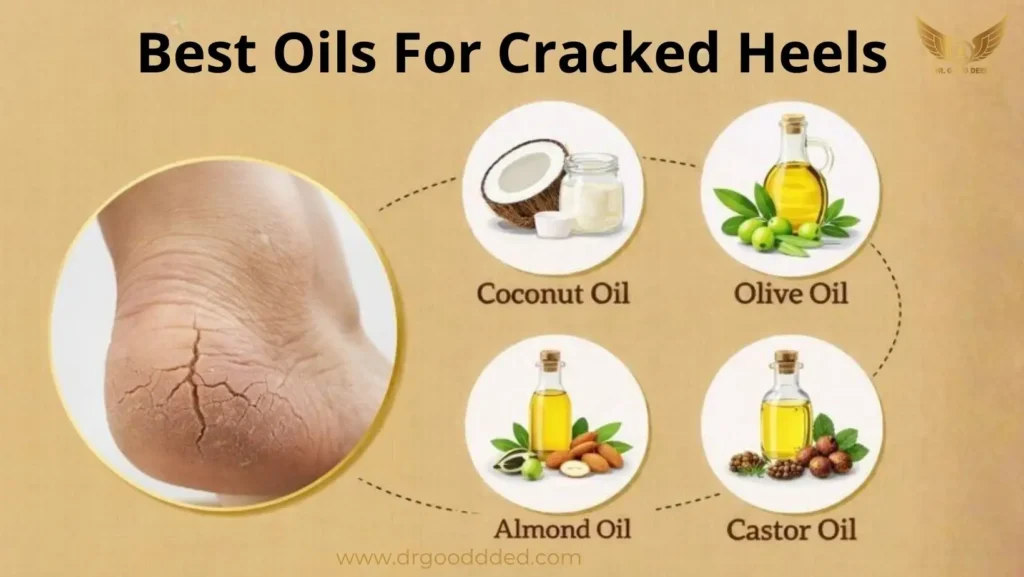
Oils can help, but they do not “add water” by themselves. They mainly seal, and so oils work best right after bathing, when your skin still holds water. If you put oil on bone-dry skin, you may seal dryness in.
Oils are one option under the umbrella of best oils for cracked heels , not the only solution. If your heels have thick callus, a heel cream with urea (an ingredient that helps hold water and soften thick skin) often does more than oil alone. You can also try urea in the 10% to 25% range for dry for cracked heels.
Coconut Oil
Coconut oil feels light and comfortable. Use a small amount at night, right after washing and drying your feet. Put on clean cotton socks so it stays on your skin and not on your sheets. If your heel cracks are open and bleeding, keep products simple and non-stinging, and stop anything that burns.
Olive Oil
Olive oil can soften skin and reduce rough feel. Use a few drops only. Massage it into the heel rim after a shower. Let it absorb before you walk so you do not slip. If you want faster change, pair olive oil with a thick heel cream underneath. The cream pulls in water. The oil seals it.
Almond Oil
Almond oil spreads easily and does not feel as heavy. Use it at night with socks. Do not use it if you have a nut allergy. If your skin reacts with itching or rash, stop. You can still stick with home remedies for cracked heels that rely on plain petroleum jelly, which tends to irritate less.
Castor Oil
Castor oil is thick. It can feel sticky. Some people like it for very dry heels because it seals strongly. Use a tiny amount. Use socks. If you are not comfortable with the feel, skip it.
How To Soften Cracked Heels Naturally
To soften cracked heels naturally , you need two steps in the right order. First, you soak to rehydrate and loosen thick skin. Then you moisturize fast while skin still feels slightly damp. Moisturizing your heels should happen within minutes of bathing, not hours later.
If you wait, water evaporates and dryness returns.
Warm Water Soaking Routine
Use warm water, not hot. Soak for about 10 minutes. Then pat dry well, including between toes. While the skin still feels slightly damp, apply a thick cream or petroleum jelly, then socks at night.
If you have diabetes, do not soak your feet as a routine habit unless your clinician approves it. People with diabetes should wash their heels in warm water but not soak them, and dry them well.
Epsom Salt Foot Soak
Epsom salt (magnesium sulfate) can make soaking feel soothing, and it may loosen dead skin so you can file gently after. Evidence for epsom salt as a “healer” for heel fissures is limited.
If your skin feels drier after epsom salt, cut back. Always moisturize right after. If you have diabetes, follow the “no soaking” advice unless your clinician says it is safe for you.
Vinegar Soak (Mild Exfoliation)
A very dilute vinegar soak can help loosen dead skin. But vinegar can sting and irritate, especially if you have open cracks. Do not use vinegar if the crack bleeds, feels raw, or looks infected. Also avoid vinegar if you have eczema flares on the feet.
Use vinegar only as a mild exfoliation helper, and stop if it burns. If you want a safer, more standard option, focus on urea-based heel creams and gentle filing after warm water.
Honey As A Natural Humectant
Honey can act as a humectant (it attracts water). Honey can support healing in certain wound settings, but that does not mean kitchen honey fixes all heel cracks. Evidence for honey as a reliable heel fissure treatment is limited.
If you try it, use it only on clean skin with shallow dryness, not on deep bleeding cracks. Rinse well, dry well, then moisturize. You still need home remedies for cracked heels that seal moisture overnight to keep gains from fading.
Cracked Heel Repair Home Remedies
When the skin has already split, your main job is to keep the crack closed while it rebuilds. You do that by sealing moisture, reducing rubbing, and keeping the area clean. These home remedies for cracked heel repair work best at night because your heels stay still and covered.
Petroleum Jelly + Socks Method
This is the simplest “seal and protect” routine. Wash your feet with mild soap. Pat them dry well. If the crack is shallow, you can gently smooth the thick rim with a foot file after a short warm rinse. Do not file into the crack.
Now apply a thick layer of petroleum jelly over the heel rim and directly over the crack. Put on clean cotton socks. Keep them on overnight. In the morning, wash off any slippery residue so you do not fall.
This method helps because petroleum jelly forms a barrier that slows water loss from skin. That gives your heel time to repair its outer layer. It is one of the most dependable home remedies for cracked heels , and it fits most people because it is low-cost and low-stinging.
Shea Butter For Overnight Repair
Shea butter works like a thick moisturizer and seals in one. Use it when your heel feels rough but also “tight,” like it might split again. After washing and drying, warm a small amount in your palms. Press it into the heel rim instead of rubbing fast. Slow pressure helps it sit in the rough areas.
Then wear socks. If you wake up and your heels feel softer, keep using it for several nights. Shea butter can support cracked heel repair because it keeps the skin flexible, which helps the crack stop widening when you walk.
Banana And Avocado Mask
This is a softening mask, not a “magic fix.” Banana and avocado add a thick, creamy layer that can make dry skin feel less stiff for a while. Mash half a ripe banana with a few bites of ripe avocado. Spread it on clean heels. Let it sit for about 15 to 20 minutes. Rinse and pat dry. Apply your regular heel cream, then a seal like petroleum jelly, then socks.
Skip this mask if you have deep open cracks or bleeding. Food masks can get messy, and you want to avoid anything that might irritate broken skin. Use it only when you are trying to soften cracked heels naturally and your skin is intact.
Baking Soda Exfoliation
Baking soda can act as a gentle scrub, but it can also irritate if you overdo it. Use it only when the heel rim feels thick and dull, not raw. Mix a small amount with water to make a paste. Rub lightly on the thick rim for less than one minute. Rinse well. Pat dry. Moisturize right away.
If you feel burning, stop. If you notice more dryness the next day, cut this out. Your goal with home remedies for cracked heels is steady improvement, not a “scrub hard” moment.
Dry Cracked Heels Treatment Home Remedies
Dry heels keep cracking when your routine misses one piece. You need controlled exfoliation, daily moisture, and one deeper repair day each week. These home remedies for dry, cracked heels focus on habits that stop the heel rim from turning stiff again.
Exfoliation Routine
Exfoliate only after your heel skin is softened. That usually means after a shower or a short warm rinse. Use a pumice stone or foot file. Move in one direction with light pressure. Focus on the outer rim, not the center of the heel.
Two or three times per week is enough for most people. This supports your goal to heal cracked heels at home without making the heel raw.
Moisturizing Routine
Moisturizing needs timing. Put heel cream on within a few minutes after bathing. That locks in the water your skin already absorbed. If your heels are very thick, pick a heel cream that contains urea (a water-binding ingredient) or lactic acid (a gentle softener). Use it only on intact skin at first. If it stings, switch to a plain, thick moisturizer and petroleum jelly.
At night, seal your moisturizer. Petroleum jelly, shea butter, or one of the best oils for cracked heels can work as the top layer. Then socks. This routine targets the cause, which is water loss from skin.
Weekly Deep-Repair Mask
Once a week, do a longer “repair night.” After washing and drying, apply a thick layer of moisturizer, then a sealant like petroleum jelly, then socks. Keep it on for at least one hour, or overnight if it feels comfortable. This helps even if your cracks are not severe because it builds flexibility back into the heel rim.
If you prefer an oil layer, use one of the best oils for cracked heels over your cream, not instead of it. Oil seals best when water is already in the skin.
Lifestyle Tips To Prevent Cracked Heels
Prevention matters because heels crack from repeated stress. If you keep the stress, you keep the cracks. Combine these tips with home remedies for cracked heels so your results last.
Choosing Proper Footwear
Choose shoes that support your heel and reduce friction. A closed back helps hold the heel in place. A cushioned sole reduces impact on hard floors. If you wear sandals, pick ones with a firm sole and a supportive heel cup, not flat flip-flops.
If you stand for long hours, rotate shoes so the same pressure points do not hit every day. If the heel rim keeps splitting, consider gel heel cups. They reduce rubbing and help the rim stay together while you heal cracked heels at home .
Avoiding Hot Showers And Harsh Soaps
Very hot water strips oils from skin. Harsh soaps can do the same. Use warm water. Use a mild cleanser. Pat your feet dry instead of rubbing hard. Then moisturize fast. This makes it easier to soften cracked heels naturally and keep them that way.
Maintaining Hydration
Drink water throughout the day. Hydration alone will not fix heel cracks, but dehydration can make dryness worse. Also, try not to skip fats completely in your diet. Your skin barrier needs lipids (natural fats). If you have diet limits, follow your clinician’s advice.
When To See A Doctor
Home remedies for cracked heels help many mild cases. You should still know when home care is not enough.
Severe Pain Or Bleeding
If cracks bleed often, feel deep, or hurt when you rest, get medical help. Deep fissures can need special dressings or prescription creams. Do not try to cut thick skin with blades at home.
Diabetic Cracked Heels
If you have diabetes, treat heel cracks as a bigger deal. You may not feel small injuries, and healing can be slower. Use gentle care only. Avoid sharp tools. If cracks keep returning, get a foot exam. You can still use home remedies for cracked heels , but you should do them with extra safety and guidance.
Signs Of Infection
Call a clinician if you see redness spreading, warmth, swelling, pus, fever, or a bad smell. Infection needs medical care. Do not cover a possibly infected crack with heavy occlusive layers without getting advice.
FAQs
1. What Is The Fastest Way To Heal Cracked Heels?
The fastest safe approach uses three steps nightly: quick warm rinse, gentle smoothing of thick rim, then seal with petroleum jelly and socks. This mix of home remedies for cracked heels helps close shallow splits while you sleep, but results still vary by depth and pressure.
2. Can Cracked Heels Heal On Their Own?
Sometimes mild dryness improves if you switch to better shoes and moisturize daily, but true splits often reopen with walking. If you want to heal cracked heels at home , you usually need a routine that adds moisture and seals it at night for at least one to two weeks.
3. Is Vaseline Good For Cracked Heels?
Yes, Vaseline is a strong sealant. It slows water loss so your skin barrier can rebuild. It works best over a heel cream, then socks. Many home remedies for cracked heel repair rely on this because it is simple and often causes less stinging than acids.
4. Which Oil Works Best For Cracked Heels?
It depends on how dry your skin is and what feel you can stick with. Coconut and olive oil feel lighter; castor oil feels heavier. Oils work best as a top layer over cream. Used this way, the best oils for cracked heels can help keep softness overnight.
5. Why Do My Heels Crack Even After Moisturizing?
You may moisturize too late, like hours after bathing, when the water has already left your skin. You may also skip exfoliation, so the cream cannot reach healthy skin. Pressure from open-back shoes can also reopen cracks. Adjust your home remedies for dry cracked heels routine and footwear together.
6. Are Cracked Heels A Sign Of Vitamin Deficiency?
Sometimes low nutrition affects skin, but heel cracks most often come from dryness, pressure, friction, and thick callus. If you also have fatigue, hair changes, or mouth sores, ask a clinician. Do not assume vitamins alone will fix home remedies for cracked heels .
7. Can Diabetes Cause Cracked Heels?
Yes. Diabetes can dry skin and reduce feeling in your feet, so small cracks can go unnoticed and worsen. If you have diabetes, choose gentle care and avoid sharp tools. You can use home remedies for cracked heels , but medical guidance matters more in this case.
8. How Often Should I Exfoliate Cracked Heels?
Most people do well with two or three gentle sessions per week, always after washing or soaking. Daily filing can irritate and make skin sore. If you want to soften cracked heels naturally , consistency and light pressure beat aggressive scrubbing.
9. Are Cracked Heels Dangerous?
They can be if cracks are deep, bleeding, or infected. Risk is higher if you have diabetes, poor blood flow, or nerve damage. Treat early, keep skin clean, and use home remedies for cracked heel repair before the split becomes a deeper wound.
10. How Long Does It Take For Cracked Heels To Heal?
Mild cracks may improve in a few days, but deeper fissures often need two to four weeks of steady care. Your shoes and body weight also affect healing time. Keep using home remedies for cracked heels even after they look better so the rim stays flexible.











Leave a Comment