

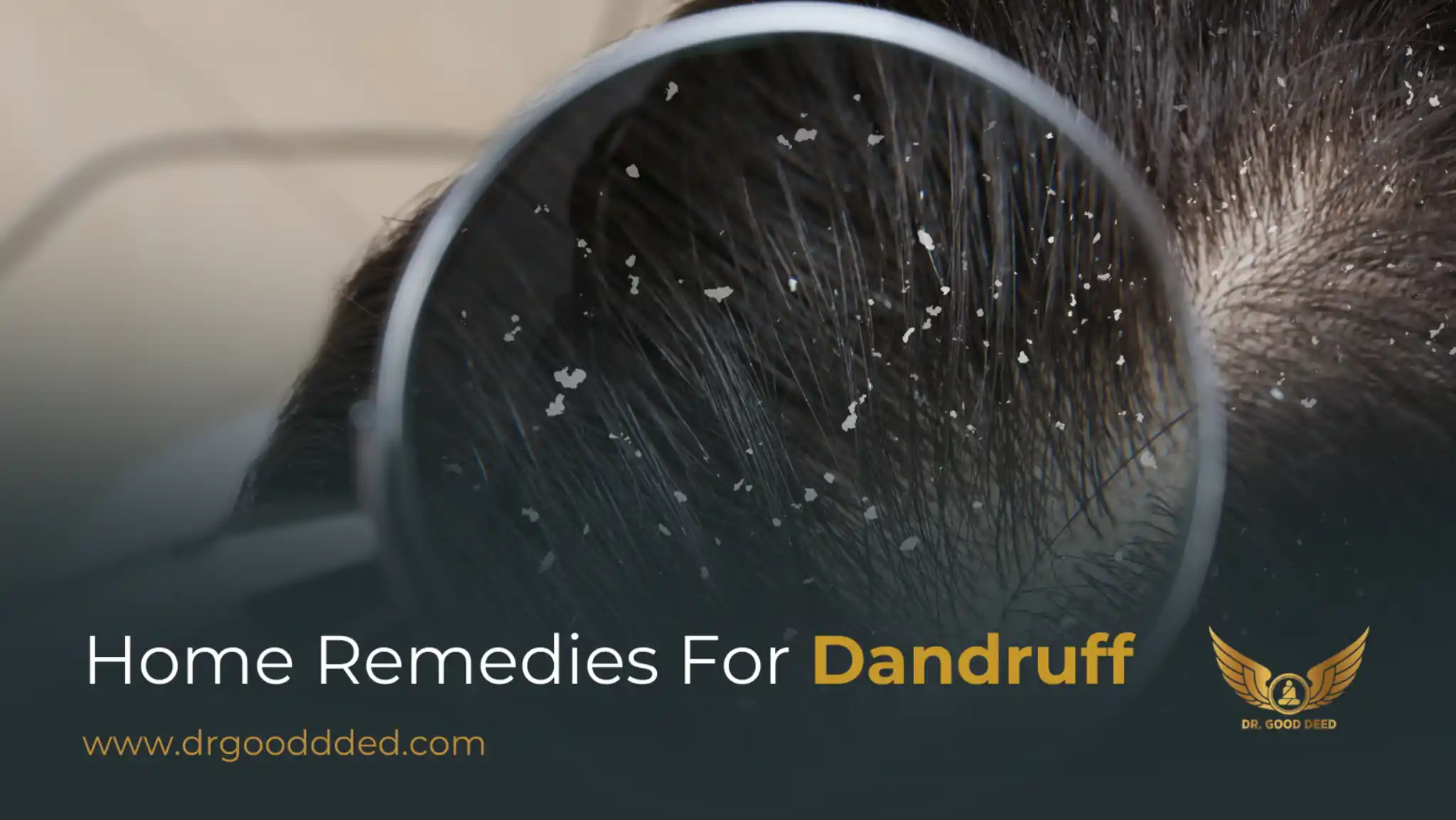

Home remedies for dandruff focus on restoring scalp balance, reducing excess yeast, and calming skin irritation. Dandruff is a scalp condition where skin cells shed faster than normal, leading to visible flakes and itching.
Dandruff is linked to scalp oil levels, yeast overgrowth, and individual skin sensitivity rather than poor hygiene. When used correctly, home remedies for dandruff can reduce flakes, itching, and redness without harsh chemicals. Results depend on cause, consistency, and scalp type, and improvement is gradual rather than instant.
What Causes Dandruff?
Dandruff develops when the scalp’s renewal cycle speeds up. Skin cells clump together and shed as flakes. Dandruff involves inflammation and altered skin barrier function, meaning the scalp cannot protect itself well. Home remedies for dandruff work best when you understand the trigger behind your flakes.
Oil, Malassezia (Yeast) and Scalp Sensitivity
Your scalp produces sebum, a natural oil. A yeast called Malassezia lives on most scalps and feeds on this oil. Problems start when the yeast breaks oil into fatty acids that irritate sensitive scalps.
Your immune system reacts, causing faster skin shedding. This explains why dandruff often affects oily areas like the scalp, eyebrows, and sides of the nose. Home remedies for dandruff aim to limit yeast growth while protecting the scalp barrier.
Common Triggers: Product Buildup, Dry Skin, Seborrheic Dermatitis
Hair sprays, gels, and dry shampoos can stay on the scalp. This buildup blocks normal shedding and traps oil. Dry weather reduces scalp moisture, leading to fine white flakes that look like dandruff but behave differently.
Seborrheic dermatitis is a medical condition characterised by greasy, yellow flakes and redness. It involves inflammation rather than simple dryness. Home remedies for dandruff may help mild cases, but not severe inflammation.
When Dandruff Signals Psoriasis or Eczema
Some flakes appear thick, silvery, or firmly attached. Psoriasis causes rapid skin growth due to immune system overactivity. Eczema causes itching, cracking, and oozing due to barrier damage. These conditions need medical care. Home remedies for dandruff alone cannot control these disorders and may worsen irritation.
Natural Remedies for Dandruff
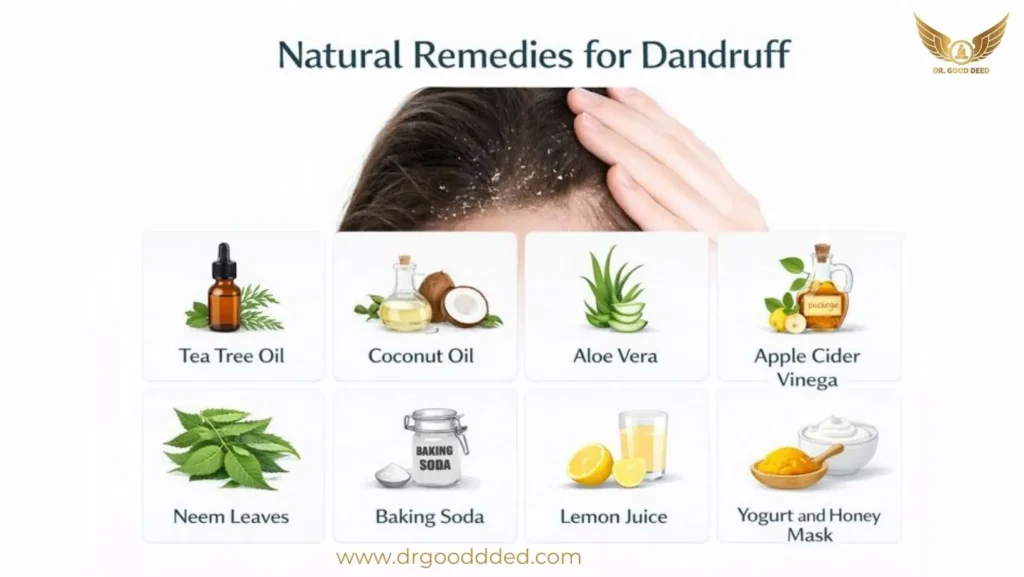
Many plant-based treatments show mild antifungal or soothing effects. Evidence is limited, but small clinical trials support symptom relief in some users. These natural remedies for dandruff focus on comfort rather than cure.
Coconut Oil — Antimicrobial and Moisturizing Effects
Coconut oil contains lauric acid, which penetrates hair fibers and reduces protein loss. Lab studies show mild antifungal activity, but human evidence remains limited. Coconut oil for dandruff helps dry scalps by reducing water loss.
Oily scalps may worsen due to yeast feeding on excess oil. Doctors usually advise short contact time rather than overnight use. Home remedies for dandruff using coconut oil suit dryness more than inflammation.
Tea Tree Oil — Antifungal Action and Usage Tips
Tea tree oil contains terpinen-4-ol, shown in small clinical trials to reduce dandruff severity. It can irritate skin if undiluted. Always mix with a carrier oil and patch test. Home remedies for dandruff using tea tree oil should be stopped if burning occurs.
Aloe Vera — Soothes Inflammation and Itch
Aloe vera contains polysaccharides that reduce inflammation and itching. Limited studies suggest it improves Seborrheic dermatitis symptoms when applied topically. Aloe does not kill yeast directly, but calms the skin. This makes it useful when itching dominates flaking. Home remedies for dandruff often combine aloe with mild cleansers.
Apple Cider Vinegar (ACV) — pH Balancing Rinse
Healthy scalp pH stays slightly acidic. ACV lowers surface pH, which may slow yeast growth. No large clinical trials confirm effectiveness. Dermatologists caution against frequent use due to irritation risk. Dilution is critical. Home remedies for dandruff using ACV should avoid broken skin.
Neem Leaves — Traditional Antifungal Therapy
Neem contains azadirachtin and nimbidin, compounds with antifungal properties in lab studies. Human evidence is limited but promising. Traditional medicine uses neem rinses for scalp infections. The strong smell fades after drying. Home remedies for dandruff using neem may help mild fungal imbalance.
Baking Soda — Gentle Exfoliant for Flakes
Baking soda removes loose flakes through mild abrasion. It does not treat the underlying cause. Frequent use disrupts scalp pH and damages hair cuticles. Dermatologists advise rare use only. Home remedies for dandruff should avoid daily exfoliation.
Lemon Juice — Reduces Oil and Residue
Citric acid cuts grease and product residue. It may sting inflamed skin. Sun exposure after use can cause irritation. Evidence for antifungal benefit is weak. Home remedies for dandruff using lemon should be diluted and used infrequently.
Yogurt and Honey Mask — Restores Moisture and Microbiome
Yogurt contains probiotics that support healthy skin bacteria. Honey acts as a humectant and has mild antimicrobial action. Honey improves seborrheic dermatitis symptoms when diluted. Home remedies for dandruff using this mask focus on hydration and barrier support.
DIY Remedies for Dandruff
Homemade blends allow control over ingredients and strength. These DIY remedies for dandruff suit people with mild flakes and no active skin disease.
Homemade Dandruff Hair Oil: Coconut, Neem, Tea Tree
A blend of coconut oil, neem extract, and tea tree oil targets dryness and yeast together. Heat coconut oil gently, add neem, then cool and strain before adding tea tree oil. This creates a balanced dandruff hair oil . Patch testing is essential. Home remedies for dandruff using oils should rinse thoroughly.
ACV Rinse Recipe and Frequency
Mix one tablespoon of ACV with one cup of water. Pour over scalp after shampoo. Rinse with plain water after one minute. However, you should use ACV only once in a week. Overuse causes irritation. Home remedies for dandruff rely on moderation.
Fenugreek Seed Paste for Persistent Flakes
Fenugreek contains saponins that reduce inflammation. Soak seeds overnight and grind into paste. Limited research supports itch reduction, not antifungal action. Apply briefly and rinse well. Home remedies for dandruff using fenugreek suit itchy scalps.
Baking Soda and Aloe Mixture for Deep Scalp Cleanse
Combining baking soda with aloe reduces dryness risk. Use a small amount and massage gently. Rinse within two minutes. This method targets buildup rather than yeast. Home remedies for dandruff should not replace medical shampoos when inflammation persists.
How To Get Rid Of Dandruff Naturally — Routine
Home remedies for dandruff work only when you follow a clear routine. Random use gives weak results. Your scalp heals when care stays regular and gentle. Scalp barrier repair depends on repeated low irritation care, not aggressive cleaning.
Pre-Wash Scalp Treatment Steps
Before washing, your scalp needs softening. Dry flakes stick tightly to skin. Oil or gel loosens them. Use a light layer of oil or aloe gel. Massage using fingertips, not nails. Leave it for twenty to thirty minutes. This step reduces flake breakage during washing. Home remedies for dandruff work better when flakes loosen before shampooing.
Correct Application And Timing For Home Remedies
Apply remedies only on the scalp, not the hair length. Too much product blocks follicles. Follow time limits. Longer exposure does not mean better results. For example, essential oils irritate skin when left too long. Contact irritation is a common cause of worsening dandruff. Home remedies for dandruff require discipline, not intensity.
Shampooing Technique To Avoid Irritation
Use lukewarm water. Hot water strips protective oils. Apply shampoo only to the scalp. Massage gently for one minute. Let the foam rinse through the hair ends. Rinse until the water runs clear. Leftover shampoo residue increases itching. Residue worsens Seborrheic dermatitis symptoms. Home remedies for dandruff fail when the shampoo technique is poor.
Weekly Maintenance Vs Acute-Flare Routine
During flare-ups, treat the scalp twice weekly. During calm periods, once weekly is enough. Overuse dries the scalp barrier. Excessive washing disrupts the scalp microbiome. Get rid of dandruff naturally by adjusting care based on symptoms, not habit.
Dandruff Hair Oil
A good dandruff hair oil supports scalp repair without feeding yeast. Oils are tools, not cures. Their effect depends on the type and amount.
Choosing Carriers: Coconut, Olive, Jojoba
Coconut oil suits very dry scalps. Olive oil offers antioxidants but feels heavy. Jojoba oil mimics natural scalp oil and suits oily skin better. Jojoba does not feed Malassezia as easily. Choose based on how greasy your scalp feels after one day. Home remedies for dandruff improve when oil choice matches scalp type.
Concentration And Patch Testing For Essential Oils
Essential oils need dilution. Strong concentration burns skin. Doctors usually recommend low-strength mixes. Patch test behind the ear and wait 24 hours. Redness or itching means stop. Contact dermatitis often looks like dandruff but worsens with oils. Home remedies for dandruff should never create new irritation.
Coconut Oil For Dandruff: Benefits And Limits
Coconut oil for dandruff gets praise, but results vary. Understanding limits prevents frustration.
Antimicrobial Properties And Scalp Absorption
Coconut oil penetrates the hair shaft and reduces protein loss. Lab studies show lauric acid slows some fungal growth. Human studies remain small and limited. This oil mainly helps with dryness and itching. Coconut oil for dandruff supports moisture but does not fix inflammation alone.
When Coconut Oil Can Worsen Seborrheic Dermatitis
Seborrheic dermatitis involves oil and yeast. Adding more oil may worsen flakes. Dermatologists warn that heavy oils trap heat and feed yeast. If flakes turn yellow or greasy, stop use. Coconut oil for dandruff suits dry dandruff, not oily, inflammatory types.
Lifestyle Changes To Reduce Dandruff
Scalp health reflects daily habits. Stress, diet, and product choices influence inflammation. Home remedies for dandruff succeed faster when lifestyle supports healing.
Stress Management To Reduce Flare-Ups
Stress raises cortisol, a hormone that increases oil production and inflammation. Stress is linked to seborrheic dermatitis flares. Short walks, steady sleep, and breathing exercises help. Stress control does not cure dandruff but reduces flare frequency. Get rid of dandruff naturally by calming your nervous system.
Diet Changes: Foods That Support Scalp Health
Zinc supports skin repair. Omega three fats reduce inflammation. Vitamin B deficiencies link to flaky skin. Eggs, nuts, fish, seeds, and leafy greens help. Excess sugar may increase yeast growth. However, diet alone does not cure dandruff, but it supports treatment response. Natural remedies for dandruff work better with balanced nutrition.
Avoiding Products That Increase Buildup
Heavy styling products clog follicles. Dry shampoos leave starch residue. Sweat mixed with product worsens flakes. Wash after workouts. Choose light formulas labeled residue-free. Home remedies for dandruff fail when the buildup stays unchecked.
When To See A Doctor (Medical Treatment For Severe Dandruff)
Some cases need medical help. Delaying treatment worsens inflammation and hair shedding. Home remedies for dandruff have limits.
Red Flags: Bleeding, Severe Pain, Spreading Rash
Bleeding cracks suggest psoriasis or infection. Pain is not normal for dandruff. Rash beyond the scalp signals systemic skin disease. These signs require professional care.
Prescription Options: Medicated Shampoos, Topical Steroids, Antifungals
Doctors may prescribe antifungal shampoos like ketoconazole. Steroid lotions reduce inflammation during flares. Dosage varies by age and condition. These treatments target root causes better than home care. Home remedies for dandruff can support but not replace prescriptions.
Tests A Dermatologist May Order
Skin scraping checks fungal overgrowth. Patch testing rules out allergies. Biopsy confirms psoriasis if suspected. These tests guide safe treatment.
FAQ
What Is The Fastest Home Remedy To Remove Dandruff?
Fast relief often comes from antifungal approaches like diluted ACV or tea tree oil blends. Results depend on the cause. Evidence shows symptom relief, not guaranteed elimination, especially in inflammatory dandruff cases.
Can Coconut Oil Remove Dandruff Completely?
Coconut oil for dandruff improves dryness and itching. It does not remove dandruff caused by yeast or inflammation. Medical studies show oil alone rarely resolves seborrheic dermatitis.
How Often Should I Use Home Remedies For Dandruff?
Most dermatologists suggest one to two times weekly. Overuse damages the scalp barrier. Home remedies for dandruff work through consistency, not daily application.
Does Dandruff Get Worse If The Scalp Is Dry Or Oily?
Both extremes worsen flakes. Dryness causes fine flakes. Oil feeds yeast. Balance matters more than oil level. Get rid of dandruff naturally by restoring balance.
Can Dandruff Spread To Other People Or Pets?
Dandruff is not contagious. Malassezia already lives on human skin. You cannot pass dandruff through contact.
What Foods Help Reduce Dandruff Naturally?
Foods rich in zinc, omega three fats, and B vitamins support skin repair. Diet supports treatment but does not replace scalp care.
Can Stress Or Anxiety Trigger Dandruff Flare-Ups?
Yes. Stress increases oil and inflammation. Clinical studies confirm higher flare rates during stress. Stress control helps natural remedies for dandruff work better.
Are DIY Dandruff Hair Oils Safe For Sensitive Skin?
DIY oils can irritate sensitive skin. Patch testing is essential. Stop use if burning occurs. DIY remedies for dandruff should feel calming, not harsh.
Should I Avoid Shampooing Daily If I Have Dandruff?
Oily scalps may benefit from daily washing. Dry scalps may worsen. Adjust frequency based on symptoms, not rules.
When Should I Switch From Home Remedies To Medicated Treatments?
If flakes persist after two weeks or symptoms worsen, switch. Medical shampoos target inflammation and yeast more effectively than home remedies for dandruff .








Leave a Comment