



Reflux esophagitis develops when acid exposure becomes frequent enough to inflame the esophageal lining. Home remedies for reflux esophagitis work by reducing how often stomach acid reaches the esophagus and by lowering the damage acid causes when reflux happens. Effective home-based care focuses on body position, meal timing, portion size, weight control, breathing patterns, and careful food selection, all of which directly influence acid pressure and reflux frequency.
When these factors are controlled together, acid contact time drops and the esophagus gains the conditions it needs to repair itself. These remedies do not promise instant relief, but they address the root mechanical and digestive triggers that keep inflammation active.
20 Natural Remedies For Reflux Esophagitis
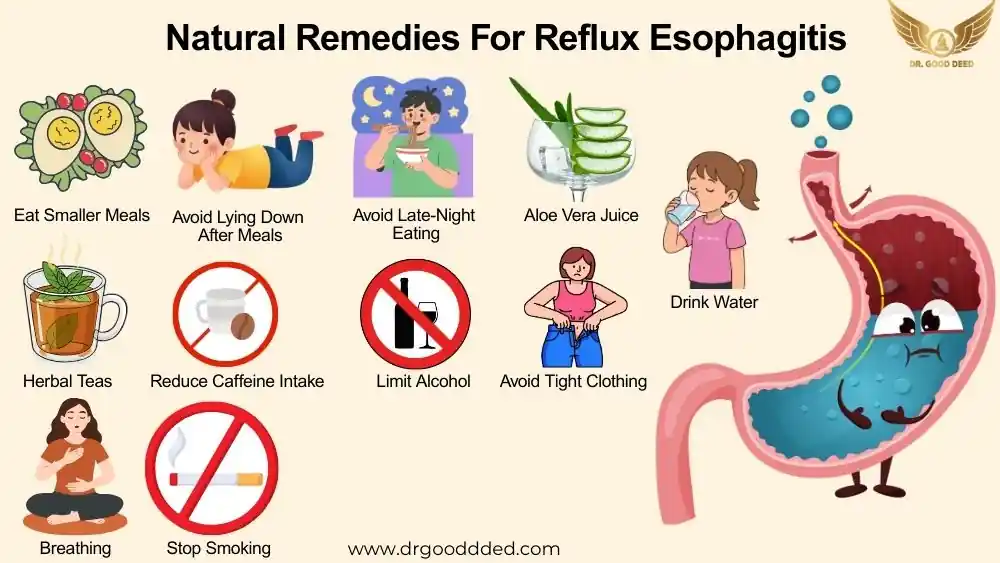
Reflux esophagitis improves when repeated acid contact is stopped. These remedies work by lowering stomach pressure, reducing acid backflow, and protecting the esophagus lining while it repairs itself. Consistency matters more than intensity.
These natural remedies for reflux esophagitis target pressure and acid movement to reduce triggers that keep inflammation active.
Elevate The Head While Sleeping
Raising your upper body during sleep lowers nighttime reflux. Acid moves upward more easily when you lie flat. Elevation keeps gravity working in your favor. You will experience fewer reflux episodes when the chest stays higher than the stomach. This is one of the most effective home remedies for reflux esophagitis for night symptoms.
Eat Smaller Meals
Large meals stretch the stomach. Stretching increases pressure inside the abdomen. That pressure pushes acid upward through the lower esophageal valve. Smaller meals reduce that force. Many patients report fewer flare-ups when they stop eating until full. This method directly reduces symptoms of esophagitis .
Avoid Lying Down After Meals
Lying down soon after eating allows acid to pool near the esophagus. Staying upright helps food move downward. Reflux episodes increase when people recline after meals. Sitting or standing reduces acid contact time.
Stay Upright For 2–3 Hours After Eating
The stomach needs time to empty. Remaining upright for at least two hours lowers acid backup. This habit protects the inflamed lining and supports recovery in several types of esophagitis linked to reflux injury.
Avoid Late-Night Eating
Late meals increase nighttime reflux risk. Acid production continues during sleep, but swallowing stops. This allows acid to sit longer in the esophagus. Finishing meals earlier reduces overnight inflammation and supports healing through proven home remedies for reflux esophagitis .
Weight Reduction To Reduce Acid Pressure
Excess abdominal weight increases pressure on the stomach. This pressure forces acid upward. Even modest weight loss reduces reflux frequency. Weight control is a long-term strategy among the most reliable natural remedies for reflux esophagitis .
Ginger
Ginger supports stomach emptying and reduces nausea. It does not neutralize acid, but it may lower stomach irritation. Small amounts are generally safe. Ginger helps digestion speed, which reduces acid backflow.
Licorice (DGL)
Deglycyrrhizinated licorice, known as DGL, supports the protective mucus layer of the esophagus. It does not stop acid production. It helps shield damaged tissue. Doctors often suggest it as supportive care, not a cure.
Aloe Vera Juice
Aloe has anti-inflammatory properties. Limited studies suggest it may calm esophageal irritation. Only purified, food-grade aloe should be used. Evidence is still limited, so it should be used cautiously as part of broader home remedies for reflux esophagitis .
Herbal Teas
Non-mint herbal teas such as chamomile may reduce gut irritation. They do not block acid. They help relaxation and digestion. Peppermint should be avoided because it can worsen reflux by relaxing the esophageal valve.
Chew Food Slowly
Fast eating increases swallowed air. Air raises stomach pressure. Chewing slowly reduces that pressure and supports digestion. This habit alone can reduce daily reflux episodes.
Identify And Eliminate Trigger Foods
Trigger foods differ by person. Common triggers include fatty foods, tomato-based meals, chocolate, and citrus. Keeping a food-symptom log helps identify patterns. Removing triggers is central to food for reflux esophagitis planning.
Reduce Caffeine Intake
Caffeine relaxes the lower esophageal valve. This allows acid to escape the stomach. Reducing coffee, energy drinks, and strong tea lowers reflux frequency.
Limit Alcohol
Alcohol irritates the esophageal lining and increases acid output. It also slows healing. Reducing alcohol intake lowers inflammation and improves symptom control in reflux-related types of esophagitis .
Avoid Tight Clothing Around The Abdomen
Tight belts or waistbands increase abdominal pressure. Pressure forces acid upward. Loose clothing reduces mechanical reflux triggers and supports home remedies for reflux esophagitis .
Practice Diaphragmatic Breathing
Deep breathing strengthens diaphragm control. The diaphragm supports the lower esophageal valve. You will feel improved reflux control with breathing training.
Manage Stress
Stress does not cause reflux, but it worsens symptoms. Stress increases stomach sensitivity and acid perception. Managing stress reduces pain severity in symptoms of esophagitis .
Use A Wedge Pillow
A wedge pillow keeps the chest elevated all night. This method reduces acid exposure time. Studies show fewer nighttime reflux events compared to standard pillows.
Drink Water
Small sips of water help wash acid downward. Large volumes during meals may worsen reflux. Proper timing matters in home remedies for reflux esophagitis .
Stop Smoking
Smoking weakens the esophageal valve and slows tissue repair. Stopping smoking significantly improves healing rates and lowers complications.
Foods For Reflux Esophagitis
Food choice plays a direct role in how often acid reaches your esophagus. Certain foods reduce acid pressure, while others delay stomach emptying or relax the valve that blocks reflux. Choosing the right foods for reflux esophagitis reduces daily irritation and supports healing.
Low-Acid Fruits And Vegetables
Low-acid produce protects the esophagus lining. Bananas, melons, apples, pears, carrots, green beans, spinach, and zucchini are easier to digest. These foods do not trigger acid spikes. They also add fiber and water, which helps food move smoothly through your digestive tract.
People who shift toward low-acid produce often notice fewer burning episodes within weeks. This change supports long-term home remedies for reflux esophagitis .
High-Fiber Foods For Digestion
Fiber improves stomach emptying and reduces pressure buildup. Oats, brown rice, whole wheat bread, lentils, beans, and barley help keep digestion steady. When food moves faster through the stomach, acid has less time to flow upward. Low-fiber diets are linked to more frequent reflux symptoms. Fiber intake supports several natural remedies for reflux esophagitis by lowering acid exposure time.
Lean Protein Sources
Lean protein digests more easily than fatty meat. Skinless chicken, turkey, fish, eggs, and tofu provide nutrition without slowing digestion. Fatty protein stays in the stomach longer, which increases reflux risk. Cooking methods matter. Baking, grilling, steaming, or boiling works better than frying. Protein choices strongly affect daily symptoms of esophagitis .
Foods That Trigger Acid Reflux
Some foods relax the lower esophageal valve or irritate the lining directly. Common triggers include fried food, spicy meals, tomato-based sauces, citrus fruits, chocolate, onions, garlic, and mint. These foods do not harm everyone the same way.
Keeping a symptom log helps you identify personal triggers. Removing them is essential when managing types of esophagitis linked to acid injury.
Home Remedies For Acidity
Acidity often comes before esophageal inflammation. Managing acidity early reduces damage and lowers the risk of reflux esophagitis. These home remedies for acidity focus on stomach balance and digestive habits.
Ginger And Warm Water
Warm ginger water supports digestion and reduces stomach discomfort. Ginger may help food move faster out of the stomach, which reduces acid backup. Use small amounts because too much ginger can cause irritation. Evidence supports ginger as supportive care, not a cure.
Herbal Teas For Acidity Relief
Chamomile and fennel teas may calm the digestive tract. They do not stop acid production, but they may reduce irritation and bloating. Peppermint tea should be avoided because it can worsen reflux by relaxing the esophageal valve. Herbal teas work best as part of broader home remedies for reflux esophagitis .
Lifestyle Changes To Reduce Acidity
Skipping meals increases acid buildup. Eating at regular times helps regulate acid release. Poor sleep, stress, and smoking worsen acidity. Improving sleep routines and avoiding tobacco reduces acid exposure. These steps support both home remedies for acidity and esophageal healing.
Meal Timing And Portion Control
Large meals increase stomach pressure. Eating smaller portions more often helps control acidity. Finish meals at least three hours before sleep. This timing reduces nighttime reflux and protects the esophagus during rest.
What To Avoid With Reflux Esophagitis
Healing fails when daily habits continue to trigger reflux. Certain behaviors directly increase acid exposure time or weaken the esophageal valve, making recovery slow or incomplete despite other efforts.
Late-Night Meals
Eating close to bedtime increases nighttime reflux. Acid remains active while swallowing stops during sleep. This leads to prolonged acid contact with the esophagus.
Tight Clothing And Belly Pressure
Tight waistbands, belts, and shapewear increase abdominal pressure. This pressure pushes acid upward. Loose clothing reduces mechanical reflux triggers.
Alcohol, Spicy, And Fried Foods
Alcohol irritates the esophagus and increases acid output. Spicy and fried foods delay digestion and worsen inflammation. Reducing these foods improves outcomes in reflux-related types of esophagitis .
Overeating
Eating until full stretches the stomach. Stretching increases acid pressure and worsens reflux. Stopping before fullness reduces daily symptoms of esophagitis .
When Home Remedies Are Not Enough
Some symptoms indicate deeper or ongoing damage. When inflammation persists or warning signs appear, relying only on home care increases complication risk and delays proper treatment.
Persistent Symptoms Despite Remedies
If burning, pain, or regurgitation continue after several weeks of consistent changes, medical evaluation is needed. Ongoing inflammation increases complication risk.
Painful Swallowing Or Weight Loss
Pain when swallowing or unexplained weight loss may signal deeper injury or narrowing of the esophagus. These symptoms should not be managed only with home remedies for reflux esophagitis .
Symptoms Lasting More Than Two Weeks
Symptoms that persist longer than two weeks without improvement need professional review. Chronic inflammation may require medication support.
Signs Of Complications
Vomiting blood, black stools, chest pain, or severe difficulty swallowing are warning signs. These require immediate medical care.
FAQs
Do Home Remedies Really Heal Reflux Esophagitis?
Home remedies reduce acid exposure and support healing in mild cases. They do not repair severe damage alone. Doctors often combine lifestyle changes with medication for better results.
Which Home Remedy Works Fastest For Esophagitis?
Sleeping position changes and meal timing often reduce symptoms quickly. Elevation and early dinners lower nighttime acid exposure within days for many people.
Can Reflux Esophagitis Heal Without Medication?
Mild reflux esophagitis can improve with strict lifestyle control. Moderate or severe cases usually need medication to allow the lining to heal safely.
What Foods Worsen Reflux Esophagitis The Most?
Fried foods, alcohol, spicy meals, citrus, tomato sauces, and chocolate worsen reflux most often. These foods increase acid or weaken the esophageal valve.
Is Reflux Esophagitis The Same As GERD?
GERD is the condition that causes acid reflux. Reflux esophagitis is the injury that happens when acid damages the esophagus over time.
How Long Does Esophagitis Take To Heal Naturally?
Mild cases may improve within weeks. Healing time depends on acid control, diet, and lifestyle consistency. Severe cases take longer.
Can Acidity Cause Esophageal Damage?
Yes. Chronic acidity exposes the esophagus to repeated acid injury. Over time, this causes inflammation, ulcers, or scarring.
Are Herbal Remedies Safe For Reflux Esophagitis?
Most are safe in small amounts, but evidence is limited. Herbal remedies should support, not replace, proven home remedies for reflux esophagitis .
When Should Reflux Esophagitis Not Be Treated At Home?
Severe pain, bleeding, swallowing difficulty, or weight loss should never be managed only at home. Medical evaluation is necessary.
Can Lifestyle Changes Alone Prevent Esophagitis?
Yes. Consistent diet control, weight management, meal timing, and smoking avoidance prevent most reflux-related esophageal damage.









Leave a Comment