



Natural remedies for heat rash focus on cooling the skin, clearing blocked sweat ducts, and calming inflammation. When sweat ducts clog, moisture leaks into surrounding skin, causing itching, burning, and red bumps. Effective remedies cool the skin to reopen blocked ducts, absorb excess moisture to stop further blockage, and protect the skin barrier to prevent infection.
Methods like controlled cooling, airflow, moisture-absorbing powders, soothing plant-based applications, and proper hydration help the skin reset its normal sweat flow.
20 Home Remedies for Heat Rash
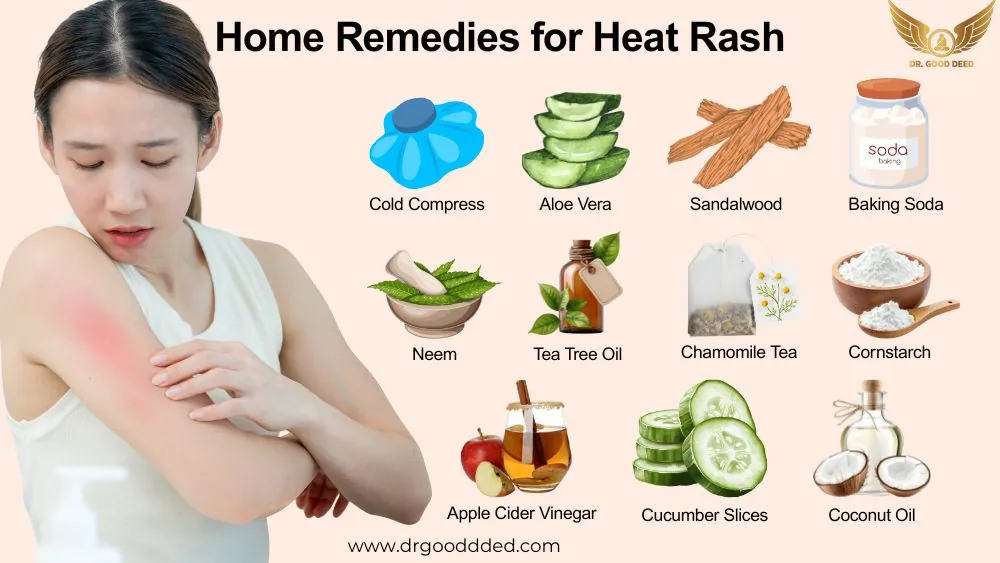
Heat rash improves when sweat ducts reopen and skin temperature drops. Most remedies work by reducing moisture, calming inflammation, or preventing friction. Combining cooling with dryness gives faster relief than using one method alone.
Cold Compress
Cold compresses lower skin temperature fast. Cooling reduces inflammation and itching by slowing blood flow near the surface. Cooling helps reopen blocked sweat ducts. You should wrap ice in a cloth and apply it for ten minutes. Do not place ice directly on skin. This method supports natural remedies for heat rash without drug exposure.
Aloe Vera
Aloe vera gel contains compounds that calm irritated skin, support surface healing, and help reduce redness and dryness. Use fresh or pure gel only. Apply a thin layer twice daily. Avoid products with fragrance. Aloe fits well among home remedies for heat rash because it cools without blocking pores.
Oatmeal Bath
Colloidal oatmeal forms a protective layer over skin. It reduces itch signals sent by irritated nerve endings and lowers skin inflammation. Evidence specific to heat rash is limited, but symptom relief is consistent. Grind plain oats and mix into lukewarm water. Soak briefly. This method aligns with natural remedies for heat rash that protect the skin barrier.
Sandalwood
Sandalwood paste has traditional use for heat-related skin irritation and mild anti-inflammatory effects. Clinical data for heat rash remain limited, so results vary. Mix sandalwood powder with water and apply lightly. Rinse after drying. This option appears often in herbal remedies for heat rash , but it should not replace cooling measures.
Baking Soda
Baking soda reduces surface moisture and mild itching. It changes skin pH slightly, which can calm irritation. Doctors caution against frequent use because it may dry the skin too much. Mix a small amount with water and apply briefly. This works best as short-term support within home remedies for heat rash .
Talcum Powder
Plain talcum powder absorbs moisture and reduces friction. Keeping skin dry is a core principle in managing heat rash. Use sparingly and only on intact skin. Avoid inhalation. This option helps control symptoms but does not treat blocked ducts directly. It still plays a role in natural remedies for heat rash, focused on moisture control.
Neem
Neem leaves contain antibacterial compounds shown in laboratory studies. This may lower infection risk if scratching occurs. Evidence on heat rash is limited, but neem washes may help skin hygiene. Boil leaves, cool the water, and rinse the area. Neem remains a common choice in herbal remedies for heat rash due to its skin-soothing effects.
Tea Tree Oil
Tea tree oil has proven antibacterial activity. It may reduce secondary infection risk. It must always be diluted to avoid burns and using it on broken skin. Apply once daily at most. This remedy supports natural remedies for heat rash when infection risk exists, not for cooling alone.
Chamomile Tea
Chamomile contains flavonoids that calm skin irritation and reduce redness with topical use. Evidence for heat rash remains limited but supportive. Brew tea, cool it fully, and apply it with a cloth. This option fits within home remedies for heat rash aimed at calming the itch.
Cornstarch
Cornstarch absorbs sweat effectively. Moisture control prevents further duct blockage. It should only be used on dry skin, not wet folds. Apply lightly. This method supports natural remedies for heat rash by limiting sweat buildup rather than treating inflammation.
Hydration And Cooling
Internal hydration helps regulate body temperature because dehydration worsens heat-related skin issues. Drink water regularly and avoid peak heat hours. Cooling the body reduces sweat production at the source. This is one of the most effective natural remedies for heat rash , supported by basic heat illness research.
Apple Cider Vinegar
Apple cider vinegar may reduce itching by balancing skin surface acidity. Scientific evidence specific to heat rash is limited. Always dilute before use. Avoid broken skin. This method appears in home remedies for heat rash , but the benefits vary between people.
Steroid Creams
Low-strength steroid creams reduce inflammation and itching. Doctors usually prescribe these for short periods when symptoms are severe. Overuse can thin skin. These creams are not natural remedies for heat rash , but they are medically accepted for short-term relief.
Unscented Talcum Powder
Fragrance increases irritation risk. Unscented powder reduces friction safely when used correctly. Apply only after skin cools and dries. This supports moisture control, which is central to natural remedies for heat rash .
Apply Calamine Lotion
Calamine lotion cools skin and dries oozing bumps. It is commonly recommended by dermatologists for itchy rashes. Evidence supports symptom relief, not faster healing. Use twice daily. This fits supportive home remedies for heat rash .
Use Cucumber Slices
Cucumber has high water content and provides surface cooling. There is limited clinical research, but the cooling effects are immediate. Apply slices to affected areas for short periods. This method supports natural remedies for heat rash, focused on comfort.
Fans Or Air Conditioning
Airflow speeds sweat evaporation because dry skin heals faster. Fans reduce humidity around the body. Avoid direct cold airflow on infants. This approach is one of the most effective natural remedies for heat rash for prevention.
Coconut Oil
Coconut oil helps repair the outer skin layer and improves skin barrier function. It should only be used after cooling the skin because oil can trap heat. Use thin layers. This supports home remedies for heat rash during healing, not during active sweating.
Antihistamines
Antihistamines reduce itch by blocking histamine release. Doctors usually suggest them when itching disrupts sleep. Dosage varies by age and condition. These medicines support comfort but are not natural remedies for heat rash .
Oatmeal
Dry oatmeal can reduce friction in skin folds. It also absorbs moisture. This method is helpful when sweating cannot be avoided. It supports natural remedies for heat rash, focused on skin protection.
Types Of Heat Rash
Heat rash forms at different skin depths, which changes how it looks and feels. Some types itch sharply, while others cause little discomfort. Knowing the type helps you choose the right care and avoid worsening the rash.
Miliaria Crystallina
This is the mildest form. Sweat gets trapped near the surface. You see clear, fragile blisters with no redness. It often appears in infants. Cooling and drying the skin usually resolves it quickly. This form responds well to natural remedies for heat rash focused on cooling.
Miliaria Rubra (Prickly Heat)
This is the most common form. Sweat ducts block deeper, causing red bumps and sharp itching. Inflammation triggers the prickling feeling. Continued heat worsens it. Cooling, moisture control, and prickly heat home remedies help reduce symptoms. Scratching increases infection risk.
Miliaria Profunda
This form affects deeper ducts. Bumps are firm and flesh-colored with less itching. It often appears after repeated episodes. Medical evaluation may be needed if it persists. Natural remedies for heat rash may help relieve symptoms.
Prickly Heat Home Remedies
Prickly heat causes sharp itching because sweat leaks into deeper skin layers. The goal of prickly heat home remedies is to reduce sweat, protect skin, and prevent infection. These steps work best when started early.
Cornstarch For Moisture Control
Cornstarch absorbs sweat and reduces skin friction. Sweat trapped in skin folds worsens prickly heat. Keeping these areas dry lowers irritation. You should apply cornstarch only to clean, dry skin. Never use it on wet rashes because it can clump and irritate further. Moisture control is a core part of natural remedies for heat rash , especially in humid climates.
Coconut Oil For Skin Barrier
Repeated sweating weakens the outer skin layer. This allows for more irritation and itching. Coconut oil helps repair that barrier by reducing water loss from skin. Studies on dry skin show improved barrier strength with regular use. Apply only after cooling the skin completely. Use a thin layer. Heavy application traps heat. This method supports prickly heat home remedies during recovery, not during active sweating.
Cooling Powders And Lotions
Cooling powders reduce friction and heat buildup. Calamine-based products provide both cooling and drying effects. Dermatologists often suggest them for itchy rashes. Avoid menthol-heavy products on sensitive skin. Cooling agents work best when combined with airflow and loose clothing. This approach fits well with natural remedies for heat rash that focus on symptom control.
Home Remedies For Baby Rashes
Baby skin traps heat faster than adult skin because sweat ducts block easily. Care must stay gentle and simple. Home remedies for baby rashes focus on cooling and prevention rather than aggressive treatment.
Gentle Cooling Baths
Lukewarm baths reduce skin temperature without drying it. A brief water exposure for heat rashes. Avoid soap during flare-ups. Soap strips protective oils and increases irritation. Pat skin dry instead of rubbing. Cooling baths support natural remedies for heat rash in infants safely.
Fragrance-Free Moisturizers
Fragrance triggers irritation and allergic reactions in babies. Simple, fragrance-free moisturizers help restore skin balance after cooling. Apply only when skin feels cool and dry. Thick creams during heat exposure trap warmth. These products support home remedies for baby rashes when used correctly.
Preventing Heat Rash In Babies
Prevention matters more than treatment. Dress babies in loose cotton clothing. Avoid overdressing indoors. Keep sleeping areas cool and well ventilated because overheating increases rash risk. These steps reduce recurrence and support long-term control of natural remedies for heat rash in infants.
What To Avoid During Heat Rash
Some habits slow healing even when treatment is correct. Heat retention, friction, and pore-blocking products trap sweat under the skin. Avoiding these triggers is as important as applying remedies.
Tight Or Synthetic Clothing
Tight clothing traps sweat and increases friction. Synthetic fabrics block airflow. Both increase sweat duct blockage. Loose cotton allows evaporation and cooling. Clothing choice directly affects how well natural remedies for heat rash work.
Heavy Oils And Creams
Heavy products trap heat and sweat. This delays healing. Oils should only be used after cooling the skin. During an active rash, light products work better. This rule applies to adults and babies alike.
Excessive Heat Exposure
Heat exposure drives sweating. Sweating worsens the rash. Avoid peak afternoon heat when possible. Stay indoors or in shaded areas. Fans and airflow reduce humidity around skin. Heat control is the foundation of natural remedies for heat rash .
When To See A Doctor For Heat Rash
Most heat rashes resolve on their own, but certain signs need medical review. Infection, fever, or lack of improvement suggest a deeper issue. Early care prevents complications and scarring.
Rash Lasting More Than 3 Days
If the rash does not improve after cooling and home care, medical review is wise. Persistent rash may signal deeper duct blockage or infection. Doctors assess whether treatment needs adjustment.
Signs Of Infection
Pain, pus, swelling, or warmth suggest infection. Scratching breaks the skin and lets bacteria enter. Infected heat rash requires prescription treatment. Natural remedies for heat rash are not enough once infection develops.
Heat Rash In Infants With Fever
Fever is not normal with simple heat rash. It may signal heat illness or infection. Infants with rash and fever need prompt medical evaluation. Do not delay care.
FAQs
Do Natural Remedies Work For Heat Rash?
Yes, natural remedies for heat rash work for most mild cases by cooling skin, reducing sweat, and protecting the skin barrier. Cooling and moisture control are first-line care.
What Is The Fastest Home Remedy For Heat Rash?
Cooling the skin works fastest. Cold compresses and air circulation reduce itching within minutes. These methods address the root problem of trapped sweat rather than masking symptoms.
Are Herbal Remedies Safe For Heat Rash?
Many herbal remedies for heat rash are safe when used correctly. Evidence is limited for some herbs, so results vary. Always test on a small skin area first.
How Long Does Heat Rash Take To Heal Naturally?
Most cases improve within two to three days once heat exposure stops. Healing may take longer if sweating continues. Early use of natural remedies for heat rash shortens recovery.
Can Babies Use Home Remedies For Heat Rash?
Yes, but only gentle home remedies for baby rashes should be used. Cooling baths, airflow, and simple moisturizers are safest. Avoid strong oils and medicated products.
Is Prickly Heat Contagious?
No, prickly heat does not spread between people. It forms due to blocked sweat ducts, not infection. Close contact does not increase risk.
What Worsens Heat Rash Symptoms?
Heat, humidity, friction, and tight clothing worsen symptoms. Ignoring these factors limits the effect of natural remedies for heat rash , even if treatments are used.
Can Heat Rash Become Infected?
Yes. Scratching damages the skin and allows bacteria to enter. Infection changes treatment needs. Medical care becomes necessary at that point.
Which Fabric Is Best During Heat Rash?
Loose cotton and breathable linen work best. These fabrics allow sweat evaporation and reduce friction. Fabric choice strongly affects recovery speed.
When Should Heat Rash Not Be Treated At Home?
Heat rash should not be treated at home if fever, pus, spreading redness, or pain appears. These signs suggest infection or heat illness requiring medical care.






Leave a Comment