
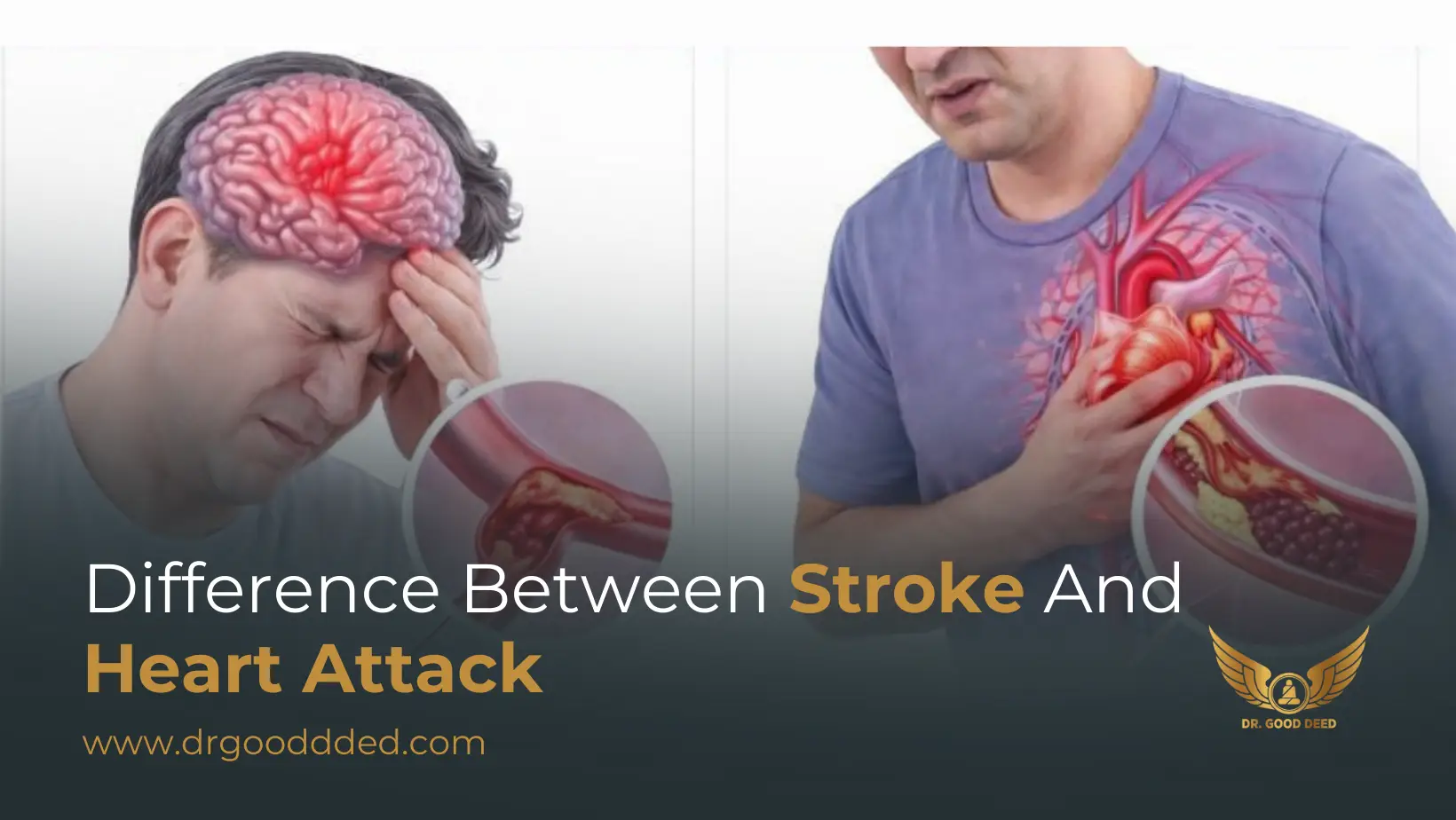

The difference between a stroke and a heart attack starts with where blood flow fails. A stroke happens when blood supply to the brain stops or drops. A heart attack happens when blood flow to the heart muscle is blocked.
A stroke injures brain cells within minutes because the brain cannot store oxygen. It can happen due to a clot blocking a brain artery or a vessel bursting and bleeding. Treatment for stroke focuses on fast brain scans, clot-removal medicines or procedures, and strict blood pressure control, because wrong treatment can worsen brain damage.
A heart attack injures heart muscle when a coronary artery gets blocked, usually by a clot forming over fatty plaque. Treatment for heart attack focuses on quickly opening the blocked artery using medicines, stents, or surgery to save heart muscle.
Understanding the difference between stroke and heart attack helps you act fast, recognize symptoms early, and reach the right emergency care before permanent damage sets in.
What Is a Stroke?
A stroke is a sudden brain emergency. Your brain needs oxygen every second. When a brain blood vessel gets blocked or breaks, brain cells start to die. That is the difference between a stroke and a heart attack at the organ level.
How A Stroke Occurs
Your brain runs on blood flow. A stroke begins when blood cannot move through a vessel in the brain. That can happen in two main ways.
- One way involves a blockage. A clot can form in a brain artery. Or a clot can travel from somewhere else and lodge in a brain artery. This starves brain tissue.
- The other way involves bleeding. A weak vessel can burst. Blood leaks into the brain area. Pressure rises inside the skull. This pressure can crush nearby brain tissue.
Stroke symptoms often appear quickly and suddenly. This is a key part of the difference between stroke and heart attack .
Types Of Stroke (Ischemic, Hemorrhagic, TIA)
- Ischemic stroke means a blockage. It is the most common type. The clot stops oxygen from reaching brain cells.
- Hemorrhagic stroke means bleeding. The vessel breaks and spills blood into or around the brain. Long-term high blood pressure can weaken vessels and raise this risk.
- TIA means transient ischaemic attack. It is a short blockage of brain blood flow. It is also called a mini-stroke, in which the symptoms often last less than five minutes, then improve.
The difference between stroke and heart attack also shows up in the first test. Stroke care often starts with urgent brain imaging. Doctors need to see if you have bleeding or a clot.
Stroke Vs Mini-Stroke Differences
A TIA can mimic a stroke. You can have the same face droop, arm weakness, or speech trouble. The big difference is time and damage. A TIA clears because the blockage resolves. A stroke can keep going and can leave lasting injury.
Do not treat a TIA as “it went away so it is fine.” TIAs are often a warning of a future stroke. About one-third of people who have a TIA later have a stroke.
What Is a Heart Attack?
A heart attack is a heart muscle emergency. Your heart has its own blood supply through the coronary arteries. If a coronary artery gets blocked, part of your heart muscle doesn’t get oxygen.
Stroke is “brain blood flow failure,” whereas, heart attack is “heart muscle blood flow failure.”
How A Heart Attack Occurs
Most heart attacks start with plaque. Plaque is fatty buildup inside an artery wall. When plaque cracks, your body tries to “patch” it. A clot forms on top. The clot can block the artery and cut off oxygen to the heart muscle.
The longer the block lasts, the more muscle dies. That dead muscle cannot pump again. This is why speed matters. It also explains why your symptoms can build over minutes, not always in one sharp moment.
Role Of Blocked Coronary Arteries
Blocked coronary arteries are the main cause of heart attack . Narrowing often grows over the years. High blood pressure can damage the artery lining. High LDL cholesterol can feed plaque growth. Smoking can inflame vessels and raise clot risk. Diabetes can injure vessels and change how blood clots.
Some heart attacks happen with less plaque buildup. A vessel spasm can squeeze the artery shut. A tear in the artery wall can also block flow. These are less common, but they exist. Doctors look for them in younger people, too.
Heart Attack Vs Cardiac Arrest
A heart attack is mainly caused by a lack of oxygen supply to the heart tissues, which occurs due to blockage in the coronary arteries.
Cardiac arrest is an electrical problem. The heart’s rhythm fails, and pumping stops. Sudden cardiac arrest can be the first sign for some people having a heart attack.
So cardiac arrest is a separate emergency, even if one can lead to the other.
Stroke Vs Heart Attack Causes
Both events often trace back to artery disease and clots. Still, triggers differ by organ and vessel type. This is another practical difference between a stroke and a heart attack .
Causes Of Stroke
The causes of stroke often involve a clot blocking a brain artery. Sometimes the clot forms in the neck arteries, like the carotid artery, then breaks off and travels upward. Sometimes it forms in the heart and travels, especially when you have atrial fibrillation, an irregular heartbeat that can let clots form.
Bleeding strokes are often linked to high blood pressure. Pressure can weaken small brain vessels. Some people also have weak vessel spots called aneurysms (a bulge in a blood vessel). If an aneurysm breaks, bleeding can follow.
Causes Of Heart Attack
The causes of heart attack most often involve plaque rupture and clotting in a coronary artery. It is not just “a blockage.” It is also inflammation and clotting activity inside the artery wall.
Less common causes include coronary spasm and artery tearing. Some drugs that tighten vessels can raise the risk. Doctors ask about this in the ER because it can change the treatment plan.
Shared Risk Factors (BP, Diabetes, Smoking)
High blood pressure stresses the vessel walls. Diabetes harms the lining of vessels and changes clotting. Smoking irritates vessels and raises clot tendency. High LDL cholesterol helps plaque form. Low activity and poor sleep can add to risk.
This overlap matters because the difference between stroke and heart attack does not protect you from both. One event can raise the risk of the other later.
Heart Attack Vs Stroke Symptoms

Symptoms help you decide what is happening. They also help you act faster. The difference between stroke and heart attack shows up clearly here.
Common Stroke Symptoms
Common symptoms of stroke often appear suddenly. Sudden numbness or weakness on one side, sudden confusion or trouble speaking, sudden vision trouble, sudden trouble walking, and sudden severe headache with no known cause.
Stroke symptoms often look “uneven.” One side of your face may drop. One arm may drift down. Your words may not come out right. If you feel “your body obeys on one side but not the other,” treat it as urgent.
Common Heart Attack Symptoms
Common symptoms of heart attack include chest pressure, squeezing, or pain. Shortness of breath, cold sweat, nausea, and lightheadedness are other common symptoms of a sudden heart attack.
The chest feeling can spread to your arm, neck, jaw, back, or upper stomach. Some people call it heaviness. Some call it burning. If it lasts or it comes with breath trouble or sweating, treat it as an emergency.
Symptoms That Overlap
Some symptoms overlap, which can confuse you. Nausea can occur in both. Sweating can occur in both. Feeling faint can occur in both. Some people also feel intense fear in both events.
This is why you should not self-diagnose at home. If you suspect either problem, you need emergency care. Tests can sort out the difference between stroke and heart attack fast and safely.
Silent Stroke Vs Silent Heart Attack
A silent stroke can happen when a small brain area loses blood flow without obvious symptoms. Later, a scan may show old stroke spots. You may only notice memory or balance changes over time.
A silent heart attack can also happen. Older adults and people with diabetes may have very mild heart attack symptoms, or none that feel “classic.”
Signs Of Stroke Vs Heart Attack
FAST Warning Signs Of Stroke
FAST gives common stroke patterns quickly and provides you a quick check, such as.
- Face drooping.
- Arm weakness.
- Speech difficulty.
- Time to call emergency services.
If you see FAST signs, assume stroke until proven otherwise. This mindset can save brain function.
Chest Pain And Heart-Related Warning Signs
Heart attacks often announce themselves in the chest. Chest pressure that lasts can be a big clue. Shortness of breath, cold sweat, and pain spreading to the jaw or arm also matter. If chest symptoms lead the picture, treat it as a possible heart attack. Call emergency services. Do not drive yourself if you feel faint.
Symptoms In Women
Women can have chest pressure. Women also more often have less typical signs. Neck, jaw, shoulder, upper back, or upper stomach pain, plus nausea, dizziness, and unusual fatigue, are other uncommon symptoms in women.
For stroke, women often show the same sudden one-sided weakness or speech trouble as men. Do not wait for “classic” signs.
Symptoms In Older Adults
Older adults may have weaker warning signals. They may show confusion, weakness, or shortness of breath instead of clear chest pain. They may also have balance trouble that looks like a fall.
If an older adult has a sudden change from their normal state, treat it as urgent. Even if symptoms improve, you still need evaluation.
Stroke Vs Heart Attack Treatment
When you understand the difference between stroke and heart attack , you also understand why doctors rush you into different tests and rooms. Stroke care often starts with a brain scan. Heart attack care often starts with an ECG (heart tracing) and blood tests.
Emergency Treatment For Stroke
Emergency treatment for stroke depends on what caused it. Doctors must first rule out bleeding. A non-contrast CT scan helps do that fast.
If you have an ischemic stroke (a clot stroke), doctors may use a clot-busting IV medicine. This medicine must be given within 4.5 hours from when symptoms began. Faster is better.
If you have a “large vessel” blockage (a big artery blockage), you may need mechanical thrombectomy. That is a procedure where a specialist threads a device into the artery and removes the clot. Thrombectomy should happen as quickly as possible and can be useful up to 24 hours in selected patients.
If you have a hemorrhagic stroke (bleeding stroke), clot-busting drugs are unsafe. Care focuses on controlling blood pressure, stopping bleeding, and lowering pressure in the skull. Sometimes you need surgery. The key point is this: brain bleeding and brain clots look similar at first. Imaging separates them.
This is where the difference between stroke and heart attack becomes life-saving. The “right” medicine for one can harm the other.
Emergency Treatment For Heart Attack
Emergency treatment for a heart attack aims to restore blood flow to the heart muscle. Aspirin is a common early step because it reduces clotting and helps blood keep moving through a narrowed artery.
You may need a procedure called coronary angioplasty, often with a stent. Angioplasty and stents increase blood flow through a blocked or narrowed heart artery.
Doctors may also use other medicines to reduce strain on the heart, prevent more clots, and control rhythm problems. The exact plan depends on your ECG and your artery findings.
Again, the difference between stroke and heart attack shows up in the first hour. Stroke teams rush to brain imaging. Heart teams rush to heart rhythm tests and artery opening.
Importance Of Treatment Timing
- For ischemic stroke, IV clot-busting medicine works best when given early, and it has a strict time window for many patients.
- For certain strokes, thrombectomy can still help later, but only for selected patients with the right scan pattern.
- For a heart attack, the longer the artery stays blocked, the more heart muscle dies. That dead muscle cannot come back. Opening the artery early gives you more pumping strength later.
Here is a quick timing view that helps you act fast. It also reinforces the difference between stroke and heart attack .
| Emergency Goal | Stroke (Clot Type) | Heart Attack (Blocked Artery) |
| Main urgent action | Restore brain blood flow | Restore heart blood flow |
| Common first “must-do” test | Brain CT scan | ECG + heart blood tests |
| Key time window examples | IV clot-busting often within 4.5 hours; thrombectomy up to 24 hours in select cases | Earlier artery-opening is better; plan depends on type and tests |
Recovery After Stroke Vs Heart Attack
Recovery is not just “rest at home.” You heal best with structure, rehab, and risk control. The difference between stroke and heart attack also shapes rehab.
Stroke Recovery Timeline
After a stroke, you may need rehab for movement, speech, and daily tasks. You will need long-term rehabilitation that can last months or years, depending on stroke severity.
You often improve fastest early on. There can be a critical period where added intensive therapy gives the biggest gains, often around 2 to 3 months after stroke, in some settings.
That does not mean recovery stops later. Finishing formal rehab, often by 3 to 4 months, should not end progress. You can keep improving with practice.
Heart Attack Recovery Timeline
After a heart attack, your recovery focuses on heart strength, safe activity, and preventing another attack. Cardiac rehab usually includes monitored exercise, food coaching, and support for stress and sleep. Cardiac rehab teams can include exercise and nutrition specialists, physical therapists, and mental health professionals.
Your return to work depends on how much muscle got injured and what procedure you needed. Some people return within weeks. Others need longer.
Long-Term Complications
Stroke can leave weakness, speech trouble, swallowing trouble, or thinking changes. Heart attack can leave rhythm problems, chest discomfort, or heart failure (weak pumping). Both can raise depression and anxiety risk, especially after a sudden hospital stay.
Which Is More Dangerous: Stroke Or Heart Attack?
The danger depends on stroke type, heart attack size, your age, and how fast you get care.
Fatality Rates Comparison
Heart disease remains a leading cause of death in many countries. In the US, the CDC reports that cardiovascular disease causes very frequent deaths overall. Stroke is also a leading cause of death and a major cause of serious disability in adults.
A massive heart attack can kill fast, especially if it triggers a deadly rhythm. A major bleeding stroke can also kill fast due to brain pressure. So, both stroke and heart attack can be immediately fatal.
Disability Risk Comparison
Stroke more often causes lasting disability because the brain controls speech, movement, and memory. Stroke is a major cause of serious disability. Heart attacks can also cause disability, especially if the heart pumps weakly after.
Quality-Of-Life Impact
A stroke can change how you speak, walk, eat, and think. A heart attack can change your stamina and your sense of safety during activity. Both can change your job life and family life.
So, heart attack can kill suddenly. Stroke can be disabling long-term. Either one deserves the same urgency.
Prevention Of Stroke And Heart Attack
Lifestyle Changes To Reduce Risk
You lower risk when you stop smoking, manage blood pressure, and control your diabetes. Those steps reduce artery injury that drives the causes of stroke and the causes of heart attack .
If you have atrial fibrillation, ask about stroke prevention. That rhythm can raise clot risk in the heart and lead to brain clots.
Diet And Exercise Role
Food and movement control blood pressure, blood sugar, and cholesterol. Aim for more whole foods and less ultra-processed food. Walk often. Add strength work if your doctor says it is safe. These habits reduce plaque buildup and clot risk.
Importance Of Regular Health Screenings
Many risks stay silent. High blood pressure often has no warning signs. High cholesterol also hides. Regular checks can catch problems early, before you face the symptoms of stroke or the symptoms of heart attack .
FAQs
Can A Stroke Cause A Heart Attack?
Yes, it can happen. A severe stroke can stress your body and raise heart strain. You may develop rhythm problems, which can trigger heart damage. This links to the difference between stroke and heart attack in how organs react.
Can A Heart Attack Lead To A Stroke?
Yes. After a heart attack, clots can form in the heart. Irregular rhythm can also follow. Those clots can travel to the brain and cause an ischemic stroke. This explains overlap between causes of stroke and heart disease.
Are Stroke And Heart Attack Symptoms The Same?
Not exactly. The symptoms of stroke often involve sudden face droop, arm weakness, or speech trouble. The symptoms of heart attack often involve chest pressure and breath trouble. Some signs overlap, so you still call emergency help.
Which Happens Faster: Stroke Or Heart Attack?
Either can start within minutes. Stroke signs can appear suddenly, then worsen. Heart attack symptoms can hit fast or build. Treat both as urgent. This is the practical difference between stroke and heart attack you should remember.
Can Young People Get Strokes Or Heart Attacks?
Yes. It is less common, but it happens. Smoking, uncontrolled blood pressure, diabetes, some drug use, and some clotting disorders raise the risk. Family history can also matter.
Is Recovery Harder After A Stroke Or Heart Attack?
It depends on severity. Stroke recovery can involve speech and movement retraining, which takes time. Heart attack recovery often focuses on stamina and heart pumping strength. Cardiac rehab and stroke rehab both help.
How Long Does Emergency Treatment Take?
Teams start tests right away. For stroke, fast brain imaging guides treatment for stroke decisions. For a heart attack, ECG and blood tests guide treatment for heart attack and fast artery-opening plans.
Can Stress Cause Stroke Or Heart Attack?
Long-term stress can raise blood pressure and harm sleep. It can also push you toward smoking or poor eating. Those changes raise risk over time. Sudden intense stress can also strain the heart in some people.
Are Warning Signs Always Obvious?
No. Some people have silent events. Older adults and people with diabetes may have weaker warning signals. That is why checkups matter, even when you feel fine.
Can Both Happen At The Same Time?
It is rare but possible. Severe artery disease and clotting problems can raise the chance. If you see signs of stroke or heart attack , call emergency services and let tests confirm the difference between stroke and heart attack .


Leave a Comment