Spirulina side effects are the possible problems your body can face when you take spirulina, especially if the quality is poor or your health is fragile. The side effects of spirulina are stomach issues, allergy, or stress on the liver and immune system, not instant poisoning.
Large reviews from health agencies and research groups say spirulina looks “generally safe” for healthy adults, but they also warn that contaminated products and wrong use can still cause harm.
Side effects of spirulina side effects depend a lot on who you are. If you live with an autoimmune disease (where your immune system attacks your own body), weak kidneys, or liver disease, the side effects of spirulina can be stronger and show up faster.
Case reports also show rare but real problems, such as liver injury and severe allergy after spirulina supplements, especially when the product was not well controlled.
Side Effects Of Spirulina Supplements
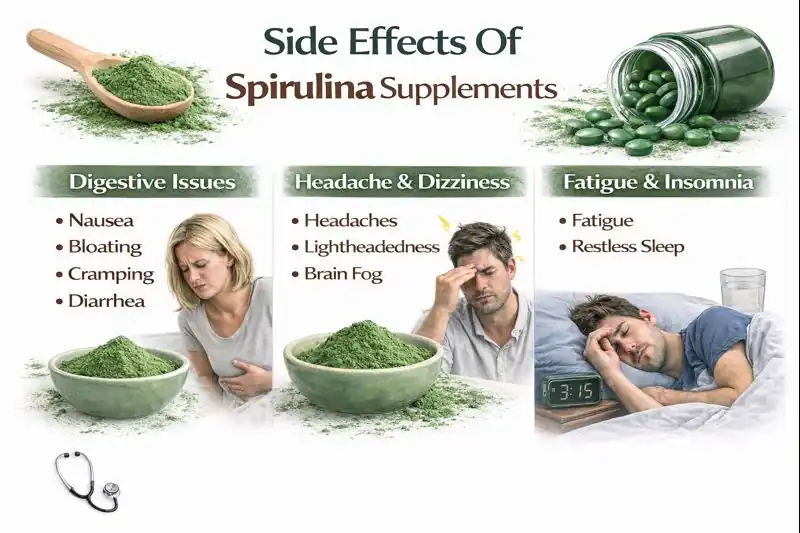
When you open a bright green powder or swallow a tablet, you usually expect energy and better health, not problems. Yet even normal doses can lead to side effects of spirulina supplements . You may feel unwell and report mild spirulina side effects like nausea, gas, headache, or feeling wired and unable to sleep. Safety reviews list digestive upset, headache, and fatigue as the most frequent side effects of spirulina , while stressing that serious reactions remain uncommon.
Common Digestive Issues (Nausea, Bloating, Cramps)
Your gut is often the first place where spirulina side effects appear. Spirulina packs a lot of protein, minerals, and pigments into a tiny dose, and that can shock a sensitive stomach.
People report nausea, bloating, cramping, and loose stools as some of the earliest side effects of spirulina when they jump straight to a full scoop of powder. Clinical summaries list digestive upset as the most common group of side effects of spirulina supplements , especially in people who already live with irritable bowel or reflux.
Headaches And Dizziness After Spirulina Intake
Headache and light dizziness also show up among common spirulina side effects . These may relate to changes in blood sugar, blood pressure, or simple dehydration, since many users forget to drink water with the powder.
Some people describe a “foggy” head or pressure behind the eyes after a new dose, which they first mistake as detox but which is more likely part of the side effects of spirulina .
Because serious neurological symptoms like confusion or strong, sudden headache can signal something more than normal spirulina side effects , doctors advise that you stop the product and seek care if those appear.
Spirulina Contaminated With Heavy Metals/Toxins
Pure spirulina grown in controlled tanks behaves very differently from spirulina grown in open ponds. Cyanobacteria (a type of water bacteria that includes spirulina) easily pick up heavy metals like lead and arsenic from dirty water, and they can be mixed with other algae that make microcystins (toxic chemicals that damage the liver and kidneys).
Studies of market products in Europe found microcystin in several blue-green algae supplements, which can turn normal spirulina side effects into something far more dangerous.
Microcystins are well known to public health bodies as liver poisons that can cause nausea, vomiting, abdominal pain, and even acute hepatitis. In this situation, the side effects of spirulina are really the effects of these toxins, not the spirulina itself.
Who Should Avoid Spirulina (Autoimmune, PKU, Pregnancy Considerations)
You should be very careful with spirulina side effects if your immune system already behaves in a sensitive way. A 2025 rheumatology paper and other reviews showed that spirulina can activate immune cells and has been linked with flares of autoimmune diseases like dermatomyositis and blistering skin disorders in some patients.
When you add an immune-stimulating supplement, the side effects of spirulina may look like worse joint pain, more rashes, or new muscle weakness, not just mild stomach upset.
Spirulina also contains phenylalanine, an amino acid that people with phenylketonuria (PKU, a rare genetic condition where you cannot break down phenylalanine) must avoid. For you, even small amounts can harm the brain over time. That turns normal side effects of spirulina supplements into a major risk, so PKU guidelines usually treat spirulina products as unsafe.
Safety summaries also urge pregnant and breastfeeding women to be careful because the baby’s organs are still forming and microcystin or heavy metals, even in low levels, can cause lasting damage. In these groups, the safest approach is to avoid spirulina unless a specialist who knows your full history clearly agrees.
How Dosage Affects Side Effects
Dose is one of the biggest drivers of spirulina side effects . Human trials that examined the use of spirulina for cholesterol or blood sugar often used a few grams per day and reported mainly mild problems like digestive upset or headache.
Higher intakes from large homemade scoops or multiple products can push side effects of spirulina into more serious territory, especially if your liver or kidneys already work hard.
Toxicology studies show that risk from microcystins rises as daily intake climbs, even when each gram of powder holds only a small trace of toxin. So instead of chasing huge doses, you protect yourself by using modest amounts and by pausing the supplement if new symptoms appear.
When Spirulina Becomes Unsafe
For a healthy adult using a clean brand, spirulina side effects usually stay mild and short-lived. Spirulina becomes unsafe when several risk factors stack together: contaminated product, very high intake, and underlying disease such as liver scarring or autoimmune illness. Then the side effects of spirulina can shift from simple gas or nausea to yellow eyes, dark urine, or severe rash.
Reports collected by NIH LiverTox and recent reviews remind doctors that herbs like spirulina can still trigger drug-like reactions, including acute liver injury, even if that happens rarely, so any great change in your health after starting spirulina deserves serious attention.
Can Spirulina Thin The Blood?
Spirulina holds vitamin K and other compounds that may slightly change how your blood clots. Reviews from nutrition experts and safety summaries note possible interaction with warfarin and other anticoagulant drugs, although strong clinical trials are limited.
In practice, the side effects of spirulina related to clotting seem most important for you if you already take blood thinners or have a bleeding disorder, since even small shifts in clotting can change your lab results or bleeding risk.
Does Spirulina Cause Stomach Upset?
Yes, stomach upset is one of the most common side effects of spirulina supplements that users notice in real life. Gas, bloating, cramps, and loose stools often show up in the first days when you start or when you suddenly increase the dose.
For many people, these spirulina side effects calm down once they take spirulina with food, drink more water, and move back to a smaller serving. If pain, diarrhea, or nausea continue for more than a few days, or if you see blood, you should get medical advice.
Spirulina Liver Side Effects
Your liver acts as your main filter, so it feels some of the most important spirulina side effects . The NIH LiverTox database lists isolated reports of liver injury in people who used spirulina products, although the authors point out that contamination and other herbs in mixed formulas may share the blame. Still, these cases show that the side effects of spirulina can include raised liver enzymes or hepatitis (inflammation of the liver) in sensitive users.
Can Spirulina Affect Liver Enzymes?
Liver enzyme tests are blood tests that show how hard your liver is working. Case reports describe people who developed high enzymes after starting spirulina and then improved when they stopped it. That pattern suggests a possible link, even though the overall number of reports stays small compared with how many people use spirulina worldwide.
What Happens When Spirulina Is Contaminated With Microcystins?
Microcystins attack liver cells directly, which turns mild spirulina side effects into a much more serious illness. Public health alerts from the FDA and CDC show that these toxins can cause appetite loss, vomiting, severe fatigue, dark urine, and yellow eyes.
Long-term, they may even raise the risk of liver tumors. Because you cannot see or taste microcystins, your only real protection is buying from companies that test every batch and share those results. When microcystins are present, the side effects of spirulina are signs of toxin exposure that demand urgent care.
Spirulina And Fatty Liver Disease: Benefits Vs. Risks
Early studies suggest spirulina might improve some blood markers in people with fatty liver, yet the trials are short and often small, so the science stays limited. If you already live with fatty liver, your organ has less reserve, so spirulina liver side effects from toxins or overdose will hit harder. Talk to your liver specialist before you add spirulina, especially if you also take other supplements or alcohol that strain the liver.
Liver Toxicity Warnings From Poor-Quality Spirulina
Warnings from toxicology studies on blue-green algae keep repeating the same message: quality control matters. Products that come from unknown ponds or lack proper testing show higher rates of microcystin and heavy metals.
In that setting, spirulina side effects can include severe abdominal pain, strong nausea, and hospital-level liver injury instead of simple gas. Children, pregnant women, and people with chronic liver disease carry the highest risk, because their bodies tolerate toxins less well.
Signs Of Spirulina-Related Liver Stress
You should watch for signs that point to spirulina liver side effects rather than normal adjustment. These include ongoing loss of appetite, pain under your right ribs, yellowing of skin or eyes, and tea colored urine. If these symptoms appear within days or weeks of starting spirulina, stop the product and see a doctor as soon as you can, instead of waiting to see whether the problem “detoxes” away.
Spirulina Allergy Symptoms
Although many people tolerate spirulina, doctors have now published several cases of true allergy. In these patients, spirulina side effects appear as fast immune reactions, not slow digestive changes.
A 2014 case report showed a woman with full anaphylaxis (a sudden, severe whole-body allergic reaction) after a spirulina pill, and a 2024 review counted five confirmed allergies, most with severe reactions. These spirulina allergy symptoms can happen even at low doses, often minutes or hours after you take the product.
Itching, Hives, Or Swelling After Spirulina
Early spirulina allergy symptoms often show in your skin. You may notice itching, red patches called hives, or swelling of the lips and eyelids soon after a dose. You may think this comes from food you ate at the same meal, so you keep taking spirulina, and the reaction worsens. In reality, these are not harmless side effects of spirulina . They are warning signs that your immune system sees spirulina proteins as enemies.
Symptoms Of Severe Spirulina Allergic Reactions
In rare cases, spirulina side effects move into true anaphylaxis, a life-threatening allergic reaction. Symptoms include trouble breathing, wheezing, chest tightness, fast heartbeat, and feeling faint.
Case reports show teens and adults who needed emergency treatment after drinks or taking tablets that contained spirulina. When spirulina allergy symptoms reach this level, you need urgent medical care and long-term avoidance of spirulina and related algae.
Spirulina-Induced Asthma Flare-Ups
Asthma is a condition where your airways swell and narrow, which makes it hard to breathe. For some people with asthma, the side effects of spirulina include tighter chest, coughing, or a full asthma attack after a dose.
A recent allergy paper described a teenage boy who developed hives, lip swelling, and an asthma flare a few hours after taking spirulina tablets, and testing confirmed spirulina as the trigger. If you already use an inhaler, treat new wheezing after spirulina as a red flag and stop using the product.
Identifying Early Immune Reactions
You can often spot immune-type spirulina side effects before they grow severe. Mild tingling in the lips, itchy throat, or a small rash that keeps returning after each dose are early hints that your body reacts badly.
Because later reactions can become stronger, allergists advise that you stop spirulina and ask for medical advice rather than taking another tablet and hoping for the best. For many sensitive people, these small signs are the first stage of spirulina allergy symptoms that could later turn into full anaphylaxis.
Who Is At Higher Risk Of Spirulina Allergy
You face higher risk of immune-driven side effects of spirulina if you already live with asthma, strong hay fever, or food allergies, especially to seafood or other algae. Your immune system already reacts faster to certain proteins, so it may also react to spirulina pigments like phycocyanin. Even if you fall into this group, you should still start very cautiously and stop at the first sign of trouble.
Spirulina Interactions With Medications
Doctors now pay closer attention to spirulina interactions with medications . Spirulina can stimulate the immune system, affect blood sugar, and slightly alter clotting, so it can interfere with drugs that act in the same areas. Medical reviews and the NIH safety sheet warn that some spirulina side effects only show up when you mix the supplement with prescription drugs, not when you take it alone.
Immunosuppressants And Spirulina Risks
If you take immunosuppressant medicines, for example, after an organ transplant or for an autoimmune disease, spirulina can work against your treatment. These drugs calm your immune system, while spirulina may wake it up. That clash turns the side effects of spirulina into real dangers, such as organ rejection or disease flare. Experts in rheumatology now advise strong caution with spirulina in patients on these drugs.
Spirulina + Blood-Thinning Medications
Blood thinners such as warfarin, and some newer anticoagulants, keep your blood from clotting too easily. Because spirulina may slightly affect clotting and vitamin K handling, spirulina interactions with medications in this group can change lab values and bleeding risk. In practical terms, the spirulina side effects you notice might be easier bruising or nosebleeds if you take spirulina on top of your regular blood thinner without telling your doctor.
Spirulina With Diabetes Medications
Some human trials suggest that spirulina can lower blood sugar a little in people with type 2 diabetes, although the research is still early. If you already take insulin or tablets that drop blood sugar, this extra effect can push levels too low.
That turns normal side effects of spirulina into shakiness, sweating, or confusion from hypoglycemia (blood sugar that drops too low). For that reason, experts say you should only combine spirulina with diabetes drugs if your doctor adjusts your treatment and monitors your readings closely.
Spirulina And Autoimmune Disease Treatments
Autoimmune drugs such as steroids or biologic injections keep your immune system from attacking healthy tissue. Since spirulina may stimulate immune cells, spirulina interactions with medications in this group can undo some of the protective effect. Doctors have reported cases where patients developed new autoimmune problems or flares while also using spirulina. In that setting, spirulina side effects are not just mild discomfort, they can mean faster joint damage, skin blisters, or muscle weakness.
Is Spirulina Safe With Thyroid Medication?
Evidence on thyroid interaction is limited, yet many endocrinologists stay cautious. Thyroid tablets such as levothyroxine need an empty stomach and careful timing. Any high-protein or mineral supplement, including spirulina, can change how much medicine you absorb.
If you take thyroid pills, your safest move is to keep several hours between them and spirulina, watch for changes in your energy, weight, or heart rate, and report any concerns. That way, if spirulina side effects touch your thyroid control, your doctor can see the pattern and adjust treatment before bigger problems grow.
Spirulina Overdose Side Effects
Spirulina overdose side effects usually appear when you take much more than the label suggests or you use many spirulina products at once. For a healthy adult, most research uses moderate doses and reports mild problems. Very high doses raise the chance of gut upset, liver stress, or allergy.
What Happens When You Take Too Much Spirulina
When the dose is too high, spirulina side effects that were mild can suddenly feel strong. You may feel sick, shaky, or weak. Some case reports link high intake with liver enzyme spikes, which means liver cells are under stress. This is rare, but it becomes more likely as total exposure grows, especially if the product carries microcystins or heavy metals.
Symptoms Of Excess Spirulina Intake
Common spirulina overdose side effects include strong nausea, repeated vomiting, cramps, and watery stools. Some people also notice pounding headaches, odd fatigue, or trouble sleeping. These go beyond usual side effects of spirulina supplements and should not be brushed off as “detox”. If symptoms do not calm after stopping spirulina, or if you see blood, you need medical help.
Risks Of High-Dose Spirulina Powders And Capsules
Powders make overdose easy. A heaped spoon can hold several times the suggested serving. Capsules seem small, so you may swallow many in a day. Toxicology work shows that contaminated blue green algae products can give microcystin doses above health limits when people take large daily amounts. That turns normal spirulina side effects into toxin injury, including liver or kidney damage.
Safe Daily Spirulina Limits
Major groups such as NIH and WebMD say spirulina looks safe for most healthy adults at modest doses, though exact limits differ between trials. Doctors usually prefer the lowest dose that meets your goal. Dose also varies with your age, weight, and health. If you have liver, kidney, or autoimmune disease, even standard amounts can give stronger side effects , so you need personal advice instead of copying online plans.
How To Reduce Overdose-Related Discomfort
If you suspect spirulina overdose side effects , stop the supplement at once. Drink water in small, regular sips. Eat light foods like rice or toast while your gut settles. Avoid painkillers that stress the liver unless your doctor approves them. Severe or lasting symptoms, dark urine, or yellow eyes may be signs of serious spirulina liver side effects , not simple stomach irritation.
Who Should Not Take Spirulina
Some people face more risk than benefit from spirulina. For them, spirulina side effects can be intense even at low doses. Expert reviews and patient case reports help flag these groups.
People With Autoimmune Disorders
Autoimmune disease means your immune system attacks your own tissue. Spirulina can stimulate immune cells and has been linked with flares of autoimmune skin and muscle disease in published reports. Side effects of spirulina might show as new rashes, worse joint pain, or more fatigue, rather than only nausea. Many rheumatology and allergy experts suggest that people with active autoimmune disease avoid spirulina unless a specialist supervises it.
Those With Phenylketonuria (PKU)
PKU is a rare genetic condition where you cannot handle phenylalanine, an amino acid in high-protein foods. Spirulina contains this amino acid. For you, side effects of spirulina supplements can include long-term brain damage, so diet plans for PKU normally treat spirulina as unsafe. Health sites and genetic clinics list it among products that should be avoided.
Individuals With Seafood/Algae Allergies
If you already react to seaweed, shellfish, or other algae-based foods, you may be more likely to show spirulina allergy symptoms . Confirmed case reports describe hives, swelling, and anaphylaxis from spirulina tablets and drinks. For you, even a small test dose can bring dangerous side effects of spirulina , so allergists usually advise complete avoidance.
People With Kidney Conditions
Kidneys clear waste and some toxins. Microcystins and heavy metals from poor quality spirulina can strain them further. Blue green algae safety alerts note kidney as a target organ in animals and in human exposure.
That means spirulina side effects may be more serious and longer-lasting if your kidney function is already reduced. You should not start spirulina without direct approval from your nephrologist.
Pregnant Or Breastfeeding Women
Human safety data in pregnancy and lactation remains limited. Some small studies use spirulina for anemia or nutrition, but large, long-term trials are missing. At the same time, microcystin and metal exposure in early life can be harmful.
Regulatory bodies advise against blue-green algae products that lack strict toxin testing, especially for pregnant women. Until better data appear, avoiding spirulina is safer than risking serious side effects of spirulina in the mother or baby.
How To Take Spirulina Safely
If your doctor agrees that spirulina suits you, you can lower the chance of spirulina side effects by focusing on quality, dose, and monitoring.
Choosing High-Quality, Toxin-Free Spirulina
Regulators like the FDA and European agencies stress that blue green algae products must be tested for microcystins and heavy metals. You should buy only from brands that share clear lab reports for each batch. The label should show origin, lot number, and contact details. This is one of the best ways to reduce spirulina liver side effects and other toxin-related problems.
Recommended Dosage Guidelines
Clinical trials tend to use modest daily amounts and follow people for a limited time. Doctors usually decide dose based on your age, body size, goals, and other medicines. Because spirulina interactions with medications are possible, the safest rule is to keep the dose as low as possible and avoid mixing products with different forms of algae.
When To Stop Taking Spirulina
Stop spirulina and seek care if you notice strong rash, swelling, breathing trouble, or other clear spirulina allergy symptoms . Stop at once if you see signs of liver stress such as dark urine, yellow eyes, or pain under the right rib cage.
Monitoring Your Body’s Reaction
When you start spirulina, it helps to pay attention for a few weeks. Note any new headaches, stomach changes, sleep problems, or skin signs. If you are on long term medicine, ask your doctor whether you need extra blood tests. This makes spirulina interactions with medications easier to spot early, before they cause bigger trouble.
How To Introduce Spirulina Gradually
A slow start can reduce many side effects of spirulina supplements . Begin with a small serving and keep it at that level for several days. Take it with food and water. If no spirulina side effects show, your doctor may allow a slight increase. If you notice any worrying side effects of spirulina , it is safer to stop than to push on.
FAQ
Can Spirulina Cause Anxiety Or Insomnia?
Some people feel restless or wired or have trouble sleeping after taking spirulina. These spirulina side effects may relate to changes in blood sugar or individual sensitivity. If mood or sleep worsens, stop and talk with your doctor.
Is Spirulina Safe To Take Daily?
For many healthy adults, short-term daily use at modest doses looks safe. Yet long-term data are limited, and spirulina overdose side effects or contamination problems can still appear, especially with poor-quality products.
Can Spirulina Cause Skin Reactions?
Yes. Hives, itching, and swelling are documented spirulina allergy symptoms , sometimes progressing to full anaphylaxis. Any new rash after starting spirulina should be treated as a warning, not as a simple, harmless reaction.
Does Spirulina Detox Cause Temporary Side Effects?
Claims that nausea, diarrhea, or headaches are harmless “detox” are misleading. These are real side effects of spirulina or of toxins in the product. If they persist or feel strong, medical review is safer than waiting.
How Long Spirulina Side Effects Last
Mild spirulina side effects such as gas or light headaches often fade within a few days after you stop. Allergic reactions and liver problems can last much longer and may need treatment, blood tests, or even hospital care.
Can Spirulina Cause Digestive Discomfort Or Bloating?
Yes, stomach discomfort is among the common side effects of spirulina supplements . Gas, cramps, and bloating are reported in many user groups and reviews, especially when the dose is high or increased too quickly.
Does Spirulina Worsen Acid Reflux Or Gastritis?
Spirulina is rich in protein and minerals, which can irritate an already inflamed stomach. Some people with reflux or gastritis report worse burning after spirulina, so these side effects of spirulina mean the product does not suit you.
Can Spirulina Increase Uric Acid Levels?
Data on uric acid are limited. However, any high-protein supplement can, in theory, raise uric acid in some people. If you have gout, new joint pain after spirulina should be treated as a possible spirulina side effect .
Does Spirulina Affect Liver Enzymes?
Yes, a few case reports link spirulina with raised liver enzymes and even hepatitis. These spirulina liver side effects are rare but serious, especially in people with previous liver disease or heavy supplement use.
Can Spirulina Thin The Blood Too Much?
Spirulina is not a strong blood thinner by itself. Still, spirulina interactions with medications such as warfarin and some antiplatelet drugs might change clotting control, so people on these medicines should only use spirulina under medical guidance.
The normal blood sugar levels chart by age shows the safe ranges you should aim for today. It lists fasting numbers, post-meal peaks, and A1C targets. These ranges shift with age, health, and medicines. You can use this guide to spot what is normal for you right now and what needs care soon.