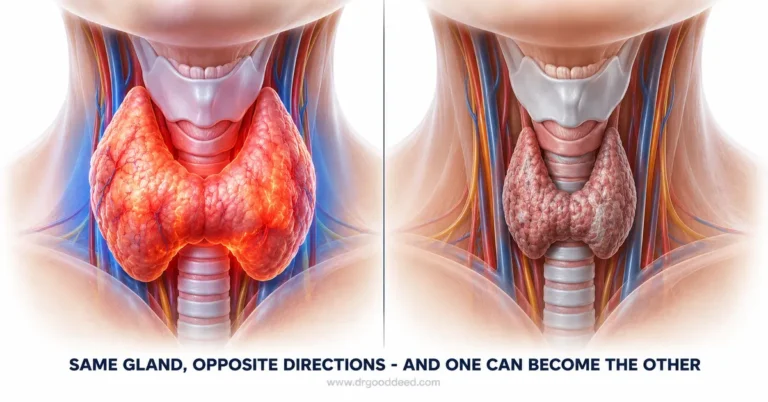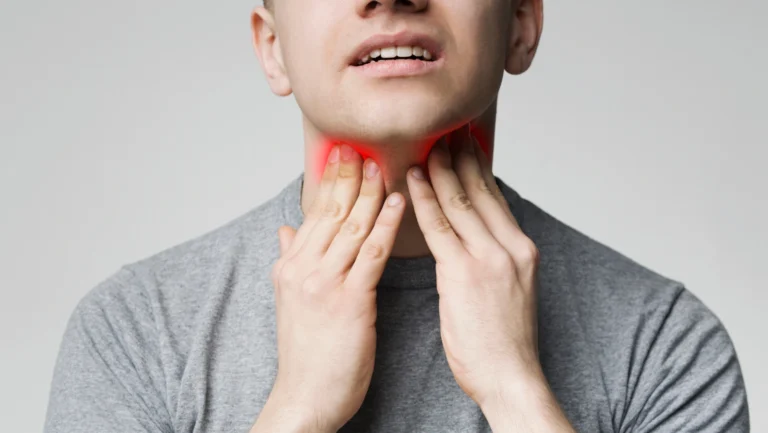


Thyroid pain feels like a tender, pressure-like ache in the front of the lower neck, directly over the thyroid gland. Most people describe it as a sore, tight sensation that worsens when swallowing, turning the head, or pressing the neck.
In the US, subacute thyroiditis is the most common cause of acute thyroid pain, affecting more women than men, typically between ages 20 and 50. This guide covers where thyroid pain originates, what conditions cause it, how to tell it apart from other neck pain, and when it signals something serious.
Where Is Thyroid Pain Located?
Thyroid pain located at the front lower neck, just below the Adam’s apple, at the base of the throat. The thyroid sits like a butterfly over the trachea (windpipe), so pain typically appears right there at the center or slightly to one side.
The pain doesn’t always stay in one spot. It spreads in specific patterns depending on the cause:
- Ear pain: The thyroid shares nerve pathways with the external ear through the auricular branch of the vagus nerve. Thyroid inflammation sends pain signals up to one or both ears.
- Jaw pain: Inflammation radiates upward along the anterior neck muscles toward the angle of the jaw.
- Throat tightness: Swelling presses against the trachea and esophagus, creating a sensation of a lump or tightness in the throat.
- Upper chest: Large goiters or severe inflammation occasionally press downward, producing chest pressure or discomfort behind the sternum.
Thyroid pain located strictly at the front lower neck is localized pain. Radiating pain spreading toward the ears or jaw typically indicates subacute thyroiditis or rapid gland enlargement.
Thyroiditis Causing Neck Pain
Thyroiditis causing neck pain is the most common reason a person feels acute, significant thyroid discomfort. Thyroiditis means inflammation of the thyroid gland.
Subacute granulomatous thyroiditis (De Quervain’s thyroiditis) produces the most intense thyroid pain of any thyroid condition. It follows a viral upper respiratory infection, often influenza or COVID-19. The immune system attacks the thyroid during the recovery phase, causing the gland to swell rapidly and become exquisitely tender.
The pain progression follows a pattern:
- Week 1 to 2: Mild sore throat that patients often mistake for leftover infection
- Week 2 to 4: Sharp, increasingly severe anterior neck pain; gland becomes visibly tender to touch
- Week 4 to 8: Pain peaks, then gradually subsides as the inflammatory phase passes
- Week 8 to 12: Hypothyroid phase begins (reduced thyroid output as the gland recovers)
Thyroiditis caused by Hashimoto’s disease works differently. Hashimoto’s produces a dull, pressure-like discomfort rather than sharp pain. The gland enlarges slowly over months. Pain in Hashimoto’s is typically mild and intermittent, not the severe ache of subacute thyroiditis.
Postpartum thyroiditis (occurring within 12 months of delivery) follows a similar pattern to Hashimoto’s: mild neck fullness and tenderness without the intense pain of the subacute form.
Thyroid Nodules and Pain
Most thyroid nodules cause no pain at all. Over 95% of thyroid nodules in the US are discovered incidentally during imaging for unrelated conditions. The nodule itself rarely irritates surrounding tissue.
Pain from a nodule occurs in two specific situations:
- Hemorrhage into a nodule: When a cyst or nodule bleeds internally, the sudden expansion stretches the thyroid capsule. This produces acute, sharp pain that appears without warning. Patients often describe it as a sudden stabbing sensation on one side of the neck. The pain peaks within hours and gradually decreases over 1 to 3 days as the blood is reabsorbed.
- Rapid growth or infection: A nodule growing quickly, or a rare thyroid abscess, irritates the surrounding tissue and nearby lymph nodes. This produces localized tenderness that is reproducible on physical examination.
Papillary thyroid cancer, the most common thyroid malignancy, almost never causes pain. Pain in a thyroid nodule is more commonly benign hemorrhage than cancer. Still, any new thyroid nodule with pain warrants ultrasound evaluation.
Symptoms That Often Appear Alongside Thyroid Pain
Symptoms of thyroid pain vary based on the underlying cause. The pain rarely appears in isolation.
In subacute thyroiditis:
- Low-grade fever (99 to 101°F) during the acute inflammatory phase
- Fatigue and general body aching, similar to post-viral illness
- Temporary hyperthyroid symptoms: heart palpitations, sweating, and heat intolerance as the inflamed gland releases stored hormones
- Visible neck swelling on one or both sides
In Hashimoto’s-related tenderness:
- Chronic fatigue and brain fog
- Weight gain and cold intolerance
- Gradual neck fullness without acute fever
- Constipation and dry skin as TSH rises
In nodule-related pain:
- Sudden, one-sided neck swelling
- Visible lump that appears or enlarges suddenly
- Difficulty swallowing if the nodule is large enough to press on the esophagus
Pain worsening with swallowing is a key identifying feature of thyroid-origin neck pain. Muscle strain and cervical spine issues don’t worsen specifically with swallowing.
Conditions That Can Mimic Thyroid Pain
Several common conditions produce anterior neck pain that gets mistaken for thyroid pain.
Muscle strain: Sternocleidomastoid muscle strain from poor posture or sleeping position produces lateral neck pain that moves with head rotation. Thyroid pain doesn’t change with head rotation in most cases.
Lymph node swelling: Reactive lymphadenopathy from viral infections swells lymph nodes just lateral to the thyroid. These feel like firm, movable bumps. They’re often tender but positioned higher in the neck than the thyroid.
Acid reflux (GERD): Chronic GERD causes a burning, throat-level sensation that mimics thyroid tightness. GERD pain worsens after eating and when lying flat. Thyroid pain doesn’t change with meals.
Cervical spine issues: C3-C4 or C4-C5 disc problems cause anterior neck pain and sometimes throat tightness through referred pain. This pain travels down the arm or into the shoulder, which thyroid pain doesn’t.
Carotid artery tenderness (Eagle syndrome): An elongated styloid process causes pain lateral to the throat, sometimes near the thyroid region. It worsens with swallowing and head turning, making it the most commonly confused condition with thyroid pain.
When Thyroid Pain Becomes a Warning Sign
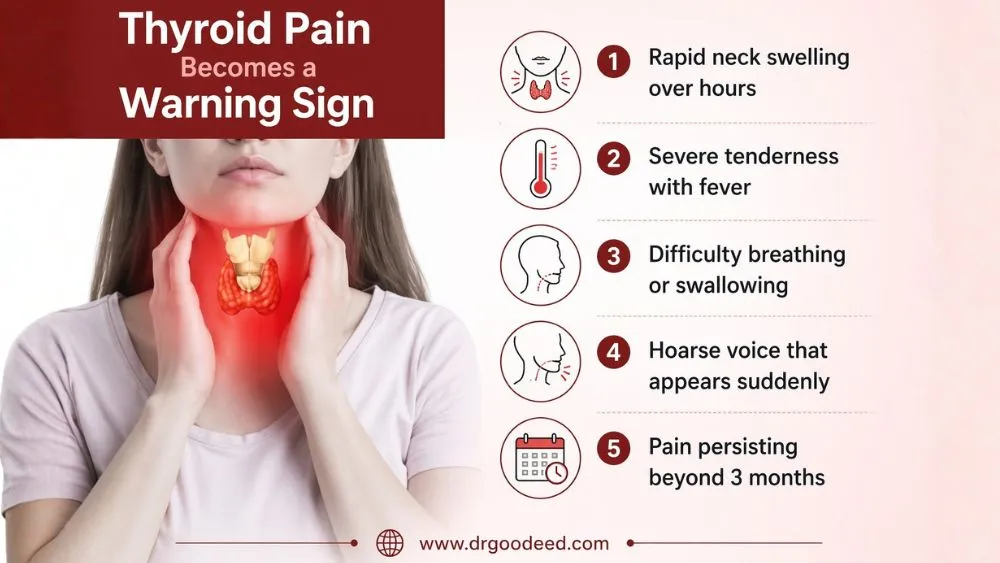
Certain presentations of thyroid pain feel like an urgent medical situation, not a routine inflammatory episode.
Seek immediate medical attention for:
- Rapid neck swelling over hours: A rapidly enlarging thyroid (acute suppurative thyroiditis or hemorrhage into a large nodule) compresses the airway. This is a medical emergency.
- Severe tenderness with fever above 101°F: Suggests bacterial thyroid infection (rare but serious). Requires antibiotics and sometimes surgical drainage.
- Difficulty breathing or swallowing: Compression of the trachea or esophagus from swelling warrants same-day evaluation.
- Hoarse voice that appears suddenly with neck swelling: Suggests rapid mass expansion pressing on the recurrent laryngeal nerve.
- Pain persisting beyond 3 months without diagnosis: Warrants full workup including ultrasound and biopsy to rule out malignancy.
Subacute thyroiditis pain typically improves within 6 to 8 weeks. Pain lasting longer than that without a confirmed diagnosis needs clinical investigation.
How to Relieve Thyroid Pain
Relieving thyroid pain depends on the cause, but several approaches reduce discomfort across most thyroid pain conditions.
Anti-inflammatory medications:
- Ibuprofen (400 to 600 mg every 6 to 8 hours with food) is the first-line treatment for subacute thyroiditis pain per American Thyroid Association guidelines
- Aspirin at anti-inflammatory doses (650 mg every 4 to 6 hours) is an alternative for patients who tolerate it
- For severe subacute thyroiditis unresponsive to NSAIDs, prednisone (40 mg/day tapering over 4 to 6 weeks) reduces inflammation rapidly
Cold application:
- A cold pack on the front of the neck for 15 to 20 minutes reduces acute swelling and numbs localized tenderness
- Cold works better than heat for inflammatory thyroid conditions; heat can increase blood flow and worsen swelling
Positioning adjustments:
- Sleep with the head elevated 15 to 30 degrees to reduce pressure on the swollen gland
- Avoid tight collars, scarves, or necklaces during flare-ups
How to relieve thyroid pain from subacute thyroiditis doesn’t require surgery or hospitalization in most cases. NSAIDs resolve 70 to 80% of subacute thyroiditis pain within 2 to 4 weeks.
How Doctors Identify Thyroid-Related Pain
Clinical diagnosis combines physical examination, blood tests, and imaging.
Physical examination: The physician palpates the thyroid with two fingers pressing gently below the Adam’s apple while the patient swallows. Subacute thyroiditis produces exquisite tenderness on even light palpation. A firm, nodular gland suggests Hashimoto’s or multinodular goiter.
Blood tests:
- TSH: Drops significantly in subacute thyroiditis during the hyperthyroid phase; rises during the hypothyroid recovery phase
- Free T3 and T4: Elevated during acute thyroid inflammation as stored hormones release
- ESR (erythrocyte sedimentation rate): Rises sharply in subacute thyroiditis, often above 50 mm/hr; a hallmark finding
- TPO antibodies: Elevated in Hashimoto’s thyroiditis
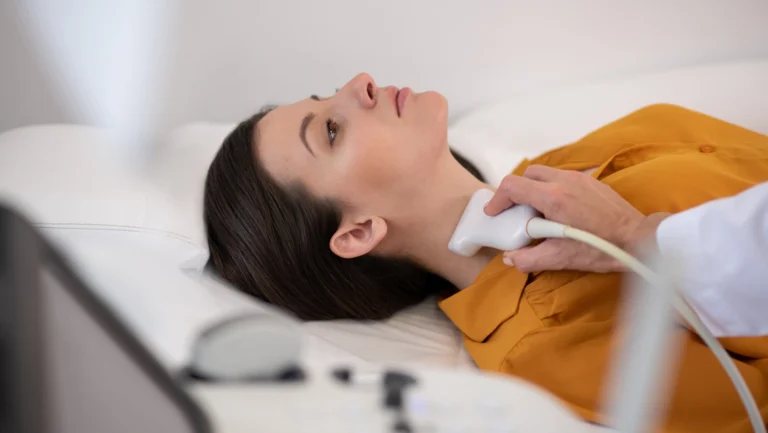
Thyroid ultrasound: The most useful imaging tool. It identifies nodule hemorrhage, gland enlargement, abnormal blood flow patterns (reduced flow in subacute thyroiditis on Doppler), and cystic changes. Radioactive iodine uptake scan shows characteristically low uptake in subacute thyroiditis, which distinguishes it from Grave’s disease.
What to Expect in Recovery and Management
Subacute thyroiditis follows a predictable 3-phase course over 4 to 6 months:
- Hyperthyroid phase (weeks 1 to 6): Pain peaks, stored hormones release, TSH drops
- Hypothyroid phase (weeks 6 to 16): Pain resolves, but fatigue and weight gain appear as thyroid function temporarily drops
- Recovery phase (months 4 to 6): TSH and thyroid hormones normalize in 80 to 90% of patients
About 10 to 15% of subacute thyroiditis patients develop permanent hypothyroidism requiring lifelong levothyroxine.
Recurrence of subacute thyroiditis occurs in approximately 2% of cases, usually triggered by another viral illness.
Hashimoto’s-related neck discomfort waxes and wanes with antibody activity. There’s no acute recovery phase; the condition is chronic and managed with periodic TSH monitoring and levothyroxine when TSH rises above 10 mIU/L.
FAQs
What does thyroid pain feel like when you touch your neck?
Thyroid pain feels like a sharp, hot tenderness directly over the lower front neck when pressed. In subacute thyroiditis, even light touch causes significant pain. In Hashimoto’s, touching the gland produces mild pressure discomfort rather than sharp pain. The tenderness reproduces consistently at the same midline location with each touch.
Can thyroid pain spread to the ear or jaw?
Yes. The vagus nerve connects the thyroid region to the external ear canal. Subacute thyroiditis causes referred pain to one or both ears in up to 30% of cases. Jaw pain comes from inflammation spreading along anterior neck muscles toward the mandibular angle. Ear and jaw pain disappear when thyroid inflammation resolves.
Is thyroid pain constant or does it come and go?
In subacute thyroiditis, pain is constant and worsens progressively over 2 to 4 weeks before resolving. In Hashimoto’s, tenderness comes and goes with antibody flares, sometimes lasting days then disappearing. Nodule hemorrhage pain appears suddenly, peaks within hours, then fades over 1 to 3 days.
How do I know if my neck pain is thyroid-related?
Thyroid pain located at the midline front lower neck that worsens specifically during swallowing is the strongest indicator of thyroid origin. Muscle strain worsens with head rotation. Lymph node pain is positioned higher and lateral. If pressing directly below the Adam’s apple reproduces the pain, thyroid origin is clinically likely.
Do thyroid nodules always cause pain?
No. Over 95% of thyroid nodules cause no pain. Pain occurs when a nodule bleeds internally (sudden sharp pain) or grows rapidly. Most nodules are found incidentally on imaging ordered for unrelated reasons. Painful nodules are more likely benign hemorrhagic cysts than malignant tumors.
Can thyroiditis cause severe throat pain?
Yes. Subacute thyroiditis produces throat pain severe enough that many patients initially visit urgent care for suspected strep throat or tonsillitis. The distinction: thyroid throat pain originates at the base of the throat (not the tonsils), worsens with neck palpation, and accompanies elevated ESR with normal throat swabs.
How long does thyroid pain usually last?
Subacute thyroiditis pain lasts 4 to 8 weeks. Most patients feel significant improvement by week 6 with ibuprofen treatment. Nodule hemorrhage pain resolves in 1 to 3 days. Hashimoto’s tenderness episodes last 2 to 7 days. Pain persisting beyond 8 weeks without a confirmed diagnosis requires imaging and further evaluation.
What triggers thyroid pain flare-ups?
Subacute thyroiditis triggers include viral infections, specifically influenza, COVID-19, mumps, and adenovirus. Hashimoto’s flares correlate with high psychological stress (which raises cortisol and suppresses regulatory T-cells) and iodine excess from supplements. Nodule hemorrhage often occurs after vigorous neck movement, coughing fits, or physical strain.
Can thyroid pain go away on its own?
Yes, for subacute thyroiditis. Without any treatment, the inflammatory phase resolves in 2 to 5 months. Ibuprofen shortens the painful phase significantly. Nodule hemorrhage pain resolves in days without treatment. Hashimoto’s tenderness resolves between flares without specific intervention. Only bacterial thyroid abscesses require active medical treatment to resolve.
When should I worry about thyroid pain?
When thyroid pain feel like a rapidly worsening pressure with visible neck swelling, difficulty breathing, or fever above 101°F. These suggest airway compression or bacterial infection, both medical emergencies. Also seek care when symptoms of thyroid pain last beyond 8 weeks, when a new neck lump appears with pain, or when voice changes accompany swelling.