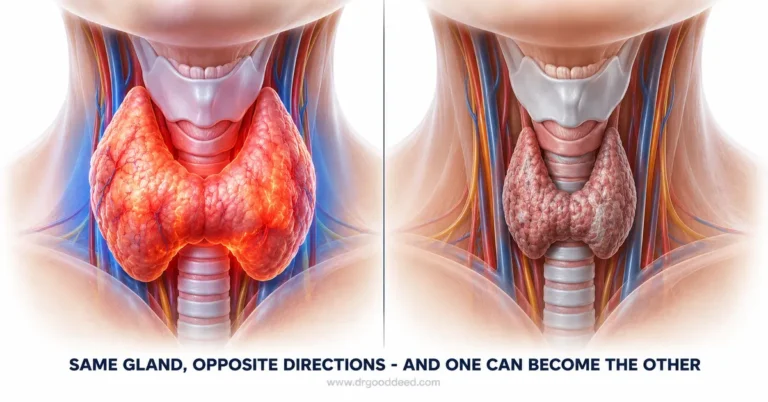

Natural remedies for hypothyroidism work best as support strategies alongside medical treatment, not as replacements for it. Hypothyroidism (ICD-10: E03.9) affects approximately 5% of the US population, with Hashimoto’s thyroiditis accounting for 90% of cases.
Nutrient deficiencies, gut dysfunction, and chronic inflammation all worsen thyroid output in documented ways. This article covers evidence-backed remedies, the right diet framework, lifestyle changes that move TSH levels, and the clear boundaries of what natural approaches can and cannot achieve.
Best Natural Remedies for Hypothyroidism
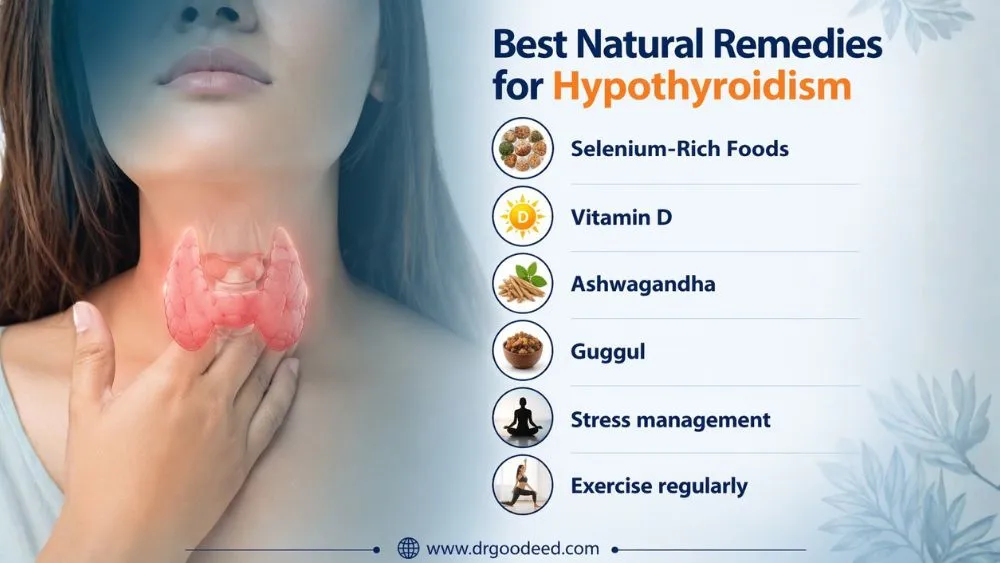
Natural remedies for hypothyroidism with the strongest clinical evidence target the specific deficiencies and mechanisms that impair thyroid hormone production and conversion.
Selenium-Rich Foods and Supplementation
Selenium is the most evidence-backed nutrient for thyroid function. The thyroid gland contains more selenium per gram of tissue than any other organ in the body. It needs selenium to convert T4 (inactive thyroid hormone) into T3 (active form), and to protect thyroid tissue from oxidative damage.
Nutrient deficiencies affecting thyroid function start here. A 2019 meta-analysis in Thyroid journal found that selenium supplementation (200 mcg/day) significantly reduced thyroid peroxidase antibody (TPO-Ab) levels in Hashimoto’s patients over 12 months.
Food sources with high selenium content:
- Brazil nuts: 1 to 2 nuts daily provides the full 200 mcg dose
- Sardines: 45 mcg per 3-oz serving
- Eggs: 15 mcg per egg
- Tuna: 92 mcg per 3-oz serving
Don’t exceed 400 mcg/day total. Selenium toxicity causes hair loss, nail brittleness, and nerve damage at high doses.
Iodine Intake: When It Helps and When It Harms
Iodine is needed to make thyroid hormones, but it’s not a universal fix. Iodine deficiency causes hypothyroidism in populations with low dietary iodine, mainly in landlocked developing regions. In the US, where most people get iodine through iodized salt and dairy, deficiency is rare.
For Hashimoto’s patients specifically, high iodine intake worsens autoimmune activity. A 2012 study in Endocrine found that reducing iodine from high to adequate levels in Hashimoto’s patients normalized TSH in 78% of cases without any medication change.
The safe intake for most US adults: 150 mcg/day. Seaweed supplements and high-dose iodine products frequently exceed 1,000 to 3,000 mcg per serving. These are inappropriate for anyone with Hashimoto’s.
Adaptogenic Herbs for Thyroid Support
Among natural ways to support thyroid function, two adaptogens have clinical data behind them.
Ashwagandha (Withania somnifera): A randomized controlled trial in Journal of Alternative and Complementary Medicine (2018) found that 600 mg/day of ashwagandha root extract over 8 weeks produced a significant increase in T3 and T4 levels in subclinical hypothyroidism patients. TSH dropped meaningfully in the treatment group versus placebo.
Guggul (Commiphora mukul): The active compound guggulsterone stimulates thyroid function by increasing iodine uptake in the thyroid. Studies from Planta Medica show increased T3 and T4 output. Standard dose used in trials: 25 mg of guggulsterones twice daily.
Neither herb replaces levothyroxine in confirmed clinical hypothyroidism. Both are reasonable adjuncts for subclinical cases or as natural remedies for hypothyroidism in patients with borderline TSH.
Probiotics and Gut Health Connection
The gut-thyroid axis is one of the least-discussed areas in thyroid health. The gut microbiome controls how much T4 converts to T3 in peripheral tissue. Gut bacteria also regulate iodine absorption and deiodinase enzyme activity.
Leaky gut (intestinal permeability) is disproportionately common in Hashimoto’s patients. A damaged gut lining allows bacterial proteins to enter the bloodstream, triggering immune responses that cross-react with thyroid tissue through molecular mimicry.
Lactobacillus and Bifidobacterium strains directly reduce intestinal permeability. A 2021 study in Nutrients found that Hashimoto’s patients given a multispecies probiotic for 12 weeks showed reduced TPO-Ab levels and improved T3/T4 ratios compared to placebo.
Daily probiotic foods: kefir (10 billion+ CFU per cup), kimchi, and unsweetened yogurt with live cultures all support this pathway.
Anti-Inflammatory Nutritional Support
Chronic low-grade inflammation suppresses deiodinase enzymes, which convert T4 to T3. Reducing systemic inflammation improves thyroid hormone conversion without changing thyroid hormone production itself.
Nutrient deficiencies affecting thyroid through the inflammation pathway include:
- Vitamin D: Deficiency is twice as common in Hashimoto’s patients versus the general population. Vitamin D receptors exist on immune cells that regulate thyroid antibody production. Target serum 25(OH)D: 50 to 80 ng/mL.
- Zinc: Required for T3 receptor activity at the cellular level. Low zinc means cells can’t respond to T3 even when levels are normal. Food sources: oysters (74 mg per 3 oz), beef, and pumpkin seeds.
- Magnesium: Magnesium deficiency impairs TSH secretion. The NHANES data shows 48% of US adults consume below the recommended daily intake.
Diet Plan for Hypothyroidism
A diet plan for hypothyroidism needs to be consistent in what it removes and strategic in what it adds.
Foods that support thyroid function:
- Fatty fish (salmon, mackerel): omega-3s reduce thyroid inflammation
- Eggs: provide selenium, zinc, and tyrosine (an amino acid needed to make thyroid hormones)
- Seaweed in small amounts (nori, not high-dose supplements): natural iodine source
- Brazil nuts: selenium delivery in food form
- Chicken and turkey: tyrosine-rich proteins
Foods that interfere:
- Raw goitrogenic vegetables in large amounts: Kale, broccoli, Brussels sprouts, and cauliflower contain goitrogens that block iodine uptake when eaten raw in large quantities. Cooking deactivates most goitrogens. Eating these vegetables cooked in normal amounts poses no problem.
- Highly processed foods: Trans fats and refined carbohydrates increase systemic inflammation and raise cortisol, which suppresses TSH signaling.
- Gluten (for Hashimoto’s specifically): The molecular structure of gliadin (a gluten protein) resembles thyroid tissue. In people with Hashimoto’s who also have gluten sensitivity, gluten triggers immune reactions that hit the thyroid. A 2019 study in Frontiers in Endocrinology showed reduced TPO-Ab levels in Hashimoto’s patients after 6 months on a gluten-free diet.
- Soy isoflavones: Large amounts of soy suppress thyroid peroxidase activity. This matters most in people with borderline iodine intake.
Daily diet framework:
- Morning: protein-rich meal with eggs or Greek yogurt; take thyroid medication 30 to 60 minutes before eating
- Midday: cooked vegetables with lean protein; avoid raw cruciferous vegetables in large portions
- Evening: anti-inflammatory fats (salmon, olive oil); minimize refined carbohydrates
Lifestyle Changes That Improve Thyroid Health
Lifestyle changes for hypothyroidism affect TSH more directly than most patients expect.
Sleep quality: The pituitary releases TSH in pulses during deep sleep. Chronic sleep deprivation disrupts TSH secretion patterns. A single night of 4-hour sleep increases inflammatory cytokines that suppress thyroid function by the next morning. Target: 7 to 9 hours in a consistent sleep window.
Stress management: Cortisol directly inhibits TSH secretion and reduces T4-to-T3 conversion. Chronic stress in women with Hashimoto’s is associated with flares in TPO-Ab levels. Diaphragmatic breathing for 10 minutes daily reduces salivary cortisol by 16% in clinical trials (per International Journal of Environmental Research and Public Health, 2021).
Exercise type and intensity: Moderate exercise (30 minutes of walking, yoga, or low-intensity cycling) reduces inflammatory markers in hypothyroid patients. High-intensity training without adequate recovery raises cortisol, which worsens conversion. Hypothyroid patients exercising at over 80% maximum heart rate daily often see TSH worsen, not improve.
Avoiding environmental disruptors: Bisphenol A (BPA) in plastics mimics estrogen and displaces thyroid hormone from its transport protein (TBG). Switching to glass or BPA-free containers reduces BPA exposure. Perchlorate in some tap water blocks iodine uptake. A water filter certified for perchlorate removal is a practical step.
Managing Fatigue in Hypothyroidism Naturally
Fatigue and hypothyroidism natural treatment targets the two mechanisms driving exhaustion: low T3 at the cellular level and mitochondrial dysfunction.
Low T3 reduces mitochondrial activity throughout the body. Mitochondria in muscle cells produce less ATP, making physical effort feel disproportionately draining.
Practical interventions:
- Coenzyme Q10 (CoQ10): 100 to 200 mg/day improves mitochondrial ATP production. Clinical use in thyroid-related fatigue is supported by case series in Thyroid Research.
- Iron levels: Low ferritin (below 70 ng/mL) reduces thyroid hormone synthesis and worsens fatigue independent of hemoglobin. Many hypothyroid women with “normal” CBC results have ferritin in the 15 to 30 ng/mL range. That’s too low for optimal thyroid function.
- Timed carbohydrate intake: Blood sugar instability worsens fatigue in hypothyroid patients. Eating protein with every meal stabilizes glucose and reduces the cortisol spikes that worsen thyroid conversion.
- Morning light exposure: 10 minutes of natural light within 30 minutes of waking resets the circadian rhythm, supports cortisol’s natural morning peak, and improves energy patterns. This is free and underused.
Common Mistakes People Make With Natural Treatment
These errors consistently undermine results.
Taking iodine supplements without testing: Most US hypothyroid patients don’t have iodine deficiency. Adding iodine to Hashimoto’s without confirmed deficiency raises TPO-Ab levels and worsens the condition. Test serum iodine or urinary iodine first.
Stopping medication for natural remedies: Natural remedies for hypothyroidism support thyroid function. In confirmed clinical hypothyroidism (TSH above 10 mIU/L), they don’t replace levothyroxine. Stopping medication raises cardiac risk, worsens cognitive function, and increases miscarriage risk in women trying to conceive.
Taking supplements with thyroid medication: Calcium, iron, and magnesium all bind to levothyroxine in the gut and block absorption. These supplements must be taken 4 hours apart from medication, not with it.
Relying only on TSH as a marker: TSH alone misses poor T4-to-T3 conversion. Some patients maintain normal TSH but have low Free T3 and remain symptomatic. Testing Free T3, Free T4, and Reverse T3 gives a complete picture that TSH alone doesn’t provide.
When Natural Remedies Are Not Enough
Natural remedies for hypothyroidism reach their limit in specific situations:
- TSH above 10 mIU/L: medication is the standard of care per American Thyroid Association guidelines
- Pregnancy: maternal TSH above 2.5 mIU/L in the first trimester requires immediate treatment; natural approaches alone are insufficient
- Myxedema (severe hypothyroidism with facial swelling, reduced consciousness): medical emergency
- Hashimoto’s with TSH rising despite 6 months of dietary and lifestyle changes
- Cardiac symptoms (slow pulse, fluid around the heart) linked to untreated hypothyroidism
Natural ways to support thyroid function reduce antibody levels, improve conversion, and lower inflammatory burden. But they work within the boundaries of how much thyroid tissue still functions.
FAQs
Can hypothyroidism be cured naturally?
No. Hashimoto’s thyroiditis (autoimmune hypothyroidism) causes permanent thyroid tissue damage over time. Natural remedies for hypothyroidism reduce antibody levels and slow progression but don’t reverse existing damage. Subclinical hypothyroidism with TSH under 10 mIU/L sometimes normalizes with selenium and dietary changes alone.
What is the best natural remedy for hypothyroidism?
Selenium at 200 mcg/day has the strongest evidence. A 2019 meta-analysis in Thyroid confirmed it reduces TPO antibodies significantly over 12 months in Hashimoto’s patients. After selenium, vitamin D correction (targeting 50 to 80 ng/mL serum level) shows the next strongest impact on antibody reduction.
Which foods should be avoided in hypothyroidism?
Avoid large amounts of raw cruciferous vegetables (raw kale, raw broccoli in large amounts), high-dose soy isoflavone supplements, and high-iodine seaweed supplements. For Hashimoto’s patients: gluten triggers immune cross-reactivity with thyroid tissue. Processed foods raise inflammation and suppress T4-to-T3 conversion.
Does iodine help all hypothyroidism patients?
No. Iodine helps only in iodine-deficiency hypothyroidism, which is rare in the US. For Hashimoto’s patients, excess iodine worsens autoimmune activity. A 2012 study showed high iodine increased TPO antibodies in Hashimoto’s patients by 40%. Test urinary iodine before supplementing.
Can lifestyle changes improve thyroid hormone levels?
Yes, specifically in subclinical hypothyroidism. Lifestyle changes for hypothyroidism including sleep optimization, stress reduction, and anti-inflammatory diet have moved TSH from subclinical elevated ranges to normal in documented cases. They don’t normalize TSH in overt hypothyroidism (TSH above 10 mIU/L) without medication.
How long do natural remedies take to show results?
Selenium supplementation shows measurable TPO antibody reduction by 3 months. Dietary changes like gluten removal in Hashimoto’s take 6 months for antibody shifts to appear on labs. Vitamin D correction normalizes within 3 months of achieving target serum levels. TSH changes from lifestyle alone take 3 to 6 months minimum.
Are herbal supplements safe for thyroid conditions?
Ashwagandha and guggul are reasonably safe at clinical doses. Ashwagandha at 600 mg/day is well-tolerated in 8-week trials. High-dose iodine supplements (kelp, bladderwrack) are unsafe for Hashimoto’s patients. Always check interactions with levothyroxine before adding any supplement, especially calcium and iron.
Can gut health affect thyroid function?
Yes. The gut microbiome controls deiodinase enzyme activity, which converts T4 to T3. Leaky gut allows bacterial proteins that cross-react with thyroid tissue to enter the bloodstream, worsening Hashimoto’s antibody levels. A 2021 trial confirmed multispecies probiotics reduced TPO-Ab levels after 12 weeks.
Why does hypothyroidism cause fatigue?
Low T3 reduces ATP production in mitochondria. Every cell in the body produces less energy. Fatigue and hypothyroidism natural treatment targets this at the cellular level through CoQ10 (supports mitochondria), iron correction (ferritin below 70 ng/mL impairs thyroid synthesis), and blood sugar stabilization (prevents cortisol spikes that suppress T3 conversion).
When should I see a doctor for hypothyroidism symptoms?
See a doctor when TSH exceeds 4.5 mIU/L on two separate tests, when fatigue, weight gain, cold intolerance, or hair loss persist despite 3 months of dietary changes, or immediately if pregnant with any thyroid symptoms. Natural remedies for hypothyroidism don’t substitute for a TSH test and clinical evaluation when symptoms are present.