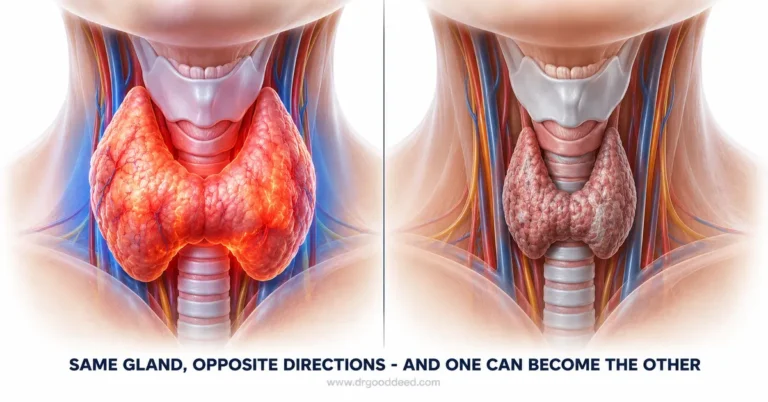

A hyperthyroidism diet plan changes how fast your symptoms worsen, how much weight you lose, and how well your body holds up during treatment. In the US, around 1.2% of the population has hyperthyroidism, and most of them never get dietary guidance beyond “avoid iodine.”
This guide covers what to eat, what to cut, which nutrients you are likely losing, and how to structure meals when your metabolism is running too hot.
Low Iodine Diet for Hyperthyroidism
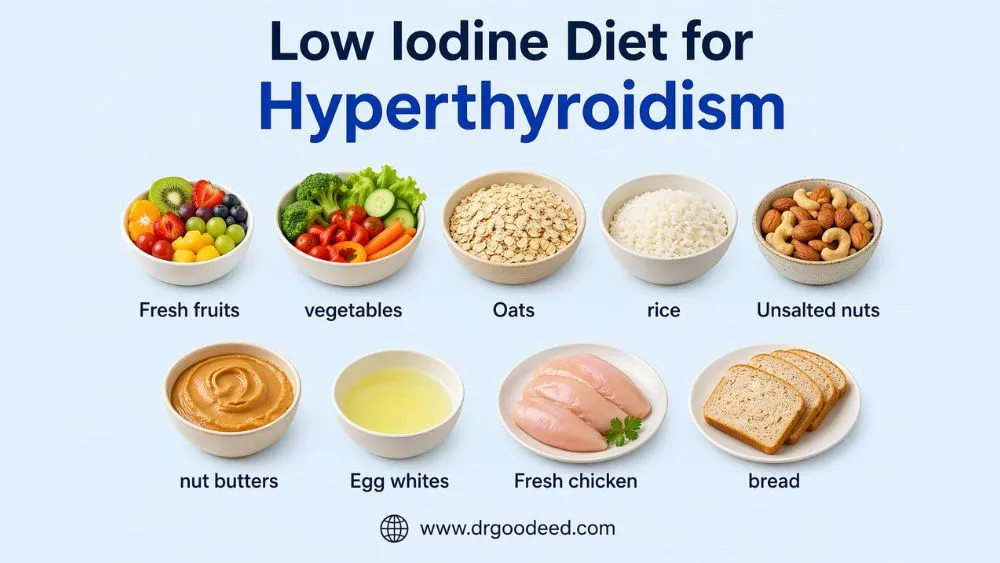
A low-iodine diet for hyperthyroidism limits iodine to under 50 micrograms per day. The thyroid uses iodine to make hormones. When it is already overproducing, feeding it more iodine makes things worse.
The average American diet delivers 150 to 300 mcg of iodine daily, mostly from iodized salt, dairy, and eggs. That is two to six times what someone with an overactive thyroid should be getting during active treatment.
Foods naturally low in iodine:
- Fresh fruits and vegetables (non-sea-based)
- Oats and rice (unsalted)
- Unsalted nuts and nut butters
- Egg whites (the yolk is where iodine concentrates)
- Fresh chicken and beef (not processed)
- Homemade bread made without iodized salt
Switching to non-iodized salt alone cuts a meaningful amount. Sea salt has less iodine than iodized table salt, but it is not iodine-free. Read labels.
Foods to Avoid in Hyperthyroidism
Foods to avoid hyperthyroidism go beyond seaweed and iodized salt. Many processed foods contain iodine-based additives like potassium iodate, used as a dough conditioner in commercial bread. Erythrosine (Red Dye No. 3) is another iodine source hiding in processed snacks and maraschino cherries.
High-iodine foods to cut:
- Seaweed, kelp, nori
- Dairy (milk, cheese, yogurt)
- Iodized table salt and foods made with it
- Saltwater fish and shellfish
- Commercial breads and baked goods
Stimulants that worsen symptoms:
Caffeine is a real problem here. Hyperthyroidism already pushes your heart rate up and makes you jittery. Adding caffeine, whether from coffee, energy drinks, or pre-workout supplements, amplifies palpitations and anxiety. People with Graves’ disease who drink three or more cups of coffee daily report worse tremors and sleep disruption.
Alcohol is another trigger. It interferes with thyroid medication absorption and stresses the liver, which already processes thyroid hormones.
Goitrogenic foods: a nuanced point
Cruciferous vegetables like broccoli, kale, and cauliflower contain goitrogens, compounds that mildly suppress thyroid function. In hypothyroidism, these are often restricted. In hyperthyroidism, some research suggests they are actually useful in moderate amounts because they slightly slow hormone production. Cooking reduces their goitrogenic effect, so raw is better for this purpose. This is not commonly covered in most blogs.
Nutrient Deficiencies in Hyperthyroidism
Nutrient deficiencies in hyperthyroidism are almost guaranteed. The thyroid overproduces hormones, your metabolism speeds up, and your body burns through nutrients faster than normal intake can replace them.
Calcium and Vitamin D: Excess thyroid hormone accelerates bone turnover. Bones break down faster than they rebuild. Studies show hyperthyroid patients lose bone density at double the normal rate. Without treatment and adequate calcium (1,000 to 1,200 mg daily) and Vitamin D (1,500 to 2,000 IU daily), fracture risk rises within months.
Selenium: This mineral helps convert the inactive thyroid hormone T4 into the active form T3, but it also protects thyroid tissue from oxidative damage. Low selenium worsens autoimmune thyroid activity. Brazil nuts (two per day) provide roughly 200 mcg, which is the recommended amount.
Magnesium: Depleted fast when metabolism is elevated. Low magnesium causes muscle cramps, poor sleep, and irregular heartbeat, symptoms that overlap heavily with hyperthyroidism itself. Most patients cannot tell what is coming from the thyroid and what is a magnesium deficit.
B12 and Iron: Both drop because of faster cell turnover and reduced absorption. Fatigue that does not improve with hyperthyroidism treatment is often B12 or iron deficiency continuing underneath.
Weight Loss in Hyperthyroidism Diet Support
Weight loss in hyperthyroidism diet support means managing unintended weight loss, not causing it. The body is already burning too many calories. Most patients lose 10 to 30 pounds before diagnosis.
The goal is caloric surplus without iodine loading.
Practical strategies:
- Eat every 3 to 4 hours. Waiting longer causes your already-fast metabolism to break down muscle for fuel.
- Add calorie-dense foods that are low in iodine: avocado, olive oil, unsalted nut butters, bananas, sweet potatoes.
- Aim for 25 to 30 grams of protein per meal to protect muscle tissue.
- Smoothies made with oat milk (not dairy), banana, nut butter, and oats can add 400 to 600 calories without iodine.
Muscle wasting is the part most patients do not catch in time. Once muscle mass drops, even after thyroid levels normalize, rebuilding takes months. Starting resistance training early, combined with protein-heavy meals, makes a measurable difference.
Autoimmune Thyroid Diet Graves Disease
Autoimmune thyroid diet Graves disease management requires targeting inflammation directly. Graves’ disease is the most common cause of hyperthyroidism in the US; it is an autoimmune condition where the immune system attacks the thyroid.
Diet does not stop the autoimmune attack. But it changes the inflammatory environment around it.
Anti-inflammatory pattern that shows results:
- Omega-3 fatty acids from flaxseed, walnuts, and fatty fish (sardines are low in mercury)
- Turmeric with black pepper (curcumin is the active compound; absorption increases 2,000% with piperine)
- Leafy greens for antioxidants
- Berries for polyphenols
Gut-immune connection: 70% of immune cells are in the gut lining. Intestinal permeability, or “leaky gut,” has been linked in multiple studies to autoimmune conditions including Graves’. Removing processed foods, reducing sugar, and adding fermented foods (dairy-free options like sauerkraut or kimchi) supports gut barrier integrity. This is the angle most blogs skip entirely.
Gluten: Several studies, including one published in Frontiers in Endocrinology, show an overlap between Graves’ disease and celiac disease. People with Graves’ who test positive for anti-gliadin antibodies sometimes see antibody levels drop on a gluten-free diet. It is worth testing for celiac before making the switch.
Foods That Help Stabilize Thyroid Overactivity
An effective hyperthyroidism diet plan includes foods that calm the system down, not just foods to remove.
Cooling and stabilizing choices:
- Cruciferous vegetables (raw): mild goitrogenic effect, as mentioned above
- Lemon balm: used traditionally to reduce thyroid-stimulating activity; some small clinical studies support its use
- Bugleweed (an herb): inhibits thyroid hormone synthesis in early research; not a replacement for medication
- Calcium-rich non-dairy foods: bok choy, fortified oat milk, almonds
Macronutrient balance: Keep carbohydrates from whole sources (sweet potato, oats, brown rice) to fuel a fast metabolism without spiking blood sugar. Protein should be 1.2 to 1.5 grams per kilogram of body weight. Fat from plant sources keeps caloric intake up without iodine risk.
Meal Planning Strategy for Daily Thyroid Balance
A structured hyperthyroidism diet plan spreads calories across five to six smaller meals. Three large meals leave too much time between eating, and the metabolic rate of someone with hyperthyroidism will begin pulling from muscle stores within two to three hours of fasting.
Sample daily structure:
- Breakfast: Oatmeal with banana, flaxseed, walnuts, and oat milk
- Mid-morning: Smoothie with nut butter and fruit
- Lunch: Grilled chicken, sweet potato, steamed broccoli (raw is fine too)
- Afternoon snack: Avocado on unsalted rice cakes
- Dinner: Salmon (low-mercury option), brown rice, raw kale salad
- Evening: Handful of Brazil nuts, apple
This setup hits caloric needs, keeps iodine controlled, and delivers selenium, magnesium, and omega-3s in a single day.
Hydration and Electrolyte Balance in Hyperthyroidism
Increased metabolism means increased sweating and faster fluid turnover. Most patients with hyperthyroidism are mildly dehydrated without realizing it. Aim for at least 10 to 12 cups of water daily.
Electrolytes, especially potassium and magnesium, get flushed out with excess sweat. Coconut water (unsweetened) replenishes both without the sugar load of commercial sports drinks. Bananas and sweet potatoes are high-potassium whole food options.
Avoid excessive caffeine not just for its stimulant effect, but because it is a diuretic and worsens fluid loss.
Lifestyle Factors That Enhance Diet Effectiveness
Diet alone does not control hyperthyroidism. It supports the medication doing the main work.
Sleep deprivation raises cortisol, which worsens immune activity. Getting seven to eight hours is not optional for someone managing an autoimmune thyroid condition. Stress spikes cortisol and directly activates immune pathways linked to Graves’ flares. Consistent sleep and stress reduction (yoga, walking, breathwork) produce measurable reductions in inflammatory markers within eight to twelve weeks.
Long-Term Dietary Approach for Thyroid Control
The hyperthyroidism diet plan changes as treatment progresses. During active hyperthyroidism, the focus is low iodine, high calories, and anti-inflammatory foods. Once levels normalize through medication or radioactive iodine therapy, the iodine restriction becomes less critical, though processed food reduction stays relevant.
If surgery or radioactive iodine causes hypothyroidism afterward (which it does in most cases), the diet shifts significantly. Planning for that transition with an endocrinologist and a registered dietitian who specializes in thyroid conditions is the clearest path forward.
FAQs
What is the best diet plan for hyperthyroidism?
The best hyperthyroidism diet plan keeps iodine under 50 mcg daily, hits 1.2 to 1.5g of protein per kg of body weight, and includes selenium from two Brazil nuts daily. Focus on whole foods: oats, sweet potato, fresh chicken, flaxseed, and dairy-free calcium sources.
Should iodine be completely avoided in hyperthyroidism?
No. The target is restriction, not elimination. Under 50 mcg daily is the clinical benchmark. Complete elimination is nearly impossible and not required. Cut iodized salt, dairy, and seafood first. Those three alone reduce intake by 60 to 80%.
Which foods worsen hyperthyroid symptoms quickly?
Seaweed and kelp supplements cause the fastest spikes. Caffeine amplifies palpitations and anxiety within 30 minutes. Iodine-based contrast dyes used in CT scans are the most acute trigger, capable of inducing thyroid storm in untreated patients.
Can diet alone control hyperthyroidism?
No. Diet supports treatment but does not replace antithyroid medication, radioactive iodine therapy, or surgery. Untreated hyperthyroidism causes atrial fibrillation, bone loss, and heart failure. A hyperthyroidism diet plan works alongside, not instead of, medical care.
Why does hyperthyroidism cause weight loss?
Excess T3 and T4 hormones accelerate basal metabolic rate by 20 to 80%. The body burns through calories, then starts breaking down muscle and fat for fuel. Some patients lose 15 pounds in six weeks without changing their eating habits.
How can I gain weight safely with hyperthyroidism?
Eat every three to four hours. Add calorie-dense iodine-free foods: avocado, olive oil, nut butter, oats, bananas. Aim for 400 to 600 extra calories daily. Resistance training two to three times per week preserves and rebuilds muscle faster than diet alone. Weight loss in hyperthyroidism diet support requires both.
Is gluten linked to Graves’ disease symptoms?
Yes, in a subset of patients. Graves’ disease and celiac share a genetic overlap (HLA-DQ2 and DQ8 alleles). In patients with both conditions, a strict gluten-free diet reduces thyroid antibody levels within three to six months. Testing for celiac before eliminating gluten gives clearer data.
What nutrients are commonly deficient in hyperthyroidism?
Calcium, Vitamin D, selenium, magnesium, B12, and iron. These are the six consistently depleted in clinical studies. Nutrient deficiencies in hyperthyroidism are caused by faster metabolism burning through nutrients and impaired absorption in the gut.
How often should I eat with hyperthyroidism?
Five to six times daily. Three-hour gaps between meals prevent muscle catabolism. Skipping meals accelerates muscle wasting because the elevated metabolic rate starts pulling energy from lean tissue within two to three hours of fasting.
Can hydration levels affect thyroid symptoms?
Yes. Even mild dehydration worsens palpitations, fatigue, and muscle cramps in hyperthyroid patients. Target 10 to 12 cups of water daily. Add unsweetened coconut water after sweating to replace potassium and magnesium without iodine or excess sugar.