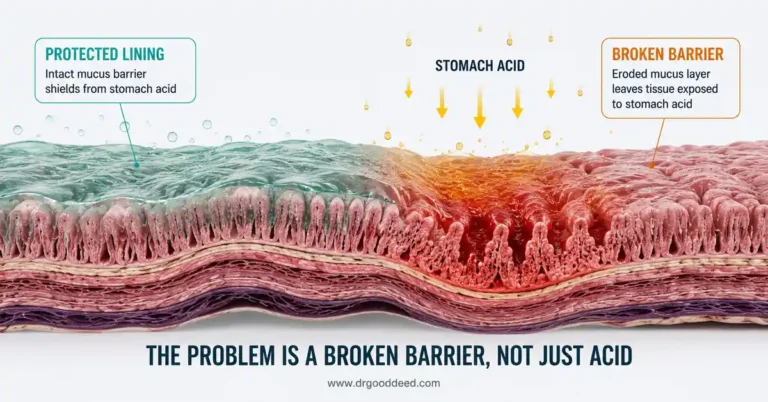


Acid reflux hits when stomach acid flows back up into the esophagus. Around 20% of adults in the US experience it weekly.
The right home remedies for acid reflux reduce symptoms fast, and consistent lifestyle changes keep them from coming back. Baking soda stops tonight’s burning. Changing meal size, sleep position, and trigger foods stops next week and the week after that.
If symptoms persist past 4 weeks of consistent changes, a gastroenterologist can run a pH monitoring test that measures exactly how much acid is reaching the esophagus, giving a precise diagnosis.
This article covers 10 remedies that work, what to drink, what to avoid, and the warning signs that mean home treatment isn’t enough.
10 Home Remedies for Acid Reflux That Actually Help
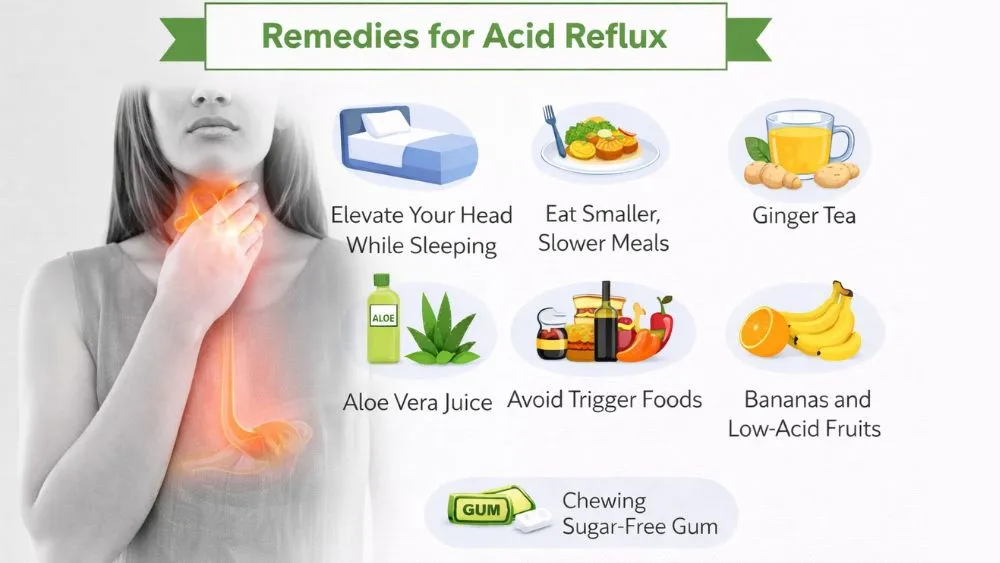
The 10 home remedies for acid reflux below are ranked by how directly they address the underlying mechanism.
1. Elevate Your Head While Sleeping
This is the most effective single change for nighttime reflux. Lying flat removes gravity’s role in keeping stomach acid down. Elevating the head of the bed by 6–8 inches uses gravity to prevent acid from reaching the esophagus while you sleep.
Head-of-bed elevation reduces nighttime acid exposure by 67% compared to lying flat. Use a bed wedge or raise the head of the bed frame itself.
Adding extra pillows doesn’t work; it bends the body at the waist, which increases abdominal pressure and makes reflux worse, not better.
2. Eat Smaller, Slower Meals
A full stomach presses against the lower esophageal sphincter (LES), the valve separating the stomach from the esophagus. Enough pressure forces that valve open. Smaller meals reduce that mechanical pressure.
Eating slowly matters too. Fast eating causes air swallowing, which adds gas pressure to an already-full stomach.
Aim for 4–5 small meals instead of 3 large ones. Stop eating 2–3 hours before lying down. The stomach empties at roughly 2–4 hours, depending on meal composition.
3. Avoid Trigger Foods
Every person’s trigger list varies slightly. The most consistent offenders across research:
- Fried and high-fat foods: Fat delays gastric emptying, keeping the stomach full and pressurized longer
- Chocolate contains methylxanthines that directly relax the LES
- Peppermint: Menthol relaxes the LES
- Tomato-based sauces: High acidity adds to stomach acid volume
- Onions and garlic: Fermentable; produce gas that increases pressure
- Citrus fruits: Low pH adds acid directly
- Alcohol relaxes the LES and increases acid production
Identify your personal top 3 triggers and cut those first. Eliminating everything at once is unnecessary and hard to maintain.
4. Ginger Tea
Ginger contains gingerols and shogaols compounds that speed up gastric emptying and reduce inflammation in the esophageal lining. Faster stomach emptying means less time for acid buildup and less pressure on the LES.
Steep 1 inch of fresh ginger in hot water for 10 minutes. Drink 20–30 minutes before meals. Ginger’s prokinetic effects – its ability to speed up gut movement – are well documented in gastroenterology research, though the exact reduction in reflux symptoms varies by study.
5. Aloe Vera Juice (Limited Use)
Aloe vera juice soothes the esophageal lining after acid exposure. It reduces heartburn, acid regurgitation, and flatulence in a 4-week trial.
Use inner fillet aloe vera juice. The outer latex layer contains anthraquinones, which act as harsh laxatives and cause cramping. Drink 1–2 oz before meals. Limit to 2–3 times per week; daily long-term use isn’t studied extensively.
6. Baking Soda (Short-Term Only)
½ teaspoon of baking soda in 4 oz of water neutralizes stomach acid within 5 minutes. It’s the fastest non-prescription home remedy for acid reflux available. The relief comes from sodium bicarbonate reacting with hydrochloric acid; the resulting CO2 causes a belch that releases pressure.
Don’t use this more than twice per week. Baking soda is high in sodium. Regular use raises blood pressure and disrupts the body’s acid-base balance. People with kidney disease, heart conditions, or hypertension should avoid it entirely.
7. Apple Cider Vinegar (Controversial)
ACV’s proposed benefit for acid reflux is based on the theory that some people have low stomach acid, causing the LES to stay open. Adding acid supposedly signals the LES to close. Clinical evidence is limited because no large trials confirm this.
Taking ACV undiluted damages tooth enamel and irritates the esophagus. If you try it, use 1 tablespoon diluted in 8 oz of water before meals. If symptoms worsen, stop immediately. Apple cider vinegar remains the most controversial of the home remedies for acid reflux on this list.
8. Bananas and Low-Acid Fruits
Bananas have a pH of 5–5.5, mildly acidic but well above stomach acid’s pH of 1.5–3.5. They coat the esophageal lining and provide pectin, a fiber that helps move food through the gut faster, reducing the window for reflux.
Other low-acid fruits that work similarly: melons (cantaloupe, honeydew), pears, and apples without the skin.
9. Chewing Sugar-Free Gum
This one surprises people. Chewing gum stimulates saliva production and saliva is alkaline (pH 6.5–7). More saliva means more natural acid neutralization in the esophagus after a reflux episode.
A 2005 study in the Journal of Dental Research found that chewing sugar-free gum for 30 minutes after meals significantly reduced esophageal acid levels. Use sugar-free; sugar feeds mouth bacteria and worsens dental erosion already at risk from reflux acid.
10. Weight Loss if Overweight
Excess abdominal fat applies constant mechanical pressure on the stomach, pushing acid upward. A BMI above 30 raises the risk of GERD by 2.5 times compared to normal BMI.
A 2006 study in the New England Journal of Medicine found that losing as little as 10–15 pounds reduced reflux frequency significantly, even without other home remedies for acid reflux. Weight loss addresses the root cause that most remedies only work around.
Do Home Remedies for Acid Reflux Actually Work?
Yes, for mild to moderate symptoms, home remedies for acid reflux provide real relief. But none of them cure chronic GERD, and they won’t heal esophageal damage from long-term untreated reflux.
When home remedies help:
- Occasional heartburn after large or fatty meals
- Reflux triggered by specific foods or drinks
- Nighttime symptoms from lying flat
- Mild symptoms during pregnancy
- Reflux linked to excess weight or lifestyle habits
When they don’t:
- Symptoms occur more than twice per week (clinical GERD)
- Difficulty swallowing or sensation of food sticking
- Chronic cough, hoarseness, or asthma worsened by reflux
- Symptoms despite dietary and lifestyle changes
Instant Relief for Acid Reflux: What Works Fast?
Instant relief for acid reflux within 5–15 minutes:
- Baking soda in water neutralizes acid in under 5 minutes
- Sitting fully upright removes positional pressure immediately
- Chewing sugar-free gum increases saliva flow within 2–3 minutes
- OTC antacids (calcium carbonate, like Tums) work in under 5 minutes by directly neutralizing acid
What doesn’t work instantly:
- Ginger tea takes 20–30 minutes to produce any effect
- Dietary changes: These prevent future episodes, not the current one
- Aloe vera juice soothes over time, not within minutes
For instant relief for acid reflux, baking soda and antacids are your fastest options. Everything else is prevention, not acute rescue.
Drinks for Acid Reflux Relief
Drinks for acid reflux relief that actually help:
- Ginger tea reduces acid production and speeds gastric emptying
- Chamomile tea: Anti-inflammatory; calms esophageal irritation
- Warm water dilutes stomach acid and stimulates saliva; drink 30 minutes after meals
- Low-fat milk temporarily buffers acid (the fat in whole milk slows emptying and worsens reflux later)
- Coconut water: Alkaline pH, gentle on the esophagus
Avoid completely:
- Carbonated drinks: CO2 bubbles increase stomach pressure and force the LES open
- Coffee and caffeine directly relax the LES and stimulate acid production
- Alcohol relaxes the LES and increases gastric acid secretion
- Citrus juices: pH of 2–3, adding to already-excessive acid
Among drinks for acid reflux relief, chamomile tea is underrated. Chamomile is traditionally used to calm esophageal irritation, though evidence for it directly reducing acid output is limited.
Foods to Avoid to Prevent Acid Reflux
The foods to avoid to prevent acid reflux list works by categories, not just individual items:
High-fat foods (slow gastric emptying, increase LES pressure):
- Fried foods
- Full-fat dairy
- Fatty cuts of meat
LES-relaxing foods (directly weaken the valve):
- Chocolate
- Peppermint
- Alcohol
High-acid foods (add volume to stomach acid):
- Tomatoes and tomato sauces
- Citrus fruits
- Vinegar-heavy foods
Fermentable foods (produce gas that builds pressure):
- Onions
- Garlic
- Beans and lentils in large amounts
The food to avoid to prevent acid reflux is peppermint. It appears in tea, gum, and digestive supplements marketed for stomach health, but for reflux specifically, menthol relaxes the LES and makes symptoms worse.
Lifestyle Changes for Acid Reflux
Lifestyle changes for acid reflux produce longer-lasting results than any single remedy:
- Stop smoking: Nicotine directly reduces LES pressure within minutes of each cigarette
- Avoid eating within 3 hours of bedtime: Stomach acid production peaks 2 hours after meals
- Maintain a healthy BMI: Losing 5–10% of body weight reduces reflux frequency measurably
- Wear loose clothing: Tight waistbands increase abdominal pressure continuously
- Manage stress: Stress increases cortisol, which raises acid production and slows gut motility
- Sleep on your left side: The stomach sits left of center; left-side sleeping positions the stomach below the esophagus, making upward flow harder
The lifestyle changes for acid reflux with the fastest measurable impact: stopping late-night eating and sleeping elevated. Both produce results within 1–2 weeks of consistent application.
When Home Remedies Are Not Enough
Stop relying on home remedies for acid reflux and see a doctor if:
- Heartburn happens more than twice per week consistently
- You need antacids daily to function
- Food feels like it sticks in the chest or throat when swallowing
- You’ve lost weight without trying
- A chronic cough or hoarseness developed alongside reflux
- Symptoms continue despite 4+ weeks of lifestyle and dietary changes
Chronic GERD causes Barrett’s esophagus in 10–15% of long-term cases, a condition where esophageal cells change structure and carry increased cancer risk. That’s why persistent GERD isn’t something to manage indefinitely with baking soda.
Medical options a doctor considers:
- H2 blockers (famotidine) reduce acid production; work within 1–3 hours
- Proton pump inhibitors / PPIs (omeprazole, pantoprazole) reduce acid production more powerfully; take 4–8 weeks for full effect
- Endoscopy checks for esophageal damage, Barrett’s, or other structural issues
FAQs
What is the fastest home remedy for acid reflux?
Baking soda (½ tsp dissolved in 4 oz of water) neutralizes stomach acid within 5 minutes by reacting with hydrochloric acid in the stomach. Calcium carbonate antacids (Tums) work equally fast. For instant relief for acid reflux, these two options outperform every other remedy on speed.
Does milk help acid reflux?
Temporarily, yes. Milk’s pH (6.5–6.8) and protein content briefly buffer stomach acid. But whole milk’s fat content slows gastric emptying and increases acid production 30–60 minutes later. Low-fat or skim milk provides a short-term buffer without the fat-triggered rebound.
Is apple cider vinegar safe for acid reflux?
Only when diluted. Undiluted ACV has a pH of 2.5–3, acidic enough to damage tooth enamel and irritate an already inflamed esophagus. Dilute 1 tablespoon in 8 oz of water. If symptoms worsen after two uses, ACV is making your reflux worse, not better. Stop.
Can drinking water stop acid reflux?
Yes, warm water dilutes stomach acid and stimulates saliva, which is alkaline. Drink 6–8 oz of warm water 30 minutes after meals. Cold water slows gastric emptying and adds pressure. This is a supportive home remedy for acid reflux.
Do bananas help acid reflux?
Yes, for most people. Bananas have a pH of 5–5.5 and contain pectin, which speeds gut motility. About 1–2% of reflux patients report bananas worsen their symptoms, likely due to individual fructose sensitivity. If bananas cause bloating, skip them and use melon instead.
How long do home remedies take to work?
Baking soda and antacids: 5 minutes. Ginger tea: 20–30 minutes. Dietary changes: 1–2 weeks of consistency before noticeable reduction. Head-of-bed elevation: first night improvement is common, measurable reduction in acid exposure within 1 week per published studies.
Can acid reflux go away naturally?
Yes, if caused by specific triggers (pregnancy, short-term weight gain, a medication). Functional or occasional reflux resolves when triggers are removed. Structural GERD from a weakened LES or hiatal hernia doesn’t resolve without medical treatment, regardless of how many home remedies for acid reflux you use.
Are herbal remedies safe?
Most are, at low doses. Ginger, chamomile, and aloe vera (inner fillet) are safe for most adults. DGL licorice is safe; regular licorice raises blood pressure. Peppermint tea is unsafe for reflux, specifically, as it relaxes the LES. Always check interactions with any current medications before starting herbal remedies.
Sources
New England Journal of Medicine
This article is for informational purposes only and does not substitute professional medical advice, diagnosis, or treatment. Always consult a licensed healthcare provider about your symptoms.