

If you have tried melatonin gummies, blackout curtains, and a bedtime app with zero results, you are not alone. 5 natural remedies for better sleep quality actually work when they are matched to the specific problem keeping you up. Sleep-onset insomnia, the kind where you cannot fall asleep, and sleep-maintenance insomnia, the kind where you wake at 3am and stay awake, involve different biological mechanisms.
This guide breaks down natural sleep aids that actually work for each specific problem, covering natural remedies for trouble falling asleep.
Key Takeaways
- Sleep-onset and sleep-maintenance insomnia are separate problems with separate causes
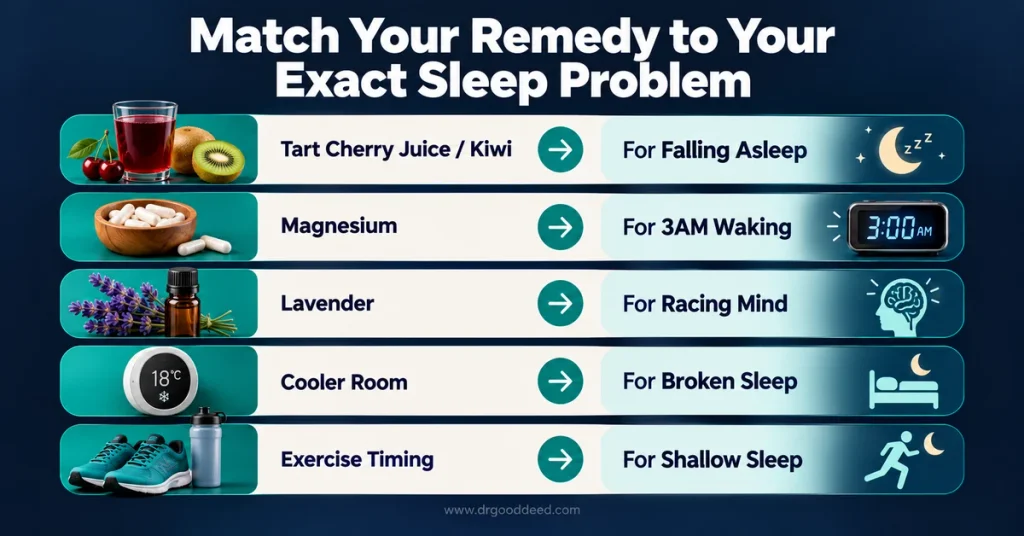
- Tart cherry juice and kiwi target sleep onset by raising melatonin and serotonin precursors before bed.
- Magnesium targets 3am wakeups by calming the central nervous system through GABA receptor activity.
- Lavender aromatherapy is best suited for anxious, racing-thought insomnia rather than physical sleeplessness.
- Room temperature and exercise timing both affect how deep your sleep gets, not just how long you sleep.
A 30-second gut check: name the exact moment your sleep breaks down before picking a remedy. That single step is what separates people who get results from people who cycle through supplements for months with nothing to show for it.
Why Most Sleep Remedies “Don’t Work”: You’re Solving the Wrong Problem
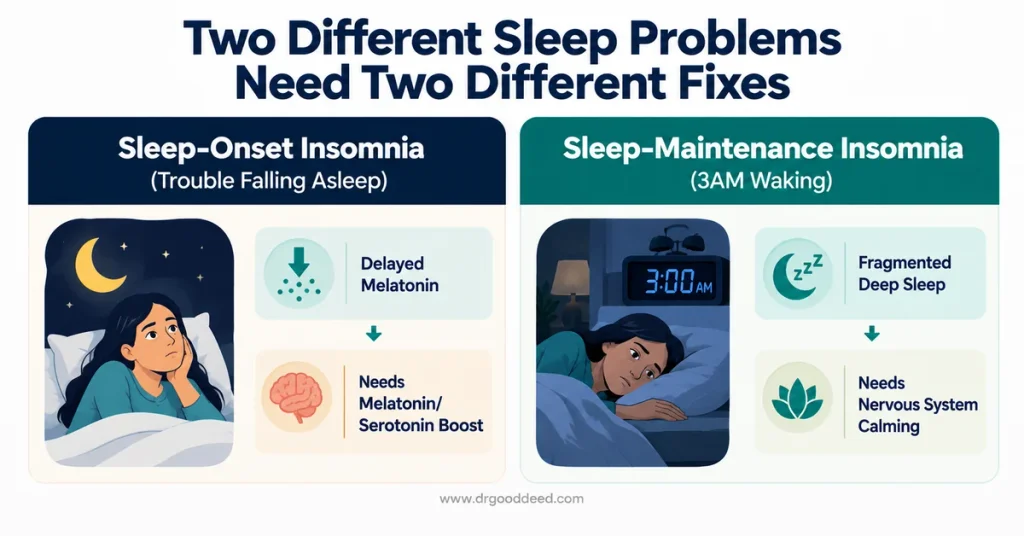
Sleep-onset insomnia involves a delayed release of melatonin and an overactive pre-sleep arousal system, so it responds to remedies that raise melatonin or lower mental stimulation before bed.
- Sleep-maintenance insomnia involves fragmented deep sleep and heightened nervous system reactivity during the night, so it responds to remedies that calm the central nervous system for hours.
- A remedy such as magnesium, taken for a falling-asleep problem, may show little benefit because its calming effect on GABA regulation is more suited to preventing midnight arousal than inducing initial drowsiness.
Once you separate these two problems, the next five sections make far more sense, and you can pick based on your actual symptom instead of guessing.
1. Tart Cherry Juice and Kiwi: For Trouble Falling Asleep
Natural remedies for trouble falling asleep work by raising melatonin or serotonin precursors in the hours before bedtime, and tart cherry juice and kiwi are two of the best foods that help you sleep better.
- A randomized, placebo-controlled trial published in the European Journal of Nutrition found that Montmorency tart cherry juice concentrate raised urinary melatonin levels and increased average total sleep time by roughly 34 minutes per night compared with placebo.
- Tart Montmorency cherries naturally contain melatonin and tryptophan, the amino acid your body converts into serotonin and then into melatonin, giving a modest but measurable boost to your body’s own sleep signal.
- A study from Taipei Medical University, published in the Asia Pacific Journal of Clinical Nutrition, found that adults with sleep complaints who ate two kiwifruit one hour before bed for four weeks reduced sleep onset latency by 35.4 percent and improved total sleep time.
- Kiwi’s benefit is linked to its serotonin and antioxidant content, and unlike melatonin supplements, both foods carry essentially no risk of morning grogginess at normal serving sizes.
If your problem is racing thoughts the moment your head hits the pillow, these two foods target the biology behind that delay.
2. Magnesium: For Waking Up at 3AM and Not Getting Back to Sleep
Magnesium acts on the central nervous system by regulating GABA receptor activity, the same inhibitory pathway targeted by prescription sedatives, which helps quiet nervous system arousal that triggers middle-of-the-night waking.
- A large share of American adults consume less magnesium than the Estimated Average Requirement from food alone, which means low intake is common enough to matter for sleep quality.
- Magnesium glycinate and magnesium citrate are absorbed more completely than magnesium oxide, which mostly acts as a laxative and delivers little of the calming benefit people are looking for.
- Because the effect builds over hours of steady nervous system regulation rather than causing immediate drowsiness, magnesium tends to disappoint people using it purely for trouble falling asleep.
3. Lavender Aromatherapy: For a Racing Mind at Bedtime
Lavender aromatherapy is best matched to anxious, racing-thought insomnia rather than sleep that is disrupted by pain, noise, or a physical condition.
- A randomized crossover trial published in the International Journal of Geriatric Psychiatry found that lavender aromatherapy significantly reduced agitation and nighttime restlessness in older adults with dementia compared with a control condition.
- Inhaled lavender is thought to influence the limbic system, the brain region tied to emotional regulation, which may explain its calming effect on anxious pre-sleep arousal rather than a direct sedative action on the body.
- Diffused or topically diluted lavender is the standard studied form; oral ingestion of lavender essential oil is not recommended and can cause gastrointestinal upset.
- Because its main pathway is reducing mental agitation rather than raising melatonin, lavender pairs poorly with someone whose only issue is a late circadian clock, and pairs well with someone who cannot stop thinking once the lights go off.
For readers whose insomnia is driven by an anxious mind rather than a biological clock delay, lavender addresses a mechanism that food-based remedies do not touch.
4. A Cooler Room: For Restless, Broken Sleep
Room temperature and room light is one of the most underused natural sleep aids that actually work, largely because it requires no purchase and produces results the same night.
- A bedroom temperature between 65 and 68 degrees Fahrenheit for most healthy adults.
- Your core body temperature naturally drops in the evening as part of the biological signal that initiates sleep, and a warm room works directly against that drop.
- Sleeping in a room warmer than the recommended range is associated with more fragmented sleep and reduced time spent in REM sleep, the stage most sensitive to temperature disruption.
- Cooling strategies that work without a new thermostat include a fan angled away from the body, moisture-wicking sheets, and lowering the temperature about an hour before bed rather than at lights-out.
- This factor works alongside light exposure, since blue light from screens delays the same evening temperature and melatonin drop that a cool room supports.
Because temperature affects sleep depth for every insomnia type, it is one of the best tips for sleeping better in summer, whether your problem is falling asleep or staying asleep.
5. Smart Exercise Timing: For Sleep That Won’t Deepen
Vigorous exercise raises core body temperature and cortisol, both of which work against the natural evening decline your body needs to enter deep sleep.
- Finishing vigorous workouts at least two hours before bedtime to give cortisol and temperature time to normalize.
- People who exercise too close to bedtime often report normal total sleep time on a tracker but still wake up feeling unrested, because total time asleep does not equal adequate deep sleep.
- Morning or early afternoon exercise has been associated with better sleep quality in observational research, likely because it reinforces the daytime-high, nighttime-low cortisol pattern that supports deep sleep.
How to Combine These Without Overdoing It
Start with one remedy matched to your specific problem, such as tart cherry juice for onset insomnia or magnesium for 3am waking, and give it two full weeks before judging results.
- Cooler room temperature and consistent morning exercise are safe to combine with almost any other remedy since they work through separate mechanisms.
- Avoid combining magnesium supplements with other sedating supplements such as high-dose melatonin or valerian without medical guidance, since combined central nervous system effects are not well studied.
- Track your sleep with a simple diary noting time to fall asleep, number of wakeups, and how rested you feel, so you can identify which remedy is doing the work.
If two weeks of a correctly matched remedy produces no change, that is useful information pointing toward an underlying condition rather than a reason to add three more supplements at once.
When to See a Doctor Instead
Natural remedies are not appropriate substitutes for medical evaluation when specific warning signs are present.
- Loud snoring, gasping for air during sleep, or witnessed breathing pauses can indicate sleep apnea, a condition that natural remedies do not treat and that requires clinical diagnosis.
- Sleep problems lasting longer than three months, or ones causing significant daytime impairment, meet the clinical threshold for chronic insomnia and warrant a conversation with a doctor.
- Sudden changes in sleep pattern alongside mood changes, chest pain, or unexplained weight change should be evaluated promptly rather than managed with supplements.
Track the clock time of your wakeups for one week before choosing a remedy. A consistent 2 to 4am wakeup pattern points toward a nervous system or cortisol issue suited to magnesium, while trouble in the first 30 minutes after lights-out points toward a melatonin-timing issue better suited to tart cherry juice or kiwi.
FAQs
How do I know if my problem is falling asleep or staying asleep?
Track wake times for one week. Trouble in the first 30 minutes points to sleep onset insomnia; waking after 2 to 3 hours points to sleep maintenance insomnia.
Can I use more than one remedy at the same time?
Yes, but pair mechanisms carefully. Cooler room temperature and morning exercise combine safely with almost any other remedy on this list.
How many nights before a natural remedy actually works?
Most trials measuring tart cherry juice, kiwi, and magnesium show measurable change within 7 to 14 consecutive nights of correct use.
Why do sleep remedies work for some people and not others?
Mismatched mechanism is the leading cause. A remedy built for 3am waking will underperform for someone whose only issue is falling asleep.
When does poor sleep stop being a “try remedies” problem?
At the three-month mark, or sooner if breathing pauses, loud snoring, or major daytime impairment appear, natural remedies should not replace a medical evaluation.
Sources
- Howatson G, et al. “Effect of tart cherry juice (Prunus cerasus) on melatonin levels and enhanced sleep quality.” European Journal of Nutrition, 2012. link
- Lin HH, et al. “Effect of kiwifruit consumption on sleep quality in adults with sleep problems.” Asia Pacific Journal of Clinical Nutrition, 2011. link
- NIH Office of Dietary Supplements. “Magnesium: Fact Sheet for Health Professionals.” link
- Lin PW, et al. “Efficacy of aromatherapy (Lavandula angustifolia) as an intervention for agitated behaviors in Chinese older adults with dementia.” International Journal of Geriatric Psychiatry, 2007. link
- Sleep Foundation. “Best Temperature for Sleep.” link
- National Institute of Neurological Disorders and Stroke. “Brain Basics: Understanding Sleep.” link
- American Academy of Sleep Medicine. “Exercise and Sleep.” link
- National Heart, Lung, and Blood Institute. “Sleep Apnea.” link
Medical Disclaimer: This article is for general information only and is not medical advice. It does not replace a diagnosis, treatment plan, or guidance from a qualified healthcare professional. Always talk to your doctor about your own symptoms and before starting, stopping, or changing any treatment. If you think you may be having a medical emergency, call 911 or go to your nearest emergency room.